Water Tanker Capacity Guide: Matching Volume to Job Needs
Water Tanker Capacity Guide: Matching Volume to Job Needs
Choosing the right water tanker capacity affects uptime, fuel cost, and daily output.
A tanker that is too small creates refill delays.
A tanker that is too large can raise purchase cost, axle load, and route restrictions.
For road transport, construction, and municipal work, the best water tanker matches volume to real duty cycles.
That means looking beyond tank size alone.
You need to compare daily water demand, distance to refill points, road conditions, and chassis limits before making a decision.
Start with the job, not the brochure
Many buyers begin with a standard water tanker size list.
That is useful, but it should not drive the final choice.
In practice, water usage changes by task.
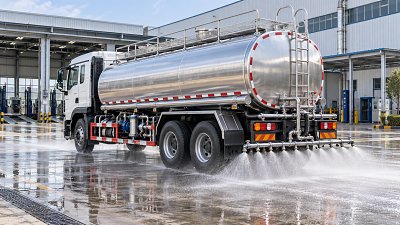
Dust suppression, road washing, landscaping, and emergency supply all consume water differently.
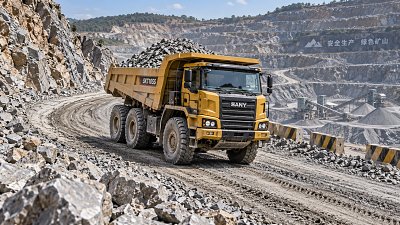
A mining access road may need repeated spray passes.
A municipal cleaning route may need lower volume but better maneuverability in tighter streets.
The first question is simple: how much water must move each shift?
From there, estimate how often the truck can refill without disrupting the operation.
This turns water tanker selection from a catalog exercise into an operating decision.
Core demand inputs
- Daily water consumption by application
- Number of working hours per shift
- Distance to hydrant, pond, depot, or treatment source
- Average refill time, including queue time
- Road grade, site surface, and travel speed
- Seasonal changes in temperature and dust levels
Understand common water tanker capacity ranges
Water tanker capacity usually falls into practical bands.
Each band suits a different transport environment and workload.
The right band depends on both payload and how the truck is expected to move.
Smaller units often work best when access is limited.
Larger units are better when refill points are far away or water use is heavy.
Still, larger capacity does not automatically mean better productivity.
Calculate the volume your site actually needs
A practical water tanker decision starts with a simple field calculation.
Estimate total daily demand, then divide it by the realistic number of trips per shift.
That gives a working target for water tanker capacity.
Basic method
- Measure daily water demand in liters.
- Count expected trips, including refill travel.
- Add a buffer for peak periods or delays.
- Check gross vehicle weight and legal load limits.
For example, a site needing 48,000 liters per shift may complete four efficient trips.
That suggests around 12,000 liters per trip before adding reserve.
If travel times are unstable, a 15,000-liter water tanker may be safer.
If the route is short and refill is quick, 10,000 to 12,000 liters may be enough.
Match capacity to application type
Different jobs place different demands on a water tanker.
The spray system, route pattern, and refill rhythm all influence the best capacity choice.
Construction and infrastructure
These projects often need dust control, compaction support, and road wetting.
Water demand can spike quickly during dry weather.
A mid-size or large water tanker usually fits best, especially on wide job sites.
Municipal cleaning and landscaping
City work favors turning radius, stable braking, and easy route access.
A smaller water tanker may outperform a larger one on congested roads.
This is especially true when refill stations are frequent and close.
Mining and remote industrial roads
Long haul distances and rough ground usually push buyers toward larger capacity.
In these settings, refill downtime is expensive.
A heavy-duty water tanker with durable baffles and suitable chassis support is often the better choice.
Do not ignore chassis, axle load, and route limits
Water is heavy, and tank volume directly affects legal and mechanical limits.
One liter of water weighs about one kilogram.
A 15,000-liter water tanker carries roughly 15 tons of water before tank and equipment weight.
That is why tanker capacity must match the truck chassis and local road regulations.
- Check gross vehicle weight rating
- Confirm front and rear axle distribution
- Review bridge, tunnel, and road access limits
- Consider braking performance on slopes
- Verify tire specification for full-load operation
Skipping these checks can turn a good water tanker on paper into a costly field problem.
Factor in refill logistics and operating efficiency
Capacity planning is really a logistics question.
The farther the refill point, the more valuable each extra liter becomes.
But on short loops, oversized capacity may sit unused while burning more fuel.
A useful comparison is cost per delivered liter across a full shift.
That includes fuel, driver time, maintenance, and refill waiting time.
Often, the most efficient water tanker is not the biggest one but the best-matched one.
Signs your capacity is too small
- Frequent unplanned refill trips
- Dust suppression gaps during peak hours
- Drivers spending more time traveling than spraying
- Dependence on backup units to finish routine tasks
Signs your capacity is too large
- Low average fill rate on normal shifts
- Access issues on narrow or soft roads
- Higher tire, brake, and suspension wear
- More capital tied up than the job requires
A practical checklist before you buy a water tanker
Before finalizing a water tanker, confirm the operating picture from both the site and transport side.
That reduces the risk of under-specifying or over-investing.
- Define daily liters required by each task.
- Measure travel and refill cycle times.
- Check route width, slope, and ground condition.
- Confirm chassis payload and axle compliance.
- Review spray system needs, not just tank volume.
- Plan for seasonal demand peaks and backup margin.
- Compare suppliers on build quality and support response.
Reliable sourcing matters as much as technical fit.
For buyers comparing global options, a specialized B2B industry platform can simplify evaluation.
It helps identify suppliers, compare vehicle specifications, and review related truck and equipment categories in one place.
That becomes especially useful when a water tanker must align with wider fleet or project procurement plans.
Final decision: choose capacity that protects workflow
The best water tanker capacity is the one that supports uninterrupted work at the lowest realistic operating cost.
That decision should come from demand data, refill logistics, route limits, and chassis compatibility.
When these factors line up, the water tanker becomes a productivity tool rather than a transport bottleneck.
Shortlist capacity options only after the job profile is clear.
Then compare suppliers, tank build quality, and support capability with equal discipline.
A well-matched water tanker will save time every shift, and those savings add up faster than most purchase teams expect.
Trending News
- How to choose an off road truck for steep and unstable job sites
- How to match crane truck lifting capacity to your jobsite loads
- What drives logging truck cost beyond the base purchase price?
- How to match lowbed trailer deck height to your hauling equipment
- What documents are needed to export a low bed trailer to Southeast Asia?
Tag
Recommended News
 Buying GuideHow to choose an off road truck for steep and unstable job sitesChoose the right off road truck for steep, unstable job sites. Compare traction, braking, stability, clearance, payload, and route-test essentials.
 Buying GuideHow to match crane truck lifting capacity to your jobsite loadsCrane truck capacity planning made clear: calculate gross load, radius, rigging, outriggers, and ground conditions to select safer, job-ready lifting equipment.
 Buying GuideHow to match lowbed trailer deck height to your hauling equipmentLowbed trailer deck height guide: match equipment clearance, ramp geometry, axle loads, tractor fit, and route limits for safer, more efficient hauling.
 Buying GuideWhat to verify before choosing a delivery truck supplier for school transportationDelivery truck supplier for school transportation: verify route fit, payload, safety, compliance, service support, and total cost before choosing a reliable partner.
 Buying GuideWhat an excavator manufacturer catalog should show before you compare modelsExcavator manufacturer catalog guide: verify supplier identity, configurations, hydraulics, compliance, parts support, and delivery readiness before comparing models.
 Buying GuideWhat to check before appointing a bulldozer distributorBulldozer distributor selection guide: evaluate service, parts availability, warranty, pricing, compliance, and lifecycle value to reduce downtime and protect fleet investment.
 Buying GuideWhat to verify before choosing a truck cement mixer supplierTruck cement mixer supplier checklist: verify chassis fit, drum quality, hydraulics, compliance, spare parts, and after-sales support before you buy.
 Buying GuideHow to verify a truck spare parts supplier before placing a bulk orderTruck spare parts supplier verification made practical: learn how to check part specifications, factory control, test records, samples, pricing, and delivery capability before placing a bulk order.
 Buying GuideWhat size truck container is right for a typical freight load?Truck container sizing made simple: compare payload, volume, pallet layouts, route access, and loading needs to choose the most efficient freight solution.
 Buying GuideWhat drives semi trailer price differences between similar models?Semi trailer price differences come down to frame materials, axles, suspension, coating, and configuration. Compare specifications line by line to choose lasting value.
 Buying GuideHow to compare excavator manufacturer price lists before requesting quotesCompare an excavator manufacturer price list with confidence. Learn to normalize configurations, calculate landed costs, assess options and service, and create stronger RFQs.
 Buying GuideHow to choose a mixer truck drum capacity for your concrete pourMixer truck capacity guide: match drum size to pour rate, legal payload, site access, and delivery cycles for efficient, reliable concrete placement.
 Buying GuideHow to size a bulldozer for construction site grading workBulldozer for construction sizing guide: match weight, blade, traction, grade control, and transport needs to improve grading productivity and costs.
 Buying GuideHow to assess a truck cement manufacturer’s build quality before orderingTruck cement manufacturer build quality: assess tank steel, welding, chassis integration, pneumatic systems, factory QC, and inspection evidence before ordering.
 Buying GuideWhen does a truck trailer OEM make sense for private-label fleets?Truck trailer OEM programs help private-label fleets cut lifecycle costs, standardize operations, and improve uptime. Learn when customization delivers real commercial value.
 Buying GuideWhat to verify before choosing a water truck OEM for your fleetWater truck OEM selection guide: verify chassis compatibility, tank quality, pump performance, compliance, and service support to build a safer, more reliable fleet.
 Buying GuideHow to size a cab chassis truck for a fire department apparatusCab chassis truck for fire department sizing guide: balance GVWR, axle loads, wheelbase, water tank placement, and mission needs for safer apparatus design.
 Buying GuideWhat to verify before choosing a truck chassis supplierChoose the right truck chassis supplier with a practical checklist for application fit, axle ratings, body integration, quality control, delivery reliability, and after-sales support.
 Buying GuideHow to choose a logging truck for steep and rough forest roadsLogging truck selection for steep, rough forest roads: compare traction, braking, gearing, chassis strength, tires, and supplier support for safer, more reliable hauling.
 Buying GuideHow to choose a flatbed trailer deck length for oversized loadsFlatbed trailer deck length guide for oversized loads: balance cargo support, axle weight, securement space, overhang, and route access for safer transport.
 Buying GuideHow to assess a truck chassis supplier for trailer manufacturingTruck chassis supplier for trailer manufacturing: learn how to assess technical fit, quality control, engineering support, and delivery reliability for smarter sourcing.
 Buying GuideIs the SHACMAN H3000 6×4 Cement Mixer suitable for large projects?SHACMAN H3000 6×4 Cement Mixer: assess payload, cycle time, traction, and service support to see if it can keep large concrete projects moving efficiently.
 Buying GuideHow to evaluate heavy duty trucks for sale in Russia before buyingHeavy duty trucks for sale in Russia: learn how to compare specifications, winter readiness, service support, supplier reliability, and total ownership costs before buying.
 Buying GuideWhat to verify before choosing a logging truck producerChoose a logging truck producer with confidence: verify chassis strength, load security, compliance, service support, and delivery control for demanding forestry routes.
 Buying GuideHow to choose a truck excavator for confined construction sitesTruck excavator selection for confined sites: explore access, reach, stability, attachments, and safety factors to choose a productive, space-efficient solution.