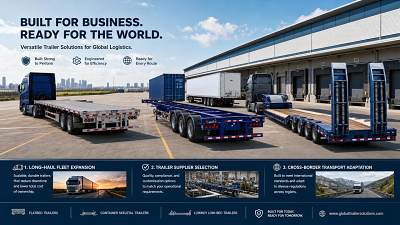
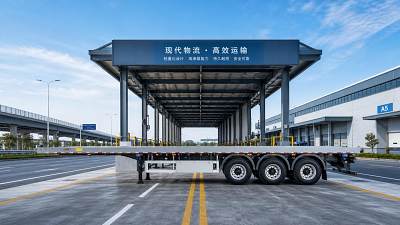
Truck Trailer Supplier Checklist for Long-Haul Fleet Expansion
Expanding a long-haul fleet requires more than adding equipment—it demands choosing a reliable truck trailer supplier that can support performance, compliance, lifecycle cost, and delivery timelines at scale. This checklist helps business decision-makers evaluate suppliers more strategically, reduce procurement risk, and build a trailer sourcing plan aligned with operational growth and cross-border transport demands.
Why does choosing the right truck trailer supplier matter so much in long-haul expansion?
For fleet owners, logistics operators, distributors, and procurement teams, trailer sourcing is rarely just a product decision. It affects route utilization, cargo safety, axle load compliance, maintenance planning, fuel efficiency, driver uptime, and contract fulfillment. A weak truck trailer supplier can create delays that ripple through the entire transport network.
Long-haul expansion also introduces new complexity. Cross-border lanes may require different dimensions, braking systems, lighting configurations, reflective markings, documentation, and component compatibility. That means decision-makers need a supplier that can do more than quote a price. They need one that understands operating environments and can align specifications with regional transport rules.
- A low upfront trailer price may lead to higher total operating cost if parts wear quickly or service support is weak.
- Fast fleet growth can fail if production capacity cannot keep pace with phased purchase orders.
- Mixed trailer specifications across regions can increase driver training needs and spare parts complexity.
- Poor documentation from a truck trailer supplier may slow customs clearance, registration, and road readiness.
This is why a disciplined checklist matters. It helps leaders compare suppliers on business impact, not only on unit cost. In the road transport equipment sector, the most resilient procurement decisions balance technical fit, after-sales capability, compliance readiness, and delivery reliability.
What should decision-makers include in a truck trailer supplier checklist?
Before issuing RFQs or entering negotiations, it helps to build a structured scoring framework. The goal is to avoid buying trailers that look acceptable on paper but fail under real freight conditions. The checklist below covers the most practical evaluation areas for long-haul fleet expansion.
A strong truck trailer supplier should be able to provide clear answers for each area without excessive ambiguity. If a supplier struggles to explain how its trailer configuration fits your route profile, maintenance capacity, or destination-market rules, that is an early warning sign.
Core qualification questions to ask early
- Which trailer types are most suitable for our freight mix: container haulage, bulk cargo, palletized goods, oversized machinery, or temperature-sensitive transport?
- Can the supplier adapt specifications for different legal road limits and operating conditions across markets?
- What is the normal lead time for standard builds and for custom builds during peak demand periods?
- How are axles, landing gear, braking components, tires, and electrical systems sourced and supported?
- What documentation will be available for inspection, customs, registration, and maintenance reference?
How do you match trailer type to long-haul application scenarios?
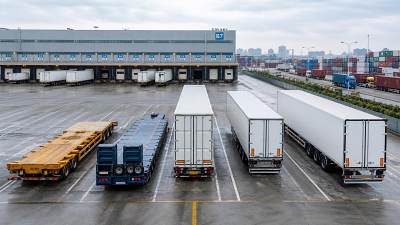
Not every truck trailer supplier is equally strong across all trailer categories. Some perform better in standard platform or flatbed production, while others are more capable in tanker, low-bed, side-wall, tipper, or refrigerated configurations. Procurement teams should compare supplier strength by application, not only by catalog size.
The table below helps connect common long-haul transport tasks with trailer selection priorities. It is especially useful when fleets are expanding into new lanes, cargo categories, or international routes.
If your freight mix is changing rapidly, prioritize a truck trailer supplier with configurable platforms and repeatable customization processes. That approach simplifies future expansion, especially when contracts shift between logistics, infrastructure, and industrial transport sectors.
Scenario-specific selection checks
- For long-distance highway routes, focus on tare weight, brake stability, tire wear behavior, and ease of preventive maintenance.
- For mining-adjacent or rough-road transport, inspect frame strength, suspension robustness, and corrosion protection.
- For municipal or regional multi-stop distribution, loading access and turnaround efficiency may matter more than maximum payload.
- For international trade lanes, confirm spare parts interchangeability and service support in destination markets.
Which technical details separate a dependable truck trailer supplier from a risky one?
Technical evaluation should go beyond brochure language. Procurement leaders should ask how the trailer is designed for fatigue resistance, braking consistency, load stability, and serviceability. The right truck trailer supplier should explain structure, not just features.
Key technical areas to review
- Frame and steel selection: Review beam design, reinforcement zones, weld quality approach, and expected load cycle conditions.
- Axle and suspension setup: Match axle count, suspension type, and service interval expectations with road condition and cargo density.
- Brake and electrical systems: Confirm compatibility with tractor units, regional regulations, and maintenance skill levels.
- Surface treatment and corrosion protection: Important for humid ports, chemical exposure, winter roads, and coastal logistics corridors.
- Parts accessibility: A trailer that is difficult to service can reduce uptime even if the original purchase price is attractive.
Technical transparency is especially important for long-haul fleets because repairs often happen under time pressure. A trailer built with common service parts and straightforward maintenance access is often more valuable than one with a marginally lower purchase cost but weaker field support.
Useful specification documents to request
- General arrangement drawing with dimensions and axle spacing.
- Component list covering braking, suspension, kingpin, tires, landing gear, and electrical parts.
- Payload guidance under the intended operating condition.
- Maintenance schedule recommendations and spare parts planning list.
How should buyers compare price, lifecycle cost, and supplier service?
A truck trailer supplier should not be judged by initial quotation alone. Fleet expansion decisions are capital-intensive, and the wrong purchase can affect utilization for years. The real comparison should include maintenance cost, parts availability, repair time, residual value expectations, and operating efficiency.
The table below shows a practical comparison framework for total cost evaluation. It helps decision-makers avoid the common mistake of selecting the lowest bidder without measuring downstream cost drivers.
For executive teams, the best truck trailer supplier is often the one that lowers operating uncertainty. Even small reductions in downtime, emergency repair frequency, and delayed delivery penalties can outweigh a modest difference in purchase price.
A practical cost review checklist
- Compare spare parts lead times for critical wear items.
- Estimate maintenance labor impact based on service accessibility.
- Review the cost implications of non-standard components across your fleet.
- Include expected registration, compliance adaptation, and delivery costs in the final sourcing model.
What compliance and documentation checks should not be skipped?
In cross-border and multi-market transport, compliance failures can be more expensive than technical failures. A truck trailer supplier should understand that road transport equipment is not only a mechanical product but also a regulated asset. Documentation gaps can delay customs clearance, registration, inspection, or insurance processing.
Important compliance review points
- Check vehicle dimensions, axle load layout, and gross weight suitability against destination-market regulations.
- Verify braking, lighting, reflector, and conspicuity requirements according to the operating region.
- Confirm whether the supplier can provide general technical files, packing details, serial identification, and export documentation.
- Ensure any optional certification discussion stays tied to the actual target market rather than generic claims.
Because requirements vary by country and route, decision-makers should avoid assuming one standard trailer specification fits every market. This is where a specialized B2B sourcing platform adds value by helping buyers compare supplier readiness, product information, and market-specific procurement references in one place.
How can a global B2B platform improve truck trailer supplier selection?
When procurement teams search for a truck trailer supplier across multiple countries, the challenge is not only finding options. The larger issue is filtering them efficiently. A specialized industry platform focused on heavy trucks, trailers, construction machinery, and spare parts gives buyers a clearer way to compare supply-side capability before entering deeper negotiation.
The Global Heavy Truck Industry Platform supports this process by connecting buyers with manufacturers, suppliers, and distributors across the commercial vehicle supply chain. For decision-makers, this means easier access to trailer categories, truck-related product ecosystems, market insights, and sourcing references relevant to road transport equipment procurement.
Where the platform adds practical value
- Supplier discovery: Identify truck trailer supplier options across different production strengths and regions.
- Product comparison: Review trailer categories alongside related truck chassis, spare parts, and application sectors.
- Market intelligence: Use industry resources, buying guides, and sector updates to refine purchasing timing and criteria.
- Cross-border efficiency: Improve communication and sourcing transparency for global fleet expansion projects.
For enterprises planning phased expansion, the ability to compare suppliers in a structured environment can shorten decision cycles and improve internal alignment between procurement, operations, finance, and technical teams.
Common mistakes buyers make when evaluating a truck trailer supplier
Mistake 1: Treating all trailers as interchangeable assets
Trailers that appear similar can perform very differently once route conditions, load patterns, and service intervals are considered. Standardization is useful, but only when the specification matches the actual transport job.
Mistake 2: Comparing quotations without comparing configuration details
A lower quote may reflect a different axle class, thinner material selection, simplified electrical setup, or reduced after-sales commitment. Procurement teams should compare like-for-like specifications before judging value.
Mistake 3: Ignoring serviceability during expansion planning
As fleet size grows, even minor maintenance inefficiencies become costly. A dependable truck trailer supplier should support parts planning, technical communication, and repeat-order consistency.
Mistake 4: Underestimating documentation and compliance timing
Delays often come from incomplete files rather than production failure. Decision-makers should clarify documentation scope early in the procurement cycle.
FAQ: truck trailer supplier questions business buyers often ask
How do I know whether a truck trailer supplier can support fleet growth, not just one order?
Check whether the supplier can discuss repeat production consistency, phased delivery planning, component sourcing stability, and after-sales response for a larger installed base. A supplier that can only deliver a one-time batch may not support long-term expansion efficiently.
What should be prioritized first: price, lead time, or specification?
Start with operational fit and regulatory suitability. If the specification does not match cargo, route, and compliance needs, a fast or cheap purchase can still become an expensive mistake. After that, compare lead time and commercial terms within the correct technical framework.
How long does trailer procurement usually take?
Timing varies by trailer type, customization depth, production queue, and export process. Standard configurations generally move faster than special-purpose builds. Buyers should request milestone visibility covering confirmation, production, inspection, shipment, and document preparation.
Is it better to source from one truck trailer supplier or several?
That depends on fleet strategy. One main supplier can simplify standardization, training, and parts planning. Multiple suppliers may reduce concentration risk or support specialized trailer categories. Many growing fleets use a hybrid model: one core supplier plus selective secondary sourcing.
Why choose us for truck trailer supplier discovery and sourcing support?
The Global Heavy Truck Industry Platform is built for buyers who need more than scattered listings. Our focus on the commercial vehicle and heavy equipment supply chain helps enterprise decision-makers evaluate truck trailer supplier options with stronger industry context, clearer category coverage, and more efficient global sourcing visibility.
- If you need parameter confirmation, you can compare trailer categories, load applications, and component preferences before shortlisting suppliers.
- If you need product selection support, you can assess trailer options for long-haul logistics, infrastructure transport, industrial cargo, and cross-border operations.
- If delivery timing is critical, you can use the platform to identify suppliers with suitable production scope and discuss lead time expectations earlier.
- If your project requires customization, you can explore suppliers able to align trailer specifications with route conditions, operational tasks, and market requirements.
- If certification or documentation is a concern, you can use industry resources and buying guidance to prepare more focused supplier discussions.
- If you are ready for quotation discussions, you can organize supplier comparison more efficiently across product, service, and compliance dimensions.
For long-haul fleet expansion, the best sourcing outcome comes from asking better questions before placing the order. Use this checklist to narrow your priorities, then connect with the right truck trailer supplier through a platform designed for global heavy truck and trailer trade. If you want to discuss trailer selection, specification matching, delivery cycle planning, documentation readiness, or supplier comparison, now is the right stage to start that conversation.
Trending News
- When does heavy equipment transport require a lowboy trailer?
- When does a light commercial vehicle for urban delivery save fleet costs?
- How to choose an off road truck for steep and unstable job sites
- How to match crane truck lifting capacity to your jobsite loads
- What drives logging truck cost beyond the base purchase price?
Tag
Recommended News
 Fleet ManagementWhen does a light commercial vehicle for urban delivery save fleet costs?Light commercial vehicle for urban delivery: learn when route density, payload utilization, access, and driver productivity can reduce fleet cost per successful stop.
 Fleet ManagementHeavy Truck Specs That Matter Most for Long-Term Fleet PlanningHeavy truck specs that truly shape long-term fleet success: compare payload, torque, axle setup, fuel efficiency, and parts support to cut downtime and plan smarter.
 Fleet ManagementTruck Parts Supplier Risks That Affect Long-Term Fleet CostsTruck parts supplier risks can quietly increase long-term fleet costs through downtime, poor fitment, and supply delays. Learn how to choose smarter and protect uptime.
 Fleet ManagementSemi Trailer Distributor Red Flags That Can Delay Fleet ExpansionSemi trailer distributor warning signs can stall fleet expansion fast. Learn the key red flags in inventory, delivery, support, and compliance before you buy.
 Fleet ManagementLogistics Transportation Trends Reshaping Fleet Cost ControlLogistics transportation trends are redefining fleet cost control. Discover how data, sourcing, and equipment strategy help fleets cut risk, improve utilization, and stay competitive.
 Fleet ManagementOff Road Truck Safety Risks and Maintenance Checks Before DeploymentOff road truck safety starts before deployment. Learn key risks, maintenance checks, and inspection steps to reduce downtime, protect crews, and keep every jobsite moving.
 Fleet ManagementTruck Fleet Cost Control: 7 Metrics That Matter in 2026Truck fleet cost control in 2026 starts with 7 key metrics. Learn how fuel, uptime, utilization, downtime, and TCO reveal hidden costs and smarter sourcing decisions.
 Fleet ManagementHeavy Truck Fuel Efficiency: What Impacts Operating CostsHeavy truck fuel efficiency directly impacts operating costs. Learn how design, payload, maintenance, and driver behavior affect fuel use and smarter truck buying decisions.
 Fleet ManagementTruck Fleet Planning Tips for Lower DowntimeTruck fleet planning tips to cut downtime, improve uptime, optimize maintenance, manage spare parts, and build a more reliable, cost-efficient transport operation.
 Fleet ManagementTruck Tipper Safety Checks Before Daily OperationTruck tipper daily safety checks made simple: inspect hydraulics, brakes, tires, lights, loads, and tipping stability to reduce downtime and operate with confidence.
 Fleet ManagementDump Truck Supplier Risks in Mining ProjectsFind out how to choose a reliable dump truck supplier for mining industry projects, reduce sourcing risks, secure parts support, and improve uptime in harsh mining operations.
 Fleet ManagementBest Commercial Vehicle Parts for Warehouse Fleets with High Stop-Start UseCommercial vehicle parts for warehouse fleets should handle heavy stop-start use with fewer failures. Discover proven brake, battery, suspension, and steering choices that cut downtime.
 Fleet ManagementDelivery Truck Supplier in USA: What Matters Most for Fleet ExpansionDelivery truck supplier in USA selection impacts uptime, cost, and fleet growth. Learn how to compare suppliers by route needs, service support, and long-term scalability.
 Fleet ManagementHow to Choose Commercial Vehicle Parts for Warehouse Fleet UptimeCommercial vehicle parts for warehouse fleets directly impact uptime. Learn how to choose durable, accurate-fit parts and reliable suppliers to reduce downtime and control maintenance costs.
 Fleet ManagementWhy a Light Duty Truck Manufacturer in USA Still Matters for Fleet ReliabilityLight duty truck manufacturer in USA choices still shape fleet uptime, parts access, and lifecycle value. See what buyers should compare for more reliable operations.
 Fleet ManagementHow to Plan a Dump Truck Bulk Order for Multi-Site ProjectsDump truck bulk order planning for multi-site projects made simple. Learn how to balance specs, delivery, support, and total cost for smarter fleet decisions.
 Fleet ManagementWhat Makes a Delivery Truck Supplier Cost-Effective in Real OperationsDelivery truck supplier with cost-effective solutions: learn how to cut fuel, maintenance, and downtime costs with a practical checklist for smarter fleet purchasing.
 Fleet ManagementHow Low-Maintenance Truck Spare Parts Suppliers Help Cut DowntimeTruck spare parts supplier with low maintenance benefits help fleets cut downtime, speed repairs, and lower service costs. Discover how smarter sourcing boosts uptime.
 Fleet ManagementHow Commercial Vehicle Parts for Warehouse Improve Daily UptimeCommercial vehicle parts for warehouse operations help reduce downtime, improve safety, and keep trucks and trailers moving efficiently. Discover how the right parts boost daily uptime.
 Fleet ManagementCommercial Vehicle Parts for Cold Storage: Reducing Failure in Daily UseCommercial vehicle parts for cold storage help reduce daily failures, protect cargo quality, and improve fleet uptime. Discover scenario-based maintenance insights for refrigerated transport.
 Fleet ManagementDelivery Truck Supplier in USA: What to Compare Before Expanding a FleetDelivery truck supplier in USA comparison guide for fleet expansion. Learn how to evaluate quality, service, parts support, and lifecycle cost before you invest.
 Fleet ManagementBest Commercial Vehicle Parts for Warehouse OperationsCommercial vehicle parts for warehouse operations should boost safety, uptime, and load control. Explore the best brake, tire, steering, and lighting solutions for efficient fleet performance.
 Fleet ManagementTruck Cement Mixer Supplier: What to Check Before Fleet ExpansionTruck cement mixer supplier selection can make or break fleet expansion. Learn the key checks on quality, compliance, parts support, and total cost before you buy.
 Fleet ManagementTruck Trailer Supplier Checklist for Long-Haul Fleet ExpansionTruck trailer supplier checklist for long-haul fleet expansion: compare compliance, lifecycle cost, delivery, and support to reduce sourcing risk and scale with confidence.
 Fleet ManagementIs a Lightweight Semi Trailer Manufacturer the Right Fit for High-Frequency RoutesFind out if a semi trailer manufacturer with lightweight design is the smart choice for high-frequency routes, balancing payload, durability, compliance, and long-term fleet savings.