L4 Autonomous Truck Chassis Emerges as Tech Export Vehicle
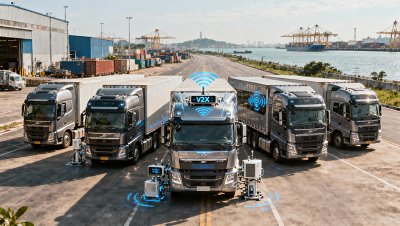
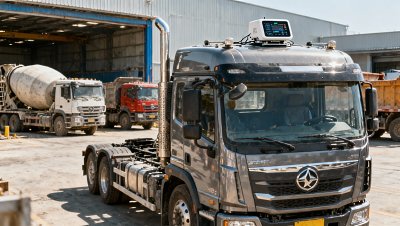
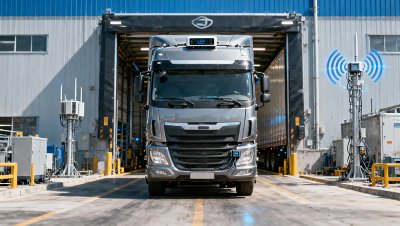
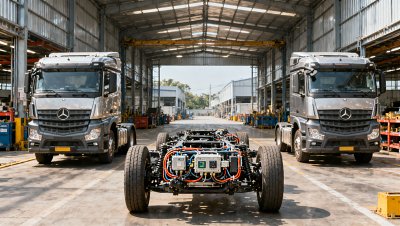
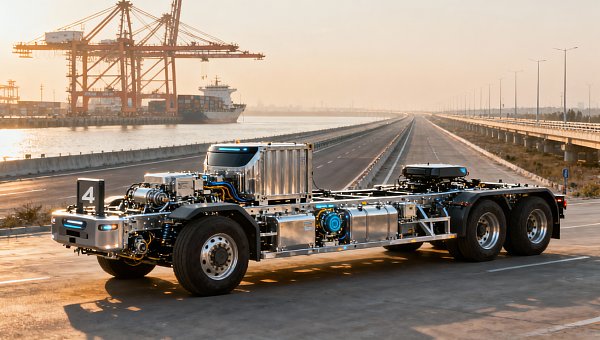
On May 14, 2026, China’s Ministry of Transport disclosed phased outcomes of the Smart Shipping 2030 Action Plan, revealing accelerated spillover effects beyond maritime logistics. The rollout of L4-level autonomous container tractors—deployed on the Tianjin Port–Xiong’an New Area trunk route—has transitioned into常态化 trial operations. Critically, the underlying universal tractor chassis platform (powertrain-agnostic across electric, hydrogen, and diesel configurations) is now open for technology licensing, with DP World (UAE) and Chile’s National Port Authority confirmed as inaugural partners. This marks a strategic shift: from domestic pilot to globally licensable mobility infrastructure.
Event Overview
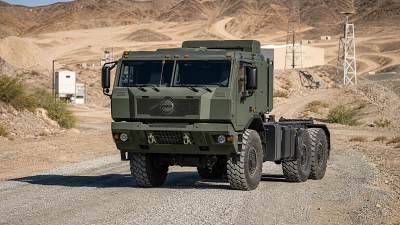
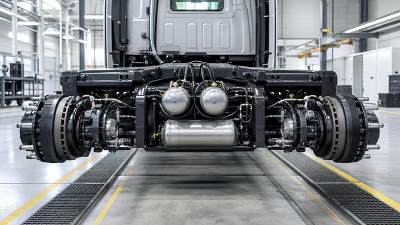
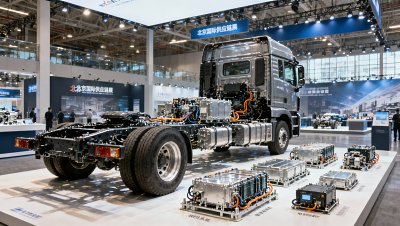
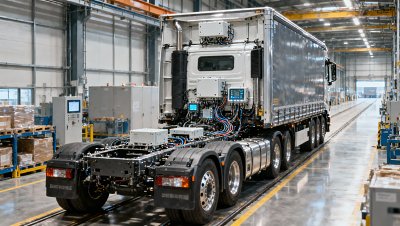
On May 14, 2026, the Ministry of Transport announced that the L4 autonomous container tractor operating on the Tianjin Port–Xiong’an New Area corridor has entered常态化 trial operation. The vehicle’s modular, multi-powertrain-compatible tractor chassis platform is now available for technical licensing. Initial licensees include DP World and Chile’s National Port Authority. The chassis is explicitly designed for rapid adaptation to short-haul port drayage and off-road mine transport applications overseas.
Industries Affected
Direct Trading Enterprises
Trading firms engaged in cross-border containerized cargo—particularly those serving ports in emerging markets—face revised cost and reliability benchmarks. As licensed L4 chassis enter local fleets, dwell times at terminals may compress, but integration timelines and interoperability with legacy terminal operating systems (TOS) introduce new operational dependencies. Impact manifests not in immediate tariff shifts, but in recalibrated service-level agreements (SLAs) around gate-to-gate transit time and equipment availability guarantees.
Raw Material Procurement Enterprises
Companies sourcing bulk commodities (e.g., copper ore, iron concentrate) from remote mining regions stand to gain indirect efficiency gains—if licensed chassis are adopted in mine-to-port haulage. However, procurement teams must now assess vendor logistics capability through a new lens: whether their transport partners hold or plan to acquire licensed chassis deployment rights, and whether local regulatory frameworks permit autonomous operation in non-port zones. This adds a layer of due diligence previously absent from supplier qualification.
Manufacturing Enterprises
Export-oriented manufacturers—especially in automotive, machinery, and electronics—rely on predictable inland container movement. Widespread adoption of licensed L4 chassis could reduce trucking volatility (e.g., driver shortages, fuel-price-driven surcharges), but only where national safety certifications and cybersecurity compliance regimes align. Manufacturers in jurisdictions lacking harmonized Type Approval standards for autonomous commercial vehicles may experience delayed onboarding, creating regional asymmetry in logistics resilience.
Supply Chain Service Providers
Third-party logistics (3PL) providers and freight forwarders face dual pressures: opportunity and obsolescence risk. Those securing early access to licensed chassis—or partnering with authorized integrators—gain differentiation in tender processes requiring autonomous-ready solutions. Conversely, providers reliant solely on conventional fleet management platforms risk marginalization in RFPs specifying autonomous interoperability (e.g., ISO/IEC 21434-compliant telematics, V2X coordination readiness). Their impact lies less in hardware ownership and more in system integration capability.
Key Considerations and Response Measures for Stakeholders
Evaluate Licensing Pathways, Not Just Hardware Specs
Stakeholders should prioritize understanding the scope and territorial limits of each licensing agreement—including permitted use cases (e.g., port-only vs. public-road), required local certification steps, and software update governance. Technical compatibility alone does not guarantee operational deployment.
Assess Local Regulatory Readiness Beyond Technology
Before committing to chassis integration, enterprises must audit national and subnational regulations covering remote supervision protocols, cyber incident reporting obligations, and insurance liability frameworks for autonomous freight. A functional chassis cannot operate where legal guardrails remain undefined.
Factor in Powertrain-Specific Infrastructure Dependencies
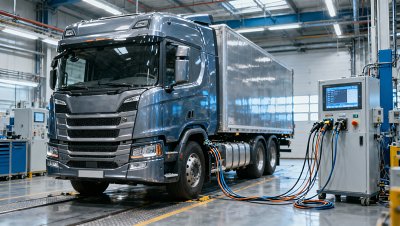
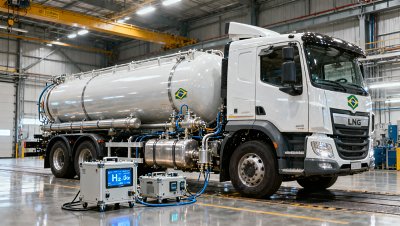
The chassis supports electric, hydrogen, and diesel powertrains—but each demands distinct support ecosystems. For example, hydrogen-powered deployment requires verified refueling station density and cryogenic maintenance capacity; electric variants require high-power charging corridors aligned with shift cycles. Infrastructure gaps—not chassis performance—will determine rollout velocity.
Editorial Perspective / Industry Observation
Observably, this development signals a pivot from ‘smart port’ as an isolated node to ‘autonomous mobility stack’ as an exportable industrial asset. The choice to standardize on a chassis—not full vehicle—is deliberate: it decouples hardware modularity from software sovereignty, enabling host nations to retain control over perception algorithms, fleet management logic, and data governance. Analysis shows this model reduces foreign technology lock-in risk for adopters while expanding China’s influence through foundational components rather than turnkey systems. Current evidence suggests licensing terms emphasize local assembly and software localization clauses—making this less a product export and more a co-development enabler.
Conclusion
This milestone reflects a maturing phase in intelligent transportation policy: where regulatory ambition converges with scalable, licensable engineering. It does not herald immediate global fleet replacement, but rather initiates a multi-year calibration period—where technical feasibility, regulatory acceptance, and economic viability converge unevenly across geographies. A rational interpretation is that the L4 chassis serves first as a stress test for international autonomous freight governance—not as a near-term volume driver, but as a catalyst for institutional learning.
Source Attribution
Official disclosure: Ministry of Transport of the People’s Republic of China, May 14, 2026 (Smart Shipping 2030 Action Plan Phase I Progress Report). Further details pending publication of technical licensing framework documents and partner implementation roadmaps—both under active monitoring.
Trending News
- How to load an excavator onto a lowbed trailer without tipping
- China’s New Energy Heavy Truck Sales Share Exceeds 50% in September 2026
- CATL Unveils Heavy-Truck Battery Range Extension, Signs Deals for 13,000 Vehicles
- CATL Unveils Tianxing II Electric-to-Electric Range-Extended Heavy Truck Solution
- How much torque does a truck engine need for heavy-duty hauling?
Tag
Recommended News
 Truck TechnologyHow to locate a truck exhaust system leak before replacing partsLocate a truck exhaust system leak before replacing parts. Learn how to spot soot trails, confirm leaks safely, and identify root causes to avoid costly guesswork and repeat repairs.
 Truck TechnologyDoes a cab chassis truck for fire department have enough frame capacity?Cab chassis truck for fire department: assess frame strength, axle loads, tank weight, stability and compliance for a safer, reliable fire apparatus build.
 Truck TechnologyWhen does a truck off road setup need locking differentials?Truck off road setups need locking differentials when uneven, low-grip terrain causes wheelspin. Learn how to choose the right axle locks for safer, reliable mobility.
 Truck TechnologyEPA Remote-Diagnostics Rules Take Effect for Diesel EnginesEPA Remote-Diagnostics Rules take effect for diesel engines sold in the U.S. Learn how OTA updates, real-time NOx reporting, and fault-code retention may impact compliance, OEM projects, and imports.
 Truck TechnologyCab Chassis Truck for Military Use: Key Specs That Affect Mission ReadinessCab chassis truck for military use: explore the key specs that drive mission readiness, off-road mobility, integration flexibility, and lifecycle support for smarter fleet decisions.
 Truck TechnologyBULLDOZER with GPS Tracking: What Improves on Remote Job SitesBULLDOZER with GPS tracking improves remote job sites with better visibility, reduced idle time, stronger fleet coordination, and smarter earthmoving decisions across harsh terrain.
 Truck TechnologyTruck Body Materials Compared: Steel, Aluminum, or Composite?Truck body material comparison made practical: explore steel, aluminum, and composite options for payload, durability, corrosion resistance, and lifecycle cost.
 Truck TechnologyBest Cab Chassis Truck Setups for Municipal Engineering TasksCab chassis truck for municipal engineering: compare the best setups for sanitation, tanker, utility, and dump tasks to improve uptime, safety, and long-term fleet value.
 Truck TechnologyTruck Electrical System Faults: Common Causes and Fast ChecksTruck electrical system faults can cause no-starts, dim lights, and costly downtime. Learn common causes, fast checks, and practical steps to diagnose issues quickly.
 Truck TechnologyASEAN-ICV Opens Mutual Access for Connected Heavy VehiclesASEAN-ICV opens mutual access for connected heavy vehicles, cutting duplicate V2X testing across Thailand, Vietnam, Indonesia, and Malaysia. See what it means for exports, compliance, and fleet delivery.
![]() Truck TechnologyTruck Concrete Mixer Basics: Capacity, Drum Type, and Jobsite FitTruck concrete mixer basics explained: compare capacity, drum type, and jobsite fit to improve pour efficiency, cut delays, and choose the right mixer truck with confidence.
Truck TechnologyTruck Concrete Mixer Basics: Capacity, Drum Type, and Jobsite FitTruck concrete mixer basics explained: compare capacity, drum type, and jobsite fit to improve pour efficiency, cut delays, and choose the right mixer truck with confidence. Truck TechnologyBrazil Requires Dual-Mode Tracking on Imported Heavy TrucksBrazil requires dual-mode tracking on imported heavy trucks. Learn how BeiDou+GPS, SISFROTA, and ABNT NBR 16501:2025 rules affect licensing, compliance, and market access.
 Truck TechnologyWater Truck OEM Options: Tank Size, Pump Output, and Road ConditionsWater truck OEM selection starts with the right match of tank size, pump output, and road conditions. Learn how to compare specs, improve uptime, and choose a fleet-ready solution.
 Truck TechnologyChile Requires Remote Diagnostics on Imported Heavy TrucksChile Requires Remote Diagnostics on Imported Heavy Trucks: learn how NCh3871:2026, OTA, ISO 22161, and VHMP rules will impact truck imports, registration, and fleet planning.
 Truck TechnologyHow to Compare Logging Truck OEM Specs for Drivetrain and Load StabilityLogging truck OEM specs compared the right way: learn how to evaluate drivetrain torque, axle ratios, suspension, and load stability for safer forestry hauling.
 Truck TechnologyIndia Drafts BS-VI Phase II Remote OBD Upload RuleIndia Drafts BS-VI Phase II Remote OBD Upload Rule: learn how India’s new real-time OBD upload proposal could impact truck exporters, T-Box upgrades, certification timelines, and market access.
 Truck TechnologyMilitary Truck Payload vs Mobility: What Matters in Harsh TerrainMilitary truck performance in harsh terrain depends on more than payload. Discover how mobility, traction, axle load, and suspension affect real-world mission success.
 Truck TechnologyLogging Truck OEM Options: Key Specs for Harsh Forestry RoutesLogging truck OEM options for forestry routes: compare axle layouts, frame strength, traction, braking, and service support to choose a durable, high-uptime truck.
 Truck TechnologyVietnam to Require VCA Checks for Imported Heavy TrucksVietnam to Require VCA Checks for Imported Heavy Trucks from August 1, 2026. Learn how VCA testing, CAN, HVIL, and OBD-II rules could impact truck exports, certification, and delivery planning.
 Truck TechnologyMexico Enforces CAN FD Rule for Imported TrucksMexico Enforces CAN FD Rule for Imported Trucks: learn how NOM-042-SEMARNAT-2026 impacts OBD-II+, ANCE verification, ECU strategy, and Mexico-bound truck compliance.
 Truck TechnologyBrazil ANP Rule Requires H₂ Leak Sensors on Imported Gas TractorsBrazil ANP rule requires H₂ leak sensors on imported gas tractors from Oct 1, 2026. Learn the compliance impact, IEC 60079-29-1 standard, and what exporters must do now.
 Truck TechnologyTruck Brake System Basics: Components, Failure Risks, and Safety ChecksTruck brake system basics explained: key components, common failure risks, and practical safety checks to improve fleet uptime, compliance, and road safety.
 Truck TechnologySupply Chain Expo Opens With Focus on Heavy Truck Core SystemsHeavy truck core systems take center stage at the Supply Chain Expo, spotlighting battery systems, electric drive axles, and by-wire technologies shaping export opportunities.
 Truck TechnologyTruck Control Unit Failures: Common Symptoms and Fix StrategiesTruck control unit failures often start with small warning signs. Learn key symptoms, root causes, and smart repair strategies to cut downtime and avoid costly misdiagnosis.
 Truck TechnologyEU V2X Rule Sets 2027 Deadline for New Heavy Truck ApprovalEU V2X Rule Sets 2027 Deadline for New Heavy Truck Approval: learn how ETSI EN 302 637-2 and UN R155 reshape EU truck compliance, certification, sourcing, and export planning.