When Truck Aluminum Parts Lower Weight but Raise Repair Costs
Lightweight design is reshaping commercial vehicles, and truck aluminum is now central to decisions on efficiency, durability, and lifecycle cost. For buyers comparing truck export options, sourcing from a semi trailer manufacturer, or evaluating systems like truck hydraulic and truck pump components, the trade-off is clear: lower weight can improve payload and fuel economy, but repairs may become more complex and expensive.
For most commercial buyers, the short answer is this: aluminum truck parts can create real operating value, but only when the duty cycle, repair network, and total cost of ownership are evaluated together. Lower weight is not automatically a better deal. In many fleets, reduced fuel consumption and higher payload offset the premium. In others, especially where repair capability is limited or routes are harsh, aluminum can raise downtime and repair costs enough to weaken the business case.
What Buyers Are Really Trying to Judge
People searching for information on truck aluminum parts are usually not asking a materials question alone. They are trying to make a purchasing or sourcing decision. Procurement teams, distributors, and market researchers typically want to know whether aluminum improves profitability, where it makes sense in heavy-duty applications, and how it affects serviceability after the sale.
That means the most useful comparison is not aluminum versus steel in theory, but aluminum versus steel in specific commercial scenarios:
- Long-haul logistics fleets focused on fuel efficiency and payload
- Construction and mining operations exposed to impact, abrasion, and rough roads
- Export markets where replacement parts and repair equipment may be limited
- Distributor channels that must support warranty, aftersales service, and customer expectations
If your business is involved in truck export, trailer sourcing, or component distribution, the real decision point is whether the weight savings translate into measurable commercial return without creating hidden costs in repair, training, inventory, or downtime.
Why Aluminum Is Attractive in Commercial Trucks
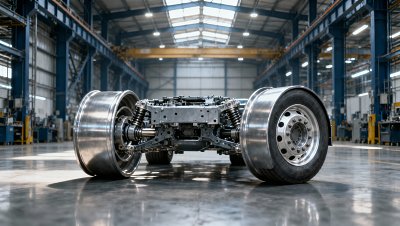
Truck aluminum parts are widely used because weight reduction matters. In commercial transport, every kilogram saved can contribute to better fuel economy, higher legal payload, or improved vehicle efficiency. Depending on the application, aluminum may be used in wheels, fuel tanks, cross-members, body panels, trailer structures, battery boxes, and some cab or chassis-related components.
The value proposition usually comes from four areas:
- Lower vehicle weight: This supports better fuel efficiency and may increase cargo capacity.
- Corrosion resistance: Aluminum often performs well in wet or chemically exposed environments, reducing rust-related issues.
- Modern fleet positioning: Lightweight vehicles are attractive in markets emphasizing operating efficiency and emissions reduction.
- Potential lifecycle savings: When properly matched to the application, lower fuel use over time can offset the higher material cost.
For a semi trailer manufacturer or truck body supplier, aluminum can also improve product appeal in export markets where operators prioritize payload and long-distance efficiency. In sectors such as logistics transportation, refrigerated transport, and urban distribution, lightweight construction can be a strong selling point.
Where Repair Costs Start to Rise
The main concern is not that aluminum always fails more often. The issue is that when damage happens, the repair process may be more specialized, more time-consuming, and more expensive than for comparable steel parts.
Several factors drive this cost increase:
- Specialized repair methods: Aluminum often requires different welding, shaping, and handling procedures than steel.
- Dedicated tools and workspaces: Many repair shops need separate tools or cleaner environments to avoid contamination and poor repair quality.
- Higher labor skill requirements: Not every workshop is equipped to repair aluminum truck structures or panels correctly.
- Part replacement instead of repair: In some cases, damaged aluminum components are more likely to be replaced than repaired, especially in remote markets.
- Longer downtime: If a qualified repair facility is not nearby, vehicles may sit longer waiting for parts or specialized service.
For fleet managers and distributors, this is where the economics become more complex. A truck that saves fuel every day but spends more time off the road after an accident may not deliver the expected lifecycle advantage.
Not All Aluminum Parts Carry the Same Risk
One of the most important buying mistakes is treating all aluminum use as equal. In reality, repair risk varies significantly by component type and operating environment.
Lower-risk applications often include parts where the benefits of corrosion resistance and weight savings are strong, while structural damage risk is relatively manageable. Examples may include fuel tanks, wheels, toolboxes, battery enclosures, and selected trailer body elements.
Higher-risk applications tend to be those exposed to repeated impact, twisting loads, harsh jobsite contact, or difficult field repair conditions. Depending on design and usage, these can include structural members, body sections in construction service, and areas likely to be damaged in loading operations or minor collisions.
Buyers should therefore ask not “Is aluminum good or bad?” but “Which parts should be aluminum in this operating context?” That question leads to a more profitable sourcing strategy.
How Duty Cycle Changes the Aluminum vs. Steel Decision
The best material choice depends heavily on where and how the vehicle works.
Long-haul transport: Aluminum usually has a stronger business case here. Vehicles spend more time at steady highway speeds, fuel use matters greatly, and every payload improvement can support revenue. If the fleet has access to qualified service, aluminum parts may offer solid lifecycle value.
Urban and regional delivery: The value can still be positive, but buyers should consider stop-and-go driving, frequent loading impacts, and accident exposure. Repair frequency may be higher even if fuel benefits remain meaningful.
Construction and infrastructure projects: These applications often need extra caution. Rough surfaces, overloaded conditions, vibration, and jobsite contact can increase damage risk. In these cases, durability, field repair convenience, and part availability may outweigh pure weight reduction.
Mining and heavy industrial transport: Material selection should be highly conservative. Extreme duty environments often reward robust designs and repair practicality over maximum lightweighting.
For business evaluators, this means aluminum works best where operational efficiency gains are repetitive and predictable, and less well where unpredictable damage and harsh conditions dominate the cost structure.
What Procurement Teams Should Check Before Buying
If you are sourcing from a truck export supplier, trailer manufacturer, or component producer, there are several practical questions that matter more than marketing claims.
- Which exact parts are aluminum? Ask for a component-level breakdown rather than a broad lightweight claim.
- What are the expected weight savings? Request measurable figures by model or configuration.
- How does this affect payload and fuel use? Look for realistic operating estimates, not ideal test scenarios.
- What is the repair recommendation? Ask whether damaged parts are typically repaired or replaced.
- Is there repair support in the destination market? This is critical for truck export and global distribution.
- What spare parts are stocked? Supply chain delays can turn minor damage into major downtime costs.
- What training or technical documentation is available? Aftersales support can determine whether aluminum remains an asset or becomes a liability.
For distributors and agents, these questions also affect channel confidence. Selling a lightweight truck is easier than supporting it after months of real-world use. Strong technical backing from the supplier reduces that risk.
Why Repair Economics Matter More Than Material Price Alone
Many buyers compare aluminum and steel mainly by initial product cost. That is not enough. The better approach is to calculate total commercial impact across the full operating cycle.
Important cost categories include:
- Initial purchase premium
- Fuel savings over expected mileage
- Payload-related revenue gains
- Expected accident or damage frequency
- Average repair cost per incident
- Vehicle downtime cost
- Local parts availability
- Resale value and market acceptance
In some fleets, a higher repair bill is still acceptable because the vehicle generates more revenue overall. In others, especially where margins are tight and service access is poor, the higher repair burden can erase the benefit. This is why lifecycle cost analysis matters more than simple procurement price comparison.
How This Affects Related Systems and Component Sourcing
Lightweight design decisions do not exist in isolation. Buyers evaluating truck hydraulic systems, truck pump applications, trailer assemblies, or chassis-related components should consider whether the surrounding structure changes maintenance requirements or operating stress.
For example, when vehicle architecture shifts toward lighter materials, integration quality becomes more important. Mounting points, frame interfaces, vibration behavior, and load distribution should all be reviewed carefully. This is especially relevant when sourcing across borders from multiple suppliers, where component compatibility and aftersales responsibility may not be perfectly aligned.
For B2B buyers using a global heavy truck industry platform, this creates a practical advantage: supplier comparison should include not just product specifications, but technical service depth, export documentation quality, and evidence of aftersales capability in your target region.
When Aluminum Is Usually Worth It
Aluminum truck parts tend to make commercial sense when most of the following conditions are true:
- The truck operates in long-distance or high-utilization service
- Fuel cost is a major profitability factor
- Payload gains can be monetized
- Damage frequency is relatively controlled
- Repair infrastructure is available and qualified
- The supplier can provide stable spare parts and technical support
Under these conditions, aluminum is not just a lightweight material. It becomes a business tool for improving operating efficiency and fleet competitiveness.
When Buyers Should Be More Cautious
Aluminum deserves closer scrutiny when:
- Vehicles work in severe construction, mining, or off-road environments
- Field repairs are common and need to be simple
- Local workshops lack aluminum repair capability
- Parts supply lead times are uncertain
- Minor collision or handling damage is frequent
- Downtime carries a very high commercial penalty
In these cases, partial lightweighting or mixed-material design may be the smarter route. Buyers do not always need a fully aluminum-heavy configuration to achieve useful weight reduction. Strategic material selection often produces a better balance between efficiency and serviceability.
Final Takeaway for Buyers, Distributors, and Market Evaluators
Truck aluminum parts can absolutely lower weight and improve commercial performance, but they can also raise repair costs, extend downtime, and increase aftersales complexity. The right decision depends less on the material itself and more on application fit, service network strength, and total cost logic.
For procurement teams, distributors, and business evaluators, the safest approach is to assess aluminum at the component level, not as a blanket advantage. Ask where the weight savings create measurable value. Ask where repair difficulty could create operational risk. And when comparing suppliers, prioritize those that can support the full lifecycle of the product, from specification and export to spare parts and technical service.
In short, aluminum is often a smart choice in commercial vehicles, but only when lightweight gains are matched by realistic repair planning. The best sourcing decision is not the lightest truck on paper. It is the truck that delivers the strongest long-term business return in the real market where it will actually operate.
Trending News
- Construction Machinery Cost Control: 7 Hidden Expenses in Project Planning
- Logging Truck Price Guide: Spec Choices That Change Total Ownership Cost
- Crane Truck Cost Breakdown: Chassis, Crane Unit, and Compliance Fees
- How to Vet a Logging Truck Distributor Before Entering a New Market
- Logging Truck Supplier Selection: Load Capacity, Terrain Fit, and Downtime
Tag
Recommended News
 Truck Parts IndustryChoosing a Truck Parts Exporter: Lead Time, Compliance, and Quality RisksTruck parts exporter selection affects uptime, compliance, and cost. Learn how to compare lead time, certification, and quality control to avoid delays, claims, and fleet-wide failures.
 Truck Parts IndustryGermany Heavy Truck Parts Manufacturers: Quality and Supply RisksHeavy truck parts manufacturer in Germany selection guide: compare quality systems, traceability, testing, and supply risks to secure reliable truck parts sourcing.
 Truck Parts IndustryIrkeshtam Port’s 24-Hour Freight Clearance Boosts Exports to KyrgyzstanIrkeshtam Port’s 24-hour freight clearance slashes heavy-truck component clearance to <15 mins—boosting road transport equipment exports to Kyrgyzstan.
 Truck Parts IndustryHeavy Truck Parts for Construction: Which Components Fail Most OftenHeavy truck parts manufacturer for construction insights: discover which brake, suspension, filter, and drivetrain components fail most often—and how smarter sourcing cuts downtime and repair costs.
 Truck Parts IndustryBulk Order Discounts on Truck Spare Parts: When Savings Become RiskTruck spare parts supplier with bulk order discounts: learn when lower prices increase downtime, quality, and inventory risk—and how to source smarter for reliable fleet performance.
 Truck Parts IndustryTruck Parts Wholesale: How to Balance Price, Quality, and Stock RiskTruck parts wholesale success depends on balancing price, quality, and inventory risk. Learn practical sourcing checks to protect margins, reduce dead stock, and choose reliable suppliers.
 Truck Parts IndustryHow OEM Services Reduce Downtime in Heavy Truck Parts SupplyHeavy truck parts manufacturer with OEM services helps cut downtime with accurate fit, faster lead times, and stable supply—discover smarter sourcing for fleet maintenance.
 Truck Parts IndustryErenhot-Mongolia 24-Hour Freight Clearance Boosts Trucking EfficiencyErenhot-Mongolia 24-hour freight clearance slashes truck clearance time by 40%—boosting efficiency for auto parts, cold-chain & cross-border trucking.
 Truck Parts IndustryKazakhstan Extends Zero-Tariff for Truck Parts on China-Europe Rail Routes to 2027Kazakhstan extends zero-tariff for truck parts—including ADAS controllers, ECUs & T-BOX units—on China-Europe rail routes until 2027. Boost your logistics & export strategy now!
 Truck Parts IndustryHow Low-Maintenance Truck Spare Parts Reduce Downtime Over TimeTruck spare parts supplier with low maintenance solutions help fleets cut downtime, reduce repair frequency, and improve workshop efficiency. Discover how durable parts boost long-term truck performance.
![]() Truck Parts IndustryHeavy Truck Parts Manufacturer for Construction: How to Judge Product ConsistencyHeavy truck parts manufacturer for construction selection starts with consistency. Learn how to judge batch stability, traceability, and quality control to reduce risk and improve fleet safety.
Truck Parts IndustryHeavy Truck Parts Manufacturer for Construction: How to Judge Product ConsistencyHeavy truck parts manufacturer for construction selection starts with consistency. Learn how to judge batch stability, traceability, and quality control to reduce risk and improve fleet safety.![]() Truck Parts IndustryTruck Parts Price in 2026: What Is Driving Replacement Cost HigherTruck parts price in 2026 is rising fast. Discover the key cost drivers, category risks, and sourcing tips buyers need to reduce replacement costs and make smarter purchasing decisions.
Truck Parts IndustryTruck Parts Price in 2026: What Is Driving Replacement Cost HigherTruck parts price in 2026 is rising fast. Discover the key cost drivers, category risks, and sourcing tips buyers need to reduce replacement costs and make smarter purchasing decisions. Truck Parts IndustryHow to Compare Truck Tipper Distributors by Parts Response TimeTruck tipper distributor comparison starts with parts response time. Learn how to assess stock speed, technical support, and supply reliability to cut downtime and choose the right partner.
 Truck Parts IndustryCommercial Vehicle Parts for Cold Storage: What Improves ReliabilityCommercial vehicle parts for cold storage that boost uptime, temperature stability, and fleet reliability. Learn which components reduce breakdowns and protect cargo in demanding cold-chain transport.
 Truck Parts IndustryTruck Parts Wholesale: How to Balance Price, Lead Time, and QualityTruck parts wholesale guide for distributors: learn how to balance price, lead time, and quality to reduce risk, protect margins, and choose suppliers with confidence.
 Truck Parts IndustryChoosing a Heavy Truck Parts Manufacturer in Germany for Stable SupplyHeavy truck parts manufacturer in Germany: learn how to compare suppliers by scenario, secure stable supply, reduce sourcing risk, and improve fleet uptime with smarter procurement decisions.
 Truck Parts IndustryAre Low-Maintenance Truck Spare Parts Suppliers Worth Switching ToIs a truck spare parts supplier with low maintenance worth the switch? Learn how better fitment, fewer failures, and reliable delivery can cut downtime and lower fleet service costs.
 Truck Parts IndustryTruck Parts Wholesale: How to Balance Price, Stock, and ReliabilityTruck parts wholesale success depends on balancing price, stock, and reliability. Learn how to compare suppliers, reduce risk, protect margins, and make smarter buying decisions.
 Truck Parts IndustryNew Railway Cargo Transport Rules Take Effect May 1, 2026New Railway Cargo Transport Rules (2026): 72-hour certified load-securing plans required for oversized rail freight—key for wind, tunneling & crane transport equipment.
 Truck Parts IndustryYerkeshkan Port 24-Hour Freight: +87.4% Truck Parts Export to KyrgyzstanYerkeshkan Port 24-hour freight boosts truck parts exports to Kyrgyzstan by +87.4% — optimize JIT logistics, customs compliance & aftermarket supply chains now.
 Truck Parts IndustryBulk Order Discounts on Truck Spare Parts: Savings vs Supply RiskTruck spare parts supplier with bulk order discounts: learn how to cut procurement costs without raising supply risk, downtime, or inventory pressure in road transport operations.
 Truck Parts IndustryHow to Assess a Heavy Truck Parts Manufacturer for Construction FleetsHeavy truck parts manufacturer for construction: learn how to assess quality, fitment, supply speed, and technical support to reduce downtime and choose a supplier your fleet can trust.
 Truck Parts IndustryANVISA Brazil: Rubber Seals for Trucks Require REACH SVHC 233 ReportRubber seals for trucks entering Brazil must now comply with ANVISA’s REACH SVHC 233 reporting requirement — learn how to avoid customs delays and ensure seamless import.
 Truck Parts IndustryRCEP Upgrade Takes Effect: Lower Tariffs on China-Made Truck PartsRCEP Upgrade lowers tariffs on China-made truck parts—steering knuckles, axle housings & wheel hubs—for Philippines, Cambodia, Myanmar. Save costs now.
![]() Truck Parts IndustryKazakhstan Extends Zero-Tariff for China-Made Truck Parts to 2027Kazakhstan extends zero-tariff for China-made truck parts until 2027—boosting cost efficiency & clearance speed for brake discs, air suspension, LED headlights.
Truck Parts IndustryKazakhstan Extends Zero-Tariff for China-Made Truck Parts to 2027Kazakhstan extends zero-tariff for China-made truck parts until 2027—boosting cost efficiency & clearance speed for brake discs, air suspension, LED headlights.