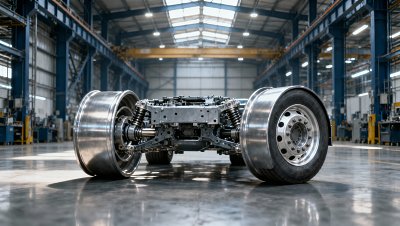
What Shortens Truck Piston Life in Heavy-Duty Operating Cycles
In heavy-duty transport, harsh loads, heat, poor lubrication, and sealing failure can greatly reduce truck piston life and overall engine reliability. For buyers, fleet evaluators, and global truck export professionals, understanding how related parts such as truck gasket, truck pump, and truck hydraulic systems affect durability is essential when sourcing components from a semi trailer manufacturer or wider commercial vehicle supply chain.
Why truck piston life becomes shorter in heavy-duty operating cycles
Truck piston life is rarely reduced by one single failure. In most heavy-duty engines, damage develops through a chain reaction involving combustion heat, oil quality, ring sealing, cooling efficiency, dust ingress, and load profile. Long-haul logistics, mining haulage, municipal engineering, and infrastructure transport all create operating cycles with more sustained stress than standard road use.
For procurement teams and distributors, the practical issue is not only whether a piston fits the engine model, but whether the full component system can survive continuous high-load operation. A piston running 8–12 hours per day under high torque behaves very differently from one used in lighter regional transport. The difference shows up in crown temperature, skirt wear, ring groove deformation, and oil consumption trends.
Many buyers focus on the piston body alone, but service life is closely linked to supporting parts. A truck gasket that cannot maintain sealing under thermal cycling, a truck pump with unstable lubrication delivery, or a cooling-related hydraulic support issue can accelerate piston distress within a much shorter maintenance interval. In cross-border sourcing, this is why system matching matters as much as unit price.
From a B2B evaluation perspective, shortened piston life usually appears in 4 common forms: abnormal carbon buildup, scuffing, ring seizure, and thermal cracking. Each failure mode points to a different root cause. Good sourcing decisions therefore require more than catalog comparison; they require understanding operating scenario, maintenance discipline, and upstream component consistency.
- High combustion temperature over repeated duty cycles can push piston crown and ring land areas beyond stable thermal limits.
- Lubrication breakdown during cold start, overload, or long uphill service increases metal-to-metal friction.
- Poor sealing from gasket or ring issues allows blow-by gases, raising heat and contamination inside the cylinder.
- Dust, fuel dilution, and irregular maintenance shorten wear life even when the piston material itself is acceptable.
The operating conditions that create the highest piston risk
Not every truck duty cycle puts equal stress on pistons. Vehicles used in quarry work, construction material transport, and overloaded regional delivery often face repeated acceleration under heavy payload, low-speed high-torque climbing, and limited cooling recovery time. These conditions create more harmful thermal cycling than smoother highway operation at stable RPM.
A useful purchasing approach is to divide risk into 3 categories: thermal load, contamination load, and lubrication load. If a fleet operates in dusty environments and engines idle frequently before carrying heavy loads, piston skirt wear and ring sticking become more likely. If routes involve mountains, stop-start hauling, or temperatures above typical ambient conditions, crown heat resistance and oil control must be assessed more carefully.
What buyers should ask suppliers first
Before comparing quotations, buyers should ask for piston material grade, ring groove treatment, compatible lubrication recommendations, and matching requirements for gasket, pump, and filtration systems. These 4 checks often reveal whether a supplier understands heavy-duty operating cycles or only offers generic aftermarket matching.
Which technical factors most often damage pistons faster
In heavy truck engines, piston failure typically develops when heat transfer, lubrication, and sealing no longer remain balanced. When a truck works under continuous cargo loads, even small deviations in oil pressure, injector condition, cooling passage cleanliness, or ring end gap can multiply wear rates over 20,000–50,000 km of severe service. The buyer’s challenge is to identify which technical factor is primary in a given application.
Heat is the first major factor. Excessive exhaust temperature, poor combustion control, and inadequate cooling can overheat piston crowns and top ring grooves. Once heat rises beyond stable design expectations, the piston may lose dimensional integrity. That leads to ring sticking, blow-by, and carbon hardening. In export procurement, engines used in hot climates or under overloaded conditions need stricter thermal margin review.
Lubrication is the second major factor. A truck pump that cannot maintain proper flow at startup or under load causes boundary lubrication instead of stable oil film separation. When oil viscosity is wrong for ambient conditions, or change intervals are extended too far, piston skirt scoring and ring wear increase. In many field cases, premature piston damage is linked to lubrication system weakness rather than piston metallurgy alone.
Sealing is the third major factor. If a truck gasket loses compression sealing under repeated thermal cycles, combustion gas leakage and coolant or oil cross-contamination can occur. That affects cylinder temperature distribution and accelerates piston distress. For procurement professionals, this confirms that piston life assessment should include gasket quality, cylinder liner match, and full engine sealing design.
The table below helps compare the most common piston life reduction factors in commercial vehicle service and what each one means during supplier evaluation.
This comparison shows why a low-cost piston can become expensive in real service if surrounding systems are not aligned. For fleets, dealers, and overseas buyers, the most economical choice is often the component package that reduces repeat failures over 1–3 maintenance cycles, not the quotation with the lowest initial line item.
Why related components change piston durability
Piston durability is strongly influenced by adjacent components. A weak truck pump can lower lubrication stability. A low-grade truck gasket can allow pressure leakage. In equipment using truck hydraulic systems to support cooling or auxiliary functions, heat management can indirectly affect engine stress. These relationships matter in integrated heavy-duty vehicle sourcing, especially when parts come from multiple factories.
This is particularly relevant when buyers work with a semi trailer manufacturer or broader commercial vehicle supplier that also offers spare parts. Consolidated sourcing can improve compatibility, but only if technical verification is performed. Otherwise, mixed-spec supply may look efficient on paper while increasing field failure rates after 6–12 months of operation.
How should buyers evaluate pistons for different road transport applications
Piston selection should start with duty cycle, not only engine reference number. A heavy truck serving cross-border freight on stable highways has different stress patterns from a dump truck carrying stone in short repetitive loops. Procurement personnel should match piston design, ring package, oil recommendation, and supporting parts to the actual operating profile across at least 3 variables: payload intensity, route severity, and maintenance frequency.
In practical B2B sourcing, buyers often compare quotations from OE-linked suppliers, established aftermarket manufacturers, and trading companies. The key is to move beyond simple fitment claims. Ask whether the piston is intended for standard transport, severe-duty cycles, or mixed road and site operation. Also confirm expected maintenance intervals, oil grade range, and whether there are known restrictions in high-temperature or dusty conditions.
Distributors and agents should also consider inventory strategy. For fast-moving commercial vehicle markets, holding one generic piston for multiple applications may reduce stock complexity, but it can also create higher warranty risk. A better method is to classify demand into light regional, heavy logistics, and severe-duty segments, then stock parts accordingly over 2–3 turnover cycles.
The table below provides a selection framework that buyers can use when comparing piston suitability across common road transport and heavy equipment scenarios.
This selection table helps buyers reduce mismatch risk. The most suitable piston is not always the highest-grade option; it is the one correctly aligned with route severity, service intervals, and the quality of associated truck gasket, truck pump, and filtration systems. That alignment is especially important in export markets where replacement speed and technical support may vary.
A 5-point procurement checklist for truck piston sourcing
- Confirm exact engine platform, power range, and expected load pattern before requesting a quotation.
- Check whether the piston is intended for standard road use or severe-duty service with frequent overload or dust exposure.
- Review matching requirements for rings, liners, truck gasket, lubrication parts, and cooling-related components.
- Ask for normal lead time, which in many international spare parts programs may range from 2–6 weeks depending on stock and customization.
- Evaluate packaging, traceability, and after-sales handling for warranty claims across distributor or fleet channels.
When lower price creates higher lifecycle cost
A cheaper piston may look attractive for tender-based purchasing, but if it increases failure frequency, downtime cost quickly rises. In heavy truck operations, one unscheduled engine repair can affect delivery schedules, labor allocation, and spare vehicle planning. For commercial buyers, lifecycle thinking is often more important than initial discount level.
Common mistakes, maintenance gaps, and FAQ for procurement teams
Many piston failures are blamed on manufacturing quality even when the actual trigger is application mismatch or maintenance error. This is common in decentralized fleets and international spare parts distribution, where installation quality, oil choice, and operating conditions vary widely. A structured FAQ helps buyers and evaluators identify avoidable risks before placing orders.
A useful rule is to review the first 3 layers of failure exposure: product quality, system compatibility, and operating discipline. If all three are not checked, piston life estimates remain unreliable. This matters for fleets buying in batches, agents supplying multiple countries, and business teams comparing suppliers across different price bands.
Below are common procurement and technical questions that frequently appear in heavy truck spare parts sourcing.
How do I know whether piston wear is caused by the part or by the system?
Look at the wear pattern. Uniform abrasive wear often suggests contamination or filtration issues. Localized scuffing may indicate lubrication failure. Cracks near the crown or ring land often point to thermal overload or combustion-related stress. If wear appears together with gasket leakage, coolant loss, or unstable oil pressure, the root cause is usually system-related rather than the piston alone.
What supporting parts should be checked during piston replacement?
At minimum, check 5 items: piston rings, cylinder liner condition, truck gasket integrity, oil pump or truck pump performance, and air/oil filtration status. In severe-duty fleets, injector condition and cooling circuit cleanliness should also be reviewed. Replacing only the piston while leaving degraded support parts in service often shortens the next maintenance cycle.
What is a realistic lead time for heavy truck piston supply?
For standard aftermarket references already in stock, dispatch may occur within 7–15 days. For larger orders, mixed kits, or special export packing, lead time often falls in the 2–4 week range. If buyers require coordinated supply with liners, gaskets, pump parts, and other engine components, planning extra verification time is advisable.
Is a piston from a broader commercial vehicle supplier suitable for severe-duty fleets?
It can be, but suitability depends on technical matching rather than supplier category. Some buyers source engine parts from a semi trailer manufacturer or full-line commercial vehicle supplier for convenience. That approach works well when the supplier can confirm application data, compatibility documents, and coordinated parts sourcing. If not, convenience may come at the cost of shorter service life and more fragmented warranty handling.
Why choose us for heavy truck parts sourcing and technical matching
For global buyers in the commercial vehicle and heavy equipment sector, the real challenge is not finding one piston listing. It is identifying reliable suppliers, comparing compatible components, and reducing sourcing risk across the heavy truck supply chain. The Global Heavy Truck Industry Platform supports this process by connecting manufacturers, suppliers, distributors, and buyers through a specialized international B2B marketplace focused on road transport equipment and related spare parts.
Because the platform covers Truck Chassis & Cab, Complete Trucks, Light Trucks, Construction Machinery, Trailers & Semi-Trailers, and Spare Parts, buyers can evaluate piston sourcing in a broader technical context. This is valuable when the issue is not just the piston itself, but also truck gasket selection, truck pump matching, truck hydraulic systems support, and supply coordination across multiple vehicle categories and use cases.
For procurement managers, business evaluators, dealers, and agents, the platform helps simplify 4 critical steps: supplier discovery, product comparison, partner screening, and inquiry communication. Instead of working through fragmented channels, buyers can compare technical offerings, review market information, and short-list suppliers for quotation and specification confirmation with greater efficiency and transparency.
If you are evaluating truck piston durability for heavy-duty operating cycles, you can contact us to discuss practical sourcing points such as parameter confirmation, application-based product selection, normal delivery cycle, custom spare parts packages, certification-related requests, sample support, and quotation coordination. This is especially useful for fleet replenishment, distributor stocking plans, export programs, and mixed-category procurement linked to heavy trucks, trailers, and commercial vehicle components.
- Request support for matching pistons with rings, liners, truck gasket sets, and lubrication-related parts.
- Confirm whether your target application is standard transport, severe-duty haulage, or mixed road and site service.
- Discuss typical lead time, batch quantity planning, export packaging, and supplier comparison criteria.
- Ask for guidance on sourcing from integrated commercial vehicle supply channels, including semi trailer manufacturer networks and wider spare parts ecosystems.
When piston life, uptime, and procurement reliability all matter, a specialized industry platform can help you move faster from information research to supplier engagement. Reach out with your engine model, duty cycle description, quantity plan, and target market so the sourcing process can begin with clearer technical alignment.
Trending News
- Truck Tipper Exporter Compliance Risks in Cross-Border Deliveries
- Truck Trailer Distributor Trends Shaping Regional Market Growth in 2026
- Crane Truck for Sale: 7 Checks Before You Choose a Model
- How to Compare a Truck Trailer Supplier Beyond Unit Price
- Bulldozer for Construction: Key Specs That Affect Earthmoving Efficiency
Tag
Recommended News
 Truck Parts IndustryChoosing a Truck Parts Exporter: Lead Time, Compliance, and Quality RisksTruck parts exporter selection affects uptime, compliance, and cost. Learn how to compare lead time, certification, and quality control to avoid delays, claims, and fleet-wide failures.
 Truck Parts IndustryGermany Heavy Truck Parts Manufacturers: Quality and Supply RisksHeavy truck parts manufacturer in Germany selection guide: compare quality systems, traceability, testing, and supply risks to secure reliable truck parts sourcing.
 Truck Parts IndustryIrkeshtam Port’s 24-Hour Freight Clearance Boosts Exports to KyrgyzstanIrkeshtam Port’s 24-hour freight clearance slashes heavy-truck component clearance to <15 mins—boosting road transport equipment exports to Kyrgyzstan.
 Truck Parts IndustryHeavy Truck Parts for Construction: Which Components Fail Most OftenHeavy truck parts manufacturer for construction insights: discover which brake, suspension, filter, and drivetrain components fail most often—and how smarter sourcing cuts downtime and repair costs.
 Truck Parts IndustryBulk Order Discounts on Truck Spare Parts: When Savings Become RiskTruck spare parts supplier with bulk order discounts: learn when lower prices increase downtime, quality, and inventory risk—and how to source smarter for reliable fleet performance.
 Truck Parts IndustryTruck Parts Wholesale: How to Balance Price, Quality, and Stock RiskTruck parts wholesale success depends on balancing price, quality, and inventory risk. Learn practical sourcing checks to protect margins, reduce dead stock, and choose reliable suppliers.
 Truck Parts IndustryHow OEM Services Reduce Downtime in Heavy Truck Parts SupplyHeavy truck parts manufacturer with OEM services helps cut downtime with accurate fit, faster lead times, and stable supply—discover smarter sourcing for fleet maintenance.
 Truck Parts IndustryErenhot-Mongolia 24-Hour Freight Clearance Boosts Trucking EfficiencyErenhot-Mongolia 24-hour freight clearance slashes truck clearance time by 40%—boosting efficiency for auto parts, cold-chain & cross-border trucking.
 Truck Parts IndustryKazakhstan Extends Zero-Tariff for Truck Parts on China-Europe Rail Routes to 2027Kazakhstan extends zero-tariff for truck parts—including ADAS controllers, ECUs & T-BOX units—on China-Europe rail routes until 2027. Boost your logistics & export strategy now!
 Truck Parts IndustryHow Low-Maintenance Truck Spare Parts Reduce Downtime Over TimeTruck spare parts supplier with low maintenance solutions help fleets cut downtime, reduce repair frequency, and improve workshop efficiency. Discover how durable parts boost long-term truck performance.
![]() Truck Parts IndustryHeavy Truck Parts Manufacturer for Construction: How to Judge Product ConsistencyHeavy truck parts manufacturer for construction selection starts with consistency. Learn how to judge batch stability, traceability, and quality control to reduce risk and improve fleet safety.
Truck Parts IndustryHeavy Truck Parts Manufacturer for Construction: How to Judge Product ConsistencyHeavy truck parts manufacturer for construction selection starts with consistency. Learn how to judge batch stability, traceability, and quality control to reduce risk and improve fleet safety.![]() Truck Parts IndustryTruck Parts Price in 2026: What Is Driving Replacement Cost HigherTruck parts price in 2026 is rising fast. Discover the key cost drivers, category risks, and sourcing tips buyers need to reduce replacement costs and make smarter purchasing decisions.
Truck Parts IndustryTruck Parts Price in 2026: What Is Driving Replacement Cost HigherTruck parts price in 2026 is rising fast. Discover the key cost drivers, category risks, and sourcing tips buyers need to reduce replacement costs and make smarter purchasing decisions. Truck Parts IndustryHow to Compare Truck Tipper Distributors by Parts Response TimeTruck tipper distributor comparison starts with parts response time. Learn how to assess stock speed, technical support, and supply reliability to cut downtime and choose the right partner.
 Truck Parts IndustryCommercial Vehicle Parts for Cold Storage: What Improves ReliabilityCommercial vehicle parts for cold storage that boost uptime, temperature stability, and fleet reliability. Learn which components reduce breakdowns and protect cargo in demanding cold-chain transport.
 Truck Parts IndustryTruck Parts Wholesale: How to Balance Price, Lead Time, and QualityTruck parts wholesale guide for distributors: learn how to balance price, lead time, and quality to reduce risk, protect margins, and choose suppliers with confidence.
 Truck Parts IndustryChoosing a Heavy Truck Parts Manufacturer in Germany for Stable SupplyHeavy truck parts manufacturer in Germany: learn how to compare suppliers by scenario, secure stable supply, reduce sourcing risk, and improve fleet uptime with smarter procurement decisions.
 Truck Parts IndustryAre Low-Maintenance Truck Spare Parts Suppliers Worth Switching ToIs a truck spare parts supplier with low maintenance worth the switch? Learn how better fitment, fewer failures, and reliable delivery can cut downtime and lower fleet service costs.
 Truck Parts IndustryTruck Parts Wholesale: How to Balance Price, Stock, and ReliabilityTruck parts wholesale success depends on balancing price, stock, and reliability. Learn how to compare suppliers, reduce risk, protect margins, and make smarter buying decisions.
 Truck Parts IndustryNew Railway Cargo Transport Rules Take Effect May 1, 2026New Railway Cargo Transport Rules (2026): 72-hour certified load-securing plans required for oversized rail freight—key for wind, tunneling & crane transport equipment.
 Truck Parts IndustryYerkeshkan Port 24-Hour Freight: +87.4% Truck Parts Export to KyrgyzstanYerkeshkan Port 24-hour freight boosts truck parts exports to Kyrgyzstan by +87.4% — optimize JIT logistics, customs compliance & aftermarket supply chains now.
 Truck Parts IndustryBulk Order Discounts on Truck Spare Parts: Savings vs Supply RiskTruck spare parts supplier with bulk order discounts: learn how to cut procurement costs without raising supply risk, downtime, or inventory pressure in road transport operations.
 Truck Parts IndustryHow to Assess a Heavy Truck Parts Manufacturer for Construction FleetsHeavy truck parts manufacturer for construction: learn how to assess quality, fitment, supply speed, and technical support to reduce downtime and choose a supplier your fleet can trust.
 Truck Parts IndustryANVISA Brazil: Rubber Seals for Trucks Require REACH SVHC 233 ReportRubber seals for trucks entering Brazil must now comply with ANVISA’s REACH SVHC 233 reporting requirement — learn how to avoid customs delays and ensure seamless import.
 Truck Parts IndustryRCEP Upgrade Takes Effect: Lower Tariffs on China-Made Truck PartsRCEP Upgrade lowers tariffs on China-made truck parts—steering knuckles, axle housings & wheel hubs—for Philippines, Cambodia, Myanmar. Save costs now.
![]() Truck Parts IndustryKazakhstan Extends Zero-Tariff for China-Made Truck Parts to 2027Kazakhstan extends zero-tariff for China-made truck parts until 2027—boosting cost efficiency & clearance speed for brake discs, air suspension, LED headlights.
Truck Parts IndustryKazakhstan Extends Zero-Tariff for China-Made Truck Parts to 2027Kazakhstan extends zero-tariff for China-made truck parts until 2027—boosting cost efficiency & clearance speed for brake discs, air suspension, LED headlights.