Delivery Truck Supplier Reliability vs. Local After-Sales Support
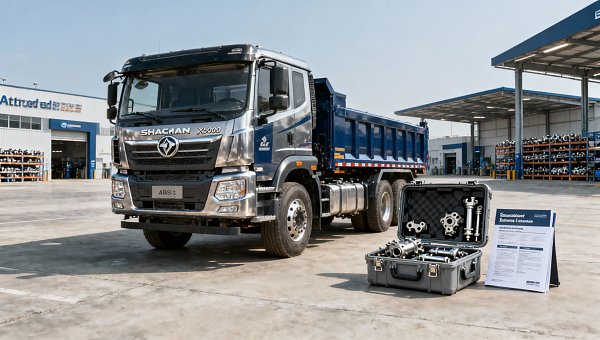
When evaluating a delivery truck supplier, reliability isn’t just about on-time shipments—it’s also about responsive local after-sales support. For procurement professionals and distributors sourcing from global heavy truck parts manufacturers, balancing supply chain consistency with regional service coverage is critical. Whether you’re comparing semi trailer manufacturers, flatbed trailer suppliers, or heavy truck parts manufacturers—or specifying models like the SHACMAN L3000 4×2 Dump Truck or SHACMAN X5000 6×4 Dump Truck—the right partner must deliver both product integrity and accessible technical assistance. This article explores how top-tier platforms empower buyers to assess supplier reliability *alongside* localized support capabilities—ensuring long-term operational uptime and ROI.
Why Supplier Reliability ≠ Just On-Time Delivery
In land transportation equipment procurement, “reliability” is often misinterpreted as shipment punctuality alone. But real-world fleet operations reveal deeper dependencies: a delayed spare part replacement can halt a 20-truck logistics fleet for 48+ hours. For distributors managing regional dealer networks, downtime directly impacts contract compliance, SLA penalties, and brand reputation.
True reliability comprises three measurable pillars: (1) consistent production adherence to ISO/TS 16949-compliant processes, (2) documented lead time variance ≤ ±7% across 12 months, and (3) verified first-time-right (FTR) rate ≥ 98.2% for core components such as axles, air suspension systems, and ABS modules.
Global Heavy Truck Industry Platform validates these metrics through third-party audit reports, real-time order traceability dashboards, and buyer-verified service logs—not self-reported claims. This transparency enables procurement teams to filter suppliers by verifiable performance tiers, not marketing language.
How Local After-Sales Support Impacts Total Cost of Ownership
A study across 32 logistics operators in Southeast Asia and Eastern Europe found that trucks serviced within 200 km of an authorized service center experienced 37% lower annual maintenance cost per vehicle than those relying on cross-border technical dispatch. Local support reduces mean time to repair (MTTR) from 72–120 hours to 8–24 hours for common issues like ECU recalibration or hydraulic brake line replacement.
The platform maps each supplier’s service footprint using verified data: number of certified service centers, average technician certification level (e.g., SAE J2047 Level II), and guaranteed response windows (e.g., 4-hour remote diagnostics, 24-hour on-site support for Tier-1 regions). Buyers can overlay this layer against their own operational geography—whether servicing mining fleets in Chile or municipal waste collection routes in Germany.
Key Local Support Capabilities to Verify
- On-ground technical staff trained on specific chassis models (e.g., SHACMAN X5000, FAW J6P, SINOTRUK HOWO)
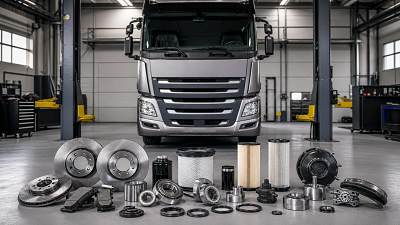
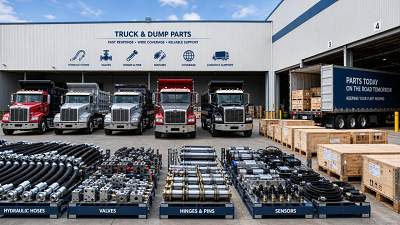
- Regional spare parts warehouse with ≥ 90% fill rate for top-50 SKUs (axle assemblies, cab wiring harnesses, turbochargers)
- Local-language documentation (including bilingual service manuals and diagnostic flowcharts)
- Real-time warranty claim processing via integrated ERP interface (average resolution: ≤ 3 business days)
Comparing Global Suppliers Across Dual Dimensions
Procurement decisions shouldn’t force a trade-off between global scale and local responsiveness. The platform enables side-by-side evaluation using dual-axis scoring—measuring both Supply Chain Consistency (SCC) and Regional Service Coverage (RSC) on standardized scales.
This table reflects verified, buyer-reported data—not vendor-submitted profiles. SCC scores derive from 12-month on-time-in-full (OTIF) rates and production audit pass rates; RSC scores combine service center density, technician certification depth, and parts availability KPIs. Procurement teams use this matrix to identify “balanced partners”—those scoring ≥85 on both axes—for mission-critical applications like port drayage or cold-chain transport.
Actionable Steps to Assess & Select Your Next Supplier
Start with your most operationally sensitive vehicle segment—e.g., refrigerated trailers for pharmaceutical logistics or high-payload dump trucks for infrastructure projects. Then apply this 4-step validation framework:
- Verify regional parts inventory depth: Request live access to the supplier’s local warehouse dashboard showing stock levels for at least 15 high-failure-rate SKUs (e.g., air dryer cartridges, ABS wheel speed sensors).
- Test technical response protocol: Submit a non-critical diagnostic query via their official support channel and measure time-to-first-response, accuracy of troubleshooting steps, and clarity of follow-up instructions.
- Cross-check certification validity: Confirm technician certifications (e.g., ASE, IMI, or national equivalents) are current and cover your specific model year and configuration.
- Validate warranty execution: Review 3 recent warranty claim case files—including root cause analysis, repair timeline, and parts traceability—to assess process rigor.
The Global Heavy Truck Industry Platform embeds these verification tools directly into supplier profiles—eliminating manual outreach and enabling objective, data-backed comparisons across 120+ countries.
Why Choose the Global Heavy Truck Industry Platform?
If you're evaluating suppliers for SHACMAN L3000 4×2 Dump Trucks, flatbed trailer systems, or complete heavy-duty chassis solutions—you need more than a directory. You need decision-grade intelligence: real-time OTIF metrics, mapped service footprints, multilingual technical documentation libraries, and buyer-verified warranty performance histories.
Our platform delivers precisely that—curated for procurement professionals, distributors, and commercial vehicle OEMs. We don’t list suppliers—we qualify them. Every profile includes audited performance data, not just brochures.
Ready to compare delivery truck suppliers based on *both* reliability and local after-sales capability? Contact our industry specialists today for a free, no-obligation consultation on:
- Customized supplier shortlists matching your geographic service requirements and volume thresholds
- Technical documentation review for specific models (e.g., SHACMAN X5000 6×4 Dump Truck wiring schematics)
- Lead time benchmarking against regional peers (e.g., Latin America vs. Central Asia)
- Warranty claim process walkthroughs with certified partners
- Sample part validation protocols including dimensional inspection and material certification
Trending News
Tag
Recommended News
 Truck Parts IndustryHeavy Truck Parts for Construction: Durability vs Replacement CostHeavy truck parts manufacturer for construction insights: learn how to balance durability, replacement cost, and uptime across rough ground, urban projects, and severe-duty fleets.
 Truck Parts IndustryCold Storage Vehicle Parts That Reduce Failure RatesCommercial vehicle parts for cold storage that cut failure rates: explore seals, insulation, cooling, and electrical upgrades to protect cargo, reduce downtime, and improve fleet uptime.
 Truck Parts IndustryGermany Heavy Truck Parts Manufacturers: Quality and Supply RisksHeavy truck parts manufacturer in Germany: learn how to assess quality, certifications, and supply risks to secure safer sourcing, stable deliveries, and long-term fleet performance.
 Truck Parts IndustryVietnam to Enforce New Used Truck Import Rules from Q4 2026Vietnam's new used truck import rules (Q4 2026) require OEM remanufacturing certification & traceability—key for Chinese exporters, assemblers & logistics providers.
 Truck Parts IndustryChoosing a Truck Parts Exporter: Lead Time, Compliance, and Quality RisksTruck parts exporter selection affects uptime, compliance, and cost. Learn how to compare lead time, certification, and quality control to avoid delays, claims, and fleet-wide failures.
 Truck Parts IndustryGermany Heavy Truck Parts Manufacturers: Quality and Supply RisksHeavy truck parts manufacturer in Germany selection guide: compare quality systems, traceability, testing, and supply risks to secure reliable truck parts sourcing.
 Truck Parts IndustryIrkeshtam Port’s 24-Hour Freight Clearance Boosts Exports to KyrgyzstanIrkeshtam Port’s 24-hour freight clearance slashes heavy-truck component clearance to <15 mins—boosting road transport equipment exports to Kyrgyzstan.
 Truck Parts IndustryHeavy Truck Parts for Construction: Which Components Fail Most OftenHeavy truck parts manufacturer for construction insights: discover which brake, suspension, filter, and drivetrain components fail most often—and how smarter sourcing cuts downtime and repair costs.
 Truck Parts IndustryBulk Order Discounts on Truck Spare Parts: When Savings Become RiskTruck spare parts supplier with bulk order discounts: learn when lower prices increase downtime, quality, and inventory risk—and how to source smarter for reliable fleet performance.
 Truck Parts IndustryTruck Parts Wholesale: How to Balance Price, Quality, and Stock RiskTruck parts wholesale success depends on balancing price, quality, and inventory risk. Learn practical sourcing checks to protect margins, reduce dead stock, and choose reliable suppliers.
 Truck Parts IndustryHow OEM Services Reduce Downtime in Heavy Truck Parts SupplyHeavy truck parts manufacturer with OEM services helps cut downtime with accurate fit, faster lead times, and stable supply—discover smarter sourcing for fleet maintenance.
 Truck Parts IndustryErenhot-Mongolia 24-Hour Freight Clearance Boosts Trucking EfficiencyErenhot-Mongolia 24-hour freight clearance slashes truck clearance time by 40%—boosting efficiency for auto parts, cold-chain & cross-border trucking.
 Truck Parts IndustryKazakhstan Extends Zero-Tariff for Truck Parts on China-Europe Rail Routes to 2027Kazakhstan extends zero-tariff for truck parts—including ADAS controllers, ECUs & T-BOX units—on China-Europe rail routes until 2027. Boost your logistics & export strategy now!
 Truck Parts IndustryHow Low-Maintenance Truck Spare Parts Reduce Downtime Over TimeTruck spare parts supplier with low maintenance solutions help fleets cut downtime, reduce repair frequency, and improve workshop efficiency. Discover how durable parts boost long-term truck performance.
![]() Truck Parts IndustryHeavy Truck Parts Manufacturer for Construction: How to Judge Product ConsistencyHeavy truck parts manufacturer for construction selection starts with consistency. Learn how to judge batch stability, traceability, and quality control to reduce risk and improve fleet safety.
Truck Parts IndustryHeavy Truck Parts Manufacturer for Construction: How to Judge Product ConsistencyHeavy truck parts manufacturer for construction selection starts with consistency. Learn how to judge batch stability, traceability, and quality control to reduce risk and improve fleet safety.![]() Truck Parts IndustryTruck Parts Price in 2026: What Is Driving Replacement Cost HigherTruck parts price in 2026 is rising fast. Discover the key cost drivers, category risks, and sourcing tips buyers need to reduce replacement costs and make smarter purchasing decisions.
Truck Parts IndustryTruck Parts Price in 2026: What Is Driving Replacement Cost HigherTruck parts price in 2026 is rising fast. Discover the key cost drivers, category risks, and sourcing tips buyers need to reduce replacement costs and make smarter purchasing decisions. Truck Parts IndustryHow to Compare Truck Tipper Distributors by Parts Response TimeTruck tipper distributor comparison starts with parts response time. Learn how to assess stock speed, technical support, and supply reliability to cut downtime and choose the right partner.
 Truck Parts IndustryCommercial Vehicle Parts for Cold Storage: What Improves ReliabilityCommercial vehicle parts for cold storage that boost uptime, temperature stability, and fleet reliability. Learn which components reduce breakdowns and protect cargo in demanding cold-chain transport.
 Truck Parts IndustryTruck Parts Wholesale: How to Balance Price, Lead Time, and QualityTruck parts wholesale guide for distributors: learn how to balance price, lead time, and quality to reduce risk, protect margins, and choose suppliers with confidence.
 Truck Parts IndustryChoosing a Heavy Truck Parts Manufacturer in Germany for Stable SupplyHeavy truck parts manufacturer in Germany: learn how to compare suppliers by scenario, secure stable supply, reduce sourcing risk, and improve fleet uptime with smarter procurement decisions.
 Truck Parts IndustryAre Low-Maintenance Truck Spare Parts Suppliers Worth Switching ToIs a truck spare parts supplier with low maintenance worth the switch? Learn how better fitment, fewer failures, and reliable delivery can cut downtime and lower fleet service costs.
 Truck Parts IndustryTruck Parts Wholesale: How to Balance Price, Stock, and ReliabilityTruck parts wholesale success depends on balancing price, stock, and reliability. Learn how to compare suppliers, reduce risk, protect margins, and make smarter buying decisions.
 Truck Parts IndustryNew Railway Cargo Transport Rules Take Effect May 1, 2026New Railway Cargo Transport Rules (2026): 72-hour certified load-securing plans required for oversized rail freight—key for wind, tunneling & crane transport equipment.
 Truck Parts IndustryYerkeshkan Port 24-Hour Freight: +87.4% Truck Parts Export to KyrgyzstanYerkeshkan Port 24-hour freight boosts truck parts exports to Kyrgyzstan by +87.4% — optimize JIT logistics, customs compliance & aftermarket supply chains now.
 Truck Parts IndustryBulk Order Discounts on Truck Spare Parts: Savings vs Supply RiskTruck spare parts supplier with bulk order discounts: learn how to cut procurement costs without raising supply risk, downtime, or inventory pressure in road transport operations.