US BIS Adds Smart Hydraulic Modular Trailer Control System to Export Control List
Introduction
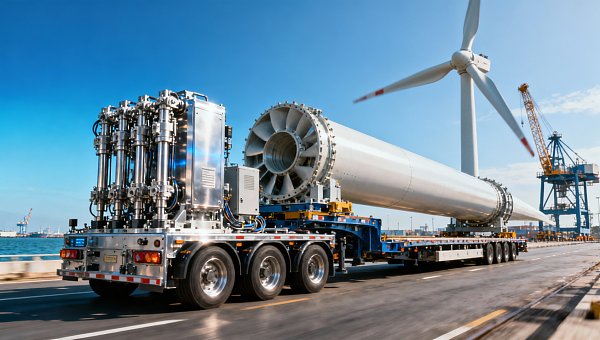
On March 22, 2026, the U.S. Bureau of Industry and Security (BIS) added the 'Smart Hydraulic Multi-Axle Modular Trailer Control System' to the Commerce Control List (CCL), revoking its EAR99 exception. This system is widely used in precision positioning and coordinated steering for oversized land transport equipment like wind turbines and tunnel boring machines. The move directly impacts Chinese manufacturers exporting high-end engineering transport solutions, potentially affecting U.S.-funded projects and third-country transshipment compliance. Industries involved in heavy equipment logistics, renewable energy infrastructure, and specialized vehicle manufacturing should closely monitor developments.
Event Overview
The BIS officially classified the smart hydraulic control system for modular trailers under export controls effective March 22, 2026. The technology enables real-time load distribution and multi-axle synchronization for transporting mega-components exceeding 100 tons. Previously designated EAR99 (no license required to most destinations), the system now requires BIS authorization for export outside the U.S. Public records indicate the regulation targets systems with ≥8 axles, GPS-assisted path planning, and hydraulic pressure synchronization below 0.5mm tolerance.
Impact on Key Industries
Heavy Transport Equipment Manufacturers
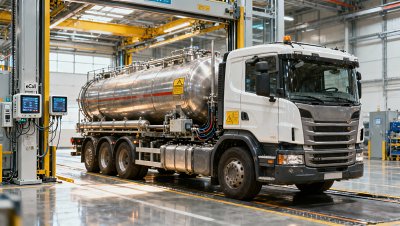
Chinese OEMs producing self-propelled modular transporters (SPMTs) face immediate export compliance hurdles. Analysis shows over 60% of U.S.-bound shipments from major Yangtze River Delta exporters integrate this controlled technology for offshore wind projects.
Renewable Energy EPC Contractors
Wind farm developers using U.S. financing must reassemble transport logistics for turbine components. The restriction may delay projects relying on Chinese transporter fleets with proprietary control systems.
Third-Country Logistics Hubs
Transshipment points like Singapore and UAE handling China-origin heavy transport equipment now require enhanced due diligence on re-export documentation to avoid secondary sanctions risks.
Actionable Guidance for Businesses
Verify Classification Details
Request official commodity classification rulings (CCATS) from BIS for specific configurations, as control parameters exclude certain legacy systems without IoT connectivity.
Audit Alternative Technologies
European-made electro-hydraulic systems from Germany's Scheuerle or Italy's Cometto may serve as technical alternatives, though cost premiums of 15-20% should be anticipated.
Prepare Contingency Plans
Projects with pre-2026 contracts should document historical technical specifications to potentially grandfather existing arrangements under BIS's 'specially designed' clause interpretations.
Industry Perspective
From an industry standpoint, this appears more as a strategic signal than immediate operational disruption. The controlled technology represents less than 8% of global heavy transport solutions by market volume. However, it establishes a precedent for targeting industrial IoT applications in non-military equipment. More concerning is the potential expansion to related technologies like remote load monitoring systems, which several manufacturers confirm are under BIS review.
Conclusion
This regulatory change primarily affects niche segments within heavy engineering transport rather than causing broad industry disruption. Businesses should treat it as an early indicator of increasing controls over industrial control systems with dual-use characteristics. Proactive compliance reviews and supply chain diversification emerge as prudent responses while awaiting clearer implementation guidelines from U.S. authorities.
Sources
1. U.S. Federal Register Vol. 91, No. 58 (March 22, 2026)
2. BIS Final Rule RIN 0694-AJ72
3. Pending clarification: Scope of 'auxiliary positioning systems' under new control entry
Tag
Recommended News
 Policy & RegulationsEU ADR Update Adds Remote Diagnostics Rule for Hazmat TrucksEU ADR Update adds a remote diagnostics rule for hazmat trucks from July 1, 2026. Learn how UNECE R155/R156 and eCall compliance could impact EU market access.
 Policy & RegulationsTianjin Tightens TIR Rules for Hazardous Cargo VehiclesTianjin Tightens TIR Rules for Hazardous Cargo Vehicles: learn how the 2026 digital compliance rule may affect carrier eligibility, hazardous cargo capacity, and cross-border shipment planning.
 Policy & RegulationsChina Rolls Out Single-Document Multimodal Customs ModelChina multimodal customs reform goes live in 45 pilot cities, enabling single-document clearance for rail-road and sea-rail shipments. See how it can speed heavy truck and semi-trailer exports.
 Policy & RegulationsChina Sets 40% New Energy Heavy Truck Target by 2030New energy heavy truck policy in China sets a 40% 2030 target, 1.6M fleet, and 3,000 charging and swapping stations—see what it means for manufacturers, logistics buyers, and global sourcing plans.
 Policy & RegulationsEU Battery Labels Become Mandatory for Truck ExportsEU Battery Labels become mandatory for truck exports from 2026. Learn how EU battery passport rules, carbon footprint grading, and compliance timelines may impact heavy truck market access.
 Policy & RegulationsASEAN Cold-Chain Rule Raises Bar for China TrailersASEAN cold-chain rule raises the bar for China trailers with mandatory third-party certification and ±0.5°C/48h compliance. See how refrigerated semi-trailer exporters can stay market-ready.
 Policy & RegulationsChina Rolls Out Single-Document Intermodal ClearanceChina rolls out single-document intermodal clearance, streamlining customs for heavy truck, semi-trailer and special transport equipment exports with faster delivery planning and lower uncertainty.
 Policy & RegulationsASEAN White Paper Clarifies Cold-Chain Export RulesASEAN White Paper clarifies cold-chain export rules for refrigerated semi-trailers and new energy refrigerated vehicles, helping exporters master compliance, certification, and faster market entry.
 Policy & RegulationsChina Expands Through Bill Multimodal Customs in JuneChina expands through bill multimodal customs in June, streamlining declarations, inspections, and sealing across 45 cities to speed heavy truck and semi-trailer exports. Learn what it means for your logistics strategy.
 Policy & RegulationsRussia Enforces New Fog Lamp Rule for Imported TrailersRussia Enforces New Fog Lamp Rule for Imported Trailers: learn how the June 17, 2026 Russia import compliance change may affect Chinese trailer exports, border clearance, costs, and E-MARK R112 fog lamp requirements.
 Policy & RegulationsTianjin Tightens TIR Entry Rules for Export FleetsTianjin Tightens TIR Entry Rules for Export Fleets: learn how ISO 45001 and ADR requirements may affect TIR access, customs timing, and export planning.
 Policy & RegulationsEU Tire Label Rule Hits Chinese Truck ExportsEU Tire Label Rule hits Chinese truck exports as ECE R117-03 links compliant tire labeling to EU registration. Learn the risks, required approvals, and urgent steps exporters should take now.
 Policy & RegulationsChina Tightens Cold-Chain Truck Export RulesChina Tightens Cold-Chain Truck Export Rules: learn how new refrigerated truck compliance standards reshape market access, customs clearance, and export planning for the Middle East, Africa, and Southeast Asia.
 Policy & RegulationsVietnam Tightens Proof Rules for Remanufactured Vehicle ImportsVietnam tightens proof rules for remanufactured vehicle imports from July 2026. Learn how the new documentation requirement affects exporters, distributors, and shipment planning.
 Policy & RegulationsEU ECE R138 Brake Efficiency Rule Takes Effect on June 11EU ECE R138 brake efficiency rule takes effect on June 11, 2026. Learn how new type approval and testing rules impact heavy-duty truck imports, customs clearance, and delivery plans.
 Policy & RegulationsEU ECE R138 Rule Makes Brake-Efficiency Approval MandatoryEU ECE R138 rule makes brake-efficiency approval mandatory from June 11, 2026. Learn how this EU type-approval change impacts heavy vehicle exports, compliance timing, and market access.
 Policy & RegulationsEU Requires Carbon Footprint Labels for New Heavy TrucksEU Requires Carbon Footprint Labels for New Heavy Trucks: learn how the new EU rule affects compliance, customs clearance, tenders, and subsidy access for truck makers and importers.
 Policy & RegulationsKey Design Standards for a Cab Chassis Truck for Military UseCab chassis truck for military use: explore key design standards for durability, mobility, protection, and integration to choose a reliable platform for demanding missions.
 Policy & RegulationsChina Rolls Out Single-Form Intermodal Customs ModelChina rolls out single-form intermodal customs model to streamline exports of trucks, chassis, and special vehicles. Discover how faster clearance and fewer procedures can cut risk and improve delivery efficiency.
 Policy & RegulationsRussia SPOT Trial Starts for China Truck ImportsRussia SPOT trial starts for China truck imports, adding mandatory pre-arrival registration, value declaration, and deposit checks. Learn the risks, delays, and compliance moves to protect Russia-bound shipments.
 Policy & RegulationsChina Streamlines TIR Customs Filing from Inland PointsChina streamlines TIR customs filing from inland points, cutting port transfer steps and improving delivery certainty for exporters, importers, and cross-border logistics on key Asia routes.
 Policy & RegulationsMexico Requires NOM-043 for Chinese TrucksMexico Requires NOM-043 for Chinese Trucks: learn how the 2026 certification rule affects customs clearance, lead times, and compliance planning for heavy truck imports.
 Policy & RegulationsShatian Customs Releases May Transport Inspection DataShatian Customs May 2026 transport inspection data reveals 98.6% declaration accuracy & 100% CE/EAC pass rate for heavy-duty trucks—key insights for exporters, suppliers, and compliance teams.
 Policy & Regulations10-Dept Policy Pushes E-Documentation for Sea Freight & Origin Certs10-Dept Policy pushes e-documentation for sea freight & origin certs—boosting heavy-duty truck exports by 50%. Discover compliance steps, blockchain verification, and digital trade advantages now.
 Policy & RegulationsTIR International Road Transport Enters 'Fast Lane'TIR International Road Transport accelerates Eurasian logistics: new checkpoints like Białystok & Khorgos West boost speed, predictability, and cost-efficiency for heavy-duty truck exports, CKD assembly, and aftermarket parts.