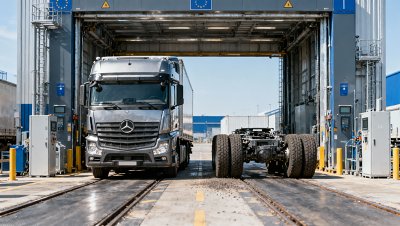
TIR International Road Transport Enters 'Fast Lane'
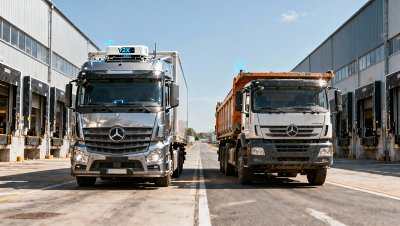
On May 18, 2026, the China Service Trade Guide Network disclosed that five new Eurasian land border checkpoints have been added to the TIR Convention — including Białystok (Poland) and the western extension of Khorgos (Kazakhstan). This development marks a significant step in streamlining cross-border road transport for Chinese heavy-duty trucks, reducing customs complexity and transit time for direct deliveries to end customers across Eastern Europe and Central Asia. The move directly impacts the heavy vehicle export, CKD assembly, and aftermarket parts logistics sectors.
Event Overview
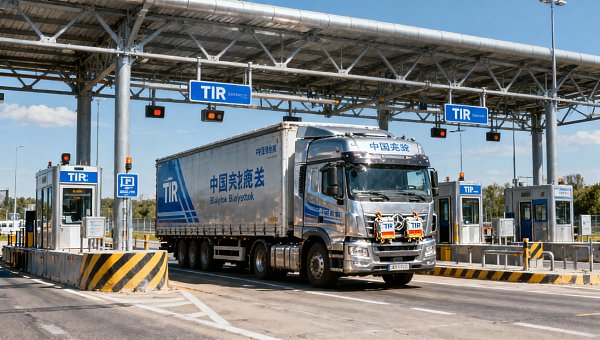
As reported by the China Service Trade Guide Network on May 18, 2026, the TIR Convention has activated five new land border checkpoints in Europe and Central Asia: Białystok (Poland), Khorgos West Extension (Kazakhstan), plus three additional sites not named in the source. These additions expand the certified TIR network along key overland corridors linking China with EU and CIS markets. The TIR system enables sealed-cargo vehicles to cross multiple borders without repeated customs inspections — provided all transit countries are TIR Contracting Parties and the route includes authorized TIR checkpoints.
Industries Affected
Direct Exporters (OEMs & Trading Companies)
Chinese heavy truck manufacturers and export-oriented trading firms benefit from reduced documentation burden and faster border clearance when delivering fully built units or CKD kits. Previously, multi-stage customs procedures at intermediate borders often caused delays of 2–4 days per crossing; under the expanded TIR framework, such delays are expected to drop significantly where full TIR-compliant routing applies. However, actual time savings depend on local implementation rigor and carrier compliance — not merely checkpoint designation.
Raw Material & Component Procurement Firms
Enterprises sourcing chassis components, axles, or braking systems from European suppliers for domestic assembly may see improved inbound logistics reliability. With more TIR-certified entry points into Kazakhstan and Poland, reverse-flow shipments (e.g., German axles entering China via Kazakh border) gain potential for standardized transit protocols — though current TIR coverage remains outbound-weighted, and inbound use is still limited by bilateral agreements and carrier readiness.
Manufacturing & Assembly Plants (CKD/SKD Facilities)
CKD-based joint ventures in Uzbekistan, Belarus, or Poland now face lower landed cost volatility for containerized kits shipped by road. Analysis shows that road-based CKD delivery — previously constrained by inconsistent customs treatment across jurisdictions — gains stronger regulatory scaffolding. Yet observed uptake will hinge on whether local customs authorities in destination countries actively recognize and process TIR Carnets for partial-load or multi-destination consignments, which remain operationally ambiguous in several newly listed locations.
Logistics & Customs Compliance Service Providers
Third-party logistics operators, freight forwarders, and TIR Carnet issuers face both opportunity and operational pressure. Demand for TIR-certified fleet management, Carnet administration, and cross-border driver training is rising — particularly for routes involving Kazakhstan’s Khorgos West Extension, where infrastructure upgrades have outpaced procedural harmonization. From industry perspective, service providers must now verify not only checkpoint status but also real-time acceptance criteria (e.g., vehicle age limits, seal types, digital pre-notification requirements), which vary locally despite TIR Convention standards.
Key Considerations & Recommended Actions
Verify TIR Eligibility Beyond Checkpoint Listing
Not all newly listed checkpoints automatically support all cargo types or vehicle categories. Exporters must confirm with national TIR associations whether their specific vehicle class (e.g., articulated heavy trucks over 40t) and cargo nature (e.g., disassembled engines vs. painted cabs) qualify for seamless passage — especially at Khorgos West Extension, where pilot testing for heavy vehicle clearance remains ongoing.
Update CKD Shipment Protocols to Align with TIR Documentation Flow
CKD consignments often involve split deliveries across multiple plants. Current TIR Carnets allow single-point origin and destination declarations only. Companies should assess whether phased or multi-drop routing requires supplementary national permits — or whether consolidating shipments into fewer, larger TIR-certified loads yields net efficiency gains despite warehouse-level inventory trade-offs.
Engage Local Customs Brokers Early in Route Planning
While the TIR system standardizes core procedures, national customs administrations retain authority over ancillary requirements (e.g., phytosanitary certificates for wooden packaging, ADR compliance for spare batteries). Proactive coordination with licensed brokers in Poland and Kazakhstan — rather than relying solely on Carnet validity — is essential to avoid unexpected holds at newly activated checkpoints.
Editorial Perspective / Industry Observation
Observably, this expansion reflects a broader recalibration of Eurasian land trade governance — less about replacing rail or sea freight, and more about filling critical ‘last-leg’ and ‘first-mile’ gaps where port congestion or rail schedule inflexibility constrain responsiveness. From industry angle, the value of TIR is not in absolute speed, but in predictability: fixed clearance windows, auditable liability chains, and reduced ad hoc inspector discretion. That said, current implementation remains fragmented. For example, while Białystok is now TIR-certified, its integration with EU’s Entry Summary Declaration (ENS) system is still pending technical alignment — meaning paper-based pre-notifications may persist alongside digital Carnets. This duality makes the upgrade better understood as an enabler of incremental optimization, not a transformative leap.
Conclusion
The activation of these five new TIR checkpoints does not eliminate structural barriers — such as varying axle-load regulations, language-dependent inspection practices, or inconsistent enforcement of environmental standards — but it does establish a more robust procedural baseline for road-based heavy vehicle trade across Eurasia. For stakeholders, the near-term significance lies not in immediate volume shifts, but in enhanced planning certainty and reduced administrative friction. A rational assessment suggests this development strengthens the viability of diversified multimodal strategies — especially for time-sensitive after-sales parts or high-value CKD configurations — rather than signaling a wholesale migration from maritime or rail alternatives.
Source Attribution
Primary source: China Service Trade Guide Network, May 18, 2026 (public disclosure). Additional context drawn from IRU (International Road Transport Union) TIR Implementation Reports, 2025–2026; and Kazakhstan Ministry of Digital Development, Innovation and Aerospace Industry, Border Infrastructure Modernization Bulletin No. 7/2026. Note: Ongoing monitoring is advised for updates on TIR Carnet digitalization rollout in Poland and interoperability testing between Kazakh TIR e-systems and EU’s NCTS platform — both scheduled for Q3 2026 but not yet confirmed.
Trending News
- When does heavy equipment transport require a lowboy trailer?
- When does a light commercial vehicle for urban delivery save fleet costs?
- How to choose an off road truck for steep and unstable job sites
- How to match crane truck lifting capacity to your jobsite loads
- What drives logging truck cost beyond the base purchase price?
Tag
Recommended News
 Policy & RegulationsGermany Ends EV Subsidy ExtensionGermany ends EV subsidy extension, reshaping EV and commercial vehicle plans in Europe. See how importers, distributors, and Chinese NEV suppliers should respond.
 Policy & RegulationsEU Rule Sets LCA Certification for Truck ImportsEU Rule Sets LCA Certification for Truck Imports: learn how the new EU LCA and EPD compliance rule will affect truck approvals, export timelines, costs, and delivery planning.
 Policy & RegulationsEU Requires LCA Reports for Imported HDVs from Oct 2026EU LCA reports for imported HDVs become mandatory from Oct 2026. Learn how the new EU heavy-duty vehicle carbon compliance rule affects exporters, suppliers, costs, and delivery readiness.
 Policy & RegulationsChina Tightens Export Filing for New Energy Heavy TrucksChina Tightens Export Filing for New Energy Heavy Trucks: learn how new HS code rules and CNAS carbon-footprint reports may impact customs clearance, compliance, and delivery timelines.
 Policy & RegulationsEU Updates CO2 Rules for Heavy-Duty Vehicle ApprovalEU Updates CO2 Rules for Heavy-Duty Vehicle Approval: learn how new lifecycle carbon and battery due diligence requirements affect EU market access, approval timing, and compliance costs.
 Policy & RegulationsChina Customs Adds New Export Fields for Road Transport EquipmentChina Customs adds new export fields for road transport equipment from Aug 15, 2026. Learn how drive type and certification data may affect compliance, clearance speed, and export planning.
 Policy & RegulationsEU Tightens Truck WVTA Brake and Lighting TestsEU Tightens Truck WVTA Brake and Lighting Tests: learn how Regulation (EU) 2026/1387 reshapes brake response, headlamp compliance, certification timing, and EU market access.
 Policy & RegulationsEU Sets CO2 Rules for New Heavy Trucks from 2027EU Sets CO2 Rules for New Heavy Trucks from 2027: learn how new EU CO2 limits, OBD, and remote data upload requirements could reshape type approval, costs, and delivery planning.
 Policy & RegulationsEU Brings Forward Cybersecurity Approval for Heavy TrucksEU heavy truck cybersecurity approval moves to August 1, 2026. Learn how WVTA, UNECE R155, OTA and telematics rules will impact EU exports, type approval and delivery plans.
 Policy & RegulationsEU Moves Truck Cybersecurity WVTA Forward to Aug 1, 2026EU truck cybersecurity WVTA moves to Aug 1, 2026. Learn how UN R155 and EU 2022/1426 affect heavy truck type approval, exports, suppliers, and compliance planning.
 Policy & RegulationsEU Brings Forward WVTA Cybersecurity Approval for TrucksEU Brings Forward WVTA Cybersecurity Approval for Trucks: learn how the 2026 deadline impacts heavy truck exports, retrofit projects, supplier compliance, costs, and EU market-entry planning.
 Policy & RegulationsEU Brings Forward WVTA Cybersecurity Approval for Heavy TrucksEU heavy truck WVTA cybersecurity approval now starts on August 1, 2026. Learn how EU type approval, CSMS audits, ADAS, OTA, and registration risks affect exporters and manufacturers.
 Policy & RegulationsEU Cybersecurity Approval Rule Takes Effect for Heavy TrucksEU Cybersecurity Approval Rule now reshapes heavy trucks market access. Learn how CSMS, UNECE R155, and WVTA deadlines could impact certification, delivery, and EU export readiness.
 Policy & RegulationsEU Requires EN 15038 Declarations for Truck ImportsEU Requires EN 15038 Declarations for Truck Imports: learn how the new EU rule affects heavy truck customs clearance, compliance timing, and export readiness.
 Policy & RegulationsEU Rule Brings SCIP Filing to Imported Truck Battery PartsSCIP filing for imported truck battery parts becomes critical in the EU from Oct 1, 2026. Learn how the rule impacts heavy-duty truck exports, aftermarket parts, and customs compliance.
 Policy & RegulationsEU REACH Expands to Truck Battery PartsEU REACH expands to truck battery parts, covering lithium-ion battery modules, BMS units, and thermal systems. Learn how SCIP filing, SVHC disclosure, and EU export compliance may affect truck suppliers.
 Policy & RegulationsEU Sets Battery Footprint Rule for Heavy TrucksEU Sets Battery Footprint Rule for Heavy Trucks: learn how the 2027 EU battery carbon footprint requirement could impact type approval, customs clearance, and truck exports.
 Policy & RegulationsEU Requires Certified V2X Modules in Heavy TrucksEU Requires Certified V2X Modules in Heavy Trucks from July 22, 2026. Learn how UN R155 and ETSI EN 303 648 rules will impact EU type approval, registration, and exports.
 Policy & RegulationsEU Tightens V2X Approval for Heavy TrucksHeavy trucks entering the EU face tougher V2X approval from July 22, 2026. Learn how UNECE R155/R156 and EU Type Approval will affect registration, exports, and delivery readiness.
 Policy & RegulationsEU Rule Takes Effect: Heavy Trucks Need V2X from July 22, 2026Heavy trucks entering the EU from July 22, 2026 need V2X modules and UN R155 approval. Learn how this rule impacts compliance, certification, exports, and delivery.
 Policy & RegulationsEU Opens Euro 7 Transition for Heavy TrucksEU Opens Euro 7 Transition for Heavy Trucks: learn how new filing rules, battery carbon footprint declarations, and OBD II checks will impact EU truck exports and compliance planning.
 Policy & RegulationsEPA Update Removes Seven Chinese Diesel Engine ModelsEPA Update Removes Seven Chinese Diesel Engine Models: learn how this EPA compliance change could affect North American truck exports, sourcing, certification, and delivery planning.
 Policy & RegulationsEU Enforces Euro 7 for New Heavy TrucksEU Enforces Euro 7 for New Heavy Trucks: learn how stricter NOx, NH₃, and brake particle certification impacts EU market access, registration timing, and exporter compliance costs.
 Policy & RegulationsLight Duty Truck Manufacturer in USA: Key Compliance ChecksLight duty truck manufacturer in USA selection starts with compliance. Learn the key checks for FMVSS, emissions, load ratings, and traceability before you buy.
 Policy & RegulationsEU Enforces Euro 7 Upgrade for Heavy Truck ImportsEU Enforces Euro 7 Upgrade for Heavy Truck Imports: learn how new PN, NH3, brake and tire wear tests affect certification, customs clearance, and on-time EU delivery.