China Streamlines TIR Customs Filing from Inland Points
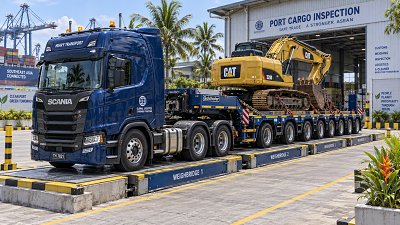
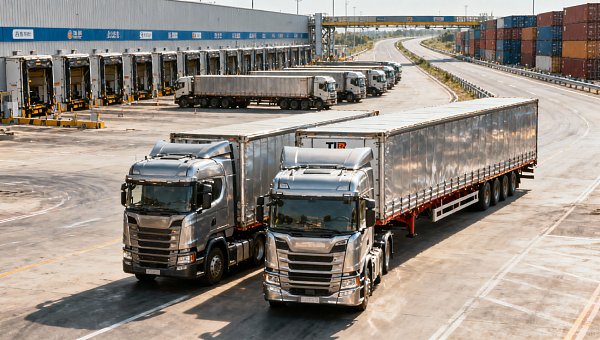
From June 1, 2026, China Customs has fully implemented new TIR road transport clearance rules that allow goods to be declared directly at inland points of departure or destination, without transfer filing at border ports. For exporters, overseas importers, vehicle and chassis trade participants, and cross-border logistics service providers focused on Central Asia, Russia-Mongolia, and ASEAN routes, this matters because it directly affects customs certainty, document processing time, delivery timeliness, and port-related delay risk.
Event Overview
According to Announcement No. 2 of 2026 issued by the General Administration of Customs, the new arrangement took effect on June 1, 2026. The public information confirms two key changes for TIR cargo transport.
First, goods moved under TIR can now be declared directly at the inland place of departure or inland destination, instead of being routed through a port for transit declaration procedures. Second, the “TIR transport application number” is used in place of the traditional transport vehicle name, with system-based automatic verification.
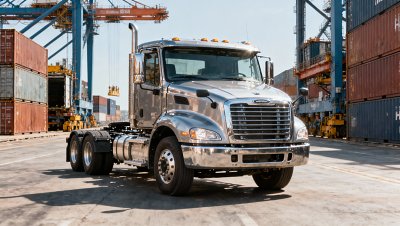
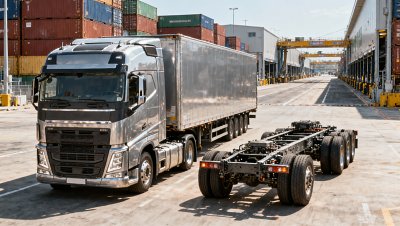
The released information indicates that these changes are intended to improve customs clearance efficiency for full vehicles, trailers, and chassis exported toward Central Asia, Russia-Mongolia, and ASEAN markets, while reducing customs waiting time and port detention risk for overseas importers.
Which Segments Are Affected
Direct trading enterprises
Exporters directly shipping complete vehicles, trailers, or chassis are among the most immediately affected. They are impacted because customs declaration can now begin from inland origin points rather than relying on an added port-stage filing link. The effect is mainly seen in shorter document circulation time, clearer filing responsibility, and better shipment schedule predictability for route planning and customer delivery commitments.
Manufacturing and assembly enterprises
Manufacturers shipping finished transport equipment to overseas markets may also see operational effects. From an industry perspective, the key impact is not only faster paperwork, but also improved coordination between factory dispatch timing and customs handling. This may help reduce mismatches between production completion, inland dispatch, and border clearance arrangements, especially where delivery windows are sensitive.
Overseas importers and channel-side buyers
Importers receiving these goods in destination markets are affected because the announcement directly points to lower customs waiting costs and lower port detention risk. Analysis shows that for buyers depending on predictable handover timing, the value of this change is less about headline speed alone and more about improved certainty in the outbound leg before import-side clearance begins.
Supply chain and logistics service providers
Freight operators, customs service teams, and cross-border road transport coordinators are affected at the execution level. They will need to adapt filing workflows to the new inland declaration model and use the TIR transport application number in place of the traditional vehicle-name field. The impact is mainly reflected in document preparation, system input practices, and coordination between inland sites and border-crossing operations.
What Companies and Practitioners Should Watch and How to Respond
Track official implementation details in actual operations
Current attention should focus on how the announced rules are applied in day-to-day customs processing at inland departure and destination points. Businesses using TIR routes should closely monitor official wording, operating notices, and any clarifications tied to filing procedures, because the practical value of the policy depends on consistent execution rather than announcement text alone.
Review document workflows built around the new application number
Companies should check whether internal declaration forms, logistics instructions, and coordination templates still rely on the traditional transport vehicle name as a key filing identifier. Observably, this update is most relevant for teams handling customs data entry, shipment booking, and supporting documentation, since the TIR transport application number now becomes a core operational reference.
Reassess route planning for relevant destination markets
Businesses shipping full vehicles, trailers, or chassis toward Central Asia, Russia-Mongolia, and ASEAN markets should review whether inland declaration changes affect dispatch timing, handover sequencing, and customer communication. More appropriately understood, this is not an automatic guarantee of end-to-end speed gains in every case, but it does create room to optimize the customs portion of route planning where TIR is already in use.
Separate policy signal from realized delivery performance
Analysis shows that the announcement provides a clearer customs framework, but companies should still evaluate actual outcomes through completed shipments. It is practical to compare pre- and post-implementation handling across document timing, port transfer dependency, and customer delivery predictability before making broader operational promises to overseas buyers.
Editorial View / Industry Observation
Observably, this development signals a more execution-oriented adjustment in China’s TIR road transport customs process, especially for inland-origin cargo flows. From an industry perspective, the most important meaning at this stage is not simply that procedures are shorter, but that customs filing responsibility and document logic appear to be moving closer to where cargo physically starts or ends its domestic movement.
Analysis shows that this should be viewed both as a practical facilitation measure and as a policy signal worth following. It already forms a concrete rule change, but the full business result will depend on how consistently enterprises, service providers, and customs-facing systems adapt to the new process. That is why continued industry attention remains necessary.
Conclusion
China’s June 1, 2026 implementation of optimized TIR customs procedures is significant mainly because it improves the structure and predictability of inland-origin road freight declarations tied to cross-border vehicle-related exports. For exporters, logistics operators, and overseas buyers, the immediate value lies in stronger customs certainty and reduced administrative delay exposure.
Current attention is better placed on practical rollout, workflow adjustment, and shipment-level verification rather than broad assumptions. More appropriately understood, this update is a meaningful operational change with clear industry relevance, while its longer-term commercial effect still deserves continued observation.
Source Information
Main source: General Administration of Customs, Announcement No. 2 of 2026.
Items requiring continued observation: the consistency of implementation in actual inland declaration operations, and the realized impact on delivery timing and customs coordination in live TIR shipments.
Trending News
- CATL Unveils Heavy-Truck Battery Range Extension, Signs Deals for 13,000 Vehicles
- CATL Unveils Tianxing II Electric-to-Electric Range-Extended Heavy Truck Solution
- How much torque does a truck engine need for heavy-duty hauling?
- How to assess a crane truck distributor's spare parts support
- Volvo Group Forms Volvo Mining to Integrate Equipment and Autonomous Solutions
Tag
Recommended News
 Policy & RegulationsHow axle load limits affect low bed trailer exports to Southeast AsiaPlanning low bed trailer export to Southeast Asia? Learn how axle load limits affect legal payload, axle layouts, and route compliance to avoid costly mistakes before ordering.
 Policy & RegulationsGermany Ends EV Subsidy ExtensionGermany ends EV subsidy extension, reshaping EV and commercial vehicle plans in Europe. See how importers, distributors, and Chinese NEV suppliers should respond.
 Policy & RegulationsEU Rule Sets LCA Certification for Truck ImportsEU Rule Sets LCA Certification for Truck Imports: learn how the new EU LCA and EPD compliance rule will affect truck approvals, export timelines, costs, and delivery planning.
 Policy & RegulationsEU Requires LCA Reports for Imported HDVs from Oct 2026EU LCA reports for imported HDVs become mandatory from Oct 2026. Learn how the new EU heavy-duty vehicle carbon compliance rule affects exporters, suppliers, costs, and delivery readiness.
 Policy & RegulationsChina Tightens Export Filing for New Energy Heavy TrucksChina Tightens Export Filing for New Energy Heavy Trucks: learn how new HS code rules and CNAS carbon-footprint reports may impact customs clearance, compliance, and delivery timelines.
 Policy & RegulationsEU Updates CO2 Rules for Heavy-Duty Vehicle ApprovalEU Updates CO2 Rules for Heavy-Duty Vehicle Approval: learn how new lifecycle carbon and battery due diligence requirements affect EU market access, approval timing, and compliance costs.
 Policy & RegulationsChina Customs Adds New Export Fields for Road Transport EquipmentChina Customs adds new export fields for road transport equipment from Aug 15, 2026. Learn how drive type and certification data may affect compliance, clearance speed, and export planning.
 Policy & RegulationsEU Tightens Truck WVTA Brake and Lighting TestsEU Tightens Truck WVTA Brake and Lighting Tests: learn how Regulation (EU) 2026/1387 reshapes brake response, headlamp compliance, certification timing, and EU market access.
 Policy & RegulationsEU Sets CO2 Rules for New Heavy Trucks from 2027EU Sets CO2 Rules for New Heavy Trucks from 2027: learn how new EU CO2 limits, OBD, and remote data upload requirements could reshape type approval, costs, and delivery planning.
 Policy & RegulationsEU Brings Forward Cybersecurity Approval for Heavy TrucksEU heavy truck cybersecurity approval moves to August 1, 2026. Learn how WVTA, UNECE R155, OTA and telematics rules will impact EU exports, type approval and delivery plans.
 Policy & RegulationsEU Moves Truck Cybersecurity WVTA Forward to Aug 1, 2026EU truck cybersecurity WVTA moves to Aug 1, 2026. Learn how UN R155 and EU 2022/1426 affect heavy truck type approval, exports, suppliers, and compliance planning.
 Policy & RegulationsEU Brings Forward WVTA Cybersecurity Approval for TrucksEU Brings Forward WVTA Cybersecurity Approval for Trucks: learn how the 2026 deadline impacts heavy truck exports, retrofit projects, supplier compliance, costs, and EU market-entry planning.
 Policy & RegulationsEU Brings Forward WVTA Cybersecurity Approval for Heavy TrucksEU heavy truck WVTA cybersecurity approval now starts on August 1, 2026. Learn how EU type approval, CSMS audits, ADAS, OTA, and registration risks affect exporters and manufacturers.
 Policy & RegulationsEU Cybersecurity Approval Rule Takes Effect for Heavy TrucksEU Cybersecurity Approval Rule now reshapes heavy trucks market access. Learn how CSMS, UNECE R155, and WVTA deadlines could impact certification, delivery, and EU export readiness.
 Policy & RegulationsEU Requires EN 15038 Declarations for Truck ImportsEU Requires EN 15038 Declarations for Truck Imports: learn how the new EU rule affects heavy truck customs clearance, compliance timing, and export readiness.
 Policy & RegulationsEU Rule Brings SCIP Filing to Imported Truck Battery PartsSCIP filing for imported truck battery parts becomes critical in the EU from Oct 1, 2026. Learn how the rule impacts heavy-duty truck exports, aftermarket parts, and customs compliance.
 Policy & RegulationsEU REACH Expands to Truck Battery PartsEU REACH expands to truck battery parts, covering lithium-ion battery modules, BMS units, and thermal systems. Learn how SCIP filing, SVHC disclosure, and EU export compliance may affect truck suppliers.
 Policy & RegulationsEU Sets Battery Footprint Rule for Heavy TrucksEU Sets Battery Footprint Rule for Heavy Trucks: learn how the 2027 EU battery carbon footprint requirement could impact type approval, customs clearance, and truck exports.
 Policy & RegulationsEU Requires Certified V2X Modules in Heavy TrucksEU Requires Certified V2X Modules in Heavy Trucks from July 22, 2026. Learn how UN R155 and ETSI EN 303 648 rules will impact EU type approval, registration, and exports.
 Policy & RegulationsEU Tightens V2X Approval for Heavy TrucksHeavy trucks entering the EU face tougher V2X approval from July 22, 2026. Learn how UNECE R155/R156 and EU Type Approval will affect registration, exports, and delivery readiness.
 Policy & RegulationsEU Rule Takes Effect: Heavy Trucks Need V2X from July 22, 2026Heavy trucks entering the EU from July 22, 2026 need V2X modules and UN R155 approval. Learn how this rule impacts compliance, certification, exports, and delivery.
 Policy & RegulationsEU Opens Euro 7 Transition for Heavy TrucksEU Opens Euro 7 Transition for Heavy Trucks: learn how new filing rules, battery carbon footprint declarations, and OBD II checks will impact EU truck exports and compliance planning.
 Policy & RegulationsEPA Update Removes Seven Chinese Diesel Engine ModelsEPA Update Removes Seven Chinese Diesel Engine Models: learn how this EPA compliance change could affect North American truck exports, sourcing, certification, and delivery planning.
 Policy & RegulationsEU Enforces Euro 7 for New Heavy TrucksEU Enforces Euro 7 for New Heavy Trucks: learn how stricter NOx, NH₃, and brake particle certification impacts EU market access, registration timing, and exporter compliance costs.
 Policy & RegulationsLight Duty Truck Manufacturer in USA: Key Compliance ChecksLight duty truck manufacturer in USA selection starts with compliance. Learn the key checks for FMVSS, emissions, load ratings, and traceability before you buy.