China Tightens Cold-Chain Truck Export Rules
On June 15, 2026, China began enforcing a new compliance guide for cross-border refrigerated transport equipment, adding stricter pre-certification conditions for exports to key markets in the Middle East, Africa, and Southeast Asia. For refrigerated truck exporters, manufacturing clusters such as Suizhou, customs clearance teams, and overseas delivery planners, the update matters because it shifts market access from a commercial discussion to a technical compliance threshold before shipment.
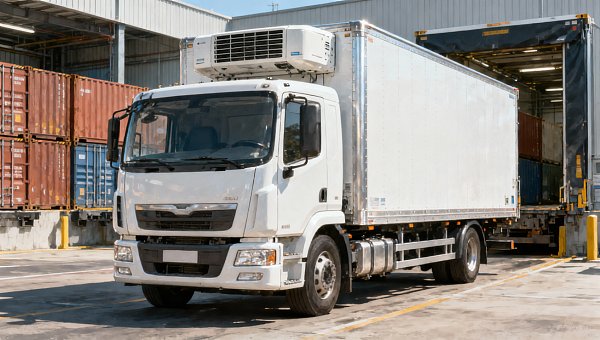
What the new export guide now requires
According to the provided information, the Ministry of Commerce of China and the General Administration of Customs jointly implemented the Compliance Guidelines for Cross-Border Special Transport Equipment Exports (Refrigerated Category) from June 15, 2026. The guide, for the first time, makes three items mandatory pre-certification conditions for key export markets in the Middle East, Africa, and Southeast Asia: precise ultra-low temperature control at -40°C, polyurethane integral foaming density of at least 38 kg/m³ for the box body, and dual compatibility with ADR and DOT standards.
The same information also indicates that the rule directly affects the customs declaration path for export-oriented industrial clusters including Suizhou. Vehicles that have not completed pre-certification may face return at the destination port or high technical rectification costs.
Why different parts of the chain are likely to feel the impact
Export execution moves closer to a compliance-first process
From an industry perspective, direct trading companies and export operators are likely to be affected first because the new requirements sit ahead of shipment rather than after delivery. The main pressure point is no longer only pricing or delivery timing, but whether the vehicle can enter the declaration and destination-entry process with the required technical basis already in place.
Manufacturing decisions become tied to target-market access
Analysis shows that refrigerated truck manufacturers and vehicle integrators may need to pay closer attention to how product specifications align with destination-market thresholds. The impact is likely to appear in product configuration, documentation preparation, and model planning, especially where a vehicle is intended for the Middle East, Africa, or Southeast Asia rather than for a broader undifferentiated export program.
Supply chain and delivery teams face higher coordination demands
For supply chain service providers, customs support teams, and delivery coordinators, the rule raises the importance of matching technical files, certification status, and shipment schedules. What deserves closer attention is the cost of mismatch: if pre-certification is incomplete, the consequence is not simply delay, but potentially return at destination or expensive technical rework.
What companies should watch in practice
Track how official wording is applied in real export workflows
Analysis shows that companies should distinguish between the policy signal itself and its operational application in customs declaration and overseas acceptance. The practical issue is whether every shipment bound for the specified markets can present evidence aligned with the new pre-certification conditions.
Check whether product specs truly match the destination market
For exporters and manufacturers, the immediate focus is not only having a refrigerated vehicle available, but confirming that its low-temperature control capability, box-body foaming density, and ADR/DOT dual-standard compatibility match the stated entry threshold for the relevant market.
Review documentation and supplier readiness before shipment
Observably, the rule increases the importance of document completeness and supplier coordination. Companies involved in procurement, assembly, export filing, and overseas handover should pay attention to whether supporting technical materials and qualification records are ready before goods are dispatched.
Prepare customer communication and fallback plans early
Given the stated risk of destination-port return or high rectification cost for non-pre-certified vehicles, firms should closely review delivery commitments and customer communication for affected markets. The key practical concern is how to reduce disputes and avoid preventable cost exposure if certification readiness is still uncertain.
How this update is best understood at this stage
Analysis shows that this is more than a routine paperwork adjustment because the requirements are tied directly to technical capability and market-entry eligibility. At the same time, it is more appropriate to understand the development as a clear regulatory signal with immediate operational consequences, rather than as a fully measurable market outcome. The industry still needs to watch how consistently the requirements are enforced across export processes and destination-market acceptance.
What the development means for the market now
At this point, the clearest significance of the June 15 rule is that compliance for refrigerated truck exports is becoming more front-loaded and more technical in nature for the specified overseas markets. A neutral reading is that the change creates a higher threshold for market entry and execution discipline, especially for exporters relying on established industrial belts and fast delivery cycles. It is more appropriate to view this as an immediate compliance change with longer-term implications that still require continued observation.
About the basis of this article
This article is based on the user-provided news title, event date, and event summary. For this type of development, commonly relevant source categories may include official notices, company statements, industry association updates, authoritative media coverage, and standards-related documents. No specific official source link was provided in the input, so the exact source link remains to be verified on an ongoing basis. Follow-up attention should remain on any further official clarification, implementation details, and how the requirements are applied in actual export and destination-entry procedures.
Trending News
- How axle load limits affect low bed trailer exports to Southeast Asia
- How to locate a truck exhaust system leak before replacing parts
- When does heavy equipment transport require a lowboy trailer?
- When does a light commercial vehicle for urban delivery save fleet costs?
- How to choose an off road truck for steep and unstable job sites
Tag
Recommended News
 Policy & RegulationsHow axle load limits affect low bed trailer exports to Southeast AsiaPlanning low bed trailer export to Southeast Asia? Learn how axle load limits affect legal payload, axle layouts, and route compliance to avoid costly mistakes before ordering.
 Policy & RegulationsGermany Ends EV Subsidy ExtensionGermany ends EV subsidy extension, reshaping EV and commercial vehicle plans in Europe. See how importers, distributors, and Chinese NEV suppliers should respond.
 Policy & RegulationsEU Rule Sets LCA Certification for Truck ImportsEU Rule Sets LCA Certification for Truck Imports: learn how the new EU LCA and EPD compliance rule will affect truck approvals, export timelines, costs, and delivery planning.
 Policy & RegulationsEU Requires LCA Reports for Imported HDVs from Oct 2026EU LCA reports for imported HDVs become mandatory from Oct 2026. Learn how the new EU heavy-duty vehicle carbon compliance rule affects exporters, suppliers, costs, and delivery readiness.
 Policy & RegulationsChina Tightens Export Filing for New Energy Heavy TrucksChina Tightens Export Filing for New Energy Heavy Trucks: learn how new HS code rules and CNAS carbon-footprint reports may impact customs clearance, compliance, and delivery timelines.
 Policy & RegulationsEU Updates CO2 Rules for Heavy-Duty Vehicle ApprovalEU Updates CO2 Rules for Heavy-Duty Vehicle Approval: learn how new lifecycle carbon and battery due diligence requirements affect EU market access, approval timing, and compliance costs.
 Policy & RegulationsChina Customs Adds New Export Fields for Road Transport EquipmentChina Customs adds new export fields for road transport equipment from Aug 15, 2026. Learn how drive type and certification data may affect compliance, clearance speed, and export planning.
 Policy & RegulationsEU Tightens Truck WVTA Brake and Lighting TestsEU Tightens Truck WVTA Brake and Lighting Tests: learn how Regulation (EU) 2026/1387 reshapes brake response, headlamp compliance, certification timing, and EU market access.
 Policy & RegulationsEU Sets CO2 Rules for New Heavy Trucks from 2027EU Sets CO2 Rules for New Heavy Trucks from 2027: learn how new EU CO2 limits, OBD, and remote data upload requirements could reshape type approval, costs, and delivery planning.
 Policy & RegulationsEU Brings Forward Cybersecurity Approval for Heavy TrucksEU heavy truck cybersecurity approval moves to August 1, 2026. Learn how WVTA, UNECE R155, OTA and telematics rules will impact EU exports, type approval and delivery plans.
 Policy & RegulationsEU Moves Truck Cybersecurity WVTA Forward to Aug 1, 2026EU truck cybersecurity WVTA moves to Aug 1, 2026. Learn how UN R155 and EU 2022/1426 affect heavy truck type approval, exports, suppliers, and compliance planning.
 Policy & RegulationsEU Brings Forward WVTA Cybersecurity Approval for TrucksEU Brings Forward WVTA Cybersecurity Approval for Trucks: learn how the 2026 deadline impacts heavy truck exports, retrofit projects, supplier compliance, costs, and EU market-entry planning.
 Policy & RegulationsEU Brings Forward WVTA Cybersecurity Approval for Heavy TrucksEU heavy truck WVTA cybersecurity approval now starts on August 1, 2026. Learn how EU type approval, CSMS audits, ADAS, OTA, and registration risks affect exporters and manufacturers.
 Policy & RegulationsEU Cybersecurity Approval Rule Takes Effect for Heavy TrucksEU Cybersecurity Approval Rule now reshapes heavy trucks market access. Learn how CSMS, UNECE R155, and WVTA deadlines could impact certification, delivery, and EU export readiness.
 Policy & RegulationsEU Requires EN 15038 Declarations for Truck ImportsEU Requires EN 15038 Declarations for Truck Imports: learn how the new EU rule affects heavy truck customs clearance, compliance timing, and export readiness.
 Policy & RegulationsEU Rule Brings SCIP Filing to Imported Truck Battery PartsSCIP filing for imported truck battery parts becomes critical in the EU from Oct 1, 2026. Learn how the rule impacts heavy-duty truck exports, aftermarket parts, and customs compliance.
 Policy & RegulationsEU REACH Expands to Truck Battery PartsEU REACH expands to truck battery parts, covering lithium-ion battery modules, BMS units, and thermal systems. Learn how SCIP filing, SVHC disclosure, and EU export compliance may affect truck suppliers.
 Policy & RegulationsEU Sets Battery Footprint Rule for Heavy TrucksEU Sets Battery Footprint Rule for Heavy Trucks: learn how the 2027 EU battery carbon footprint requirement could impact type approval, customs clearance, and truck exports.
 Policy & RegulationsEU Requires Certified V2X Modules in Heavy TrucksEU Requires Certified V2X Modules in Heavy Trucks from July 22, 2026. Learn how UN R155 and ETSI EN 303 648 rules will impact EU type approval, registration, and exports.
 Policy & RegulationsEU Tightens V2X Approval for Heavy TrucksHeavy trucks entering the EU face tougher V2X approval from July 22, 2026. Learn how UNECE R155/R156 and EU Type Approval will affect registration, exports, and delivery readiness.
 Policy & RegulationsEU Rule Takes Effect: Heavy Trucks Need V2X from July 22, 2026Heavy trucks entering the EU from July 22, 2026 need V2X modules and UN R155 approval. Learn how this rule impacts compliance, certification, exports, and delivery.
 Policy & RegulationsEU Opens Euro 7 Transition for Heavy TrucksEU Opens Euro 7 Transition for Heavy Trucks: learn how new filing rules, battery carbon footprint declarations, and OBD II checks will impact EU truck exports and compliance planning.
 Policy & RegulationsEPA Update Removes Seven Chinese Diesel Engine ModelsEPA Update Removes Seven Chinese Diesel Engine Models: learn how this EPA compliance change could affect North American truck exports, sourcing, certification, and delivery planning.
 Policy & RegulationsEU Enforces Euro 7 for New Heavy TrucksEU Enforces Euro 7 for New Heavy Trucks: learn how stricter NOx, NH₃, and brake particle certification impacts EU market access, registration timing, and exporter compliance costs.
 Policy & RegulationsLight Duty Truck Manufacturer in USA: Key Compliance ChecksLight duty truck manufacturer in USA selection starts with compliance. Learn the key checks for FMVSS, emissions, load ratings, and traceability before you buy.