ASEAN White Paper Clarifies Cold-Chain Export Rules
On June 18, 2026, a white paper on expanding agricultural imports into ASEAN brought a clearer compliance frame for imported cold-chain transport equipment. The document matters because it organizes mandatory technical requirements across ten ASEAN markets for products such as refrigerated semi-trailers and new energy refrigerated vehicles, turning export access from a largely fragmented review process into a more checklist-driven compliance task for manufacturers, exporters, certification teams, and delivery planning functions.

A clearer rule map for imported cold-chain equipment
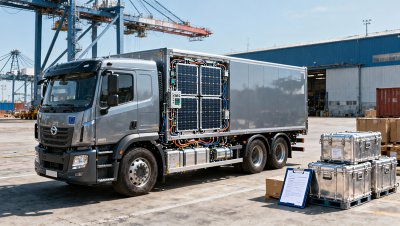
The white paper released on June 18 is described as the first systematic compilation of mandatory technical provisions used by the ten ASEAN countries for imported cold-chain transport equipment. According to the provided summary, it covers 12 key indicators, including temperature recording accuracy of ±0.5℃, a remote monitoring data format aligned with ISO/IEC 18013-3, and battery safety requirements linked to UN38.3.
The same summary states that the document provides Chinese manufacturers of refrigerated semi-trailers and new energy refrigerated vehicles with a compliance checklist for export market access. Based on the confirmed information provided, the white paper is therefore directly tied to technical standards, certification expectations, and access conditions for cold-chain equipment exports into ASEAN-related agricultural import logistics scenarios.
Where the compliance pressure is likely to appear first
Product design and factory-side validation
From an industry perspective, vehicle and equipment manufacturers are likely to feel the first impact because the listed indicators go directly to product specification and validation. Temperature recording accuracy, remote data structure, and battery safety are not only filing issues; they can affect component selection, testing arrangements, software compatibility, and technical file preparation before shipment.
Export transactions and market-entry documentation
Export-facing businesses may be affected in the documentation stage. Analysis shows that once a white paper consolidates mandatory technical clauses into a practical checklist, contract review, bid response, pre-shipment compliance review, and customer-facing document packages become more sensitive to whether product claims can be matched with test reports, technical descriptions, and certification materials.
Testing, certification, and inspection support
Certification-related firms and testing service providers may see closer scrutiny on whether submitted evidence clearly corresponds to the technical indicators highlighted in the white paper. What deserves closer attention is not only the existence of a certificate or report, but also whether the content format, test scope, and referenced standards are suitable for the destination market's import review expectations.
Delivery, after-sales, and traceability arrangements
Supply chain service providers and after-sales teams may also be affected where compliance obligations extend beyond factory release. Observably, requirements related to data recording and monitoring can influence delivery acceptance, operational traceability, and post-delivery service support, especially if customers or import-side reviewers expect equipment records and performance evidence to remain consistent after arrival.
Practical issues companies now need to track
Check whether existing technical files match the listed indicators
Analysis shows that companies should first compare current product dossiers against the 12 indicators mentioned in the summary, rather than assuming existing export materials are already sufficient. The immediate issue is specification alignment: whether current test items, reporting language, and supporting documents can directly answer the listed technical requirements.
Review data and software compliance alongside hardware compliance
The inclusion of a remote monitoring data format linked to ISO/IEC 18013-3 suggests that compliance review may not stop at insulation, refrigeration, or vehicle structure alone. What deserves closer attention is whether onboard systems, data output, and record interfaces are documented in a way that supports customer review, certification review, or import-side examination.
Treat battery-related submissions with added care
For new energy refrigerated vehicles, battery safety tied to UN38.3 should be treated as a focused review point. This does not by itself confirm a new enforcement action, but it does indicate that battery compliance belongs within the export access discussion and may affect supplier qualification, document completeness, and shipment readiness.
Watch for how the checklist is reflected in execution documents
Because the provided information does not include detailed enforcement procedures, it is more appropriate to understand the current development as a compliance signal with operational value, rather than as proof of a fully uniform execution outcome. Companies should therefore watch how similar requirements appear in customer specifications, tender documents, certification reviews, and delivery acceptance practices.
Why this reads more as an execution signal than a finished endpoint
Analysis shows that the white paper is important less because it announces an entirely new rule set in the provided facts, and more because it consolidates mandatory technical clauses into a usable export-access framework. That changes how companies prepare: a scattered regulatory reading exercise can become a structured compliance workflow.
At the same time, observably, the current information is still limited to the title, date, and summary provided here. For that reason, it is more appropriate to understand this development as a strong implementation signal and a practical compliance reference, while still leaving room to monitor later clarification in certification practice, documentation expectations, and market-side execution.
How the sector may best interpret this stage
For the cold-chain equipment trade linked to ASEAN agricultural import logistics, the immediate significance of this white paper is that technical access conditions are being presented in a more organized and reviewable form. That can influence how Chinese refrigerated vehicle exporters prepare products, documents, testing paths, and customer delivery plans.
A rational reading is that the development does not by itself settle every downstream execution detail, but it does sharpen the compliance path. Companies are likely to benefit most by treating it as an actionable reference for export preparation, while continuing to verify how specific requirements are applied in actual certification, procurement, and delivery settings.
Basis of this article and what still needs verification
This article is generated from the user-provided news title, event date, and event summary. For events of this type, commonly relevant source categories may include official notices, regulator publications, customs or trade authority information, industry association releases, standards organization documents, and reporting by established trade media.
No specific official source link was provided in the input, so the exact official publication path still requires further verification. Ongoing attention should remain on any later policy detail, certification interpretation, tender-document language, market feedback, and company-side implementation experience related to the white paper.
Trending News
- How does operating weight affect the price of a new excavator?
- How to compare concrete mixer truck suppliers by total landed cost
- How axle load limits affect low bed trailer exports to Southeast Asia
- How to locate a truck exhaust system leak before replacing parts
- When does heavy equipment transport require a lowboy trailer?
Tag
Recommended News
 Policy & RegulationsHow axle load limits affect low bed trailer exports to Southeast AsiaPlanning low bed trailer export to Southeast Asia? Learn how axle load limits affect legal payload, axle layouts, and route compliance to avoid costly mistakes before ordering.
 Policy & RegulationsGermany Ends EV Subsidy ExtensionGermany ends EV subsidy extension, reshaping EV and commercial vehicle plans in Europe. See how importers, distributors, and Chinese NEV suppliers should respond.
 Policy & RegulationsEU Rule Sets LCA Certification for Truck ImportsEU Rule Sets LCA Certification for Truck Imports: learn how the new EU LCA and EPD compliance rule will affect truck approvals, export timelines, costs, and delivery planning.
 Policy & RegulationsEU Requires LCA Reports for Imported HDVs from Oct 2026EU LCA reports for imported HDVs become mandatory from Oct 2026. Learn how the new EU heavy-duty vehicle carbon compliance rule affects exporters, suppliers, costs, and delivery readiness.
 Policy & RegulationsChina Tightens Export Filing for New Energy Heavy TrucksChina Tightens Export Filing for New Energy Heavy Trucks: learn how new HS code rules and CNAS carbon-footprint reports may impact customs clearance, compliance, and delivery timelines.
 Policy & RegulationsEU Updates CO2 Rules for Heavy-Duty Vehicle ApprovalEU Updates CO2 Rules for Heavy-Duty Vehicle Approval: learn how new lifecycle carbon and battery due diligence requirements affect EU market access, approval timing, and compliance costs.
 Policy & RegulationsChina Customs Adds New Export Fields for Road Transport EquipmentChina Customs adds new export fields for road transport equipment from Aug 15, 2026. Learn how drive type and certification data may affect compliance, clearance speed, and export planning.
 Policy & RegulationsEU Tightens Truck WVTA Brake and Lighting TestsEU Tightens Truck WVTA Brake and Lighting Tests: learn how Regulation (EU) 2026/1387 reshapes brake response, headlamp compliance, certification timing, and EU market access.
 Policy & RegulationsEU Sets CO2 Rules for New Heavy Trucks from 2027EU Sets CO2 Rules for New Heavy Trucks from 2027: learn how new EU CO2 limits, OBD, and remote data upload requirements could reshape type approval, costs, and delivery planning.
 Policy & RegulationsEU Brings Forward Cybersecurity Approval for Heavy TrucksEU heavy truck cybersecurity approval moves to August 1, 2026. Learn how WVTA, UNECE R155, OTA and telematics rules will impact EU exports, type approval and delivery plans.
 Policy & RegulationsEU Moves Truck Cybersecurity WVTA Forward to Aug 1, 2026EU truck cybersecurity WVTA moves to Aug 1, 2026. Learn how UN R155 and EU 2022/1426 affect heavy truck type approval, exports, suppliers, and compliance planning.
 Policy & RegulationsEU Brings Forward WVTA Cybersecurity Approval for TrucksEU Brings Forward WVTA Cybersecurity Approval for Trucks: learn how the 2026 deadline impacts heavy truck exports, retrofit projects, supplier compliance, costs, and EU market-entry planning.
 Policy & RegulationsEU Brings Forward WVTA Cybersecurity Approval for Heavy TrucksEU heavy truck WVTA cybersecurity approval now starts on August 1, 2026. Learn how EU type approval, CSMS audits, ADAS, OTA, and registration risks affect exporters and manufacturers.
 Policy & RegulationsEU Cybersecurity Approval Rule Takes Effect for Heavy TrucksEU Cybersecurity Approval Rule now reshapes heavy trucks market access. Learn how CSMS, UNECE R155, and WVTA deadlines could impact certification, delivery, and EU export readiness.
 Policy & RegulationsEU Requires EN 15038 Declarations for Truck ImportsEU Requires EN 15038 Declarations for Truck Imports: learn how the new EU rule affects heavy truck customs clearance, compliance timing, and export readiness.
 Policy & RegulationsEU Rule Brings SCIP Filing to Imported Truck Battery PartsSCIP filing for imported truck battery parts becomes critical in the EU from Oct 1, 2026. Learn how the rule impacts heavy-duty truck exports, aftermarket parts, and customs compliance.
 Policy & RegulationsEU REACH Expands to Truck Battery PartsEU REACH expands to truck battery parts, covering lithium-ion battery modules, BMS units, and thermal systems. Learn how SCIP filing, SVHC disclosure, and EU export compliance may affect truck suppliers.
 Policy & RegulationsEU Sets Battery Footprint Rule for Heavy TrucksEU Sets Battery Footprint Rule for Heavy Trucks: learn how the 2027 EU battery carbon footprint requirement could impact type approval, customs clearance, and truck exports.
 Policy & RegulationsEU Requires Certified V2X Modules in Heavy TrucksEU Requires Certified V2X Modules in Heavy Trucks from July 22, 2026. Learn how UN R155 and ETSI EN 303 648 rules will impact EU type approval, registration, and exports.
 Policy & RegulationsEU Tightens V2X Approval for Heavy TrucksHeavy trucks entering the EU face tougher V2X approval from July 22, 2026. Learn how UNECE R155/R156 and EU Type Approval will affect registration, exports, and delivery readiness.
 Policy & RegulationsEU Rule Takes Effect: Heavy Trucks Need V2X from July 22, 2026Heavy trucks entering the EU from July 22, 2026 need V2X modules and UN R155 approval. Learn how this rule impacts compliance, certification, exports, and delivery.
 Policy & RegulationsEU Opens Euro 7 Transition for Heavy TrucksEU Opens Euro 7 Transition for Heavy Trucks: learn how new filing rules, battery carbon footprint declarations, and OBD II checks will impact EU truck exports and compliance planning.
 Policy & RegulationsEPA Update Removes Seven Chinese Diesel Engine ModelsEPA Update Removes Seven Chinese Diesel Engine Models: learn how this EPA compliance change could affect North American truck exports, sourcing, certification, and delivery planning.
 Policy & RegulationsEU Enforces Euro 7 for New Heavy TrucksEU Enforces Euro 7 for New Heavy Trucks: learn how stricter NOx, NH₃, and brake particle certification impacts EU market access, registration timing, and exporter compliance costs.
 Policy & RegulationsLight Duty Truck Manufacturer in USA: Key Compliance ChecksLight duty truck manufacturer in USA selection starts with compliance. Learn the key checks for FMVSS, emissions, load ratings, and traceability before you buy.