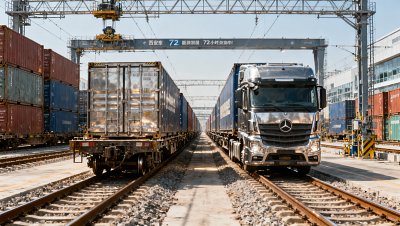
ASEAN Fruit Cold Chain Route Drives Equipment Demand
On June 18, 2026, Nanning launched a regular cross-border cold-chain rail service for ASEAN fruit entering China, supported by a rapid customs clearance capability at Guangxi ports and a distribution model linking origin, hub and end market within a 48-hour nationwide delivery framework. For the industry, this is worth watching not simply as a logistics update, but as an execution signal that cold-chain trade rules, delivery expectations and equipment procurement standards are becoming more tightly connected across cross-border transport, domestic distribution and export-oriented vehicle supply.
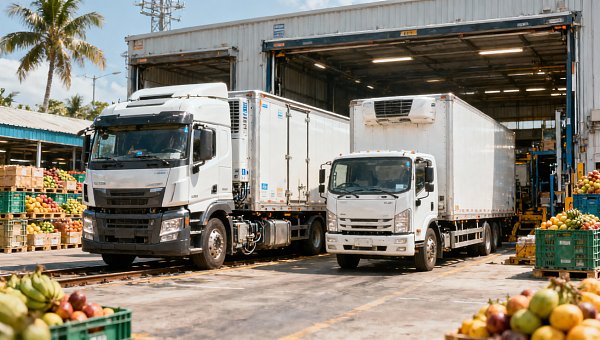
A regular route with faster clearance and a defined cold-chain flow
Confirmed information shows that the regular ASEAN cross-border cold-chain rail service was put into operation in Nanning on June 18. The route relies on a 15-second rapid customs clearance capability at Guangxi ports and is designed around a full-chain freshness-preservation system linking ASEAN production areas, Guangxi consolidation and distribution, and end destinations across China.
The same information also shows that the route has already driven year-on-year order growth of more than 40% for domestic refrigerated semi-trailers, intelligent temperature-controlled compartments and TMS onboard terminals. In parallel, a number of export companies have received batch inquiries from Southeast Asian cold-chain operators.
Where the operational signal reaches across the supply chain
Export-oriented vehicle and body manufacturers face a more specification-driven demand cycle
Analysis shows that manufacturers of refrigerated semi-trailers and temperature-controlled bodies may be among the first to feel the effect, because a regularized cold-chain corridor changes buyer expectations from one-off equipment sourcing to repeatable operating performance. What deserves closer attention is not only sales volume, but also whether technical documents, product configuration sheets, temperature-control capabilities and delivery commitments are prepared for cross-border operator review and procurement comparison.
Cold-chain service providers may need tighter coordination between transport equipment and digital control
From an industry perspective, suppliers involved in cold-chain transport services and fleet systems may be affected through dispatching, cargo traceability and temperature-management workflows. The mention of TMS onboard terminal demand suggests that hardware procurement may increasingly be assessed together with operating visibility and control capability. Companies in this segment should watch for changes in tender language, data-recording expectations, acceptance documentation and after-sales response requirements.
Trading and distribution participants may face stricter delivery and handling expectations
Observably, companies engaged in cross-border fruit trade, domestic distribution or channel circulation could be affected because faster corridor operation shortens the tolerance for delays in handover, warehousing and final delivery. The practical impact may appear in booking rhythm, receiving schedules, supporting documents and coordination with temperature-controlled transport resources, even where no new formal rule text has yet been disclosed in the input.
What companies should review now
Recheck compliance files before inquiries turn into purchase orders
Analysis shows that exporters receiving batch inquiries should organize technical specifications, product descriptions, testing materials, quality records and delivery documents in advance. The current information does not define a new certification rule, but the regularization of the route may cause buyers to place greater weight on document completeness and consistency during supplier screening.
Track whether procurement language becomes more operationally detailed
What deserves closer attention is whether future procurement requests for refrigerated semi-trailers, smart temperature-control compartments and TMS terminals begin to specify measurable operating conditions, interface requirements or traceability functions more clearly. Companies should therefore review bid materials, quotation assumptions and contract wording carefully instead of treating the recent order growth as a purely volume-led opportunity.
Prepare for pressure on lead times and coordinated delivery
From an execution perspective, a faster and more regular cold-chain corridor can shift buyer attention toward delivery windows, installation readiness and commissioning coordination. Manufacturers and suppliers should watch for changes in production scheduling, component sourcing, handover timing and service support expectations, especially if inquiries move quickly toward batch procurement.
Do not overlook after-sales and quality traceability expectations
Observably, where equipment is tied to temperature-sensitive cargo operations, buyers may pay closer attention to fault response, maintenance support and traceability of operating performance. The input does not confirm a new mandatory standard, but companies would be prudent to review how they document product quality and post-delivery support in export transactions.
Why this looks more like an execution signal than a completed rule set
Analysis shows that this development is better understood as a strong operational signal rather than a fully disclosed new regulatory framework. The regular service launch, faster customs handling and immediate equipment-order response together indicate that market participants are already adjusting behavior around speed, freshness preservation and equipment matching. At the same time, the input does not provide detailed policy text, certification criteria or procurement rules, so further observation is still needed before treating these shifts as settled compliance requirements.
How the market may need to read this stage
From an industry perspective, the main significance of this event lies in the fact that logistics regularization is beginning to influence equipment exports, technical alignment and procurement behavior at the same time. It is more appropriate to understand this as an implemented market-access and operating signal with compliance implications emerging through execution, rather than as a closed policy conclusion. Companies that supply refrigerated transport equipment, digital fleet tools or related services should stay alert to how buyers translate this corridor into technical requirements, delivery terms and review standards.
Basis of this article and points still requiring verification
This article is generated based on the user-provided news title, event date and event summary. For events of this kind, relevant source types commonly include official announcements, releases from regulatory authorities, customs or trade administration information, industry association updates, standards documents and reports from authoritative media. A specific official source link was not provided in the input, so it still needs to be verified on an ongoing basis. Further observation is also needed regarding detailed policy wording, certification interpretation, changes in tender documents, industry feedback and how companies implement related procurement and delivery arrangements in practice.
Trending News
- How to compare concrete mixer truck suppliers by total landed cost
- How axle load limits affect low bed trailer exports to Southeast Asia
- How to locate a truck exhaust system leak before replacing parts
- When does heavy equipment transport require a lowboy trailer?
- When does a light commercial vehicle for urban delivery save fleet costs?
Tag
Recommended News
 Logistics & FreightHow does a truck wing body improve loading and unloading efficiency?Truck wing bodies speed up loading and unloading with wide side access, faster forklift handling, and flexible pallet delivery. Discover whether they fit your operation.
 Logistics & FreightRed Sea Delays Push Ro-Ro Transit to 42 DaysRed Sea delays push Ro-Ro transit to 42 days, forcing heavy-truck exporters to rethink Suez route timing, freight costs, and delivery planning. Explore faster alternatives and key trade impacts.
 Logistics & FreightCai Mep Delays Stretch Truck Parts Clearance to 12 DaysTruck parts clearance at Cai Mep now stretches to 12 days, disrupting road transport equipment imports. Learn the impact on delivery, procurement, and logistics planning.
 Logistics & FreightTruck Logging: Common Route and Load Mistakes That Raise Operating RiskTruck logging mistakes in route and load planning can quietly raise fuel costs, delays, wear, and compliance risk. Learn the key errors and how to build safer, more reliable transport decisions.
 Logistics & FreightLight Commercial Vehicle for Urban Delivery: Best Fit for Stop-and-Go RoutesLight commercial vehicle for urban delivery choices can make or break stop-and-go efficiency. Discover how to match payload, maneuverability, and cost for smarter city routes.
 Logistics & FreightRed Sea Disruptions Push Equipment Exports to Rail and Caspian RouteRed Sea disruptions are pushing equipment exports to rail and the Caspian route, cutting transit to 18–21 days. See how exporters can balance delivery speed, cost, and supply chain reliability.
![]() Logistics & FreightAlashankou Opens Priority Clearance for NEV Heavy TrucksAlashankou opens priority clearance for NEV heavy trucks, cutting customs time to under 4 hours and removing key port fees. See what this means for exporters, logistics teams, and buyers.
Logistics & FreightAlashankou Opens Priority Clearance for NEV Heavy TrucksAlashankou opens priority clearance for NEV heavy trucks, cutting customs time to under 4 hours and removing key port fees. See what this means for exporters, logistics teams, and buyers. Logistics & FreightChina-Europe Rail Adds Emergency Fuel SurchargeChina-Europe rail adds an emergency fuel surcharge of USD 1,200/TEU for trucks, semi-trailers, and chassis exports. See route impact, cost risks, and planning actions now.
 Logistics & FreightKazakhstan AI Customs Review Lifts Truck Parts Checks to 37%Kazakhstan AI customs review lifts truck parts checks to 37%, raising HS 8708 inspection risks and delays. Learn what exporters, importers, and brokers must do now.
 Logistics & FreightSuez Fee Hike Reshapes Ro-Ro Truck BookingsSuez fee hike reshapes Ro-Ro truck bookings as heavy truck exporters face higher freight costs, 90-day booking windows, and tighter vessel space—see what to plan now.
 Logistics & FreightRed Sea Disruption Tightens Ro-Ro Capacity on Asia-Europe RouteRed Sea disruption squeezes Ro-Ro capacity on the Asia-Europe route, driving heavy-truck shipping costs and delays. See what exporters, buyers, and logistics teams must track now.
 Logistics & FreightBest Light Commercial Vehicle for Urban Delivery in Tight City RoutesLight commercial vehicle for urban delivery: discover how to choose the best model for tight city routes with better maneuverability, loading efficiency, and lower operating costs.
 Logistics & FreightGTRI Jumps 12.3% as Red Sea Diversions Tighten CapacityGTRI jumps 12.3% as Red Sea diversions tighten truck shipping capacity on Asia-Europe routes. See what rising costs, 62-75 day lead times, and booking suspensions mean for exporters.
 Logistics & FreightWing Van Truck Loading Problems and Practical Ways to Reduce Cargo DamageWing van truck loading mistakes can damage cargo even on short routes. Learn practical ways to improve load balance, restraint, and daily handling to cut losses.
 Logistics & FreightSuez Canal Fees Rise 35% as Heavy Truck Shipping Hits 68 DaysSuez Canal fees rise 35% as heavy truck shipping stretches to 68 days. See how higher costs and longer transit can disrupt Q3 truck and chassis delivery plans.
 Logistics & FreightDjibouti Port Clearance for Truck Chassis Extends to 18 DaysDjibouti Port clearance for truck chassis now extends to 18 days, disrupting East Africa transit. Learn the impact on truck chassis shipments, documents, and delivery planning.
 Logistics & FreightDjibouti Port Extends Truck Chassis Clearance to 18 WorkdaysDjibouti Port extends truck chassis clearance to 18 workdays, raising customs risks for East Africa and Middle East shipments. Learn the new VIN and drawing rules now.
 Logistics & FreightSuez Eastbound Rates Rise 12% as Rail Alternatives GainSuez eastbound rates rise 12% as rail alternatives gain amid Djibouti congestion. See how shippers, vehicle parts importers, and logistics providers can adapt routing and protect supply continuity.
 Logistics & FreightBulk Trailer vs Container Trailer for High-Volume FreightBulk trailer or container trailer? Discover which option cuts handling costs, speeds high-volume freight, and fits your cargo, route, and delivery goals best.
 Logistics & FreightCentral Asia Rail Rates Jump as Red Sea Diversions BiteCentral Asia rail rates jump as Red Sea diversions tighten capacity. See how rising costs on the China-Kyrgyzstan-Uzbekistan corridor affect heavy truck exports, documents, and delivery planning.
 Logistics & FreightRail Rate Jump Signals Cost Pressure on Eurasian DiversionRail rate jump on the China-Kyrgyzstan-Uzbekistan corridor signals rising Eurasian cost pressure. See how it may impact delivery timing, export quotes, and supply chain planning.
 Logistics & FreightWhen a Van Trailer Is the Right Choice for Secure FreightVan trailer solutions protect secure freight from weather, dust, and theft. Learn when a van trailer is the smart choice for safer delivery and better cargo control.
 Logistics & FreightRed Sea Disruption Lifts China-Kyrgyz-Uzbek Rail Rates 18%Red Sea disruption lifts China-Kyrgyz-Uzbek rail rates 18%, raising export costs for truck KD parts, chassis, and loose components. See what shippers must monitor now.
 Logistics & FreightChina-Europe Rail Eastern Route Passes 40,000 TripsChina-Europe Rail Eastern Route passes 40,000 trips as Manzhouli launches a smart warehouse for heavy truck KD exports. Discover how faster customs clearance may improve rail logistics planning.
 Logistics & FreightXi’an Rail Launches Truck Export Service in 72 HoursXi’an Rail launches truck export service in 72 hours, offering a faster China-Europe rail solution for new energy heavy trucks with lower costs, streamlined customs, and stronger delivery efficiency.