China Expands Through Bill Multimodal Customs in June
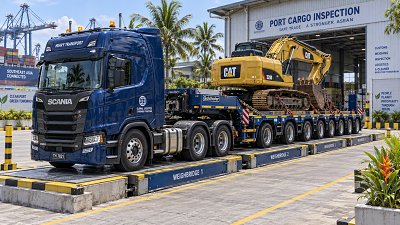
On June 1, 2026, a new cross-border trade facilitation measure moved into full implementation across 45 cities after deployment began in April, centering on a single-document and single-container approach for multimodal transport. For exporters, logistics operators, and supply chain teams involved in rail-road-water movements, this is worth close attention because it signals a practical change in how declarations, inspections, and sealing procedures can be handled through the international trade single window, with direct implications for customs clearance efficiency in cross-border heavy truck transport and semi-trailer exports.
What the June rollout confirms
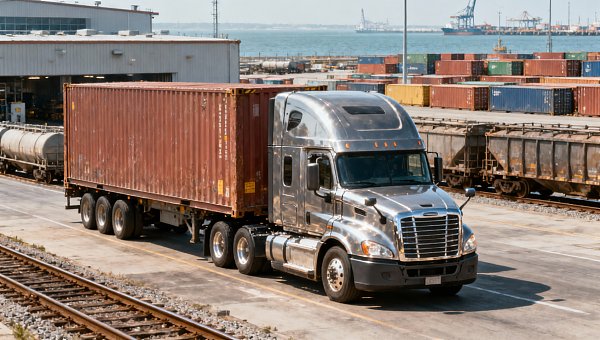
The information provided shows that the General Administration of Customs and 24 departments launched a 2026 special action on cross-border trade facilitation, with the new supervision model fully implemented in 45 cities from June after being deployed from April 2026. The policy is built around a through-bill system and a single-container system. Under this arrangement, companies can submit one multimodal transport application form through the international trade single window in place of the traditional customs transfer form. The stated operational change is full-process one-time declaration, one-time inspection, and one-time sealing for combined rail, road, and water transport.
The same information also confirms the intended result of materially shortening customs clearance time for cross-border heavy truck transportation and semi-trailer exports. No further policy details, numerical targets, or implementation results were provided in the input.
Where the operational impact is likely to be felt
Export shippers using multimodal routes
From an industry perspective, exporters that rely on combined transport modes may be the most immediate users of the new process because the reform changes how transit-related customs procedures are filed. The likely impact is concentrated in shipment planning, customs document preparation, and handover timing across different legs of transport. What deserves closer attention is whether internal shipping teams and brokers can align their documentation flows with the single-window application process.
Logistics and transport service providers coordinating handoffs
Analysis shows that freight operators, multimodal coordinators, and related service providers may feel the change in route execution rather than in commercial terms alone. Because the measure is tied to one-time declaration, inspection, and sealing across rail, road, and water segments, the main operational issue is whether transport handoffs can be organized around a more unified customs workflow. Service providers should watch for changes in process discipline, timing coordination, and document consistency between transport legs.
Manufacturers and exporters of heavy transport equipment
Observably, companies involved in cross-border heavy truck transport and semi-trailer exports are specifically connected to the stated efficiency gains in the provided information. For these businesses, the practical effect may appear in export scheduling, delivery commitments, and customs clearance predictability. What deserves closer attention is not only the shorter clearance expectation itself, but also whether contract timelines and customer communication need to be adjusted once actual implementation performance becomes clearer.
What companies should monitor during implementation
Read the procedural shift, not just the policy headline
Analysis shows that the most important immediate change is procedural: one multimodal application form through the international trade single window replaces the traditional customs transfer form in the described scenario. Companies should focus on how this alters filing steps, review points, and responsibility allocation between internal teams and external agents.
Check document readiness across all transport legs
Because the reform is framed around full-process one-time declaration, one-time inspection, and one-time sealing, businesses should pay attention to whether cargo, route, and container-related information remains consistent from origin to final customs handling point within the multimodal chain. In practice, any mismatch in transport documents or execution records could matter more when the process becomes more integrated.
Separate policy direction from operating reality
From an industry perspective, the announced framework is clear, but actual ease of use in day-to-day operations still needs observation. Companies should therefore distinguish between the policy signal and the on-the-ground rhythm of processing in the cities where full implementation begins. That means keeping communication lines open with customs agents, logistics partners, and customers instead of assuming that every shipment will immediately move under the same practical conditions.
Review delivery and customer-facing commitments
For businesses exporting equipment or arranging cross-border trucking capacity, a shorter clearance process could affect promised lead times and dispatch planning. What deserves closer attention is whether existing delivery commitments, buffer times, and exception-handling plans still match the new process once shipments begin moving under the June framework.
Why this looks like a process signal with longer-term relevance
Observably, this development is more than a routine administrative adjustment because it focuses on reducing procedural fragmentation across multiple transport modes. At the same time, it is more appropriate to understand this as an implementation-stage signal rather than a fully proven end result. The provided information confirms the framework and scope of rollout, but it does not yet establish how uniformly the model will perform across all cities or shipment types.
Analysis shows that the broader industry relevance lies in the direction of customs process integration. For companies operating in cross-border logistics chains, the key question is not only whether one filing replaces another, but whether coordination costs between transport segments actually fall in practice. That is why this remains a policy move that deserves continued operational observation.
How to read the June action now
At this stage, the most balanced reading is that the June rollout marks a concrete procedural change with immediate relevance for multimodal exporters, logistics providers, and businesses tied to cross-border heavy truck and semi-trailer movements. It should not yet be treated as a final measure of outcome, but neither is it a minor symbolic update. It is more appropriate to understand this as a meaningful near-term operating change and a longer-term signal that customs facilitation is being pushed further into integrated multimodal execution.
Basis of this article and what still needs verification
This article is based on the user-provided news title, event date, and event summary related to the 2026 special action on cross-border trade facilitation and the full June rollout of through-bill multimodal supervision in 45 cities. For this type of development, commonly relevant source categories may include official government notices, customs announcements, industry association updates, authoritative media coverage, and standard-setting documents.
A specific official source link was not provided in the input, so further verification is still needed as more formal documents or implementation notices become available. Continued attention should be paid to later official wording, any clarified operating rules, and how the process performs in actual shipment execution after the June rollout.
Trending News
- How to compare concrete mixer truck suppliers by total landed cost
- How axle load limits affect low bed trailer exports to Southeast Asia
- How to locate a truck exhaust system leak before replacing parts
- When does heavy equipment transport require a lowboy trailer?
- When does a light commercial vehicle for urban delivery save fleet costs?
Tag
Recommended News
 Policy & RegulationsHow axle load limits affect low bed trailer exports to Southeast AsiaPlanning low bed trailer export to Southeast Asia? Learn how axle load limits affect legal payload, axle layouts, and route compliance to avoid costly mistakes before ordering.
 Policy & RegulationsGermany Ends EV Subsidy ExtensionGermany ends EV subsidy extension, reshaping EV and commercial vehicle plans in Europe. See how importers, distributors, and Chinese NEV suppliers should respond.
 Policy & RegulationsEU Rule Sets LCA Certification for Truck ImportsEU Rule Sets LCA Certification for Truck Imports: learn how the new EU LCA and EPD compliance rule will affect truck approvals, export timelines, costs, and delivery planning.
 Policy & RegulationsEU Requires LCA Reports for Imported HDVs from Oct 2026EU LCA reports for imported HDVs become mandatory from Oct 2026. Learn how the new EU heavy-duty vehicle carbon compliance rule affects exporters, suppliers, costs, and delivery readiness.
 Policy & RegulationsChina Tightens Export Filing for New Energy Heavy TrucksChina Tightens Export Filing for New Energy Heavy Trucks: learn how new HS code rules and CNAS carbon-footprint reports may impact customs clearance, compliance, and delivery timelines.
 Policy & RegulationsEU Updates CO2 Rules for Heavy-Duty Vehicle ApprovalEU Updates CO2 Rules for Heavy-Duty Vehicle Approval: learn how new lifecycle carbon and battery due diligence requirements affect EU market access, approval timing, and compliance costs.
 Policy & RegulationsChina Customs Adds New Export Fields for Road Transport EquipmentChina Customs adds new export fields for road transport equipment from Aug 15, 2026. Learn how drive type and certification data may affect compliance, clearance speed, and export planning.
 Policy & RegulationsEU Tightens Truck WVTA Brake and Lighting TestsEU Tightens Truck WVTA Brake and Lighting Tests: learn how Regulation (EU) 2026/1387 reshapes brake response, headlamp compliance, certification timing, and EU market access.
 Policy & RegulationsEU Sets CO2 Rules for New Heavy Trucks from 2027EU Sets CO2 Rules for New Heavy Trucks from 2027: learn how new EU CO2 limits, OBD, and remote data upload requirements could reshape type approval, costs, and delivery planning.
 Policy & RegulationsEU Brings Forward Cybersecurity Approval for Heavy TrucksEU heavy truck cybersecurity approval moves to August 1, 2026. Learn how WVTA, UNECE R155, OTA and telematics rules will impact EU exports, type approval and delivery plans.
 Policy & RegulationsEU Moves Truck Cybersecurity WVTA Forward to Aug 1, 2026EU truck cybersecurity WVTA moves to Aug 1, 2026. Learn how UN R155 and EU 2022/1426 affect heavy truck type approval, exports, suppliers, and compliance planning.
 Policy & RegulationsEU Brings Forward WVTA Cybersecurity Approval for TrucksEU Brings Forward WVTA Cybersecurity Approval for Trucks: learn how the 2026 deadline impacts heavy truck exports, retrofit projects, supplier compliance, costs, and EU market-entry planning.
 Policy & RegulationsEU Brings Forward WVTA Cybersecurity Approval for Heavy TrucksEU heavy truck WVTA cybersecurity approval now starts on August 1, 2026. Learn how EU type approval, CSMS audits, ADAS, OTA, and registration risks affect exporters and manufacturers.
 Policy & RegulationsEU Cybersecurity Approval Rule Takes Effect for Heavy TrucksEU Cybersecurity Approval Rule now reshapes heavy trucks market access. Learn how CSMS, UNECE R155, and WVTA deadlines could impact certification, delivery, and EU export readiness.
 Policy & RegulationsEU Requires EN 15038 Declarations for Truck ImportsEU Requires EN 15038 Declarations for Truck Imports: learn how the new EU rule affects heavy truck customs clearance, compliance timing, and export readiness.
 Policy & RegulationsEU Rule Brings SCIP Filing to Imported Truck Battery PartsSCIP filing for imported truck battery parts becomes critical in the EU from Oct 1, 2026. Learn how the rule impacts heavy-duty truck exports, aftermarket parts, and customs compliance.
 Policy & RegulationsEU REACH Expands to Truck Battery PartsEU REACH expands to truck battery parts, covering lithium-ion battery modules, BMS units, and thermal systems. Learn how SCIP filing, SVHC disclosure, and EU export compliance may affect truck suppliers.
 Policy & RegulationsEU Sets Battery Footprint Rule for Heavy TrucksEU Sets Battery Footprint Rule for Heavy Trucks: learn how the 2027 EU battery carbon footprint requirement could impact type approval, customs clearance, and truck exports.
 Policy & RegulationsEU Requires Certified V2X Modules in Heavy TrucksEU Requires Certified V2X Modules in Heavy Trucks from July 22, 2026. Learn how UN R155 and ETSI EN 303 648 rules will impact EU type approval, registration, and exports.
 Policy & RegulationsEU Tightens V2X Approval for Heavy TrucksHeavy trucks entering the EU face tougher V2X approval from July 22, 2026. Learn how UNECE R155/R156 and EU Type Approval will affect registration, exports, and delivery readiness.
 Policy & RegulationsEU Rule Takes Effect: Heavy Trucks Need V2X from July 22, 2026Heavy trucks entering the EU from July 22, 2026 need V2X modules and UN R155 approval. Learn how this rule impacts compliance, certification, exports, and delivery.
 Policy & RegulationsEU Opens Euro 7 Transition for Heavy TrucksEU Opens Euro 7 Transition for Heavy Trucks: learn how new filing rules, battery carbon footprint declarations, and OBD II checks will impact EU truck exports and compliance planning.
 Policy & RegulationsEPA Update Removes Seven Chinese Diesel Engine ModelsEPA Update Removes Seven Chinese Diesel Engine Models: learn how this EPA compliance change could affect North American truck exports, sourcing, certification, and delivery planning.
 Policy & RegulationsEU Enforces Euro 7 for New Heavy TrucksEU Enforces Euro 7 for New Heavy Trucks: learn how stricter NOx, NH₃, and brake particle certification impacts EU market access, registration timing, and exporter compliance costs.
 Policy & RegulationsLight Duty Truck Manufacturer in USA: Key Compliance ChecksLight duty truck manufacturer in USA selection starts with compliance. Learn the key checks for FMVSS, emissions, load ratings, and traceability before you buy.