China Rolls Out Single-Form Intermodal Customs Model
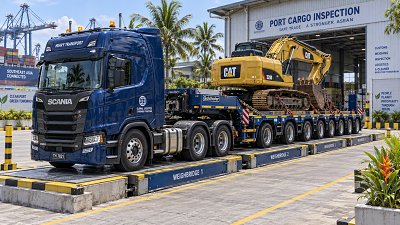
The timing of the underlying event is not clearly specified in the provided information, but the policy update itself states that on April 28, 2026, the General Administration of Customs, together with 24 departments, formally launched an integrated intermodal transport supervision model. Under this approach, exporters can file one intermodal application through the single-window system instead of using the traditional transit declaration process, completing customs declaration, inspection, and sealing at the departure point without repeating procedures at coastal ports. For exporters of complete trucks, chassis, and special-purpose operating vehicles, this is worth close attention because it points to faster outbound clearance, lower compliance friction, and fewer operational errors in large-equipment export flows.
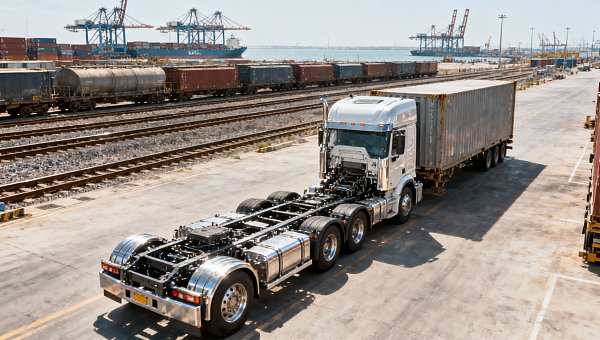
What the New Filing Process Changes in Practice
According to the provided information, the reform was formally introduced on April 28, 2026 by the General Administration of Customs and 24 other departments as part of an integrated intermodal supervision arrangement.
Companies now need to submit only one intermodal application form through the single-window platform. That form replaces the traditional transit declaration document previously used in the process.
The provided summary also states that customs declaration, inspection, and sealing can be completed in one stop at the place of departure, with no need to repeat those procedures at coastal ports during the same movement.
The model has already been implemented in 45 pilot cities. The information provided further indicates that it has significantly shortened export customs clearance time for complete trucks, chassis, special-purpose operating vehicles, and other large equipment, while reducing compliance costs and the risk of operating mistakes.
Where the Impact Is Likely to Be Felt First
Large-vehicle exporters may see the clearest process benefit
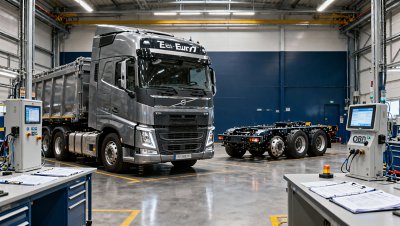
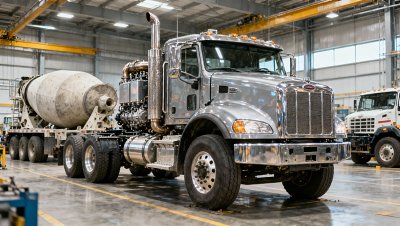
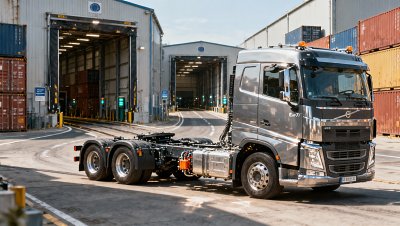
From an industry perspective, exporters handling complete trucks, chassis, and special-purpose vehicles are likely to be among the most directly affected participants because the reform is specifically described as shortening export declaration and clearance time for these cargo categories. The main impact is likely to appear in filing coordination, inspection scheduling, and port handoff management.
What deserves closer attention is whether internal export teams adjust their document preparation and departure-site coordination to match the new single-form workflow rather than continuing to operate around older transit declaration habits.
Supply chain service providers may need to realign execution steps
Analysis shows that freight organizers, customs-related service providers, and other supply chain coordinators may be affected through changes in how filing, inspection, and sealing are sequenced. If more procedures are completed at origin, service workflows tied to coastal-port repetition may need to be simplified or reassigned.
The practical issue to watch is not only speed, but also responsibility allocation: who prepares the single-window submission, who verifies consistency in documents, and who manages the operational handoff once coastal-port repetition is removed.
Manufacturers and delivery planners may need tighter origin-side control
For manufacturers shipping large equipment abroad, the reform may influence production-to-delivery coordination rather than factory output itself. If declaration and inspection are concentrated at the departure point, origin-side readiness becomes more important for dispatch timing.
Observably, the businesses most exposed are those managing bulky export cargo where delays, document mismatches, or repeated port procedures can disrupt planned delivery windows.
What Companies Should Track as the Reform Expands
Watch the distinction between policy language and operating rules
Analysis shows that the announcement sends a clear policy signal, but companies still need to follow how the model is applied in actual transactions and city-level execution. The difference between a formal framework and day-to-day processing standards will matter for exporters with time-sensitive shipments.
Review document readiness for single-window submission
Because one intermodal application now replaces the traditional transit declaration document, exporters and service partners should pay close attention to document consistency, filing completeness, and internal review steps. This is especially relevant where multiple teams share responsibility for customs paperwork and shipment release.
Focus on cargo categories already named in the policy summary
What deserves closer attention is the policy's explicit relevance to complete trucks, chassis, special-purpose operating vehicles, and other large equipment. Companies active in those categories may want to map where current delays occur and whether the new origin-based process can reduce repeat handling or filing risk.
Prepare customer communication around delivery timing and compliance steps
Where exporters serve overseas buyers or project-based delivery schedules, it may be useful to update customers on possible procedural changes in export execution. The key issue is not to overstate guaranteed outcomes, but to explain that documentation flow and customs handling steps may become more streamlined under the new model.
Why This Looks Like More Than a One-Off Administrative Adjustment
Observation suggests this development is best read as a process-efficiency signal within cross-border logistics rather than as a standalone customs notice with limited relevance. The combination of one-form filing, origin-site completion, and no repeated coastal-port procedures indicates an effort to reduce friction across connected transport stages.
At the same time, it is more appropriate to understand this as an ongoing industry dynamic rather than a fully settled end state. The provided information confirms implementation in 45 pilot cities and cites faster declaration efficiency, but continued observation is still needed on how consistently the model is executed across different shipment types and business participants.
How to Read the Current Signal
Based on the information provided, the immediate significance lies in improved export processing for large cross-border vehicle and equipment shipments, especially where customs repetition has historically added time and error risk. That makes the update relevant not only to direct exporters, but also to the service providers and operational teams supporting those shipments.
A neutral reading is that this is a meaningful procedural change with practical implications, but one that should still be assessed through implementation details. It is more appropriate to understand the update as a concrete near-term efficiency measure and a longer-term operational signal that deserves continued industry attention.
About the Information Behind This Article
This article is based on the user-provided news title, event timing note, and event summary. The specific official source link was not provided in the input, so further verification remains necessary.
For this type of policy and industry update, commonly relevant source categories may include official government notices, company disclosures, industry association updates, authoritative media coverage, and standard-setting documents. Where follow-up observation is needed, the most relevant areas to track are later official wording, implementation details in practice, and any further clarification affecting export procedures for trucks, chassis, and special-purpose vehicles.
Trending News
- How order size affects wholesale pricing for cement mixer trucks
- Commercial Vehicle Leaders Hold Firm in Q1–Q3 2026 Automotive Influence Index
- How to choose a refrigerated truck for multi-stop urban deliveries
- Tata Motors Returns to Q2 Profit on Strong Commercial Vehicle Demand
- How to load an excavator onto a lowbed trailer without tipping
Tag
Recommended News
 Policy & RegulationsHow axle load limits affect low bed trailer exports to Southeast AsiaPlanning low bed trailer export to Southeast Asia? Learn how axle load limits affect legal payload, axle layouts, and route compliance to avoid costly mistakes before ordering.
 Policy & RegulationsGermany Ends EV Subsidy ExtensionGermany ends EV subsidy extension, reshaping EV and commercial vehicle plans in Europe. See how importers, distributors, and Chinese NEV suppliers should respond.
 Policy & RegulationsEU Rule Sets LCA Certification for Truck ImportsEU Rule Sets LCA Certification for Truck Imports: learn how the new EU LCA and EPD compliance rule will affect truck approvals, export timelines, costs, and delivery planning.
 Policy & RegulationsEU Requires LCA Reports for Imported HDVs from Oct 2026EU LCA reports for imported HDVs become mandatory from Oct 2026. Learn how the new EU heavy-duty vehicle carbon compliance rule affects exporters, suppliers, costs, and delivery readiness.
 Policy & RegulationsChina Tightens Export Filing for New Energy Heavy TrucksChina Tightens Export Filing for New Energy Heavy Trucks: learn how new HS code rules and CNAS carbon-footprint reports may impact customs clearance, compliance, and delivery timelines.
 Policy & RegulationsEU Updates CO2 Rules for Heavy-Duty Vehicle ApprovalEU Updates CO2 Rules for Heavy-Duty Vehicle Approval: learn how new lifecycle carbon and battery due diligence requirements affect EU market access, approval timing, and compliance costs.
 Policy & RegulationsChina Customs Adds New Export Fields for Road Transport EquipmentChina Customs adds new export fields for road transport equipment from Aug 15, 2026. Learn how drive type and certification data may affect compliance, clearance speed, and export planning.
 Policy & RegulationsEU Tightens Truck WVTA Brake and Lighting TestsEU Tightens Truck WVTA Brake and Lighting Tests: learn how Regulation (EU) 2026/1387 reshapes brake response, headlamp compliance, certification timing, and EU market access.
 Policy & RegulationsEU Sets CO2 Rules for New Heavy Trucks from 2027EU Sets CO2 Rules for New Heavy Trucks from 2027: learn how new EU CO2 limits, OBD, and remote data upload requirements could reshape type approval, costs, and delivery planning.
 Policy & RegulationsEU Brings Forward Cybersecurity Approval for Heavy TrucksEU heavy truck cybersecurity approval moves to August 1, 2026. Learn how WVTA, UNECE R155, OTA and telematics rules will impact EU exports, type approval and delivery plans.
 Policy & RegulationsEU Moves Truck Cybersecurity WVTA Forward to Aug 1, 2026EU truck cybersecurity WVTA moves to Aug 1, 2026. Learn how UN R155 and EU 2022/1426 affect heavy truck type approval, exports, suppliers, and compliance planning.
 Policy & RegulationsEU Brings Forward WVTA Cybersecurity Approval for TrucksEU Brings Forward WVTA Cybersecurity Approval for Trucks: learn how the 2026 deadline impacts heavy truck exports, retrofit projects, supplier compliance, costs, and EU market-entry planning.
 Policy & RegulationsEU Brings Forward WVTA Cybersecurity Approval for Heavy TrucksEU heavy truck WVTA cybersecurity approval now starts on August 1, 2026. Learn how EU type approval, CSMS audits, ADAS, OTA, and registration risks affect exporters and manufacturers.
 Policy & RegulationsEU Cybersecurity Approval Rule Takes Effect for Heavy TrucksEU Cybersecurity Approval Rule now reshapes heavy trucks market access. Learn how CSMS, UNECE R155, and WVTA deadlines could impact certification, delivery, and EU export readiness.
 Policy & RegulationsEU Requires EN 15038 Declarations for Truck ImportsEU Requires EN 15038 Declarations for Truck Imports: learn how the new EU rule affects heavy truck customs clearance, compliance timing, and export readiness.
 Policy & RegulationsEU Rule Brings SCIP Filing to Imported Truck Battery PartsSCIP filing for imported truck battery parts becomes critical in the EU from Oct 1, 2026. Learn how the rule impacts heavy-duty truck exports, aftermarket parts, and customs compliance.
 Policy & RegulationsEU REACH Expands to Truck Battery PartsEU REACH expands to truck battery parts, covering lithium-ion battery modules, BMS units, and thermal systems. Learn how SCIP filing, SVHC disclosure, and EU export compliance may affect truck suppliers.
 Policy & RegulationsEU Sets Battery Footprint Rule for Heavy TrucksEU Sets Battery Footprint Rule for Heavy Trucks: learn how the 2027 EU battery carbon footprint requirement could impact type approval, customs clearance, and truck exports.
 Policy & RegulationsEU Requires Certified V2X Modules in Heavy TrucksEU Requires Certified V2X Modules in Heavy Trucks from July 22, 2026. Learn how UN R155 and ETSI EN 303 648 rules will impact EU type approval, registration, and exports.
 Policy & RegulationsEU Tightens V2X Approval for Heavy TrucksHeavy trucks entering the EU face tougher V2X approval from July 22, 2026. Learn how UNECE R155/R156 and EU Type Approval will affect registration, exports, and delivery readiness.
 Policy & RegulationsEU Rule Takes Effect: Heavy Trucks Need V2X from July 22, 2026Heavy trucks entering the EU from July 22, 2026 need V2X modules and UN R155 approval. Learn how this rule impacts compliance, certification, exports, and delivery.
 Policy & RegulationsEU Opens Euro 7 Transition for Heavy TrucksEU Opens Euro 7 Transition for Heavy Trucks: learn how new filing rules, battery carbon footprint declarations, and OBD II checks will impact EU truck exports and compliance planning.
 Policy & RegulationsEPA Update Removes Seven Chinese Diesel Engine ModelsEPA Update Removes Seven Chinese Diesel Engine Models: learn how this EPA compliance change could affect North American truck exports, sourcing, certification, and delivery planning.
 Policy & RegulationsEU Enforces Euro 7 for New Heavy TrucksEU Enforces Euro 7 for New Heavy Trucks: learn how stricter NOx, NH₃, and brake particle certification impacts EU market access, registration timing, and exporter compliance costs.
 Policy & RegulationsLight Duty Truck Manufacturer in USA: Key Compliance ChecksLight duty truck manufacturer in USA selection starts with compliance. Learn the key checks for FMVSS, emissions, load ratings, and traceability before you buy.