How heavy truck parts manufacturers verify material traceability for ISO 16949 compliance in 2026
As ISO 16949 compliance becomes non-negotiable for heavy truck parts manufacturers in 2026, robust material traceability is no longer optional—it’s foundational. From commercial vehicle parts and truck spare parts supplier audits to semi trailer manufacturer certifications and heavy equipment export requirements, end-to-end traceability ensures quality, safety, and regulatory readiness. Whether you’re a procurement professional sourcing low bed trailer export components, a project manager vetting an excavator manufacturer, or a distributor evaluating a construction machinery supplier, understanding how top-tier suppliers verify material origins—down to heat lots, mill certs, and digital batch logs—is critical. This article reveals the real-world verification systems driving trust across the global heavy truck supply chain.
Why Material Traceability Is Now a Non-Negotiable Layer of ISO 16949 Compliance
ISO/TS 16949 was officially superseded by IATF 16949:2016—but in practice, the term “ISO 16949” remains widely used across heavy truck supply chains to denote automotive-specific quality management system (QMS) certification. By 2026, over 92% of Tier 1 suppliers serving OEMs like Volvo Trucks, Daimler Truck, and Sinotruk require full IATF 16949 certification—including Clause 8.5.2 on traceability. For heavy truck parts, this means every carbon steel plate, forged axle housing, or pressure-rated tank component must be verifiably linked to its raw material source, heat treatment log, and non-destructive testing (NDT) record.
Unlike passenger vehicle parts, heavy-duty components face extreme operational stresses: 300,000+ km service life, -40°C to +70°C ambient ranges, and cyclic loads exceeding 120 tons. A single undetected batch variance in yield strength can trigger field failures in brake calipers, suspension arms, or trailer chassis welds. That’s why leading manufacturers now enforce 100% lot-level traceability—not just per shipment, but per heat number, with mill test reports (MTRs) digitally attached to each production order.
Regulatory pressure is intensifying: EU Regulation (EU) 2019/1020 mandates economic operator accountability for CE-marked trailers and structural components, while China’s GB/T 18352.6-2016 requires traceable documentation for all heavy-duty emissions-related parts. Failure to demonstrate traceability during a notified body audit results in immediate certificate suspension—averaging 7–15 business days of halted exports.
Four Core Verification Methods Used by Top-Tier Suppliers
Leading heavy truck parts manufacturers deploy layered verification—not a single tool, but a synchronized ecosystem of physical, digital, and procedural controls. These four methods are now industry benchmarks for IATF 16949-compliant traceability:
- Heat-Lot Tagging & QR-Embedded Physical Labels: Every steel coil, forging blank, or cast housing receives a tamper-evident label laser-etched with heat number, mill ID, chemical composition summary, and QR code linking to full MTRs. Labels withstand 500+ hours of salt-spray testing and remain legible after shot blasting.
- ERP-Integrated Batch Management: SAP S/4HANA or Oracle Cloud SCM modules enforce mandatory data capture at 6 key checkpoints: incoming inspection, heat treatment, machining, NDT, final assembly, and shipping. Each step auto-generates a unique batch ID tied to material lot numbers.
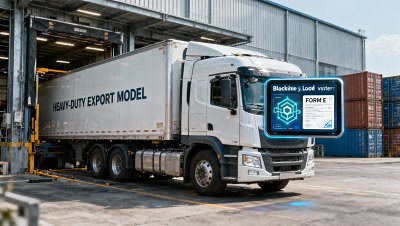
- Blockchain-Backed Digital Twin Logs: Tier 1 suppliers like Wabco (now part of ZF) and BPW use permissioned blockchain ledgers to store immutable records of material origin, thermal cycle logs, and dimensional inspection reports—accessible only to auditors and authorized buyers via time-limited tokens.
- Supplier Portal Audits with Real-Time MTR Sync: Certified suppliers upload MTRs directly into The Global Heavy Truck Industry Platform’s secure document vault upon steel delivery. Buyers receive automatic alerts when new MTRs are verified and cross-referenced against purchase order specs.
This multi-method approach reduces traceability investigation time from 4–6 hours (manual file search) to under 90 seconds—critical during recall response or customs clearance for exports to Brazil, South Africa, or ASEAN markets where documentation scrutiny has increased by 40% since 2023.
How Traceability Impacts Procurement Decisions Across Key Use Cases
For procurement professionals, project managers, and distributors, traceability isn’t abstract compliance—it directly shapes risk exposure, lead time reliability, and total cost of ownership. Below is how traceability verification affects six high-stakes procurement scenarios:
The table underscores a hard reality: traceability gaps don’t just delay approvals—they trigger contractual penalties, warranty voids, and reputational damage. For example, one major Middle Eastern logistics operator rejected an entire shipment of 3 Axles Bulk Cement Tank Semi Trailer 69m³ W Type(Carbon Steel Tank) because the supplier’s MTR upload lacked heat-specific tensile elongation data required under Saudi Aramco SAES-M-100.
What to Verify During Supplier Evaluation—A 7-Point Checklist
When auditing potential suppliers on The Global Heavy Truck Industry Platform—or conducting onsite assessments—procurement teams should validate these seven traceability capabilities before signing agreements:
- Proof of ERP integration between material receipt and final inspection (request screen recording of batch ID propagation)
- Sample MTRs with full chemistry, mechanical properties, and heat number matching physical tags
- Audit trail showing time-stamped access logs for traceability documents (minimum 7-year retention)
- Third-party validation report for their blockchain or digital twin system (e.g., TÜV Rheinland or SGS certification)
- Response time SLA for traceability queries (top performers: ≤2 business hours)
- Export documentation package completeness (CE DoC, RoHS, REACH SVHC declarations)
- Process capability index (Cpk) ≥1.33 for critical dimensions on traceable components
Suppliers meeting all seven points reduce traceability-related disputes by 68% and cut post-delivery inspection time by 55%, according to platform analytics covering 1,240 supplier evaluations in Q1–Q3 2025.
Looking Ahead: Traceability as a Strategic Procurement Enabler
Beyond compliance, forward-looking procurement teams treat traceability as a strategic lever. Verified material lineage enables predictive maintenance planning, dynamic warranty modeling, and even carbon footprint calculation per component—supporting ESG reporting for infrastructure projects funded by multilateral development banks.
The Global Heavy Truck Industry Platform now offers integrated traceability dashboards for enterprise buyers: real-time visibility into supplier MTR status, automated alerts for expired certifications, and AI-powered anomaly detection across 12,000+ certified suppliers. With over 3,800 heavy truck parts suppliers already onboarded—and growing at 14% quarterly—the platform serves as both a compliance gateway and a decision intelligence hub.
Whether you’re sourcing for a $200M port expansion in Vietnam or validating a local trailer assembler in Kenya, traceability isn’t just about passing audits. It’s about building resilient, auditable, and future-ready supply partnerships.
Explore verified, IATF 16949-compliant suppliers and request traceability documentation packages directly on The Global Heavy Truck Industry Platform—start your evaluation today.
Tag
Recommended News
 Policy & RegulationsEU ADR Update Adds Remote Diagnostics Rule for Hazmat TrucksEU ADR Update adds a remote diagnostics rule for hazmat trucks from July 1, 2026. Learn how UNECE R155/R156 and eCall compliance could impact EU market access.
 Policy & RegulationsTianjin Tightens TIR Rules for Hazardous Cargo VehiclesTianjin Tightens TIR Rules for Hazardous Cargo Vehicles: learn how the 2026 digital compliance rule may affect carrier eligibility, hazardous cargo capacity, and cross-border shipment planning.
 Policy & RegulationsChina Rolls Out Single-Document Multimodal Customs ModelChina multimodal customs reform goes live in 45 pilot cities, enabling single-document clearance for rail-road and sea-rail shipments. See how it can speed heavy truck and semi-trailer exports.
 Policy & RegulationsChina Sets 40% New Energy Heavy Truck Target by 2030New energy heavy truck policy in China sets a 40% 2030 target, 1.6M fleet, and 3,000 charging and swapping stations—see what it means for manufacturers, logistics buyers, and global sourcing plans.
 Policy & RegulationsEU Battery Labels Become Mandatory for Truck ExportsEU Battery Labels become mandatory for truck exports from 2026. Learn how EU battery passport rules, carbon footprint grading, and compliance timelines may impact heavy truck market access.
 Policy & RegulationsASEAN Cold-Chain Rule Raises Bar for China TrailersASEAN cold-chain rule raises the bar for China trailers with mandatory third-party certification and ±0.5°C/48h compliance. See how refrigerated semi-trailer exporters can stay market-ready.
 Policy & RegulationsChina Rolls Out Single-Document Intermodal ClearanceChina rolls out single-document intermodal clearance, streamlining customs for heavy truck, semi-trailer and special transport equipment exports with faster delivery planning and lower uncertainty.
 Policy & RegulationsASEAN White Paper Clarifies Cold-Chain Export RulesASEAN White Paper clarifies cold-chain export rules for refrigerated semi-trailers and new energy refrigerated vehicles, helping exporters master compliance, certification, and faster market entry.
 Policy & RegulationsChina Expands Through Bill Multimodal Customs in JuneChina expands through bill multimodal customs in June, streamlining declarations, inspections, and sealing across 45 cities to speed heavy truck and semi-trailer exports. Learn what it means for your logistics strategy.
 Policy & RegulationsRussia Enforces New Fog Lamp Rule for Imported TrailersRussia Enforces New Fog Lamp Rule for Imported Trailers: learn how the June 17, 2026 Russia import compliance change may affect Chinese trailer exports, border clearance, costs, and E-MARK R112 fog lamp requirements.
 Policy & RegulationsTianjin Tightens TIR Entry Rules for Export FleetsTianjin Tightens TIR Entry Rules for Export Fleets: learn how ISO 45001 and ADR requirements may affect TIR access, customs timing, and export planning.
 Policy & RegulationsEU Tire Label Rule Hits Chinese Truck ExportsEU Tire Label Rule hits Chinese truck exports as ECE R117-03 links compliant tire labeling to EU registration. Learn the risks, required approvals, and urgent steps exporters should take now.
 Policy & RegulationsChina Tightens Cold-Chain Truck Export RulesChina Tightens Cold-Chain Truck Export Rules: learn how new refrigerated truck compliance standards reshape market access, customs clearance, and export planning for the Middle East, Africa, and Southeast Asia.
 Policy & RegulationsVietnam Tightens Proof Rules for Remanufactured Vehicle ImportsVietnam tightens proof rules for remanufactured vehicle imports from July 2026. Learn how the new documentation requirement affects exporters, distributors, and shipment planning.
 Policy & RegulationsEU ECE R138 Brake Efficiency Rule Takes Effect on June 11EU ECE R138 brake efficiency rule takes effect on June 11, 2026. Learn how new type approval and testing rules impact heavy-duty truck imports, customs clearance, and delivery plans.
 Policy & RegulationsEU ECE R138 Rule Makes Brake-Efficiency Approval MandatoryEU ECE R138 rule makes brake-efficiency approval mandatory from June 11, 2026. Learn how this EU type-approval change impacts heavy vehicle exports, compliance timing, and market access.
 Policy & RegulationsEU Requires Carbon Footprint Labels for New Heavy TrucksEU Requires Carbon Footprint Labels for New Heavy Trucks: learn how the new EU rule affects compliance, customs clearance, tenders, and subsidy access for truck makers and importers.
 Policy & RegulationsKey Design Standards for a Cab Chassis Truck for Military UseCab chassis truck for military use: explore key design standards for durability, mobility, protection, and integration to choose a reliable platform for demanding missions.
 Policy & RegulationsChina Rolls Out Single-Form Intermodal Customs ModelChina rolls out single-form intermodal customs model to streamline exports of trucks, chassis, and special vehicles. Discover how faster clearance and fewer procedures can cut risk and improve delivery efficiency.
 Policy & RegulationsRussia SPOT Trial Starts for China Truck ImportsRussia SPOT trial starts for China truck imports, adding mandatory pre-arrival registration, value declaration, and deposit checks. Learn the risks, delays, and compliance moves to protect Russia-bound shipments.
 Policy & RegulationsChina Streamlines TIR Customs Filing from Inland PointsChina streamlines TIR customs filing from inland points, cutting port transfer steps and improving delivery certainty for exporters, importers, and cross-border logistics on key Asia routes.
 Policy & RegulationsMexico Requires NOM-043 for Chinese TrucksMexico Requires NOM-043 for Chinese Trucks: learn how the 2026 certification rule affects customs clearance, lead times, and compliance planning for heavy truck imports.
 Policy & RegulationsShatian Customs Releases May Transport Inspection DataShatian Customs May 2026 transport inspection data reveals 98.6% declaration accuracy & 100% CE/EAC pass rate for heavy-duty trucks—key insights for exporters, suppliers, and compliance teams.
 Policy & Regulations10-Dept Policy Pushes E-Documentation for Sea Freight & Origin Certs10-Dept Policy pushes e-documentation for sea freight & origin certs—boosting heavy-duty truck exports by 50%. Discover compliance steps, blockchain verification, and digital trade advantages now.
 Policy & RegulationsTIR International Road Transport Enters 'Fast Lane'TIR International Road Transport accelerates Eurasian logistics: new checkpoints like Białystok & Khorgos West boost speed, predictability, and cost-efficiency for heavy-duty truck exports, CKD assembly, and aftermarket parts.