How to spot early signs of truck hydraulic system failure
A truck hydraulic system almost never fails “all at once.” Long before a hoist stops lifting, a steering assist becomes erratic, or a PTO-driven circuit loses force under load, the system usually sends smaller warnings. For after-sales maintenance teams, those early signs matter. Catching a pressure issue, fluid problem, seal failure, or pump inefficiency early can prevent expensive downtime, secondary damage, and avoidable safety risks.
In real workshop conditions, the challenge is not whether warning signs exist. It is whether they are recognized soon enough, interpreted correctly, and linked to the right root cause. A slow-moving cylinder may look like a worn pump. A whining sound may be blamed on normal aging when it actually points to air ingress or fluid starvation. A hot hydraulic line may seem minor until contamination, pressure bypass, or internal leakage turns into a major repair.
This guide focuses on the practical side of identifying early truck hydraulic system failure, especially for maintenance personnel supporting working vehicles in logistics, municipal service, construction, and industrial transport. The goal is simple: know what to look for before the truck is sidelined.
Why early symptoms are easy to miss
Hydraulic systems are often judged by one obvious question: does the function still work? If the dump body still raises, the stabilizer still extends, or the auxiliary attachment still responds, operators may assume the system is healthy. But hydraulic performance usually declines in stages. The first stage is subtle: slightly slower cycle times, slightly more noise, slightly higher oil temperature, or slightly inconsistent response under load.
For after-sales teams, this is where experience counts. A truck hydraulic system under heavy daily use does not fail only from component age. It also fails from contamination, poor fluid condition, suction restriction, hose deterioration, cavitation, overloading, bad maintenance habits, and mismatched replacement parts. That means the same symptom can come from different faults, and different faults can create the same symptom.
Instead of waiting for a complete breakdown, it is better to track changes in behavior. Comparing present performance to normal operating behavior often reveals a developing problem sooner than a visual inspection alone.
Pressure loss: the warning sign that usually appears first
One of the earliest and most important signs of truck hydraulic system trouble is pressure loss. It may not show up as total non-function at first. More often, it appears as reduced lifting force, hesitation under load, weak actuation at higher operating temperatures, or the need for higher engine speed to achieve normal movement.
Pressure loss can come from several places:
- Worn hydraulic pump components
- Internal leakage in cylinders or control valves
- Relief valve problems
- Damaged seals
- Low hydraulic fluid level
- Air entering the suction side of the system
A useful field clue is whether the problem changes with temperature. If the system performs reasonably well when cold but weakens noticeably as the oil warms, internal leakage is often a strong suspect. Thinner hot oil escapes more easily across worn surfaces and damaged seals. If performance is poor from startup, look more closely at pump condition, fluid level, suction restriction, or severe contamination.
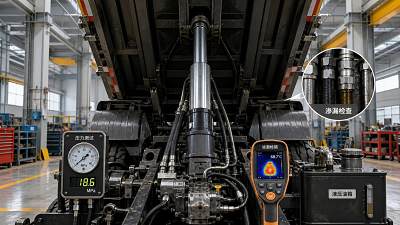
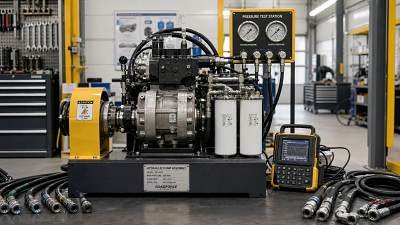
Maintenance teams should not rely only on “feel.” Pressure testing at key points is often the fastest way to confirm whether the issue is at the pump, valve, or actuator level. A truck hydraulic system that still works but cannot maintain pressure consistently is already asking for attention.
Slow or jerky movement is not just an operator complaint
Operators often describe early hydraulic trouble in simple language: “It’s getting slow,” “it shudders,” or “it doesn’t move smoothly anymore.” Those comments should not be dismissed as subjective. Slow or jerky motion is one of the clearest early indicators that something inside the hydraulic circuit has changed.
Common causes include:
- Contaminated hydraulic oil
- Air entrainment or aeration
- Clogged filters
- Restricted suction lines
- Valve spool sticking
- Cylinder seal wear
- Insufficient flow from the pump
Jerky cylinder extension is especially important. If a body lift, tail lift, or hydraulic attachment starts moving in pulses instead of a clean stroke, the issue may involve trapped air, unstable flow, or internal bypassing. In some cases, the movement becomes more unstable at certain points in the stroke, which can indicate localized cylinder wear or contamination affecting valve control.
Slow response should also be compared across functions. If every hydraulic function is slow, the fault may be more centralized, such as pump wear, low fluid level, or filter restriction. If only one function is affected, the problem may be local to a valve section, hose, cylinder, or branch circuit.
Unusual noise often tells the story before disassembly does
A healthy truck hydraulic system has a normal operating sound profile. Experienced technicians know the difference between expected pump noise and the sharper, more troubling sounds that suggest trouble is developing.
Listen for:
- Whining or high-pitched pump noise
- Rattling during function activation
- Knocking or vibration in the lines
- Buzzing near relief valves
- Foaming sounds in the reservoir
Whining is often associated with cavitation or aeration. Cavitation happens when the pump does not receive enough fluid at the inlet, causing vapor bubbles that collapse violently inside the pump. This can result from blocked suction strainers, collapsed hoses, wrong oil viscosity, or low fluid level. Aeration, by contrast, involves air entering the system through loose fittings, damaged suction hoses, or poor seals. Both conditions reduce performance, raise temperature, and damage components over time.
If relief valve buzzing becomes frequent, the system may be repeatedly hitting pressure limits due to overload, misadjustment, or flow issues. That repeated bypass creates heat and wastes energy. The truck may still appear operational, but the hydraulic circuit is working harder than it should.
Fluid leaks: obvious outside, hidden inside
External leaks are easy to understand but often underestimated. A damp hose fitting, wet cylinder rod, or oil-stained valve block is not just a housekeeping issue. It is evidence that sealing integrity has already been compromised. Small leaks tend to grow under vibration, pressure cycling, and temperature change.
Check closely around:
- Hose ends and crimped fittings
- Cylinder rod seals and gland areas
- Pump shaft seals
- Valve block connections
- Reservoir joints and return lines
But internal leakage is the more deceptive problem. It leaves no puddle under the truck, yet it can seriously weaken the truck hydraulic system. A cylinder may drift under load, a lifted body may settle slowly, or a function may require repeated activation to hold position. Those are classic signs that oil is bypassing inside a cylinder or control valve.
Teams sometimes replace hoses and seals while missing the internal leak that caused the real performance complaint. That is why leak diagnosis should include both visual inspection and function-based testing.
Overheating should never be treated as normal
Heat is one of the clearest indicators that hydraulic inefficiency is building inside the system. A truck hydraulic system naturally generates some heat, especially in demanding duty cycles, but persistent overheating means energy is being lost where it should be doing useful work.
Possible causes include:
- Relief valve bypassing too often
- Internal leakage in pumps, valves, or cylinders
- Incorrect hydraulic fluid viscosity
- Contaminated oil
- Poor reservoir cooling
- Blocked coolers or restricted return flow
Excess heat accelerates fluid degradation, reduces lubrication quality, hardens seals, and increases wear rates throughout the circuit. It also makes other symptoms worse. A system with marginal pump wear may still function when cool but lose output badly once hot. That is why temperature trends should be monitored, not just absolute overheating events.
If technicians notice frequent hot-touch lines, discolored oil, burnt odor, or a consistent drop in performance during long work cycles, they should treat those signs as part of a hydraulic fault pattern rather than as separate annoyances.
Contaminated fluid often sits behind multiple symptoms
When a truck hydraulic system develops several small problems at once, contaminated fluid is often at the center of it. Dirt, metal particles, water, degraded oil, and seal debris can affect nearly every component. Valves begin to stick, filters load up faster, pumps wear more quickly, and fine internal clearances stop behaving as designed.
Watch for these clues:
- Cloudy or milky fluid, suggesting water contamination
- Darkened oil or burnt smell, suggesting oxidation or overheating
- Foaming in the reservoir
- Unusual filter loading or repeated filter clogging
- Metallic particles found during inspection
Fluid condition tells a story about the health of the entire system. Simply topping up oil without checking quality can delay the diagnosis and allow wear to continue. For after-sales teams supporting fleets or exported equipment, maintaining the correct fluid specification is just as important as maintaining the correct fluid level.
A practical inspection routine for maintenance teams
When a truck comes in with suspected hydraulic issues, a consistent routine reduces guesswork. It also helps teams separate a true hydraulic fault from an operator impression or a load-related complaint.
- Start with the operator’s description. Ask when the problem occurs: cold start, hot operation, full load, certain functions only, or all functions.
- Inspect fluid level and condition. Look for discoloration, foam, water contamination, and odor.
- Check for external leaks. Pay close attention to suction lines, fittings, cylinder seals, and pump areas.
- Listen during operation. Noise changes during actuation can point toward cavitation, aeration, or relief activity.
- Observe speed and smoothness. Compare unloaded and loaded performance if safe to do so.
- Check temperature behavior. Does performance degrade as the system warms?
- Test pressure and flow where needed. Instrumented checks are often the dividing line between assumption and diagnosis.
- Inspect filtration and breathing components. A blocked filter or failed breather can drive larger issues.
This approach is especially useful for service teams handling multiple truck brands, body systems, and hydraulic configurations. In a global heavy truck supply environment, parts and system layouts vary, but the logic of early symptom detection remains consistent.
Common misjudgments that delay the right repair
Several mistakes show up repeatedly in hydraulic troubleshooting. One is replacing the pump too early. Pumps do fail, but weak performance is not always a pump problem. If a new pump is installed into a contaminated system with suction restriction or internal valve leakage, the complaint often returns.
Another mistake is treating leaks as separate cosmetic issues instead of signs of broader system stress. Repeated hose failures, for example, may point to pressure spikes, misrouting, vibration, or overheating rather than poor hose quality alone.
There is also a tendency to overlook the importance of correct parts matching. In international sourcing and aftermarket service, maintenance teams may work with replacement valves, hoses, filters, seals, or cylinder kits from different suppliers. Compatibility matters. A part that physically fits but does not match pressure rating, flow characteristics, seal material, or fluid compatibility can create fresh hydraulic problems instead of solving the original one.
When early diagnosis becomes a sourcing advantage
For maintenance teams, finding the fault early is only half the job. The next challenge is securing the right replacement components quickly and with confidence. That is particularly relevant in the heavy truck and commercial vehicle sector, where uptime depends not only on technical diagnosis but also on access to reliable suppliers across pumps, PTO systems, cylinders, valves, hoses, tanks, and spare parts.
This is where a well-structured industry sourcing platform becomes useful in practice. A global B2B marketplace focused on heavy trucks and equipment can help maintenance buyers compare suppliers, review component categories, and identify suitable sources for hydraulic-related truck parts without losing time across disconnected channels. For after-sales service operations handling diverse fleets, that visibility can support faster repair planning and more informed purchasing decisions.
What to treat as urgent
Some symptoms allow for scheduled inspection. Others deserve immediate action. Stop and isolate the truck hydraulic system for urgent evaluation if you find rapid fluid loss, severe cavitation noise, sudden overheating, uncontrolled movement, major drift under load, or repeated pressure relief events during normal operation. These are no longer early signs; they are warning signals that the system may be close to a damaging failure.
Early attention is what keeps hydraulic faults manageable. A small change in sound, speed, heat, or pressure may feel easy to postpone on a busy service schedule, but those are often the moments when the cheapest and safest repair is still possible. For after-sales maintenance teams, spotting those signals early is not just good practice. It is one of the most effective ways to protect equipment reliability, reduce downtime, and keep truck operations moving.
Trending News
- How does operating weight affect the price of a new excavator?
- How to compare concrete mixer truck suppliers by total landed cost
- How axle load limits affect low bed trailer exports to Southeast Asia
- How to locate a truck exhaust system leak before replacing parts
- When does heavy equipment transport require a lowboy trailer?
Tag
Recommended News
 FAQHow to spot early signs of truck hydraulic system failureTruck hydraulic system issues rarely start with total failure. Learn the early signs—pressure loss, noise, leaks, heat, and jerky movement—to prevent downtime and costly repairs.
 FAQHow to Diagnose Common Truck Steering System Problems Before They Cause DowntimeTruck steering system problems can cause costly downtime. Learn how to spot early warning signs, diagnose faults fast, and keep fleets safe and reliable.
 FAQTruck Air System Problems: Common Failure Points and FixesTruck air system problems can start with slow pressure build, leaks, or moisture. Learn common failure points, practical fixes, and how to improve truck uptime and safety.
 FAQExcavator Parts Failure Signs You Should Not IgnoreExcavator parts warning signs often start small. Learn how to spot wear, hydraulic weakness, overheating, and undercarriage damage early to reduce downtime and avoid costly shutdowns.
 FAQTruck Axle Failure Signs and Maintenance Checks That MatterTruck axle warning signs often start with heat, noise, leaks, or uneven tire wear. Learn the key maintenance checks that prevent costly downtime and unsafe failures.
 FAQTruck Wing Loading Problems and How to Prevent DowntimeTruck wing loading problems often start with small daily errors. Learn practical checks, route-based prevention tips, and smart maintenance steps to cut downtime and keep deliveries moving.
 FAQTruck Cement Delivery Problems: Common Causes and Practical FixesTruck cement delivery problems can cause blockages, delays, and waste. Learn the common causes, practical fixes, and smart checks to improve reliability and reduce downtime.
 FAQTruck Refrigerated Unit Failures That Increase Cargo Loss RiskTruck refrigerated failures can quietly raise cargo loss risk. Learn how route type, heat, airflow, seals, and parts planning affect cold-chain reliability.
 FAQTruck Transmission Problems: Early Signs, Causes, and Fix OptionsTruck transmission issues can start with subtle shifts, slipping, or heat buildup. Learn early signs, key causes, and practical repair or rebuild options for every duty cycle.
 FAQTruck Pump Troubleshooting: Common Pressure Loss Causes and FixesTruck pump troubleshooting guide: discover common pressure loss causes, warning signs, and practical fixes to restore hydraulic performance, reduce downtime, and prevent repeat failures.
 FAQHow to Evaluate a Truck Cement Supplier for Delivery RiskTruck cement supplier evaluation starts with delivery risk. Learn how to assess capacity, logistics control, export readiness, and on-time performance before you place an order.
 FAQExcavator Bucket Sizes Explained for Trenching, Loading, and Rock WorkExcavator bucket size affects trenching accuracy, loading speed, and rock work durability. Learn how to choose the right excavator bucket for better productivity and lower wear.
 FAQTruck Battery Problems: Signs, Causes, and FixesTruck battery problems can lead to breakdowns and costly delays. Learn the key warning signs, main causes, and practical fixes to keep heavy trucks reliable and on the road.
 FAQTipper Trailer Payload Limits and Safety RisksTipper trailer payload limits affect braking, stability, and rollover risk. Learn practical safety checks, load control tips, and ways to reduce costly overload damage.
 FAQHow to Qualify a Truck Tipper Supplier for Safety and Build ConsistencyTruck tipper supplier qualification starts with safety. Learn how to assess build consistency, hydraulic reliability, and factory controls to reduce sourcing risk.
 FAQHow to Read a Water Truck Quotation Without Missing Hidden CostsWater truck quotation guide: learn how to spot hidden costs in specs, freight, compliance, spare parts, and warranty so you can compare offers accurately and buy with confidence.
 FAQDelivery Truck Supplier for School Transportation: Safety ChecklistDelivery truck supplier for school transportation: use this safety checklist to compare compliance, braking, visibility, build quality, and supplier reliability before you buy.
 FAQHow ISO Certification Reduces Sourcing Risk in Truck Chassis SupplyHeavy truck chassis manufacturer with ISO certification: discover how certified suppliers reduce sourcing risk, improve traceability, and support safer global truck chassis procurement.
 FAQWater Sprinkler Truck Uses, Tank Sizes, and Road Safety BasicsWater sprinkler truck uses, tank sizes, and road safety basics explained. Learn how to choose the right capacity, improve dust control efficiency, and compare reliable fleet-ready options.
 FAQDelivery Truck for School Transportation: Safety Points Before OrderingDelivery truck supplier for school transportation: review key safety points before ordering, from braking and visibility to compliance and passenger protection.
 FAQDump Truck Sourcing Mistakes That Delay Construction ProjectsDump truck sourcing mistakes can delay construction projects, raise hidden costs, and disrupt site schedules. Learn the key risks to avoid and source smarter for faster, more reliable project delivery.
 FAQIs a Bulldozer for Construction the Right Fit for Your Site ConditionsBulldozer for construction: learn how terrain, soil, slope, and job size determine the right machine fit. Compare site conditions, avoid costly mismatches, and choose with confidence.
 FAQDump Truck OEM Quality Control Points Before Factory AcceptanceDump truck OEM quality control points before factory acceptance: learn the key checks for welding, hydraulics, brakes, and safety to reduce risk, avoid failures, and choose reliable suppliers.
 FAQTruck Trailer Bulk Order: How to Avoid Spec Drift Across BatchesTruck trailer bulk order quality can fail when specs drift across batches. Learn how to lock standards, align suppliers, and protect safety, compliance, and delivery consistency.
 FAQWhat a Dump Truck Distributor Should Offer After Vehicle DeliveryDump truck distributor support matters after delivery. Learn what to expect in spare parts, warranty, training, and technical service to reduce downtime and protect your investment.