Truck Steel Grades: Where Lower Cost Can Turn Into Higher Risk
In heavy transport equipment, choosing the right truck steel is more than a cost issue—it directly affects safety, durability, and long-term value. From truck dumper bodies and truck logging applications to truck excavator structures, buyers must look beyond price tags. Understanding steel performance can help procurement teams, distributors, and evaluators reduce hidden risks across truck wing, truck skeleton, and other critical vehicle systems.
For B2B buyers in the road transport equipment sector, steel selection is rarely a simple material decision. It influences payload stability, fatigue life, weld reliability, maintenance cycles, resale value, and even the total cost of operating a truck over 3 to 8 years. A cheaper plate or frame material may reduce the initial quote by 5% to 12%, but the downstream cost can rise quickly if cracking, deformation, or corrosion appears under real working loads.
This is especially relevant for procurement teams, commercial evaluators, distributors, and sourcing professionals comparing suppliers across multiple countries. On a global B2B platform serving heavy trucks, trailers, construction machinery, and spare parts, the real question is not only “How much does this steel cost?” but also “What risk does this steel introduce into transport performance, service life, and after-sales exposure?”
Why Steel Grade Matters More Than Many Buyers Expect
Truck steel grade determines how a structure behaves under load, impact, vibration, and repeated use. In heavy-duty applications, components such as chassis rails, side members, dumper bodies, cross-members, and truck skeleton structures may experience tens of thousands of load cycles every year. If the steel is selected mainly for low purchase cost, fatigue resistance and dimensional stability can become weak points.
In practical procurement, two steels may look similar in thickness and surface finish, yet perform very differently. Yield strength, tensile strength, elongation, toughness, hardness, and weldability all affect how the truck will behave in logistics transport, mining roads, municipal engineering, and construction job sites. A 6 mm plate with better strength and wear performance can outperform a cheaper 8 mm plate if the working condition involves impact plus abrasion.
This issue becomes critical when the truck body or equipment sees uneven loads. Truck logging bodies, for example, face concentrated force, torsion, and side impact. Dumper bodies are exposed to impact during loading and sliding wear during unloading. Truck excavator support structures often see dynamic stress peaks during lifting or material handling. In these scenarios, wrong steel selection increases the chance of crack initiation at weld toes, corners, and highly stressed connections.
Another concern is hidden substitution. Some suppliers quote one mechanical grade but deliver material with inconsistent chemistry, lower toughness, or poor flatness. For buyers managing international sourcing, this can create quality drift between batches delivered 30 to 90 days apart. The result is not always immediate failure. More often, the truck enters service normally and shows problems after 6 to 18 months, when warranty complexity and repair logistics become much harder.
Common performance factors that influence truck steel selection
- Yield strength: often a key indicator for frame and structural load capacity.
- Impact toughness: important for cold climates, rough roads, and shock loading.
- Abrasion resistance: especially relevant for dumper bodies, quarry use, and bulk material handling.
- Weldability: affects fabrication quality, repair ease, and crack risk in production.
- Corrosion behavior: matters in coastal transport, salt-treated roads, and chemical exposure.
The table below shows how lower-cost decisions can alter the risk profile of a truck structure during its service life.
For commercial decision-makers, the key lesson is clear: truck steel grades affect more than material cost. They shape maintenance frequency, downtime probability, and the reliability reputation of the supplier or distributor selling the equipment.
High-Risk Truck Applications Where Cheap Steel Causes Faster Failure
Not all truck applications demand the same steel performance. A light logistics vehicle working on paved roads has a different risk profile than a dumper truck in a quarry or a logging truck operating on uneven forest roads. Buyers should match steel grade to the real duty cycle, not to a generic catalog description.
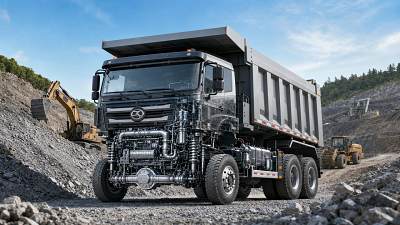
In truck dumper bodies, impact resistance and wear life are central. When material such as rock, ore, scrap, or wet aggregate drops from height, the floor and sidewall absorb repeated shock. If the steel hardness is too low or the plate quality is inconsistent, dents, local thinning, and crack propagation can appear after a few hundred loading cycles. For fleets working 5 to 6 days per week, that deterioration can become visible within one operating season.
In truck logging applications, the concern is not only surface wear but torsional stress and localized loading. Logs often create uneven contact points and side pressure. This can challenge bolsters, stakes, supports, and the truck wing or reinforcement members. Lower-grade steel with poor toughness may survive on paper but fail under combined bending and twisting on rough roads.
Truck excavator structures and support components face another pattern: dynamic load plus vibration plus stress concentration around joints. In this case, strength alone is not enough. Weldability and notch toughness matter because a high-strength steel that is poorly welded can perform worse than a moderate-grade material fabricated correctly. That is why procurement teams must compare material grade together with fabrication capability, not as separate items.
Application-based steel priorities
The following comparison helps buyers align truck steel choices with real operating scenarios instead of relying only on initial quote differences.
The comparison shows why one low-price material strategy cannot fit all truck categories. A distributor serving quarry customers and municipal fleets at the same time may need at least 2 to 3 steel configurations in its sourcing portfolio rather than a single universal specification.
A common sourcing mistake
One of the most common mistakes is comparing only thickness, not mechanical performance. For example, increasing thickness by 1 mm may add weight and reduce payload efficiency without solving fatigue issues. In some truck body designs, better-grade steel can lower dead weight by 8% to 15% while maintaining structural integrity, which directly supports fuel economy and payload value over time.
How Procurement Teams Should Evaluate Truck Steel Before Ordering
For procurement teams and business evaluators, steel selection should be treated as a structured review process. A workable sourcing framework usually includes 4 layers: material specification, fabrication quality, documentation control, and lifecycle cost assessment. When one of these layers is missing, the apparent price advantage often becomes less attractive after delivery.
First, confirm the intended use case. Ask whether the truck will run mainly on highways, mixed road conditions, construction sites, mines, forests, or municipal routes. A truck operating 2,500 to 4,000 hours per year on rough surfaces will place very different demands on steel than a vehicle used in standard regional logistics. Without this context, material comparisons are incomplete.
Second, verify the consistency of the supplied steel, not only the nominal grade. Batch-to-batch variability is a serious procurement risk in international trade. Buyers should request test records, mill data where available, dimensional tolerance details, and fabrication process information. Even when a supplier does not disclose every production detail, it should still provide enough evidence to show controlled sourcing and repeatable quality.
Third, include weld performance in the evaluation. Many truck failures start in the heat-affected zone, not in the base metal itself. If the steel is strong but difficult to weld under routine workshop conditions, field performance may drop sharply. For cross-border buyers, it is useful to confirm whether the supplier follows a stable welding process, post-fabrication inspection routine, and crack prevention practice on high-stress areas.
A practical 6-point evaluation checklist
- Define the truck application and average loading condition before requesting quotes.
- Compare steel grade, thickness, and intended service life together, not as separate metrics.
- Review weld design and reinforcement details on truck skeleton, frame, and body corners.
- Check corrosion protection strategy, especially for coastal, chemical, or winter road use.
- Ask about typical lead time, such as 20 to 45 days for standard builds and longer for custom structures.
- Estimate maintenance frequency over 12, 24, and 36 months rather than focusing only on purchase price.
The table below can help sourcing teams compare suppliers more objectively during technical and commercial review.
In many cases, the most competitive supplier is not the one with the lowest unit price, but the one that balances material performance, consistency, production control, and dependable delivery. That matters even more for distributors who must protect brand reputation across multiple resale markets.
Balancing Cost, Payload, and Lifecycle Value in Heavy Truck Structures
A lower material price can be justified when operating loads are moderate, routes are predictable, and repair access is easy. But in heavy transport equipment, many fleets work in demanding conditions where the cost of downtime is significant. A truck sitting idle for 3 to 7 days because of body cracking, frame distortion, or urgent welding repair can create losses far beyond the original steel savings.
Lifecycle value should be measured through at least 5 variables: purchase price, payload efficiency, maintenance interval, repair complexity, and useful service life. For example, a better steel configuration may cost 8% more at the procurement stage but reduce repair interventions from every 6 months to every 12 to 18 months in abrasive applications. That difference matters for fleet operators, distributors offering after-sales support, and commercial teams estimating total ownership cost.
Weight is another factor. Higher-performance steel can sometimes allow a lighter design without sacrificing structural reliability. A lighter truck body or frame can improve payload margin, axle load management, and fuel efficiency. On regional transport routes, even a modest deadweight reduction can add commercial value over hundreds of trips per year. This is especially relevant for dumpers, semi-trailer structures, and truck wing assemblies where material distribution affects operating efficiency.
However, stronger is not always better. Using very high-strength steel in the wrong areas may increase fabrication difficulty, raise brittleness risk in cold conditions, or complicate field repair. The right strategy is application-based optimization, not automatic grade escalation. Buyers should ask where high strength is needed, where wear resistance is needed, and where ductility and weldability are more important.
How to think about total value instead of unit price
- Use purchase price as only one part of the calculation, not the final decision point.
- Estimate service life in years or loading cycles for the target application.
- Consider whether repairs require workshop downtime, spare parts, or field welding.
- Review whether lighter but stronger material can improve payload economics.
- Measure supplier reliability over multiple batches, not just one sample order.
Where distributors and agents should be careful
Distributors often absorb risk that manufacturers and end users do not see immediately. If a reseller supplies trucks or truck components built with unsuitable steel, customer complaints may appear 9 to 24 months later, long after the original shipment. That can damage channel trust, increase warranty negotiation pressure, and reduce repeat orders. For this reason, channel partners should document steel-related specifications clearly in product comparison and supplier qualification stages.
Using a Global B2B Platform to Reduce Steel Selection Risk
In international sourcing, one of the biggest challenges is comparing suppliers fairly across different manufacturing regions, standards, and communication practices. A professional heavy truck industry platform helps solve this by connecting buyers, manufacturers, suppliers, distributors, and evaluators within a transparent digital marketplace built for commercial vehicles, trailers, construction machinery, and spare parts.
For buyers researching truck steel grades, the value of a specialized platform is practical. It allows them to review product categories such as truck chassis and cab, complete trucks, trailers, semi-trailers, construction machinery, and structural spare parts in one place. This reduces the time spent moving between unrelated sources and makes it easier to compare technical details, supplier positioning, and application fit within a single industry context.
A strong B2B sourcing workflow usually includes 3 stages. First comes product discovery, where the buyer identifies potential truck structures or components suitable for logistics, mining, municipal work, or infrastructure use. Second comes supplier comparison, where material quality, fabrication capability, delivery cycle, and responsiveness are reviewed. Third comes commercial collaboration, where the buyer narrows the list to suppliers that can support stable long-term trade, not just one low-price transaction.
This approach is especially useful for procurement teams managing cross-border purchasing. By using industry resources such as buying guides, market insights, brand directories, and supplier listings, they can reduce the risk of selecting truck products based only on headline price. For distributors and agents, the same environment helps identify manufacturers with stronger product alignment, clearer technical communication, and better long-term cooperation potential.
What buyers should compare on a sourcing platform
- Application fit: whether the truck body, frame, or equipment is designed for the actual cargo and terrain.
- Supplier depth: whether the supplier covers complete trucks, chassis, trailers, or only isolated parts.
- Technical transparency: whether steel-related details, fabrication notes, and use scenarios are described clearly.
- Trade efficiency: whether communication, quotation, and comparison can be completed within a manageable sourcing cycle, often 1 to 3 weeks for initial screening.
- Expansion potential: whether the supplier can support future orders, private label needs, or regional distribution growth.
When buyers use a platform built specifically for the global heavy truck industry, they gain more than access to products. They gain context, comparability, and a more efficient route to informed purchasing decisions in a sector where material choices directly affect equipment risk.
Frequently Asked Questions About Truck Steel Grades and Procurement Risk
How can buyers tell if a lower steel price is too risky?
A lower price becomes risky when the supplier cannot explain the steel’s intended use range, consistency, and fabrication method. Buyers should compare at least 4 points: steel grade suitability, weld quality control, expected maintenance interval, and application history in similar operating conditions. If the quote is 10% cheaper but service life may drop by 20% or repair frequency doubles, the commercial benefit is weak.
Which truck applications need more careful steel selection?
High-risk applications include truck dumper bodies, logging trucks, truck excavator support structures, truck skeleton assemblies, and trailers carrying abrasive or concentrated loads. These applications combine impact, torsion, vibration, or repeated fatigue. In such cases, material mismatch may appear much faster than in normal road logistics equipment.
Is thicker steel always a safer choice?
No. Thicker steel increases weight and may reduce payload efficiency, but it does not automatically improve fatigue resistance or weld performance. A better-matched grade with proper reinforcement design often performs better than simply increasing thickness. Buyers should evaluate thickness together with strength, toughness, wear resistance, and structural design.
What delivery timeline is common for truck structures or custom heavy equipment components?
For standard configurations, lead times often fall in the 20 to 45 day range depending on order quantity, material availability, and export preparation. Custom truck bodies, trailer structures, or reinforced applications may take longer, especially if technical confirmation, drawing approval, or special steel sourcing is required.
What should distributors and agents prioritize when comparing suppliers?
They should prioritize repeatability, technical clarity, and after-sales risk control. A supplier that offers stable material selection, consistent fabrication, and clear application guidance is usually more valuable than one that only leads on headline price. For channel businesses, protecting customer trust over 12 to 24 months matters more than saving a small amount on the first shipment.
Truck steel grades should never be treated as a minor cost line in heavy transport equipment procurement. They shape structural reliability, maintenance burden, payload efficiency, and long-term commercial performance across truck bodies, frames, wings, skeleton systems, and specialized work applications. For information researchers, purchasing teams, business evaluators, and channel partners, the best decisions come from comparing use case, material behavior, fabrication quality, and lifecycle value together.
The Global Heavy Truck Industry Platform helps buyers move beyond price-only sourcing by connecting them with relevant products, suppliers, market insights, and professional buying resources across the global commercial vehicle and heavy equipment supply chain. If you are evaluating truck steel options, comparing suppliers, or planning a new sourcing program, contact us today to get tailored support, explore qualified product categories, and learn more solutions for safer and more efficient heavy truck procurement.
Trending News
- Low Bed Trailer Export to Southeast Asia: Specs That Avoid Clearance Delays
- Flatbed Trailer Supplier with Modular Design: Flexibility vs Maintenance Cost
- Construction Machinery Supplier for Municipal Engineering: What to Compare First
- Best Commercial Vehicle Parts for Warehouse Fleets with High Stop-Start Use
- What Fireproof Materials Mean for Semi Trailer Safety and Lifecycle Cost
Tag
Recommended News
 Truck Parts IndustryTruck Spare Parts Supplier in Europe: Compliance Checks Before OrderingTruck spare parts supplier in Europe selection starts with compliance. Learn the key checks for safety, fitment, traceability, and import documents before you order.
 Truck Parts IndustryChoosing a Heavy Truck Parts Manufacturer with OEM Services for Stable SupplyHeavy truck parts manufacturer with OEM services: learn how to secure stable supply, consistent quality, and lower sourcing risk with practical buyer evaluation tips.
 Truck Parts IndustryHeavy Truck Parts for Construction: Durability vs Replacement CostHeavy truck parts manufacturer for construction insights: learn how to balance durability, replacement cost, and uptime across rough ground, urban projects, and severe-duty fleets.
 Truck Parts IndustryCold Storage Vehicle Parts That Reduce Failure RatesCommercial vehicle parts for cold storage that cut failure rates: explore seals, insulation, cooling, and electrical upgrades to protect cargo, reduce downtime, and improve fleet uptime.
 Truck Parts IndustryGermany Heavy Truck Parts Manufacturers: Quality and Supply RisksHeavy truck parts manufacturer in Germany: learn how to assess quality, certifications, and supply risks to secure safer sourcing, stable deliveries, and long-term fleet performance.
 Truck Parts IndustryVietnam to Enforce New Used Truck Import Rules from Q4 2026Vietnam's new used truck import rules (Q4 2026) require OEM remanufacturing certification & traceability—key for Chinese exporters, assemblers & logistics providers.
 Truck Parts IndustryChoosing a Truck Parts Exporter: Lead Time, Compliance, and Quality RisksTruck parts exporter selection affects uptime, compliance, and cost. Learn how to compare lead time, certification, and quality control to avoid delays, claims, and fleet-wide failures.
 Truck Parts IndustryGermany Heavy Truck Parts Manufacturers: Quality and Supply RisksHeavy truck parts manufacturer in Germany selection guide: compare quality systems, traceability, testing, and supply risks to secure reliable truck parts sourcing.
 Truck Parts IndustryIrkeshtam Port’s 24-Hour Freight Clearance Boosts Exports to KyrgyzstanIrkeshtam Port’s 24-hour freight clearance slashes heavy-truck component clearance to <15 mins—boosting road transport equipment exports to Kyrgyzstan.
 Truck Parts IndustryHeavy Truck Parts for Construction: Which Components Fail Most OftenHeavy truck parts manufacturer for construction insights: discover which brake, suspension, filter, and drivetrain components fail most often—and how smarter sourcing cuts downtime and repair costs.
 Truck Parts IndustryBulk Order Discounts on Truck Spare Parts: When Savings Become RiskTruck spare parts supplier with bulk order discounts: learn when lower prices increase downtime, quality, and inventory risk—and how to source smarter for reliable fleet performance.
 Truck Parts IndustryTruck Parts Wholesale: How to Balance Price, Quality, and Stock RiskTruck parts wholesale success depends on balancing price, quality, and inventory risk. Learn practical sourcing checks to protect margins, reduce dead stock, and choose reliable suppliers.
 Truck Parts IndustryHow OEM Services Reduce Downtime in Heavy Truck Parts SupplyHeavy truck parts manufacturer with OEM services helps cut downtime with accurate fit, faster lead times, and stable supply—discover smarter sourcing for fleet maintenance.
 Truck Parts IndustryErenhot-Mongolia 24-Hour Freight Clearance Boosts Trucking EfficiencyErenhot-Mongolia 24-hour freight clearance slashes truck clearance time by 40%—boosting efficiency for auto parts, cold-chain & cross-border trucking.
 Truck Parts IndustryKazakhstan Extends Zero-Tariff for Truck Parts on China-Europe Rail Routes to 2027Kazakhstan extends zero-tariff for truck parts—including ADAS controllers, ECUs & T-BOX units—on China-Europe rail routes until 2027. Boost your logistics & export strategy now!
 Truck Parts IndustryHow Low-Maintenance Truck Spare Parts Reduce Downtime Over TimeTruck spare parts supplier with low maintenance solutions help fleets cut downtime, reduce repair frequency, and improve workshop efficiency. Discover how durable parts boost long-term truck performance.
![]() Truck Parts IndustryHeavy Truck Parts Manufacturer for Construction: How to Judge Product ConsistencyHeavy truck parts manufacturer for construction selection starts with consistency. Learn how to judge batch stability, traceability, and quality control to reduce risk and improve fleet safety.
Truck Parts IndustryHeavy Truck Parts Manufacturer for Construction: How to Judge Product ConsistencyHeavy truck parts manufacturer for construction selection starts with consistency. Learn how to judge batch stability, traceability, and quality control to reduce risk and improve fleet safety.![]() Truck Parts IndustryTruck Parts Price in 2026: What Is Driving Replacement Cost HigherTruck parts price in 2026 is rising fast. Discover the key cost drivers, category risks, and sourcing tips buyers need to reduce replacement costs and make smarter purchasing decisions.
Truck Parts IndustryTruck Parts Price in 2026: What Is Driving Replacement Cost HigherTruck parts price in 2026 is rising fast. Discover the key cost drivers, category risks, and sourcing tips buyers need to reduce replacement costs and make smarter purchasing decisions. Truck Parts IndustryHow to Compare Truck Tipper Distributors by Parts Response TimeTruck tipper distributor comparison starts with parts response time. Learn how to assess stock speed, technical support, and supply reliability to cut downtime and choose the right partner.
 Truck Parts IndustryCommercial Vehicle Parts for Cold Storage: What Improves ReliabilityCommercial vehicle parts for cold storage that boost uptime, temperature stability, and fleet reliability. Learn which components reduce breakdowns and protect cargo in demanding cold-chain transport.
 Truck Parts IndustryTruck Parts Wholesale: How to Balance Price, Lead Time, and QualityTruck parts wholesale guide for distributors: learn how to balance price, lead time, and quality to reduce risk, protect margins, and choose suppliers with confidence.
 Truck Parts IndustryChoosing a Heavy Truck Parts Manufacturer in Germany for Stable SupplyHeavy truck parts manufacturer in Germany: learn how to compare suppliers by scenario, secure stable supply, reduce sourcing risk, and improve fleet uptime with smarter procurement decisions.
 Truck Parts IndustryAre Low-Maintenance Truck Spare Parts Suppliers Worth Switching ToIs a truck spare parts supplier with low maintenance worth the switch? Learn how better fitment, fewer failures, and reliable delivery can cut downtime and lower fleet service costs.
 Truck Parts IndustryTruck Parts Wholesale: How to Balance Price, Stock, and ReliabilityTruck parts wholesale success depends on balancing price, stock, and reliability. Learn how to compare suppliers, reduce risk, protect margins, and make smarter buying decisions.
 Truck Parts IndustryNew Railway Cargo Transport Rules Take Effect May 1, 2026New Railway Cargo Transport Rules (2026): 72-hour certified load-securing plans required for oversized rail freight—key for wind, tunneling & crane transport equipment.