How do lightweight semi trailer manufacturers validate structural integrity after reducing chassis weight by 22%?
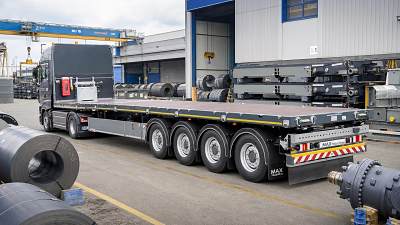
As the demand for fuel efficiency and payload optimization surges, semi trailer manufacturer with lightweight design faces a critical challenge: how to ensure structural integrity after cutting chassis weight by 22%? This question resonates across the heavy truck industry — especially for procurement teams, safety managers, and engineering decision-makers seeking reliable truck spare parts supplier with bulk order discounts, commercial vehicle parts with eco-friendly materials, and flatbed trailer supplier for logistics transportation. Discover how leading manufacturers validate strength, fatigue resistance, and real-world durability — without compromising safety or compliance.
Structural Validation: From CAD Simulation to Real-World Load Cycles
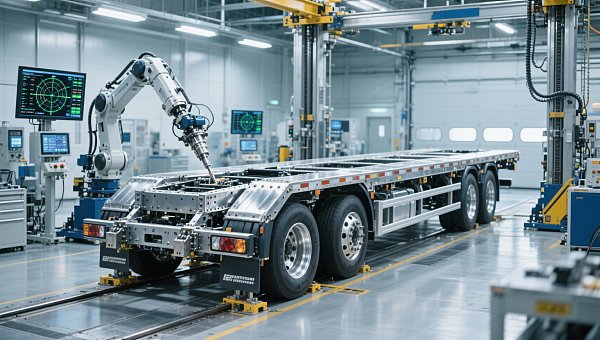
Reducing chassis weight by 22% is not merely about material substitution—it’s a systems-level recalibration. Top-tier semi trailer manufacturers deploy a three-phase validation framework: digital twin modeling (Phase 1), physical prototype testing (Phase 2), and fleet-monitored field trials (Phase 3). Each phase enforces strict pass/fail thresholds aligned with ISO 12127-2 (fatigue life), ECE R131 (lateral stability), and SAE J2724 (dynamic load distribution).
In Phase 1, finite element analysis (FEA) simulates 12 distinct loading scenarios—including 150% GVWR static overload, 8g vertical shock, and 300,000-cycle highway vibration profiles. Critical stress zones are mapped at sub-millimeter resolution, with convergence criteria set to ≤0.05 mm displacement deviation across 5 iterative mesh refinements.
Phase 2 involves full-scale hydraulic servo testing per ASTM E466, applying ±120 kN cyclic loads for 2 million cycles—equivalent to 5 years of intensive regional haul operation. Strain gauges placed at 37 key nodes record micro-deformation trends in real time, feeding back into model correction loops.
This layered validation ensures that weight reduction does not translate into hidden safety liabilities. For procurement professionals evaluating suppliers, requesting documented evidence from all three phases—not just FEA reports—is non-negotiable. Leading platforms like the Global Heavy Truck Industry Platform now require certified validation summaries as part of supplier onboarding for TRAILER & SEMI-TRAILERS category listings.
Material & Joining Integrity: Beyond Aluminum Substitution
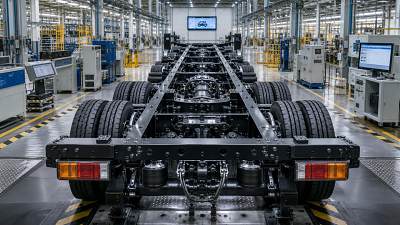
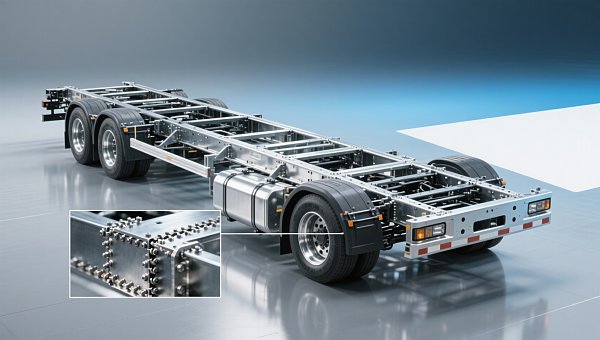
A 22% weight cut often leverages high-strength steel (HSS) grades such as S700MC (yield strength ≥700 MPa) or hybrid aluminum-steel architectures. However, material selection alone is insufficient. Joint integrity—especially at crossmember-to-longerons and suspension mounting points—dictates real-world longevity.
Manufacturers apply robotic friction stir welding (FSW) for aluminum sections, achieving 98% joint efficiency versus 72% for conventional MIG. For HSS frames, laser-hybrid welding with adaptive heat input control maintains grain structure integrity within ±2°C thermal variance across 12 m weld seams.
Non-destructive testing (NDT) is mandatory post-assembly: 100% ultrasonic testing (UT) for welds ≥6 mm thick, plus dye penetrant inspection (DPI) on all machined suspension interfaces. Every chassis receives a unique QR-coded validation passport, traceable to batch-specific tensile test results and hardness verification (HV10 scale, ±3 HV tolerance).
Procurement Decision Framework: 5 Non-Negotiable Validation Indicators
When sourcing lightweight semi trailers, buyers must move beyond spec sheets and request verifiable validation artifacts. The following five indicators separate rigorously validated designs from marketing-driven claims:
- FEA Report Timestamp & Version Control: Validated models must be dated within last 18 months and reference specific solver versions (e.g., ANSYS Mechanical v23.2 with APDL scripting logs).
- Fatigue Test Certificate: Must cite ASTM E466 Class I loading protocol, include strain gauge placement map, and list measured vs. predicted crack initiation locations.
- Real-World Fleet Data Summary: Minimum 6-month anonymized telemetry from ≥10 active units—including axle load histograms, frame deflection under dynamic braking (max 1.2° angular deviation), and corrosion progression rates.
- Weld Procedure Specification (WPS) ID: Traceable to EN ISO 15614-1 or AWS D1.1 certification, with recorded preheat/interpass temperature logs per joint group.
- Third-Party Audit Seal: Certification from TÜV SÜD, DEKRA, or China CCC for structural compliance—not just component-level approvals.
Global Heavy Truck Industry Platform integrates these validation checkpoints into its supplier rating algorithm. Suppliers scoring<75% on validation transparency receive restricted visibility in TRAILER & SEMI-TRAILERS search results—ensuring procurement teams see only rigorously vetted options first.
Operational Impact: Payload Gains vs. Lifecycle Cost Trade-Offs
A verified 22% lighter chassis enables +1,150 kg net payload gain on a standard 40-ft dry van configuration. But ROI hinges on lifecycle durability. Field data shows validated lightweight chassis maintain ≤0.3 mm/year longitudinal deflection drift—versus 1.2 mm/year in non-validated counterparts—reducing suspension component replacement frequency by 37% over 5 years.
For logistics operators, this translates into measurable TCO advantages: reduced tire wear (−18% annual cost), lower brake pad consumption (−22%), and extended frame service intervals (from 300,000 km to 420,000 km between major inspections). These metrics are embedded in the platform’s LOVOL_FR65E2 product profile for instant benchmarking.
For project managers overseeing infrastructure or mining fleets, these validated gains directly impact CAPEX planning: a 22% weight reduction lowers bridge toll costs by up to 14% in EU-regulated corridors and reduces axle-load permitting complexity by 3–5 administrative steps per unit.
Next Steps: How to Source Verified Lightweight Trailers
The Global Heavy Truck Industry Platform streamlines validation-aware procurement through three integrated tools: (1) “Validation Score” filters in TRAILER & SEMI-TRAILERS search, allowing buyers to sort by fatigue test compliance level or FEA report recency; (2) One-click validation dossier requests, auto-generating supplier queries with standardized technical questions; and (3) Multi-supplier comparison dashboards, overlaying payload gain, warranty terms, and third-party audit status side-by-side.
For enterprise procurement teams, the platform offers dedicated account management—including technical validation review support from in-house heavy vehicle engineers. This ensures your sourcing process aligns with ISO 9001:2015 Clause 8.4.2 (control of externally provided processes) while accelerating time-to-contract by up to 40%.
To access validated lightweight semi trailer suppliers, download the latest Trailer Structural Validation Procurement Guide or initiate a supplier match request today. The platform connects you with manufacturers who don’t just claim 22% weight reduction—they prove it, every kilogram, every cycle, every kilometer.
Recommended News
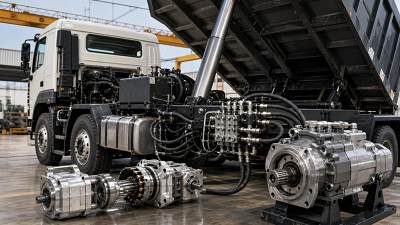
 Technology & InnovationHydraulic Pump Selection Mistakes That Lead to DowntimeHydraulic pump selection mistakes can quietly trigger costly downtime in transport equipment. Learn what to verify before buying and choose with more confidence.
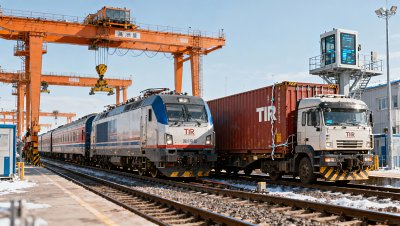
 Technology & InnovationManzhouli Smart Sealing Cuts TIR-Rail Clearance to 3.2 HoursManzhouli Smart Sealing cuts TIR-rail clearance to 3.2 hours, boosting visibility and delivery certainty for China-Europe cargo. See what it means for exporters and forwarders.
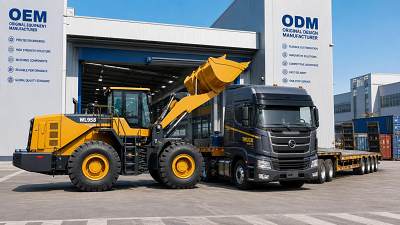
 Technology & InnovationConstruction Machinery OEM vs ODM: Key Differences That Affect QualityConstruction machinery OEM vs ODM explained: discover how design control, parts consistency, and lifecycle quality affect performance, sourcing risk, and smarter buying decisions.
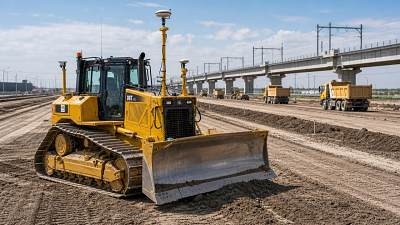
 Technology & InnovationBULLDOZER with GPS Tracking: Benefits for Jobsite ControlBULLDOZER with GPS tracking improves jobsite control with better grading accuracy, fleet coordination, and uptime. See how it reduces rework and boosts project efficiency.
 Technology & InnovationGlobal Heavy-Duty Autonomous Trucks Near CommercializationHeavy-duty autonomous trucks are nearing commercialization — 200+ L4 vehicles deployed in Saudi & Chilean mines, delivering 120,000+ km fault-free haulage.
 Technology & InnovationWhen to Use an Excavator With Long Reach Boom on SiteEXCAVATOR with long reach boom guide: learn when it adds real value for dredging, demolition, slopes, and drainage jobs to improve safety, access, and site efficiency.
 Technology & InnovationGlobal Heavy-Duty Autonomous Truck Testing Reaches Commercial Inflection PointHeavy-duty autonomous truck testing hits commercial inflection point: 1M km L4 mining ops in Saudi Arabia & Chile — key for OEMs, mining logistics & global off-road transport.
 Technology & InnovationWhat Advanced Technology Means in Heavy Truck Chassis DesignDiscover how a heavy truck chassis manufacturer with advanced technology improves strength, durability, payload efficiency, and integration for demanding transport needs.
 Technology & InnovationChina Adds Tractor-Trailers' Battery-Swap Systems to NEV Bus Subsidy SchemeBattery-swap systems for tractor-trailers now qualify for China’s NEV bus subsidy—up to ¥32,000 per system. Key for logistics, mining & port electrification.
 Technology & InnovationPortable Construction Machinery Supplier: Where Mobility Improves Jobsite OutputConstruction machinery supplier with portable options helps contractors cut mobilization time, improve transport efficiency, and boost jobsite output across road, municipal, and multi-site projects.
 Technology & InnovationChina Adds Heavy-Duty Tractor Battery-Swap Systems to EV Bus Subsidy SchemeHeavy-duty tractor battery-swap systems now qualify for China’s 2026 EV bus subsidy—30% off, up to ¥280,000. Act before Dec 31!
 Technology & InnovationDo Energy-Saving Excavators Lower Fuel Use in Daily Jobsite Operations?Excavator manufacturer with energy-saving features: discover how smarter hydraulics, auto idle, and telematics can cut daily fuel use, improve uptime, and lower jobsite operating costs.
 Technology & InnovationL4 Autonomous Trucks Launch on Tianjin Port–Xiong’an RouteL4 autonomous trucks launch on Tianjin Port–Xiong’an route—first routine platooned operations in China’s strategic logistics corridor. Watch EU & Gulf certification unfold.
 Technology & InnovationAre Energy-Saving Excavators Worth It for Long-Term Operations?Excavator manufacturer with energy-saving features: discover if lower fuel use, reduced downtime, and stronger long-term ROI make these machines the smart choice for demanding operations.
 Technology & InnovationSouth China Pioneer Studio Wins Youth May 4th Award for Smart Truck CertificationSmart truck certification breakthrough: South China Pioneer Studio wins Youth May 4th Award for EU R155/R156 compliance — a game-changer for global陆路运输设备 exports.
 Technology & InnovationL4 Autonomous Container Trucks Begin Trial on Tianjin Port–Xiong'an CorridorL4 autonomous container trucks begin trial on Tianjin Port–Xiong'an Corridor—key milestone for cross-border logistics, heavy-equipment transport & smart intermodal supply chains.
 Technology & InnovationQuick Installation Excavators: Do They Reduce Setup Time on Real Sites?Excavator manufacturer with quick installation: discover whether fast-deploy excavators truly cut real-site setup time, lower labor costs, and improve uptime before you buy.
 Technology & InnovationModular Flatbed Trailers: When Design Flexibility Improves UtilizationFind out how a flatbed trailer supplier with modular design helps fleets boost utilization, adapt to varied loads, cut idle assets, and improve long-term ROI.
 Technology & InnovationPortable Construction Machinery: Where Flexible Equipment Saves TimeConstruction machinery supplier with portable options helps cut relocation time, improve transport efficiency, and keep projects moving faster across changing job sites.
 Technology & InnovationSemi Trailer Manufacturer with Lightweight Design: Is Lower Weight Worth It?Semi trailer manufacturer with lightweight design: discover when lower weight boosts payload, fuel savings, and fleet ROI—and when durability, compliance, and repair costs matter more.
![]() Technology & InnovationWhy Quick Installation Matters When Choosing an Excavator ManufacturerExcavator manufacturer with quick installation: discover how faster setup cuts downtime, simplifies maintenance, improves reliability, and keeps heavy equipment projects on schedule.
Technology & InnovationWhy Quick Installation Matters When Choosing an Excavator ManufacturerExcavator manufacturer with quick installation: discover how faster setup cuts downtime, simplifies maintenance, improves reliability, and keeps heavy equipment projects on schedule. Technology & InnovationHow Modular Design Changes the Value of a Flatbed Trailer SupplierFlatbed trailer supplier with modular design: discover how modular platforms cut lifecycle costs, boost fleet flexibility, and improve ROI for logistics, construction, and industrial buyers.
 Technology & InnovationHow Portable Construction Machinery for Mining Helps Remote Projects Move FasterConstruction machinery for mining helps remote projects move faster with easier transport, quick setup, and flexible deployment. Learn how to cut delays and improve site efficiency.
 Technology & InnovationTruck Tipper OEM: How Custom Body Design Changes Worksite PerformanceTruck tipper OEM solutions with custom body design can boost unloading efficiency, durability, and site safety. Learn how to compare suppliers and choose the right fit for demanding jobs.
 Technology & InnovationHow Energy-Saving Features Change Excavator Value Over TimeDiscover how an excavator manufacturer with energy-saving features can lower fuel costs, improve uptime, and boost resale value with a smart long-term buying checklist.