Hydraulic Pump Selection Mistakes That Lead to Downtime
A hydraulic pump rarely fails in isolation. In heavy truck, trailer, and construction support systems, downtime often starts with a selection decision made too early or with incomplete data.
That is why hydraulic pump evaluation matters beyond catalog matching. Flow, pressure, duty cycle, oil condition, ambient temperature, mounting limits, and service access all shape real operating reliability.
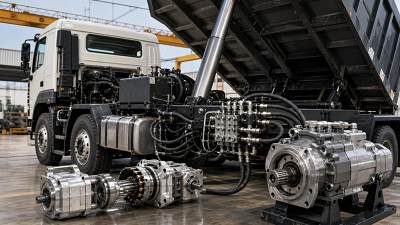
In road transport equipment, the same hydraulic pump may support tipping bodies, truck-mounted cranes, hook lifts, recovery units, or municipal attachments. Each application loads the system differently.
A poor match can reduce cycle speed, overheat oil, damage seals, and shorten component life. More importantly, it can interrupt deliveries, construction schedules, and fleet utilization.
The questions below focus on the selection mistakes that most often create avoidable downtime, and how to judge a hydraulic pump with fewer surprises later.
Why does a hydraulic pump that looks correct on paper still cause downtime?
The short answer is that nameplate data alone does not describe field conditions. A hydraulic pump may meet nominal pressure and flow, yet still struggle in daily truck operation.
One common mistake is sizing around peak pressure only. In practice, duty cycle matters just as much. A pump used for repeated lifting or long idle circulation faces different thermal stress.
Another issue is mismatched engine or PTO behavior. If pump speed varies more than expected, output also changes. That can create slow actuation at low rpm and overheating at high rpm.
Real-world transport equipment also sees contamination, vibration, and seasonal temperature swings. A hydraulic pump selected without those factors may deliver acceptable startup performance, then degrade quickly.
This is why experienced evaluators compare operating profiles, not just product sheets. The better question is not whether the pump can run, but whether it can keep running predictably.
Which hydraulic pump selection mistakes show up most often in transport equipment?
Several errors repeat across dump trucks, tankers, municipal vehicles, and trailer-mounted hydraulic systems. They usually appear during specification review, but their cost only becomes visible after deployment.
The most expensive mistake is often not dramatic. It is choosing a hydraulic pump that works adequately in short tests but cannot sustain the vehicle’s normal service rhythm.
How do you know whether the pump type fits the application?
This question matters more than many buyers expect. Not every hydraulic pump behaves the same under heavy truck operating demands, even when flow and pressure figures appear similar.
Gear pumps are widely used because they are simple, durable, and cost-effective. They suit many tipping and auxiliary systems where operating logic is straightforward and maintenance priorities are practical.
Vane pumps can offer smoother flow and lower noise in certain conditions, but they may be less forgiving where contamination control is weak or pressure demands fluctuate sharply.
Piston pumps support higher pressure and more demanding control strategies. However, they also require tighter system discipline, better filtration, and a stronger economic case.
In actual fleet applications, the better choice depends on how the hydraulic pump is used, not which technology sounds more advanced. Simpler designs often outperform complex options in rough service environments.
- For dump bodies, focus on lift speed, start-stop frequency, and cold-weather startup.
- For truck cranes, review pressure stability, fine control response, and continuous duty periods.
- For municipal equipment, check noise, compact installation, and seasonal operating variation.
- For trailer hydraulics, confirm compatibility with remote power packs and hose routing losses.
A useful evaluation method is to start from the actuator task, then work backward through flow demand, pressure peaks, speed range, reservoir design, and filtration level.
Are flow and pressure the only numbers that matter when choosing a hydraulic pump?
Not even close. Flow and pressure are essential, but they do not tell the full reliability story. Several overlooked parameters often explain why two similar systems perform very differently.
Input speed range is one of them. A hydraulic pump tied to PTO output must remain stable across the rpm range the vehicle actually uses in service, not just the ideal test point.
Suction conditions are equally important. If inlet line design is restrictive, even a high-quality hydraulic pump may cavitate. That leads to noise, vibration, and internal surface damage.
Case drain requirements, shaft load tolerance, seal material, and contamination sensitivity also deserve attention. These details are often skipped when teams compare options too quickly.
A practical review table helps prevent those omissions.
When comparing suppliers globally, this broader checklist is especially valuable. Digital B2B platforms can simplify product discovery, but deeper technical filters remain essential before shortlisting any hydraulic pump.
Where do sourcing and supplier comparison usually go wrong?
The problem is rarely price alone. It is choosing with incomplete technical evidence. Many listings look similar until you compare test conditions, material standards, lead time reliability, and after-sales documentation.
For transport equipment serving logistics, mining, or infrastructure work, delivery consistency matters almost as much as hydraulic pump design. A delayed replacement can keep a vehicle idle longer than the repair itself.
This is where an industry platform becomes useful when used correctly. Access to supplier directories, category depth, and buying guides can shorten the search, but only if comparison criteria are disciplined.
A stronger sourcing review usually includes these checkpoints:
- Request performance data at stated rpm, pressure, and oil viscosity.
- Confirm flange, shaft, port, and rotation details against the existing system.
- Check recommended filtration level and contamination limits.
- Review seal options for climate, oil type, and continuous duty exposure.
- Ask about spare parts availability and replacement lead times.
In cross-border sourcing, a hydraulic pump with slightly higher upfront cost may still be the lower-risk choice if technical support and replenishment speed are better documented.
What is the best way to reduce hydraulic pump downtime before installation?
The best approach is a pre-installation review that connects component data with operating reality. It does not need to be complicated, but it must be complete.
Start with the application profile. Define the load, target cycle time, normal rpm band, expected ambient temperature, and daily operating duration. That creates a realistic basis for hydraulic pump selection.
Then review the surrounding system. Reservoir size, suction line routing, hose diameter, relief settings, cooling capacity, and filter rating can all undermine a good pump choice if overlooked.
Before approving a final supplier, compare documentation quality. Clear dimensional drawings, performance curves, maintenance guidance, and traceable specifications usually signal lower implementation risk.
A final practical step is to build an internal checklist for repeat purchases. Once one hydraulic pump specification proves reliable on a certain vehicle type, document the full context, not just the part number.
What should you do next if hydraulic pump failures keep repeating?
Repeated failure usually means the issue sits upstream of the pump itself. Replacing the unit without revisiting selection logic often restarts the same downtime cycle.
Look first at failure patterns. If wear appears early, review contamination and suction conditions. If seals fail, confirm pressure spikes, heat, and shaft alignment. If performance drops gradually, check viscosity and internal leakage.
From there, compare actual operation with the original hydraulic pump assumptions. Many systems drift over time because attachments change, routes become heavier, or climate exposure differs from the original specification.
A careful reset usually includes three actions: validate the application data, compare qualified suppliers, and align the pump with the complete hydraulic circuit rather than one isolated parameter.
When selection is handled that way, downtime becomes easier to predict, maintenance planning improves, and hydraulic pump decisions support longer service life across the transport equipment fleet.
Trending News
- How to verify spare parts availability with a crane truck supplier
- How to verify a truck trailer OEM's claimed payload capacity
- How does operating weight affect the price of a new excavator?
- How to compare concrete mixer truck suppliers by total landed cost
- How axle load limits affect low bed trailer exports to Southeast Asia
Tag
Recommended News
 Technology & InnovationConstruction Machinery OEM: Key Specs That Affect Integration QualityConstruction machinery OEM selection starts with specs. Learn how dimensions, hydraulics, electrical interfaces, and documentation shape integration quality, safety, and uptime.
 Technology & InnovationHow Truck Body Design Affects Payload and Fuel EfficiencyTruck body design directly affects payload, fuel efficiency, and operating cost. Learn how the right truck body boosts performance, reduces waste, and improves fleet value.
 Technology & InnovationHydraulic Pump Selection Mistakes That Lead to DowntimeHydraulic pump selection mistakes can quietly trigger costly downtime in transport equipment. Learn what to verify before buying and choose with more confidence.
 Technology & InnovationManzhouli Smart Sealing Cuts TIR-Rail Clearance to 3.2 HoursManzhouli Smart Sealing cuts TIR-rail clearance to 3.2 hours, boosting visibility and delivery certainty for China-Europe cargo. See what it means for exporters and forwarders.
 Technology & InnovationConstruction Machinery OEM vs ODM: Key Differences That Affect QualityConstruction machinery OEM vs ODM explained: discover how design control, parts consistency, and lifecycle quality affect performance, sourcing risk, and smarter buying decisions.
 Technology & InnovationBULLDOZER with GPS Tracking: Benefits for Jobsite ControlBULLDOZER with GPS tracking improves jobsite control with better grading accuracy, fleet coordination, and uptime. See how it reduces rework and boosts project efficiency.
 Technology & InnovationGlobal Heavy-Duty Autonomous Trucks Near CommercializationHeavy-duty autonomous trucks are nearing commercialization — 200+ L4 vehicles deployed in Saudi & Chilean mines, delivering 120,000+ km fault-free haulage.
 Technology & InnovationWhen to Use an Excavator With Long Reach Boom on SiteEXCAVATOR with long reach boom guide: learn when it adds real value for dredging, demolition, slopes, and drainage jobs to improve safety, access, and site efficiency.
 Technology & InnovationGlobal Heavy-Duty Autonomous Truck Testing Reaches Commercial Inflection PointHeavy-duty autonomous truck testing hits commercial inflection point: 1M km L4 mining ops in Saudi Arabia & Chile — key for OEMs, mining logistics & global off-road transport.
 Technology & InnovationWhat Advanced Technology Means in Heavy Truck Chassis DesignDiscover how a heavy truck chassis manufacturer with advanced technology improves strength, durability, payload efficiency, and integration for demanding transport needs.
 Technology & InnovationChina Adds Tractor-Trailers' Battery-Swap Systems to NEV Bus Subsidy SchemeBattery-swap systems for tractor-trailers now qualify for China’s NEV bus subsidy—up to ¥32,000 per system. Key for logistics, mining & port electrification.
 Technology & InnovationPortable Construction Machinery Supplier: Where Mobility Improves Jobsite OutputConstruction machinery supplier with portable options helps contractors cut mobilization time, improve transport efficiency, and boost jobsite output across road, municipal, and multi-site projects.
 Technology & InnovationChina Adds Heavy-Duty Tractor Battery-Swap Systems to EV Bus Subsidy SchemeHeavy-duty tractor battery-swap systems now qualify for China’s 2026 EV bus subsidy—30% off, up to ¥280,000. Act before Dec 31!
 Technology & InnovationDo Energy-Saving Excavators Lower Fuel Use in Daily Jobsite Operations?Excavator manufacturer with energy-saving features: discover how smarter hydraulics, auto idle, and telematics can cut daily fuel use, improve uptime, and lower jobsite operating costs.
 Technology & InnovationL4 Autonomous Trucks Launch on Tianjin Port–Xiong’an RouteL4 autonomous trucks launch on Tianjin Port–Xiong’an route—first routine platooned operations in China’s strategic logistics corridor. Watch EU & Gulf certification unfold.
 Technology & InnovationAre Energy-Saving Excavators Worth It for Long-Term Operations?Excavator manufacturer with energy-saving features: discover if lower fuel use, reduced downtime, and stronger long-term ROI make these machines the smart choice for demanding operations.
 Technology & InnovationSouth China Pioneer Studio Wins Youth May 4th Award for Smart Truck CertificationSmart truck certification breakthrough: South China Pioneer Studio wins Youth May 4th Award for EU R155/R156 compliance — a game-changer for global陆路运输设备 exports.
 Technology & InnovationL4 Autonomous Container Trucks Begin Trial on Tianjin Port–Xiong'an CorridorL4 autonomous container trucks begin trial on Tianjin Port–Xiong'an Corridor—key milestone for cross-border logistics, heavy-equipment transport & smart intermodal supply chains.
 Technology & InnovationQuick Installation Excavators: Do They Reduce Setup Time on Real Sites?Excavator manufacturer with quick installation: discover whether fast-deploy excavators truly cut real-site setup time, lower labor costs, and improve uptime before you buy.
 Technology & InnovationModular Flatbed Trailers: When Design Flexibility Improves UtilizationFind out how a flatbed trailer supplier with modular design helps fleets boost utilization, adapt to varied loads, cut idle assets, and improve long-term ROI.
 Technology & InnovationPortable Construction Machinery: Where Flexible Equipment Saves TimeConstruction machinery supplier with portable options helps cut relocation time, improve transport efficiency, and keep projects moving faster across changing job sites.
 Technology & InnovationSemi Trailer Manufacturer with Lightweight Design: Is Lower Weight Worth It?Semi trailer manufacturer with lightweight design: discover when lower weight boosts payload, fuel savings, and fleet ROI—and when durability, compliance, and repair costs matter more.
![]() Technology & InnovationWhy Quick Installation Matters When Choosing an Excavator ManufacturerExcavator manufacturer with quick installation: discover how faster setup cuts downtime, simplifies maintenance, improves reliability, and keeps heavy equipment projects on schedule.
Technology & InnovationWhy Quick Installation Matters When Choosing an Excavator ManufacturerExcavator manufacturer with quick installation: discover how faster setup cuts downtime, simplifies maintenance, improves reliability, and keeps heavy equipment projects on schedule. Technology & InnovationHow Modular Design Changes the Value of a Flatbed Trailer SupplierFlatbed trailer supplier with modular design: discover how modular platforms cut lifecycle costs, boost fleet flexibility, and improve ROI for logistics, construction, and industrial buyers.
 Technology & InnovationHow Portable Construction Machinery for Mining Helps Remote Projects Move FasterConstruction machinery for mining helps remote projects move faster with easier transport, quick setup, and flexible deployment. Learn how to cut delays and improve site efficiency.