How Truck Body Design Affects Payload and Fuel Efficiency
Truck body design has a direct impact on how much a vehicle can carry, how much fuel it consumes, and how reliably it performs across daily transport cycles.
In heavy transport, the truck body is not just an upper structure. It influences tare weight, aerodynamics, load stability, loading speed, and maintenance demands.
That is why body selection matters in logistics fleets, construction support, mining haulage, and municipal operations. A poor match can reduce usable payload and raise operating cost.
A well-chosen truck body improves load distribution, cuts unnecessary mass, and supports fuel efficiency without compromising durability. In practical terms, that means better asset use over the full project cycle.
Why the truck body has become a sharper buying issue
Transport equipment decisions are under more pressure than before. Fuel prices remain volatile, emission rules are tightening, and delivery schedules leave less room for underperforming vehicles.
At the same time, global logistics, infrastructure work, and industrial transport continue to expand. Buyers are comparing trucks more carefully, especially where operating margins are thin.
In this environment, truck body design is no longer a secondary specification. It shapes whether a truck can move more material per trip without adding fuel waste or structural stress.
This is also why international sourcing platforms have gained relevance. Access to supplier data, body options, and application-specific equipment makes comparison more evidence-based.
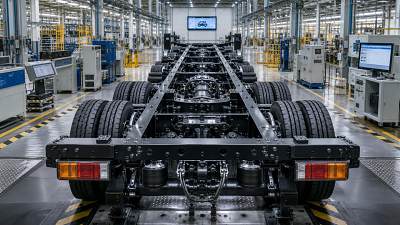
Across the Global Heavy Truck Industry Platform, buyers can review truck chassis, complete trucks, trailers, and spare parts together, which helps connect body design decisions with the wider vehicle package.
Payload starts with weight, but not weight alone
Payload is often discussed as a simple legal limit, yet the real calculation is more operational. Gross vehicle weight rating stays fixed, while body structure changes the available carrying capacity.
A heavier truck body reduces net payload. If two trucks share the same chassis rating, the lighter body usually carries more saleable or usable load per trip.
Still, lower body weight is not automatically better. If the structure flexes, wears too fast, or cannot handle material impact, the productivity gain disappears through downtime and repair cost.
The better approach is weight efficiency. That means using the least body mass needed to achieve required strength, floor life, sidewall integrity, and safe axle loading.
Key design factors that affect usable payload
- Body material selection, such as steel, aluminum, or mixed-material construction
- Floor thickness and reinforcement layout
- Sidewall height and panel design
- Subframe structure and mounting method
- Body length matched to axle spacing and legal load distribution
In practical use, the truck body must support both the material and the route. Sand, aggregate, palletized freight, and construction debris each impose very different body demands.
Fuel efficiency is shaped by more than the engine
Fuel consumption is strongly linked to body design because the truck body changes rolling resistance, aerodynamic drag, and the total energy required to move the vehicle.
The most visible factor is mass. A truck carrying unnecessary body weight burns extra fuel even before any cargo is loaded. That penalty repeats on every trip.
Body shape also matters. Box bodies, high side panels, and poorly integrated accessories can increase drag at highway speed, especially in regional and long-distance transport.
Even in lower-speed work, fuel efficiency suffers when the body causes poor balance. Uneven loading increases tire wear, axle losses, and repeated corrective driving input.
Where design choices influence fuel use
Simple changes in a truck body can therefore alter total transport economics. On high-utilization vehicles, a modest improvement often becomes significant over one operating year.
Different applications need different truck body priorities
No single truck body design works best in every duty cycle. The right balance depends on material type, road condition, loading method, travel distance, and unloading pattern.
Construction and infrastructure transport
Dump bodies for stone, soil, or demolition waste need impact resistance and stable tipping performance. Here, body durability may take priority over minimum empty weight.
Even so, overbuilt structures create a recurring payload penalty. The best truck body matches expected material density rather than assuming the hardest possible duty every day.
Regional and long-haul logistics
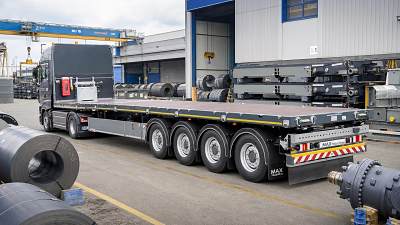
For dry freight, curtain-side, or van applications, body aerodynamics and tare weight become more important. Repeated highway distance amplifies every fuel-related design weakness.
A lighter truck body can improve payload flexibility, especially where routes mix volume-limited and weight-limited cargoes.
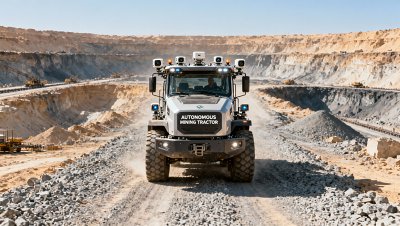
Mining and industrial haulage
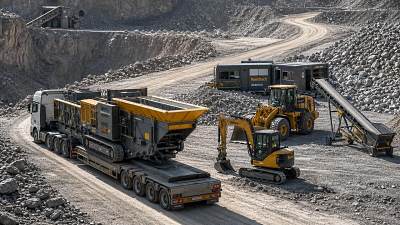
These applications usually demand a reinforced truck body, often with wear-resistant liners and stronger support members. Fuel efficiency still matters, but body life under severe loading is critical.
In such cases, the correct question is not how light the body can be. It is how efficiently the structure survives the actual payload profile.
Municipal and utility operations
Refuse bodies, service bodies, and specialized municipal units often operate with frequent stops. Their truck body design affects cycle time, hydraulic load, and route-level fuel performance.
What to examine before selecting a truck body
A useful evaluation should go beyond catalog dimensions. Body selection works better when the operating case is defined in measurable terms.
- Measure average cargo density, not only peak load assumptions
- Check whether routes are highway, mixed terrain, or confined site access
- Review axle loading with the proposed truck body and actual cargo position
- Compare body material life against expected abrasion and corrosion
- Estimate annual fuel effect from tare weight differences
- Include repair access, liner replacement, and downtime risk
This kind of review avoids a common mistake: choosing a truck body by purchase price alone. Lower upfront cost can become more expensive once payload loss and fuel burn are counted.
Using market visibility to make better equipment decisions
Truck body decisions are easier when buyers can compare complete vehicle configurations, body builders, parts support, and application guidance in one place.
That is where a sector-focused marketplace adds value. The Global Heavy Truck Industry Platform brings together complete trucks, chassis, trailers, construction machinery, and component resources across the supply chain.
This broader view helps connect body choices with supplier reliability, spare parts access, and cross-border sourcing options. It also supports more realistic benchmarking between competing specifications.
For equipment planning, that means the truck body can be judged as part of a whole transport system rather than as an isolated feature.
A practical way to move forward
The right truck body is the one that fits the load, route, and work cycle with the least waste. Payload and fuel efficiency improve when body design is treated as an engineering and commercial decision together.
Before comparing suppliers, define the duty profile clearly, calculate the effect of body weight on annual output, and check how the structure supports loading, unloading, and maintenance.
From there, it becomes easier to shortlist suitable truck body options, compare technical trade-offs, and identify configurations that deliver stronger long-term value across transport and project operations.
Trending News
- CATL Unveils Tianxing II Electric-to-Electric Range-Extended Heavy Truck Solution
- How much torque does a truck engine need for heavy-duty hauling?
- How to assess a crane truck distributor's spare parts support
- Volvo Group Forms Volvo Mining to Integrate Equipment and Autonomous Solutions
- How to verify spare parts availability with a crane truck supplier
Tag
Recommended News
 Technology & InnovationConstruction Machinery OEM: Key Specs That Affect Integration QualityConstruction machinery OEM selection starts with specs. Learn how dimensions, hydraulics, electrical interfaces, and documentation shape integration quality, safety, and uptime.
 Technology & InnovationHow Truck Body Design Affects Payload and Fuel EfficiencyTruck body design directly affects payload, fuel efficiency, and operating cost. Learn how the right truck body boosts performance, reduces waste, and improves fleet value.
 Technology & InnovationHydraulic Pump Selection Mistakes That Lead to DowntimeHydraulic pump selection mistakes can quietly trigger costly downtime in transport equipment. Learn what to verify before buying and choose with more confidence.
 Technology & InnovationManzhouli Smart Sealing Cuts TIR-Rail Clearance to 3.2 HoursManzhouli Smart Sealing cuts TIR-rail clearance to 3.2 hours, boosting visibility and delivery certainty for China-Europe cargo. See what it means for exporters and forwarders.
 Technology & InnovationConstruction Machinery OEM vs ODM: Key Differences That Affect QualityConstruction machinery OEM vs ODM explained: discover how design control, parts consistency, and lifecycle quality affect performance, sourcing risk, and smarter buying decisions.
 Technology & InnovationBULLDOZER with GPS Tracking: Benefits for Jobsite ControlBULLDOZER with GPS tracking improves jobsite control with better grading accuracy, fleet coordination, and uptime. See how it reduces rework and boosts project efficiency.
 Technology & InnovationGlobal Heavy-Duty Autonomous Trucks Near CommercializationHeavy-duty autonomous trucks are nearing commercialization — 200+ L4 vehicles deployed in Saudi & Chilean mines, delivering 120,000+ km fault-free haulage.
 Technology & InnovationWhen to Use an Excavator With Long Reach Boom on SiteEXCAVATOR with long reach boom guide: learn when it adds real value for dredging, demolition, slopes, and drainage jobs to improve safety, access, and site efficiency.
 Technology & InnovationGlobal Heavy-Duty Autonomous Truck Testing Reaches Commercial Inflection PointHeavy-duty autonomous truck testing hits commercial inflection point: 1M km L4 mining ops in Saudi Arabia & Chile — key for OEMs, mining logistics & global off-road transport.
 Technology & InnovationWhat Advanced Technology Means in Heavy Truck Chassis DesignDiscover how a heavy truck chassis manufacturer with advanced technology improves strength, durability, payload efficiency, and integration for demanding transport needs.
 Technology & InnovationChina Adds Tractor-Trailers' Battery-Swap Systems to NEV Bus Subsidy SchemeBattery-swap systems for tractor-trailers now qualify for China’s NEV bus subsidy—up to ¥32,000 per system. Key for logistics, mining & port electrification.
 Technology & InnovationPortable Construction Machinery Supplier: Where Mobility Improves Jobsite OutputConstruction machinery supplier with portable options helps contractors cut mobilization time, improve transport efficiency, and boost jobsite output across road, municipal, and multi-site projects.
 Technology & InnovationChina Adds Heavy-Duty Tractor Battery-Swap Systems to EV Bus Subsidy SchemeHeavy-duty tractor battery-swap systems now qualify for China’s 2026 EV bus subsidy—30% off, up to ¥280,000. Act before Dec 31!
 Technology & InnovationDo Energy-Saving Excavators Lower Fuel Use in Daily Jobsite Operations?Excavator manufacturer with energy-saving features: discover how smarter hydraulics, auto idle, and telematics can cut daily fuel use, improve uptime, and lower jobsite operating costs.
 Technology & InnovationL4 Autonomous Trucks Launch on Tianjin Port–Xiong’an RouteL4 autonomous trucks launch on Tianjin Port–Xiong’an route—first routine platooned operations in China’s strategic logistics corridor. Watch EU & Gulf certification unfold.
 Technology & InnovationAre Energy-Saving Excavators Worth It for Long-Term Operations?Excavator manufacturer with energy-saving features: discover if lower fuel use, reduced downtime, and stronger long-term ROI make these machines the smart choice for demanding operations.
 Technology & InnovationSouth China Pioneer Studio Wins Youth May 4th Award for Smart Truck CertificationSmart truck certification breakthrough: South China Pioneer Studio wins Youth May 4th Award for EU R155/R156 compliance — a game-changer for global陆路运输设备 exports.
 Technology & InnovationL4 Autonomous Container Trucks Begin Trial on Tianjin Port–Xiong'an CorridorL4 autonomous container trucks begin trial on Tianjin Port–Xiong'an Corridor—key milestone for cross-border logistics, heavy-equipment transport & smart intermodal supply chains.
 Technology & InnovationQuick Installation Excavators: Do They Reduce Setup Time on Real Sites?Excavator manufacturer with quick installation: discover whether fast-deploy excavators truly cut real-site setup time, lower labor costs, and improve uptime before you buy.
 Technology & InnovationModular Flatbed Trailers: When Design Flexibility Improves UtilizationFind out how a flatbed trailer supplier with modular design helps fleets boost utilization, adapt to varied loads, cut idle assets, and improve long-term ROI.
 Technology & InnovationPortable Construction Machinery: Where Flexible Equipment Saves TimeConstruction machinery supplier with portable options helps cut relocation time, improve transport efficiency, and keep projects moving faster across changing job sites.
 Technology & InnovationSemi Trailer Manufacturer with Lightweight Design: Is Lower Weight Worth It?Semi trailer manufacturer with lightweight design: discover when lower weight boosts payload, fuel savings, and fleet ROI—and when durability, compliance, and repair costs matter more.
![]() Technology & InnovationWhy Quick Installation Matters When Choosing an Excavator ManufacturerExcavator manufacturer with quick installation: discover how faster setup cuts downtime, simplifies maintenance, improves reliability, and keeps heavy equipment projects on schedule.
Technology & InnovationWhy Quick Installation Matters When Choosing an Excavator ManufacturerExcavator manufacturer with quick installation: discover how faster setup cuts downtime, simplifies maintenance, improves reliability, and keeps heavy equipment projects on schedule. Technology & InnovationHow Modular Design Changes the Value of a Flatbed Trailer SupplierFlatbed trailer supplier with modular design: discover how modular platforms cut lifecycle costs, boost fleet flexibility, and improve ROI for logistics, construction, and industrial buyers.
 Technology & InnovationHow Portable Construction Machinery for Mining Helps Remote Projects Move FasterConstruction machinery for mining helps remote projects move faster with easier transport, quick setup, and flexible deployment. Learn how to cut delays and improve site efficiency.