BULLDOZER with GPS Tracking: Benefits for Jobsite Control
Why jobsite control changes when a BULLDOZER with GPS tracking is involved
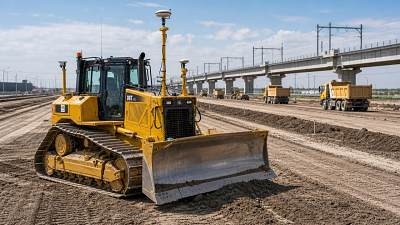
A BULLDOZER with GPS tracking changes how earthmoving work is monitored, measured, and adjusted during active operations.
Its value is not limited to location visibility.
In real projects, the bigger benefit is tighter control over grading accuracy, machine time, haul coordination, and site response.
That matters across road building, mining support, municipal works, and logistics-linked infrastructure development.
A digital heavy equipment marketplace also makes this discussion more practical.
When construction machinery, truck fleets, trailers, and spare parts are evaluated together, equipment decisions become less isolated.
On a platform serving the global heavy truck and equipment ecosystem, a BULLDOZER with GPS tracking is easier to compare within the full transport chain.
That broader view helps connect machine capability with project conditions, service support, and cross-border sourcing risk.
Actual jobsite needs vary more than the machine spec sheet suggests
The same BULLDOZER with GPS tracking can perform very differently depending on terrain, fleet coordination, and tolerance requirements.
A bulk cut-and-fill site usually values cycle visibility and machine allocation.
A finish-grading package cares more about elevation precision, rework avoidance, and clean data transfer.
A remote mining corridor may focus first on uptime, signal reliability, and maintenance planning.
This is why the right judgment starts with operating context, not only engine power, blade size, or purchase price.
More often, the useful question is how GPS data supports daily control decisions.
Can supervisors detect idle time early?
Can truck dispatch be aligned with dozer progress?
Can grade deviations be corrected before they affect compaction, drainage, or paving layers?
Where the judgment usually begins
- Check whether the site needs broad movement tracking or centimeter-level grade control.
- Confirm if the bulldozer works independently or alongside dump trucks, excavators, and compactors.
- Review signal conditions, correction services, and data compatibility with existing site systems.
- Estimate whether downtime risk or rework cost creates the stronger business case.
On highway and industrial corridor projects, coordination becomes the first payoff
Linear projects often stretch across changing ground conditions and moving work fronts.
Here, a BULLDOZER with GPS tracking helps keep production aligned with trucks, survey updates, and sequence changes.
The immediate benefit is not only where the machine is.
It is whether the machine is pushing in the correct zone, at the right time, with fewer unnecessary passes.
On transport infrastructure jobs, delays often start with small coordination gaps.
Trucks arrive before the pad is ready.
Material is spread outside target boundaries.
Grading crews lose time waiting for updated reference points.
A BULLDOZER with GPS tracking reduces these friction points when machine data feeds daily planning.
This becomes especially useful where complete trucks, trailers, and support vehicles are moving across the same corridor.
On mine support roads and rough terrain, uptime matters more than perfect dashboards
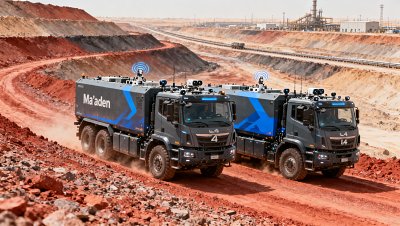
Mining-adjacent applications create a different test for a BULLDOZER with GPS tracking.
Visibility is useful, but rugged reliability decides whether digital control survives daily conditions.
Dust, vibration, long travel distances, and uneven communication coverage can weaken the value of advanced features.
In that setting, the better approach is to prioritize durable hardware, offline data capture, and maintainable components.
A unit that delivers stable positioning and usable utilization data may outperform a more complex setup that fails under field stress.
This is also where parts access matters.
When equipment is sourced through an international industry platform, support depth should be checked alongside product features.
Spare parts availability, compatible truck service networks, and supplier response speed affect real operating cost.
Urban and municipal work usually puts accuracy and disruption control under more pressure
Municipal engineering rarely offers the freedom of open terrain.
There are tighter boundaries, utility conflicts, traffic interfaces, and stronger pressure to avoid repeat work.
In these conditions, a BULLDOZER with GPS tracking supports cleaner execution by improving positional confidence and reducing guesswork.
The key difference is that accuracy here affects more than productivity.
It affects drainage performance, pavement preparation, and handoff to other equipment.
A grading error on a municipal trench restoration section can trigger extra trucking, additional material, and schedule friction with surrounding traffic controls.
So the useful benchmark is not only how fast the bulldozer moves material.
It is how consistently it meets designed levels within constrained space.
Different site types, different decision points
The most common mistake is treating all GPS-enabled dozers as equal
This is where many decisions become expensive later.
A BULLDOZER with GPS tracking is not automatically the right fit because it includes satellite positioning.
Differences in correction method, software usability, antenna protection, display ruggedness, and data export can change field performance.
Another frequent misjudgment is focusing only on acquisition cost.
That ignores training time, calibration discipline, connectivity needs, and replacement part lead times.
In actual deployment, a lower-priced machine can become more costly if it causes repeat grading or weak fleet integration.
It is also risky to assume that a site with trucks and earthmovers already uses compatible digital formats.
Compatibility between dozer guidance, surveying workflows, and transport scheduling should be confirmed early.
Points often overlooked before deployment
- Terrain may block stable correction signals during the exact hours of highest production.
- Operator adoption can lag if the interface adds steps instead of simplifying blade control.
- Data ownership and export rules matter on multinational projects using several contractors.
- After-sales support should match the region where the machine will actually work.
A practical way to match a BULLDOZER with GPS tracking to site conditions
A stronger decision process usually starts with three comparisons.
Compare target accuracy against the cost of rework.
Compare machine utilization gains against expected idle patterns.
Then compare supplier support against site remoteness and maintenance exposure.
For buyers using a global heavy equipment platform, that process can be more transparent.
Product listings, supplier profiles, related truck categories, and market insight resources help narrow the fit beyond brochure claims.
This is particularly useful when a project also depends on complete trucks, trailers, or spare parts moving through the same sourcing channel.
- Map the work area into bulk moving zones, finish zones, and mixed-traffic zones.
- Set the required positioning level for each zone before comparing equipment.
- Review whether the BULLDOZER with GPS tracking can share usable data with trucks and site management tools.
- Check service parts, display units, antennas, and software support by region.
- Estimate implementation time, not just delivery time.
What to confirm before making the next move
The real advantage of a BULLDOZER with GPS tracking appears when site control becomes measurable, not just visible.
Different jobs reward different strengths.
Some need sharper grade accuracy.
Others need dependable uptime in rough terrain or better coordination with trucks and support equipment.
Before moving forward, define the operating scene clearly, list the non-negotiable conditions, and compare support capability with field reality.
That approach leads to a more useful shortlist, better long-term control, and fewer surprises after the machine reaches the jobsite.
Trending News
- How to match lowbed trailer deck height to your hauling equipment
- What documents are needed to export a low bed trailer to Southeast Asia?
- What to verify before choosing a delivery truck supplier for school transportation
- What an excavator manufacturer catalog should show before you compare models
- What to check before appointing a bulldozer distributor
Tag
Recommended News
 Technology & InnovationConstruction Machinery OEM: Key Specs That Affect Integration QualityConstruction machinery OEM selection starts with specs. Learn how dimensions, hydraulics, electrical interfaces, and documentation shape integration quality, safety, and uptime.
 Technology & InnovationHow Truck Body Design Affects Payload and Fuel EfficiencyTruck body design directly affects payload, fuel efficiency, and operating cost. Learn how the right truck body boosts performance, reduces waste, and improves fleet value.
 Technology & InnovationHydraulic Pump Selection Mistakes That Lead to DowntimeHydraulic pump selection mistakes can quietly trigger costly downtime in transport equipment. Learn what to verify before buying and choose with more confidence.
 Technology & InnovationManzhouli Smart Sealing Cuts TIR-Rail Clearance to 3.2 HoursManzhouli Smart Sealing cuts TIR-rail clearance to 3.2 hours, boosting visibility and delivery certainty for China-Europe cargo. See what it means for exporters and forwarders.
 Technology & InnovationConstruction Machinery OEM vs ODM: Key Differences That Affect QualityConstruction machinery OEM vs ODM explained: discover how design control, parts consistency, and lifecycle quality affect performance, sourcing risk, and smarter buying decisions.
 Technology & InnovationBULLDOZER with GPS Tracking: Benefits for Jobsite ControlBULLDOZER with GPS tracking improves jobsite control with better grading accuracy, fleet coordination, and uptime. See how it reduces rework and boosts project efficiency.
 Technology & InnovationGlobal Heavy-Duty Autonomous Trucks Near CommercializationHeavy-duty autonomous trucks are nearing commercialization — 200+ L4 vehicles deployed in Saudi & Chilean mines, delivering 120,000+ km fault-free haulage.
 Technology & InnovationWhen to Use an Excavator With Long Reach Boom on SiteEXCAVATOR with long reach boom guide: learn when it adds real value for dredging, demolition, slopes, and drainage jobs to improve safety, access, and site efficiency.
 Technology & InnovationGlobal Heavy-Duty Autonomous Truck Testing Reaches Commercial Inflection PointHeavy-duty autonomous truck testing hits commercial inflection point: 1M km L4 mining ops in Saudi Arabia & Chile — key for OEMs, mining logistics & global off-road transport.
 Technology & InnovationWhat Advanced Technology Means in Heavy Truck Chassis DesignDiscover how a heavy truck chassis manufacturer with advanced technology improves strength, durability, payload efficiency, and integration for demanding transport needs.
 Technology & InnovationChina Adds Tractor-Trailers' Battery-Swap Systems to NEV Bus Subsidy SchemeBattery-swap systems for tractor-trailers now qualify for China’s NEV bus subsidy—up to ¥32,000 per system. Key for logistics, mining & port electrification.
 Technology & InnovationPortable Construction Machinery Supplier: Where Mobility Improves Jobsite OutputConstruction machinery supplier with portable options helps contractors cut mobilization time, improve transport efficiency, and boost jobsite output across road, municipal, and multi-site projects.
 Technology & InnovationChina Adds Heavy-Duty Tractor Battery-Swap Systems to EV Bus Subsidy SchemeHeavy-duty tractor battery-swap systems now qualify for China’s 2026 EV bus subsidy—30% off, up to ¥280,000. Act before Dec 31!
 Technology & InnovationDo Energy-Saving Excavators Lower Fuel Use in Daily Jobsite Operations?Excavator manufacturer with energy-saving features: discover how smarter hydraulics, auto idle, and telematics can cut daily fuel use, improve uptime, and lower jobsite operating costs.
 Technology & InnovationL4 Autonomous Trucks Launch on Tianjin Port–Xiong’an RouteL4 autonomous trucks launch on Tianjin Port–Xiong’an route—first routine platooned operations in China’s strategic logistics corridor. Watch EU & Gulf certification unfold.
 Technology & InnovationAre Energy-Saving Excavators Worth It for Long-Term Operations?Excavator manufacturer with energy-saving features: discover if lower fuel use, reduced downtime, and stronger long-term ROI make these machines the smart choice for demanding operations.
 Technology & InnovationSouth China Pioneer Studio Wins Youth May 4th Award for Smart Truck CertificationSmart truck certification breakthrough: South China Pioneer Studio wins Youth May 4th Award for EU R155/R156 compliance — a game-changer for global陆路运输设备 exports.
 Technology & InnovationL4 Autonomous Container Trucks Begin Trial on Tianjin Port–Xiong'an CorridorL4 autonomous container trucks begin trial on Tianjin Port–Xiong'an Corridor—key milestone for cross-border logistics, heavy-equipment transport & smart intermodal supply chains.
 Technology & InnovationQuick Installation Excavators: Do They Reduce Setup Time on Real Sites?Excavator manufacturer with quick installation: discover whether fast-deploy excavators truly cut real-site setup time, lower labor costs, and improve uptime before you buy.
 Technology & InnovationModular Flatbed Trailers: When Design Flexibility Improves UtilizationFind out how a flatbed trailer supplier with modular design helps fleets boost utilization, adapt to varied loads, cut idle assets, and improve long-term ROI.
 Technology & InnovationPortable Construction Machinery: Where Flexible Equipment Saves TimeConstruction machinery supplier with portable options helps cut relocation time, improve transport efficiency, and keep projects moving faster across changing job sites.
 Technology & InnovationSemi Trailer Manufacturer with Lightweight Design: Is Lower Weight Worth It?Semi trailer manufacturer with lightweight design: discover when lower weight boosts payload, fuel savings, and fleet ROI—and when durability, compliance, and repair costs matter more.
![]() Technology & InnovationWhy Quick Installation Matters When Choosing an Excavator ManufacturerExcavator manufacturer with quick installation: discover how faster setup cuts downtime, simplifies maintenance, improves reliability, and keeps heavy equipment projects on schedule.
Technology & InnovationWhy Quick Installation Matters When Choosing an Excavator ManufacturerExcavator manufacturer with quick installation: discover how faster setup cuts downtime, simplifies maintenance, improves reliability, and keeps heavy equipment projects on schedule. Technology & InnovationHow Modular Design Changes the Value of a Flatbed Trailer SupplierFlatbed trailer supplier with modular design: discover how modular platforms cut lifecycle costs, boost fleet flexibility, and improve ROI for logistics, construction, and industrial buyers.
 Technology & InnovationHow Portable Construction Machinery for Mining Helps Remote Projects Move FasterConstruction machinery for mining helps remote projects move faster with easier transport, quick setup, and flexible deployment. Learn how to cut delays and improve site efficiency.