CATL Unveils Heavy-Truck Battery Range Extension, Signs Deals for 13,000 Vehicles
CATL introduced a battery-based range-extension solution for heavy trucks and an integrated battery-swapping ecosystem at a launch event on October 20, 2026, according to the supplied event summary. Initial agreements covered 13,000 vehicles. For truck manufacturers, fleet buyers and swapping-service providers, the announcement raises potential questions about equipment compatibility, procurement specifications and delivery responsibilities. The supplied information identifies no new policy, regulation or mandatory standard; from an industry perspective, its immediate relevance is a commercial deployment signal whose implications for technical requirements and contracting practices warrant examination.
Launch Combines Separate Battery Packs With Initial Vehicle Agreements
At its second-generation heavy-truck product and battery-swapping ecosystem launch, CATL presented an all-scenario battery-based range-extension solution alongside an integrated battery-swapping ecosystem solution.
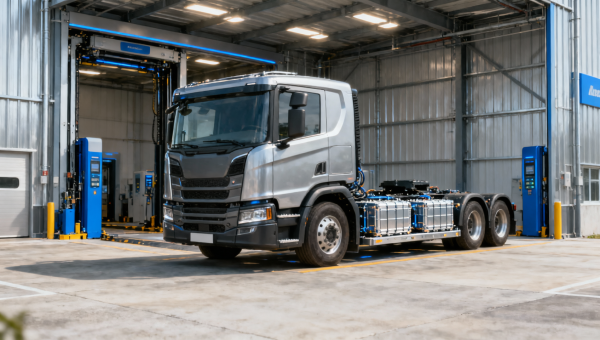
The announced design separates the underbody battery-swapping system into a main traction battery pack and a range-extension battery pack. The supplied summary states that the solution entered mass production at launch and that initial signed agreements covered 13,000 vehicles.
CATL also signed cooperation agreements with China Post, SF Express and STO Express.
Separate Battery Packs May Reshape Purchasing and Service Specifications
Vehicle integration could require more detailed compatibility checks
Analysis suggests that truck manufacturers and equipment integrators evaluating the solution may need to examine how the two battery packs interact with the vehicle and swapping equipment. Relevant procurement questions could include the supported vehicle configurations, connection interfaces, control functions and technical documentation available for each configuration.
The supplied information does not establish a common interface standard, an interoperability certification or acceptance criteria. Buyers should therefore verify any claimed compatibility against the documentation for the proposed equipment rather than infer it from the ecosystem announcement.
Fleet purchasing may need clearer battery and service boundaries
For logistics fleets and other vehicle purchasers, the separation of the battery packs could affect how vehicle supply, battery provision and swapping services are specified in contracts. Analysis suggests that buyers may need to clarify which components and services an offer includes, how operating suitability will be demonstrated and who handles faults involving multiple suppliers.
The cooperation agreements indicate commercial participation by the named logistics companies. They do not, on the information supplied, establish fleet acceptance results, completed deliveries or agreed service performance.
Swapping operators and maintenance providers may face configuration questions
From a service perspective, the proposed architecture could create a need to verify which pack configurations a swapping facility can handle and what maintenance information accompanies them. Operators and after-sales providers considering participation may also need to assess component identification, service records and responsibility for troubleshooting.
These are potential operational implications. The supplied summary does not confirm station compatibility, maintenance procedures or an industry-wide service rule.
Procurement Reviews Should Focus on Evidence Behind the Offering
Check the approval scope for the proposed configuration
As a procurement recommendation, companies evaluating the solution should request the applicable approval, testing and conformity documentation for the vehicle and battery configuration they intend to purchase. The review should establish what the documents cover and whether they correspond to the equipment offered. The announcement alone provides no basis for concluding that a particular certification requirement has changed or that every configuration has been approved.
Translate the pack architecture into contract terms
Analysis suggests that technical schedules and tender documents may benefit from separately describing the main traction pack, the range-extension pack and the associated swapping services. Buyers could seek written clarification of equipment compatibility, acceptance procedures, warranty coverage and responsibility for service interruptions. These would be contractual matters to verify, rather than requirements established by the announcement.
Verify delivery commitments separately from signed volumes
The stated mass-production launch and initial agreements provide a basis for commercial follow-up. For purchasing decisions, however, companies should seek confirmation of their own production allocation, delivery milestones, configuration availability and acceptance arrangements. The supplied information does not include a delivery schedule or establish that the 13,000 vehicles have been delivered.
Request evidence for the intended operating conditions
Fleet buyers may wish to evaluate the proposed configuration against their routes, loads and access to swapping services. Any assessment should rely on relevant technical evidence and agreed evaluation conditions. The supplied summary provides no operating data from which to conclude that the solution will deliver particular cost savings, range improvements or service availability.
Commercial Commitments Do Not Establish a New Industry Rule
Editorial observation: this announcement is best understood as a product commercialization and ecosystem coordination signal. The reported production launch and initial agreements make implementation worth following, but the supplied facts do not demonstrate a regulatory change, a mandatory technical standard or a common certification framework.
What deserves closer attention is whether subsequent technical documents and purchasing agreements define consistent compatibility requirements, acceptance criteria and service responsibilities. If such provisions recur across transactions, they could influence purchasing practices. That possibility remains an analytical observation, not evidence that a binding industry rule already exists.
Implementation Evidence Will Determine the Wider Significance
For the heavy-truck supply chain, the announcement brings a separate-pack battery architecture into a stated mass-production offering supported by initial commercial agreements. Analysis suggests that its practical significance will depend on verified compatibility, documented approval coverage, delivery performance and service arrangements.
At this stage, companies can treat the event as a reason to review technical and contractual requirements for prospective purchases. Broader conclusions about standardization, compliance changes or market adoption should await supporting implementation evidence.
Basis of This Report and Items Requiring Verification
This article is based solely on the user-provided news title, the event date of October 20, 2026, and the accompanying event summary. No specific official source links were included in the input. The reported facts therefore remain subject to verification against subsequent official company announcements and supporting documents.
Further review should focus on technical specifications, applicable approval and certification documentation, procurement or tender provisions, delivery progress, cooperation implementation and feedback from participating businesses. Any later claim of a policy, regulatory or standards change would require separate verification against the relevant official publication.
Trending News
- How to choose the right bulldozer size for a construction site
- How to choose a military truck for off-road transport
- Cummins Expects EPA to Finalize Heavy-Duty Truck NOx Rule in December
- How to choose the right bulk cement trailer capacity
- China Truckmakers' Third-Quarter Results Diverge as Exports Offset Weak Domestic Demand
Tag
Recommended News
 Technology & InnovationCATL Unveils Heavy-Truck Battery Range Extension, Signs Deals for 13,000 VehiclesExplore CATL’s heavy-truck battery range-extension solution and deals covering 13,000 vehicles. Discover what fleet buyers should check on compatibility, delivery and battery swapping.
 Technology & InnovationConstruction Machinery OEM: Key Specs That Affect Integration QualityConstruction machinery OEM selection starts with specs. Learn how dimensions, hydraulics, electrical interfaces, and documentation shape integration quality, safety, and uptime.
 Technology & InnovationHow Truck Body Design Affects Payload and Fuel EfficiencyTruck body design directly affects payload, fuel efficiency, and operating cost. Learn how the right truck body boosts performance, reduces waste, and improves fleet value.
 Technology & InnovationHydraulic Pump Selection Mistakes That Lead to DowntimeHydraulic pump selection mistakes can quietly trigger costly downtime in transport equipment. Learn what to verify before buying and choose with more confidence.
 Technology & InnovationManzhouli Smart Sealing Cuts TIR-Rail Clearance to 3.2 HoursManzhouli Smart Sealing cuts TIR-rail clearance to 3.2 hours, boosting visibility and delivery certainty for China-Europe cargo. See what it means for exporters and forwarders.
 Technology & InnovationConstruction Machinery OEM vs ODM: Key Differences That Affect QualityConstruction machinery OEM vs ODM explained: discover how design control, parts consistency, and lifecycle quality affect performance, sourcing risk, and smarter buying decisions.
 Technology & InnovationBULLDOZER with GPS Tracking: Benefits for Jobsite ControlBULLDOZER with GPS tracking improves jobsite control with better grading accuracy, fleet coordination, and uptime. See how it reduces rework and boosts project efficiency.
 Technology & InnovationGlobal Heavy-Duty Autonomous Trucks Near CommercializationHeavy-duty autonomous trucks are nearing commercialization — 200+ L4 vehicles deployed in Saudi & Chilean mines, delivering 120,000+ km fault-free haulage.
 Technology & InnovationWhen to Use an Excavator With Long Reach Boom on SiteEXCAVATOR with long reach boom guide: learn when it adds real value for dredging, demolition, slopes, and drainage jobs to improve safety, access, and site efficiency.
 Technology & InnovationGlobal Heavy-Duty Autonomous Truck Testing Reaches Commercial Inflection PointHeavy-duty autonomous truck testing hits commercial inflection point: 1M km L4 mining ops in Saudi Arabia & Chile — key for OEMs, mining logistics & global off-road transport.
 Technology & InnovationWhat Advanced Technology Means in Heavy Truck Chassis DesignDiscover how a heavy truck chassis manufacturer with advanced technology improves strength, durability, payload efficiency, and integration for demanding transport needs.
 Technology & InnovationChina Adds Tractor-Trailers' Battery-Swap Systems to NEV Bus Subsidy SchemeBattery-swap systems for tractor-trailers now qualify for China’s NEV bus subsidy—up to ¥32,000 per system. Key for logistics, mining & port electrification.
 Technology & InnovationPortable Construction Machinery Supplier: Where Mobility Improves Jobsite OutputConstruction machinery supplier with portable options helps contractors cut mobilization time, improve transport efficiency, and boost jobsite output across road, municipal, and multi-site projects.
 Technology & InnovationChina Adds Heavy-Duty Tractor Battery-Swap Systems to EV Bus Subsidy SchemeHeavy-duty tractor battery-swap systems now qualify for China’s 2026 EV bus subsidy—30% off, up to ¥280,000. Act before Dec 31!
 Technology & InnovationDo Energy-Saving Excavators Lower Fuel Use in Daily Jobsite Operations?Excavator manufacturer with energy-saving features: discover how smarter hydraulics, auto idle, and telematics can cut daily fuel use, improve uptime, and lower jobsite operating costs.
 Technology & InnovationL4 Autonomous Trucks Launch on Tianjin Port–Xiong’an RouteL4 autonomous trucks launch on Tianjin Port–Xiong’an route—first routine platooned operations in China’s strategic logistics corridor. Watch EU & Gulf certification unfold.
 Technology & InnovationAre Energy-Saving Excavators Worth It for Long-Term Operations?Excavator manufacturer with energy-saving features: discover if lower fuel use, reduced downtime, and stronger long-term ROI make these machines the smart choice for demanding operations.
 Technology & InnovationSouth China Pioneer Studio Wins Youth May 4th Award for Smart Truck CertificationSmart truck certification breakthrough: South China Pioneer Studio wins Youth May 4th Award for EU R155/R156 compliance — a game-changer for global陆路运输设备 exports.
 Technology & InnovationL4 Autonomous Container Trucks Begin Trial on Tianjin Port–Xiong'an CorridorL4 autonomous container trucks begin trial on Tianjin Port–Xiong'an Corridor—key milestone for cross-border logistics, heavy-equipment transport & smart intermodal supply chains.
 Technology & InnovationQuick Installation Excavators: Do They Reduce Setup Time on Real Sites?Excavator manufacturer with quick installation: discover whether fast-deploy excavators truly cut real-site setup time, lower labor costs, and improve uptime before you buy.
 Technology & InnovationModular Flatbed Trailers: When Design Flexibility Improves UtilizationFind out how a flatbed trailer supplier with modular design helps fleets boost utilization, adapt to varied loads, cut idle assets, and improve long-term ROI.
 Technology & InnovationPortable Construction Machinery: Where Flexible Equipment Saves TimeConstruction machinery supplier with portable options helps cut relocation time, improve transport efficiency, and keep projects moving faster across changing job sites.
 Technology & InnovationSemi Trailer Manufacturer with Lightweight Design: Is Lower Weight Worth It?Semi trailer manufacturer with lightweight design: discover when lower weight boosts payload, fuel savings, and fleet ROI—and when durability, compliance, and repair costs matter more.
![]() Technology & InnovationWhy Quick Installation Matters When Choosing an Excavator ManufacturerExcavator manufacturer with quick installation: discover how faster setup cuts downtime, simplifies maintenance, improves reliability, and keeps heavy equipment projects on schedule.
 Technology & InnovationHow Modular Design Changes the Value of a Flatbed Trailer SupplierFlatbed trailer supplier with modular design: discover how modular platforms cut lifecycle costs, boost fleet flexibility, and improve ROI for logistics, construction, and industrial buyers.