Semi Trailer Manufacturer with Lightweight Design: Is Lower Weight Worth It?
For fleet buyers and transport executives, choosing a semi trailer manufacturer with lightweight design is no longer just about reducing tare weight. It is a strategic decision that affects payload capacity, fuel efficiency, regulatory compliance, maintenance costs, and total lifecycle value. A lighter trailer can create measurable operational advantages, but lower weight is not automatically the best option in every route, cargo profile, or operating environment. The real question is whether the weight reduction comes with the right balance of durability, safety, and long-term economics.
In road transport equipment, lightweight design has become a major development direction because logistics operators face tighter cost control, stricter emissions goals, and increasing pressure to improve asset utilization. A reliable semi trailer manufacturer with lightweight design should therefore be evaluated beyond brochure claims. Material selection, structural engineering, axle configuration, repairability, supplier support, and expected working conditions all matter before deciding whether lower weight is truly worth it.
Why a Structured Evaluation Matters Before Choosing a Lightweight Trailer
Lightweight trailers often look attractive because they promise more payload and lower fuel consumption, but these benefits can be overstated when operating conditions are not carefully matched. A trailer used for high-volume express freight on paved highways has very different requirements from one operating in mining zones, port yards, or mixed urban-rural construction routes. This is why selecting a semi trailer manufacturer with lightweight design should be based on a practical evaluation framework rather than a single number such as tare weight.
A structured review also helps compare suppliers more objectively. Some manufacturers reduce weight through advanced steel grades, aluminum components, optimized cross-member layout, or redesigned suspension interfaces. Others may simply remove material from critical areas, which can increase fatigue risk or shorten service life. A disciplined process helps identify whether the lighter trailer is a true engineering upgrade or only a short-term sales proposition.
Core Points to Check When Evaluating a Semi Trailer Manufacturer with Lightweight Design
- Confirm how much weight has actually been reduced and where it was removed, including frame, floor, suspension mounts, landing gear, and side protection systems.
- Ask which materials are used, such as high-strength steel, aluminum alloy, or hybrid structures, and whether they suit your cargo and road conditions.
- Review payload gain against legal gross vehicle limits, because lower trailer weight only adds value when route regulations allow useful extra cargo.
- Check frame design and fatigue resistance data, especially at stress concentration points like kingpin area, suspension brackets, and rear overhang.
- Evaluate whether the lighter design changes maintenance needs, repair complexity, spare part cost, or workshop compatibility in your operating region.
- Compare expected fuel savings under real operating loads instead of ideal laboratory figures or marketing estimates based on empty return trips.
- Verify brake, axle, tire, and suspension matching to ensure weight reduction does not compromise stability, stopping performance, or load distribution.
- Request corrosion protection details, because lighter structures may use thinner sections that require stronger coating, sealing, and drainage design.
- Assess body type suitability, since lightweight solutions for flatbeds, curtainsiders, tankers, and tippers involve different engineering priorities.
- Confirm after-sales support, warranty terms, and technical documentation from the semi trailer manufacturer with lightweight design before purchase approval.
1. Weight Reduction Must Be Functional, Not Cosmetic
The most important issue is not simply how light the trailer is, but whether the reduction creates operational benefit without harming structural reliability. A well-designed lightweight trailer uses engineering analysis to remove unnecessary mass while preserving strength in high-stress areas. That means a reputable semi trailer manufacturer with lightweight design should provide data on frame durability, load distribution, and reinforcement logic.
2. Material Strategy Determines Real Value
High-strength steel may offer a better balance of weight, durability, and repairability than full aluminum construction in some fleets. Aluminum can reduce tare weight further, but repair methods, welding capability, and part availability may differ by market. The right material choice depends on route severity, cargo type, climate exposure, and workshop access.
3. Lower Weight Only Pays When It Improves Revenue or Efficiency
If the operation cubes out before it weighs out, a lighter trailer may not generate more billable payload. In that case, the value comes mainly from fuel savings and possible emission reduction. If cargo is dense and legal axle limits still allow additional freight, then a semi trailer manufacturer with lightweight design can deliver stronger economic upside through higher payload per trip.
When Lower Weight Is Usually Worth It
Long-Haul General Freight
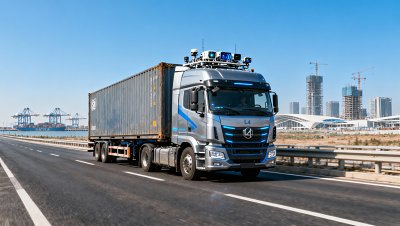
For long-distance logistics running mainly on paved highways, lighter semi-trailers often provide the clearest benefits. Reduced tare weight can improve fuel economy over high annual mileage, and even small gains become significant across large fleets. A semi trailer manufacturer with lightweight design is especially relevant when transport cycles are predictable and road quality is relatively stable.
In this scenario, key checks include aerodynamic compatibility, suspension tuning, brake efficiency under full load, and maintenance intervals. The goal is to ensure that the lightweight platform still performs reliably under sustained highway usage.
High-Volume Consumer Goods and Express Logistics
For regional distribution, parcel networks, and FMCG transport, lower trailer weight can contribute to lower energy consumption and faster equipment turnover. Here, the benefit may come less from payload increase and more from operational efficiency. Lightweight curtainsiders and van trailers are commonly considered in these applications.
Important checks include body rigidity, door and roof durability, loading dock compatibility, and sidewall wear resistance. Lightweight should not mean weaker resistance to frequent loading cycles.
Tankers and Specialized Compliance-Sensitive Cargo
In tanker transport, every kilogram matters because payload and legal distribution limits directly affect revenue. A specialized semi trailer manufacturer with lightweight design may help increase net carrying capacity while meeting strict safety and certification requirements.
However, buyers should verify baffle design, rollover stability, center of gravity, and shell durability. In liquid cargo transport, low weight must never compromise control or regulatory compliance.
When Lower Weight May Not Be the Best Priority
Construction Materials and Harsh Jobsite Conditions
For aggregates, steel coils, demolition waste, or repeated use on rough terrain, durability often matters more than absolute tare weight. A lightweight design that performs well on highways may experience faster fatigue when exposed to uneven surfaces, overloading risk, or impact-heavy loading methods.
In these operations, focus on floor thickness, weld quality, torsional resistance, and suspension reinforcement. Sometimes a slightly heavier trailer has a lower total cost of ownership because it spends less time in repair.
Cross-Border or Remote Market Operations
A highly optimized lightweight trailer may use specialized parts or repair techniques that are not easily available in remote service networks. Even if the product is technically strong, downtime can become expensive when replacement parts or approved repair procedures are limited.
This is where the supplier ecosystem matters. Through a professional sourcing channel such as the Global Heavy Truck Industry Platform, buyers can compare not only products but also supplier capabilities, parts support, and international trade readiness.
Commonly Overlooked Risks Before Selecting a Semi Trailer Manufacturer with Lightweight Design
Overemphasis on tare weight: The lightest trailer is not automatically the most profitable. If the operation is volume-limited rather than weight-limited, the revenue gain may be smaller than expected.
Ignoring repair infrastructure: Advanced lightweight materials may require specialized welding, straightening, or panel replacement procedures that are not available in all markets.
Underestimating fatigue loading: Repeated stress from poor roads, harsh braking, uneven loading, and docking impacts can shorten the life of an aggressive lightweight structure.
Missing axle and legal compliance details: Added payload value depends on local laws governing gross combination weight, axle spacing, tire ratings, and bridge formulas.
Assuming all suppliers engineer to the same standard: One semi trailer manufacturer with lightweight design may use simulation, fatigue testing, and documented validation, while another may rely mainly on material thinning.
Practical Steps for a Smarter Purchase Decision
- Define the operating profile first: cargo density, annual mileage, road conditions, loading method, legal weight limits, and expected trailer retention period.
- Request technical drawings, material specifications, and fatigue test or finite element analysis evidence from each shortlisted supplier.
- Calculate total cost of ownership using payload gain, fuel savings, maintenance frequency, downtime exposure, and residual value instead of purchase price alone.
- Inspect service network strength, spare parts access, and warranty responsiveness in the regions where the trailer will actually operate.
- Run a pilot evaluation with one or two units before a larger order, and monitor structural condition, tire wear, and fuel performance.
FAQ About Choosing a Semi Trailer Manufacturer with Lightweight Design
Does a lighter semi-trailer always carry more cargo?
Not always. Additional payload only matters when legal limits and cargo density allow it. Some operations reach volume limits before weight limits, reducing the advantage.
Is aluminum always better than steel for lightweight trailer design?
No. Aluminum can reduce weight, but high-strength steel may offer better durability, lower repair complexity, or stronger economics depending on application and local service capability.
How should suppliers be compared?
Compare engineering evidence, material quality, warranty, export experience, manufacturing consistency, support network, and lifecycle cost. The best semi trailer manufacturer with lightweight design is the one that fits the operating reality, not just the sales specification.
Final Decision and Next Step
So, is lower weight worth it? In many logistics applications, yes—if the trailer is engineered properly and matched to the right duty cycle. A capable semi trailer manufacturer with lightweight design can help improve payload efficiency, fuel economy, and long-term fleet productivity. But if lightweighting reduces durability, complicates repairs, or offers little real payload benefit under local regulations, the expected savings may disappear.
The most effective next step is to compare several qualified suppliers using a consistent technical and commercial checklist. Through the Global Heavy Truck Industry Platform, buyers can explore trailer options, review supplier capabilities, and identify dependable partners across the road transport equipment supply chain. A better lightweight trailer decision starts with better information, verified engineering, and a clear understanding of actual operating conditions.
Trending News
- When does heavy equipment transport require a lowboy trailer?
- When does a light commercial vehicle for urban delivery save fleet costs?
- How to choose an off road truck for steep and unstable job sites
- How to match crane truck lifting capacity to your jobsite loads
- What drives logging truck cost beyond the base purchase price?
Tag
Recommended News
 Technology & InnovationConstruction Machinery OEM: Key Specs That Affect Integration QualityConstruction machinery OEM selection starts with specs. Learn how dimensions, hydraulics, electrical interfaces, and documentation shape integration quality, safety, and uptime.
 Technology & InnovationHow Truck Body Design Affects Payload and Fuel EfficiencyTruck body design directly affects payload, fuel efficiency, and operating cost. Learn how the right truck body boosts performance, reduces waste, and improves fleet value.
 Technology & InnovationHydraulic Pump Selection Mistakes That Lead to DowntimeHydraulic pump selection mistakes can quietly trigger costly downtime in transport equipment. Learn what to verify before buying and choose with more confidence.
 Technology & InnovationManzhouli Smart Sealing Cuts TIR-Rail Clearance to 3.2 HoursManzhouli Smart Sealing cuts TIR-rail clearance to 3.2 hours, boosting visibility and delivery certainty for China-Europe cargo. See what it means for exporters and forwarders.
 Technology & InnovationConstruction Machinery OEM vs ODM: Key Differences That Affect QualityConstruction machinery OEM vs ODM explained: discover how design control, parts consistency, and lifecycle quality affect performance, sourcing risk, and smarter buying decisions.
 Technology & InnovationBULLDOZER with GPS Tracking: Benefits for Jobsite ControlBULLDOZER with GPS tracking improves jobsite control with better grading accuracy, fleet coordination, and uptime. See how it reduces rework and boosts project efficiency.
 Technology & InnovationGlobal Heavy-Duty Autonomous Trucks Near CommercializationHeavy-duty autonomous trucks are nearing commercialization — 200+ L4 vehicles deployed in Saudi & Chilean mines, delivering 120,000+ km fault-free haulage.
 Technology & InnovationWhen to Use an Excavator With Long Reach Boom on SiteEXCAVATOR with long reach boom guide: learn when it adds real value for dredging, demolition, slopes, and drainage jobs to improve safety, access, and site efficiency.
 Technology & InnovationGlobal Heavy-Duty Autonomous Truck Testing Reaches Commercial Inflection PointHeavy-duty autonomous truck testing hits commercial inflection point: 1M km L4 mining ops in Saudi Arabia & Chile — key for OEMs, mining logistics & global off-road transport.
 Technology & InnovationWhat Advanced Technology Means in Heavy Truck Chassis DesignDiscover how a heavy truck chassis manufacturer with advanced technology improves strength, durability, payload efficiency, and integration for demanding transport needs.
 Technology & InnovationChina Adds Tractor-Trailers' Battery-Swap Systems to NEV Bus Subsidy SchemeBattery-swap systems for tractor-trailers now qualify for China’s NEV bus subsidy—up to ¥32,000 per system. Key for logistics, mining & port electrification.
 Technology & InnovationPortable Construction Machinery Supplier: Where Mobility Improves Jobsite OutputConstruction machinery supplier with portable options helps contractors cut mobilization time, improve transport efficiency, and boost jobsite output across road, municipal, and multi-site projects.
 Technology & InnovationChina Adds Heavy-Duty Tractor Battery-Swap Systems to EV Bus Subsidy SchemeHeavy-duty tractor battery-swap systems now qualify for China’s 2026 EV bus subsidy—30% off, up to ¥280,000. Act before Dec 31!
 Technology & InnovationDo Energy-Saving Excavators Lower Fuel Use in Daily Jobsite Operations?Excavator manufacturer with energy-saving features: discover how smarter hydraulics, auto idle, and telematics can cut daily fuel use, improve uptime, and lower jobsite operating costs.
 Technology & InnovationL4 Autonomous Trucks Launch on Tianjin Port–Xiong’an RouteL4 autonomous trucks launch on Tianjin Port–Xiong’an route—first routine platooned operations in China’s strategic logistics corridor. Watch EU & Gulf certification unfold.
 Technology & InnovationAre Energy-Saving Excavators Worth It for Long-Term Operations?Excavator manufacturer with energy-saving features: discover if lower fuel use, reduced downtime, and stronger long-term ROI make these machines the smart choice for demanding operations.
 Technology & InnovationSouth China Pioneer Studio Wins Youth May 4th Award for Smart Truck CertificationSmart truck certification breakthrough: South China Pioneer Studio wins Youth May 4th Award for EU R155/R156 compliance — a game-changer for global陆路运输设备 exports.
 Technology & InnovationL4 Autonomous Container Trucks Begin Trial on Tianjin Port–Xiong'an CorridorL4 autonomous container trucks begin trial on Tianjin Port–Xiong'an Corridor—key milestone for cross-border logistics, heavy-equipment transport & smart intermodal supply chains.
 Technology & InnovationQuick Installation Excavators: Do They Reduce Setup Time on Real Sites?Excavator manufacturer with quick installation: discover whether fast-deploy excavators truly cut real-site setup time, lower labor costs, and improve uptime before you buy.
 Technology & InnovationModular Flatbed Trailers: When Design Flexibility Improves UtilizationFind out how a flatbed trailer supplier with modular design helps fleets boost utilization, adapt to varied loads, cut idle assets, and improve long-term ROI.
 Technology & InnovationPortable Construction Machinery: Where Flexible Equipment Saves TimeConstruction machinery supplier with portable options helps cut relocation time, improve transport efficiency, and keep projects moving faster across changing job sites.
 Technology & InnovationSemi Trailer Manufacturer with Lightweight Design: Is Lower Weight Worth It?Semi trailer manufacturer with lightweight design: discover when lower weight boosts payload, fuel savings, and fleet ROI—and when durability, compliance, and repair costs matter more.
![]() Technology & InnovationWhy Quick Installation Matters When Choosing an Excavator ManufacturerExcavator manufacturer with quick installation: discover how faster setup cuts downtime, simplifies maintenance, improves reliability, and keeps heavy equipment projects on schedule.
 Technology & InnovationHow Modular Design Changes the Value of a Flatbed Trailer SupplierFlatbed trailer supplier with modular design: discover how modular platforms cut lifecycle costs, boost fleet flexibility, and improve ROI for logistics, construction, and industrial buyers.
 Technology & InnovationHow Portable Construction Machinery for Mining Helps Remote Projects Move FasterConstruction machinery for mining helps remote projects move faster with easier transport, quick setup, and flexible deployment. Learn how to cut delays and improve site efficiency.