Global Heavy-Duty Autonomous Truck Testing Reaches Commercial Inflection Point
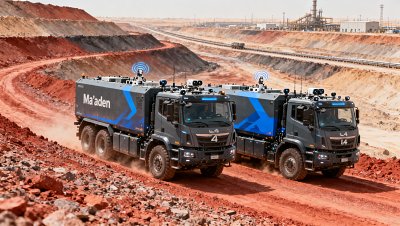
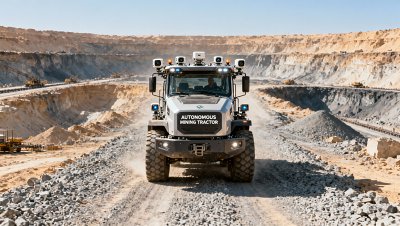
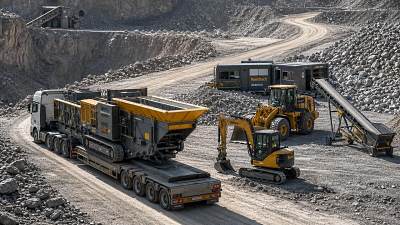
On May 18, 2026, a leading Chinese autonomous driving company announced that its L4-level autonomous mining tractor system had completed 1 million kilometers of unmanned operation — without safety driver intervention — at Ma'aden’s phosphate mine in Saudi Arabia and Escondida copper mine in Chile. This milestone signals growing traction for China-developed autonomous solutions in global off-road commercial transport, particularly for mining logistics. Industries including mining equipment supply, cross-border heavy-vehicle trade, and intelligent infrastructure services should monitor this development closely — as it reflects early-stage commercial validation beyond controlled test environments.
Event Overview
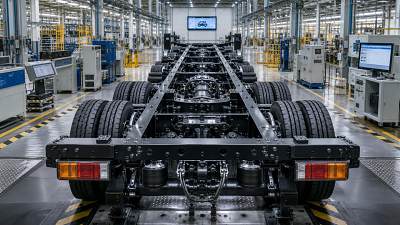
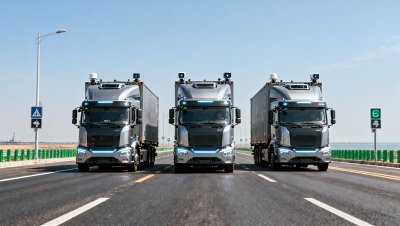
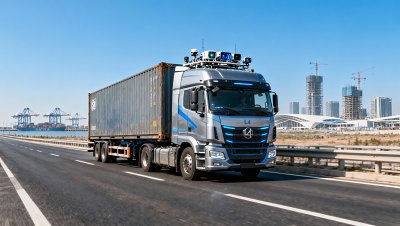
On May 18, 2026, a Chinese autonomous driving company confirmed that its L4-level autonomous mining tractor system achieved 1 million kilometers of接管-free operation at two operational mines: Ma'aden’s phosphate mine in Saudi Arabia and Escondida copper mine in Chile. The system is integrated with mainstream Chinese heavy-duty truck chassis and supports full-scenario platooning transport in open-pit mining environments. Publicly reported performance metrics include a 28% average improvement in operational efficiency and a 65% reduction in human labor dependency. Both mining groups have placed follow-up orders.
Industries Affected by This Development
Heavy-Duty Vehicle Exporters & OEMs
Chinese heavy-truck manufacturers exporting to mining-intensive regions may face increased demand for autonomous-ready chassis platforms. The deployment confirms technical compatibility with international mine operations — potentially lowering integration barriers for future exports.
Mining Equipment Integrators & Aftermarket Suppliers
Companies providing sensor suites, control modules, or fleet management software for mining vehicles may see rising specification alignment requirements — especially around interoperability with Chinese autonomous stacks and mine-specific communication protocols (e.g., LTE-M/5G private network integration).
Logistics & Haulage Service Providers in Mining Regions
Contract haulers operating in Saudi Arabia, Chile, and similar jurisdictions may need to assess fleet modernization timelines. The demonstrated reliability (1M km, no接管) suggests autonomous systems are shifting from pilot-phase evaluation toward operational substitution — affecting labor planning and maintenance scheduling.
Supply Chain Enablers for Off-Road Autonomy
Firms offering calibration services, remote diagnostics infrastructure, or cybersecurity validation for autonomous off-road systems may encounter new regional qualification pathways — as deployments scale beyond single-site pilots into multi-mine contracts.
What Relevant Enterprises or Practitioners Should Monitor and Do Now
Track official procurement frameworks and regulatory sandboxes in target markets
Both Saudi Arabia and Chile have recently updated mining technology import guidelines. Enterprises should review whether autonomous vehicle certifications issued under these deployments influence broader national type-approval processes — especially for non-mining off-road applications.
Monitor order scope and delivery timelines of the follow-up contracts
The nature of the newly placed orders (e.g., unit volume, geographic distribution, service-level commitments) will indicate whether this is a continuation of pilot scaling or the start of multi-year fleet replacement cycles — directly affecting capacity planning and parts forecasting.
Distinguish between operational validation and full regulatory recognition
While 1 million km of无人operation demonstrates robustness, it does not equate to formal L4 certification under UNECE R157 or equivalent frameworks. Stakeholders should treat current deployments as functionally validated but still subject to jurisdiction-specific legal liability frameworks.
Assess readiness for hardware-software co-development engagements
Given the system’s integration with Chinese chassis, suppliers outside China may need to evaluate interface documentation access, diagnostic protocol transparency, and firmware update governance — especially if invited to support localized adaptation or service expansion.
Editorial Perspective / Industry Observation
Observably, this milestone is less about technological novelty and more about commercial viability signaling. The 1-million-kilometer threshold — achieved across two geographically and operationally distinct mines — suggests the solution has moved beyond algorithmic maturity into sustained field resilience. Analysis shows this is best understood not as a finalized market entry, but as an inflection point where procurement decisions begin shifting from ‘can it work?’ to ‘how fast can we scale it?’. From an industry perspective, the emphasis on Chinese chassis integration also highlights a growing bifurcation in autonomous stack deployment paths: one aligned with Western OEM platforms and another optimized for domestically sourced heavy-vehicle hardware. Continued observation is warranted on whether this model expands to other resource-rich markets with similar infrastructure constraints (e.g., Australia, Peru, South Africa).
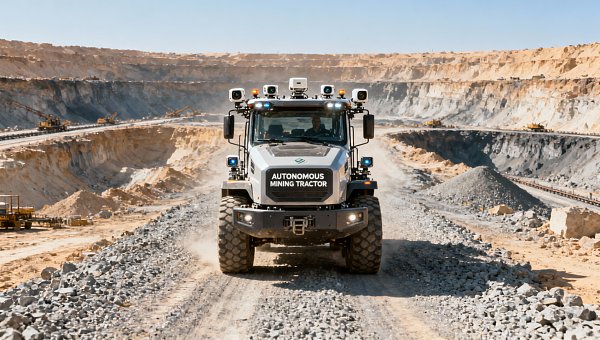
In summary, this development marks a measurable step toward real-world adoption of L4 autonomy in off-highway freight — but remains confined to highly structured, geofenced mining environments. It reflects progress in operational deployment rather than broad regulatory or technological breakthrough. Currently, it is more accurately interpreted as evidence of growing commercial confidence in specific China-originated autonomous systems — not yet as a generalized shift in global heavy-vehicle autonomy standards or timelines.
Source: Official announcement by the Chinese autonomous driving company, dated May 18, 2026. Note: Follow-up order details (e.g., value, delivery schedule, contractual scope) remain unconfirmed and are subject to ongoing disclosure.
Trending News
- How to locate a truck exhaust system leak before replacing parts
- When does heavy equipment transport require a lowboy trailer?
- When does a light commercial vehicle for urban delivery save fleet costs?
- How to choose an off road truck for steep and unstable job sites
- How to match crane truck lifting capacity to your jobsite loads
Tag
Recommended News
 Technology & InnovationConstruction Machinery OEM: Key Specs That Affect Integration QualityConstruction machinery OEM selection starts with specs. Learn how dimensions, hydraulics, electrical interfaces, and documentation shape integration quality, safety, and uptime.
 Technology & InnovationHow Truck Body Design Affects Payload and Fuel EfficiencyTruck body design directly affects payload, fuel efficiency, and operating cost. Learn how the right truck body boosts performance, reduces waste, and improves fleet value.
 Technology & InnovationHydraulic Pump Selection Mistakes That Lead to DowntimeHydraulic pump selection mistakes can quietly trigger costly downtime in transport equipment. Learn what to verify before buying and choose with more confidence.
 Technology & InnovationManzhouli Smart Sealing Cuts TIR-Rail Clearance to 3.2 HoursManzhouli Smart Sealing cuts TIR-rail clearance to 3.2 hours, boosting visibility and delivery certainty for China-Europe cargo. See what it means for exporters and forwarders.
 Technology & InnovationConstruction Machinery OEM vs ODM: Key Differences That Affect QualityConstruction machinery OEM vs ODM explained: discover how design control, parts consistency, and lifecycle quality affect performance, sourcing risk, and smarter buying decisions.
 Technology & InnovationBULLDOZER with GPS Tracking: Benefits for Jobsite ControlBULLDOZER with GPS tracking improves jobsite control with better grading accuracy, fleet coordination, and uptime. See how it reduces rework and boosts project efficiency.
 Technology & InnovationGlobal Heavy-Duty Autonomous Trucks Near CommercializationHeavy-duty autonomous trucks are nearing commercialization — 200+ L4 vehicles deployed in Saudi & Chilean mines, delivering 120,000+ km fault-free haulage.
 Technology & InnovationWhen to Use an Excavator With Long Reach Boom on SiteEXCAVATOR with long reach boom guide: learn when it adds real value for dredging, demolition, slopes, and drainage jobs to improve safety, access, and site efficiency.
 Technology & InnovationGlobal Heavy-Duty Autonomous Truck Testing Reaches Commercial Inflection PointHeavy-duty autonomous truck testing hits commercial inflection point: 1M km L4 mining ops in Saudi Arabia & Chile — key for OEMs, mining logistics & global off-road transport.
 Technology & InnovationWhat Advanced Technology Means in Heavy Truck Chassis DesignDiscover how a heavy truck chassis manufacturer with advanced technology improves strength, durability, payload efficiency, and integration for demanding transport needs.
 Technology & InnovationChina Adds Tractor-Trailers' Battery-Swap Systems to NEV Bus Subsidy SchemeBattery-swap systems for tractor-trailers now qualify for China’s NEV bus subsidy—up to ¥32,000 per system. Key for logistics, mining & port electrification.
 Technology & InnovationPortable Construction Machinery Supplier: Where Mobility Improves Jobsite OutputConstruction machinery supplier with portable options helps contractors cut mobilization time, improve transport efficiency, and boost jobsite output across road, municipal, and multi-site projects.
 Technology & InnovationChina Adds Heavy-Duty Tractor Battery-Swap Systems to EV Bus Subsidy SchemeHeavy-duty tractor battery-swap systems now qualify for China’s 2026 EV bus subsidy—30% off, up to ¥280,000. Act before Dec 31!
 Technology & InnovationDo Energy-Saving Excavators Lower Fuel Use in Daily Jobsite Operations?Excavator manufacturer with energy-saving features: discover how smarter hydraulics, auto idle, and telematics can cut daily fuel use, improve uptime, and lower jobsite operating costs.
 Technology & InnovationL4 Autonomous Trucks Launch on Tianjin Port–Xiong’an RouteL4 autonomous trucks launch on Tianjin Port–Xiong’an route—first routine platooned operations in China’s strategic logistics corridor. Watch EU & Gulf certification unfold.
 Technology & InnovationAre Energy-Saving Excavators Worth It for Long-Term Operations?Excavator manufacturer with energy-saving features: discover if lower fuel use, reduced downtime, and stronger long-term ROI make these machines the smart choice for demanding operations.
 Technology & InnovationSouth China Pioneer Studio Wins Youth May 4th Award for Smart Truck CertificationSmart truck certification breakthrough: South China Pioneer Studio wins Youth May 4th Award for EU R155/R156 compliance — a game-changer for global陆路运输设备 exports.
 Technology & InnovationL4 Autonomous Container Trucks Begin Trial on Tianjin Port–Xiong'an CorridorL4 autonomous container trucks begin trial on Tianjin Port–Xiong'an Corridor—key milestone for cross-border logistics, heavy-equipment transport & smart intermodal supply chains.
 Technology & InnovationQuick Installation Excavators: Do They Reduce Setup Time on Real Sites?Excavator manufacturer with quick installation: discover whether fast-deploy excavators truly cut real-site setup time, lower labor costs, and improve uptime before you buy.
 Technology & InnovationModular Flatbed Trailers: When Design Flexibility Improves UtilizationFind out how a flatbed trailer supplier with modular design helps fleets boost utilization, adapt to varied loads, cut idle assets, and improve long-term ROI.
 Technology & InnovationPortable Construction Machinery: Where Flexible Equipment Saves TimeConstruction machinery supplier with portable options helps cut relocation time, improve transport efficiency, and keep projects moving faster across changing job sites.
 Technology & InnovationSemi Trailer Manufacturer with Lightweight Design: Is Lower Weight Worth It?Semi trailer manufacturer with lightweight design: discover when lower weight boosts payload, fuel savings, and fleet ROI—and when durability, compliance, and repair costs matter more.
![]() Technology & InnovationWhy Quick Installation Matters When Choosing an Excavator ManufacturerExcavator manufacturer with quick installation: discover how faster setup cuts downtime, simplifies maintenance, improves reliability, and keeps heavy equipment projects on schedule.
Technology & InnovationWhy Quick Installation Matters When Choosing an Excavator ManufacturerExcavator manufacturer with quick installation: discover how faster setup cuts downtime, simplifies maintenance, improves reliability, and keeps heavy equipment projects on schedule. Technology & InnovationHow Modular Design Changes the Value of a Flatbed Trailer SupplierFlatbed trailer supplier with modular design: discover how modular platforms cut lifecycle costs, boost fleet flexibility, and improve ROI for logistics, construction, and industrial buyers.
 Technology & InnovationHow Portable Construction Machinery for Mining Helps Remote Projects Move FasterConstruction machinery for mining helps remote projects move faster with easier transport, quick setup, and flexible deployment. Learn how to cut delays and improve site efficiency.