How to Choose a Construction Truck for Tight Job Sites
Choosing the right construction truck for tight job sites requires balancing maneuverability, payload, and job-specific functions. Whether you are comparing a mixer truck, truck mounted crane, truck loader, or even a lowbed trailer for equipment transport, the right decision can improve safety, efficiency, and operating costs. This guide helps buyers and industry professionals evaluate key features, supplier options, and practical applications before making a smart investment.
For procurement teams, dealers, and project evaluators, the challenge is rarely limited to engine power or price. Tight urban streets, restricted plant access, underground parking structures, bridge rehabilitation zones, and municipal work corridors all create operational limits that a standard heavy truck may not handle efficiently. In these environments, a poor truck choice can increase reversing time, fuel burn, tire wear, labor hours, and safety exposure.
In the road transport equipment sector, selecting the right construction truck also means assessing supplier reliability, chassis adaptability, after-sales support, and long-term parts availability. Buyers using a global B2B sourcing platform often compare multiple categories at once, from truck chassis and complete trucks to trailers, construction machinery, and spare parts. That makes a structured evaluation process essential.
Understand the limits of tight job sites before comparing truck models

A construction truck for a confined site should be chosen based on actual operating conditions, not catalog assumptions. The first step is to measure the physical environment: road width, turning entry angle, gate opening, overhead clearance, slope, and unloading radius. On many municipal and infrastructure sites, access lanes can be only 3.2–4.5 meters wide, while overhead limits may fall below 4 meters.
These restrictions affect whether a 4x2, 6x4, or compact short-wheelbase chassis is practical. A truck with a long wheelbase may offer higher payload stability, but it can lose efficiency if it needs 2–3 repositioning moves per cycle. On high-frequency job sites, saving even 4 minutes per trip can create a meaningful productivity gain across a 10-hour shift.
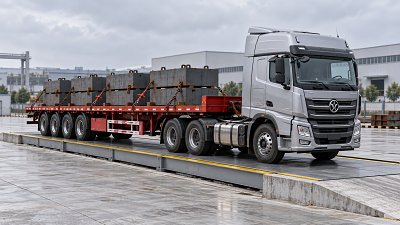
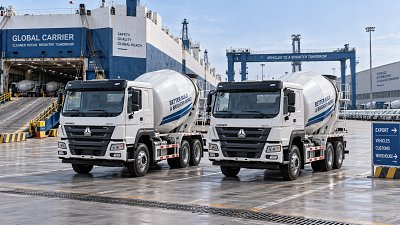
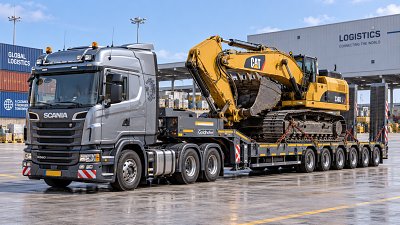
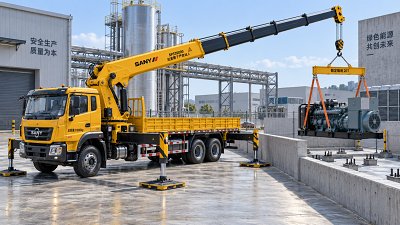
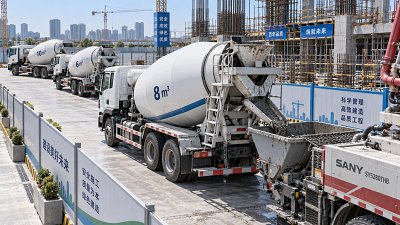
Buyers should also distinguish between movement constraints and task constraints. A mixer truck may enter the site without issue, but can it discharge concrete safely within the available turning space? A truck mounted crane may fit the road, yet still require a stabilizer footprint that exceeds the safe working zone. Equipment transport with a lowbed trailer can be even more demanding because trailer articulation changes site clearance requirements.
Key site measurements to collect
Before requesting quotations, gather a basic site profile. This reduces mismatches between the specification sheet and real-world use, especially when sourcing from overseas suppliers.
- Minimum access width: commonly 3.2–5.0 m on urban and municipal sites.
- Turning radius limit: critical for corners, internal roads, and loading bays.
- Overhead height: often 3.8–4.5 m where bridges, scaffolding, or cables are present.
- Ground condition: mud, gravel, concrete slab, or mixed terrain affects axle choice and tire pattern.
- Cycle frequency: 6–20 trips per day changes the value of fuel efficiency and maneuverability.
Why short wheelbase matters
In tight construction zones, a shorter wheelbase can improve steering response and reduce the number of corrective maneuvers. This is especially important for truck loaders and small crane trucks serving inner-city sites. However, wheelbase reduction should be balanced against body length, axle load distribution, and legal road compliance.
The table below shows how common site restrictions influence truck selection decisions across several work types.
The main takeaway is simple: site data should come first. Once width, height, and turning constraints are clear, buyers can narrow down the right construction truck category much faster and avoid expensive specification changes after order confirmation.
Match truck type to the actual construction task
Not every tight job site requires the same machine logic. A ready-mix contractor, utility installer, small civil works team, and equipment transport operator may all work in restricted spaces, but their truck priorities are different. For this reason, the best construction truck is the one that solves the complete task cycle, not just the entry challenge.
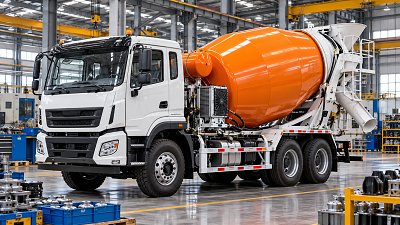
A mixer truck should be judged by drum capacity, discharge efficiency, and stability under short-stop operations. A truck mounted crane needs lifting chart suitability, boom reach, and outrigger deployment practicality. A truck loader often needs fast material handling with repeated starts and stops, while a lowbed trailer must manage loading angle, deck height, and tractor compatibility.
On smaller sites, a lower nominal payload can outperform a larger truck if it completes more trips per day with less waiting and fewer maneuvering delays. For example, a compact 4x2 or short 6-wheel configuration may complete 12 efficient cycles in one shift, while a larger 8x4 unit completes only 8 due to congestion and access restrictions.
Common truck categories for restricted work areas
The comparison below helps buyers connect site conditions with equipment function.
This comparison shows that “tight site suitability” is not a single specification. It is a combination of access fit, task completion efficiency, and legal transport compliance. Procurement decisions should therefore compare work cycles, not just truck dimensions.
A practical selection sequence
- Define the primary task: transport, lift, mix, load, or equipment delivery.
- Set the physical limits: width, height, turning radius, and unloading zone.
- Estimate daily cycles, load size, and operator requirements.
- Check road legality, local axle restrictions, and route constraints.
- Compare supplier configurations, parts support, and delivery lead time.
For B2B buyers, this approach reduces the risk of ordering an oversized unit with underused capacity or an underspecified truck that struggles under real payload conditions.
Evaluate critical specifications that affect safety, efficiency, and cost
Once truck type is defined, the next step is specification review. In tight work areas, a small change in chassis layout or body configuration can have a large effect on operating performance. Buyers should focus on six technical areas: wheelbase, gross vehicle weight range, powertrain, steering behavior, body dimensions, and serviceability.
Engine output should be matched to terrain and cycle intensity rather than selected at the highest available rating. For many compact construction trucks operating on short routes, moderate power in the range commonly used for urban-duty vehicles can provide better fuel economy and less drivetrain stress than an oversized engine. Transmission choice also matters, especially where stop-start traffic dominates more than 50% of route time.
Payload planning should include legal limits, body tare weight, and material density. On confined sites, overloading creates a double penalty: higher risk and reduced maneuverability. Tire selection, suspension setup, and brake performance must also reflect repeated low-speed cycles, curb impact, and uneven ground transitions.
Specification checklist for procurement teams
- Wheelbase and total length: verify against turning space and body requirement.
- Axle configuration: 4x2, 6x4, or other layouts should match site traction and legal load distribution.
- Cab type and visibility: essential where pedestrians, barriers, and reverse movement are frequent.
- Body or attachment dimensions: drum, crane, loader body, or trailer deck should fit the work zone.
- Maintenance access: daily checks should be possible in less than 15–20 minutes.
How specifications translate into operating value
A truck that saves 8% in fuel but loses 20% in cycle time may not be the better asset. Likewise, a higher payload unit may be less productive if it requires wider loading lanes or extended setup space. Evaluators should compare cost per completed task, not price per vehicle alone.
The table below can be used as a quick screening tool during supplier comparison and technical discussions.
Technical evaluation should never be isolated from operating reality. The right construction truck is the one whose specifications reduce risk, shorten cycle time, and remain serviceable over the expected duty pattern.
Compare suppliers beyond price and brochure claims
In international B2B procurement, supplier selection is as important as truck selection. Two vehicles may look similar on paper, but differ significantly in chassis quality, hydraulic component sourcing, weld consistency, spare parts packaging, and technical documentation. This is especially relevant for buyers comparing listings across a global heavy truck industry platform.
A professional sourcing process should review response speed, customization ability, export experience, and after-sales readiness. For many buyers, standard quotation comparisons are not enough. They should ask for dimensional drawings, axle and suspension details, parts lists, operating manuals, and estimated lead times. Depending on complexity, production and export preparation may range from 20–45 days for standard units and longer for customized builds.
Supplier evaluation also needs to reflect channel strategy. Dealers and distributors typically need stable parts supply, clear product segmentation, and repeat-order consistency. End buyers may prioritize direct factory communication, inspection visibility, and technical adaptation to local regulations.
Supplier screening points for heavy truck buyers
- Quotation completeness: does it list chassis brand, axle configuration, tires, hydraulic system, and optional equipment?
- Customization scope: can the supplier adjust body length, attachment position, or trailer deck details?
- Documentation quality: are manuals, drawings, and maintenance instructions clear and export-ready?
- Parts and service support: are wear parts available within a practical replenishment window such as 7–15 days?
- Inspection coordination: can pre-shipment checks cover dimensions, function testing, and finish condition?
A practical B2B buying workflow
Many successful buyers use a 5-step workflow: define use case, shortlist suppliers, verify technical fit, confirm commercial terms, and inspect before shipment. This process works well for complete trucks, construction machinery, trailers, and spare parts because it combines commercial efficiency with risk control.
A digital B2B marketplace can support this process by helping procurement teams compare categories, review supplier capabilities, and access buying guides and market information in one place. That becomes increasingly valuable when sourcing across multiple product segments such as truck chassis, complete trucks, lowbed trailers, and construction support equipment.
Avoid common mistakes and plan for service after delivery
One of the most common procurement mistakes is assuming that the smallest truck is automatically the best option for a tight job site. In reality, if the truck is too small for the payload or task frequency, operating cost per ton or per completed lift can rise quickly. Another common error is ignoring the working envelope of the equipment body. A crane truck, mixer chute, or trailer ramp often needs more space than the chassis alone suggests.
A second mistake is underestimating maintenance conditions. Tight sites usually involve dust, debris, curb contact, stop-start driving, and extended idling. These conditions can increase brake wear, hydraulic inspection frequency, and tire replacement intervals. Buyers should plan a preventive inspection routine at fixed intervals, such as daily walk-around checks, weekly lubrication reviews, and monthly wear-part inspection.
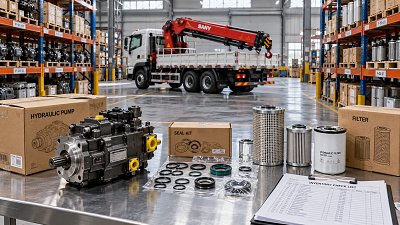
Service planning is especially important for overseas sourcing. Before placing an order, confirm which spare parts are consumables, which are long lead items, and what technical support is available remotely. For distributors and agents, stocking a basic 3–6 month supply of high-turn parts can improve uptime and customer confidence.
Risk control checklist
- Verify complete dimensions in transport mode and working mode.
- Match payload and axle loading to local road rules and site conditions.
- Confirm hydraulic, brake, and tire specifications for repeated short-cycle operation.
- Request spare parts lists and maintenance intervals before purchase approval.
- Plan operator training for reversing, loading, and safe positioning in confined areas.
FAQ for buyers and evaluators
How do I choose between a compact truck and a higher-payload model? Compare daily completed cycles, access delays, and legal loading. If a smaller unit completes 25% more cycles with lower waiting time, it may deliver better total productivity than a larger truck.
What should I ask a supplier before ordering a truck for a tight job site? Ask for overall dimensions, wheelbase, turning suitability, body operating clearances, service intervals, parts list, and estimated lead time. These points are more useful than price alone.
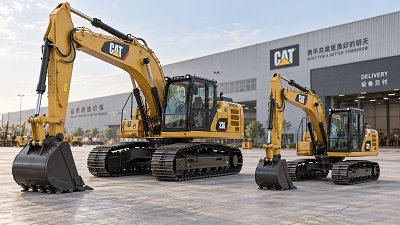
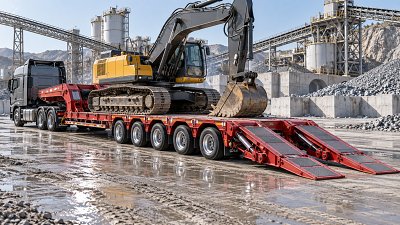
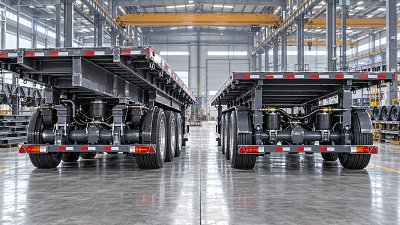
Are lowbed trailers suitable for restricted construction access? They can be, especially for compact excavators and machinery, but buyers must check deck height, ramp angle, tractor-trailer combination length, and turning path before selection.
How long does delivery usually take? For standard configurations, production and export coordination often fall within 20–45 days, while custom builds may require additional time for engineering confirmation and component sourcing.
Choosing a construction truck for tight job sites is ultimately a decision about fit: fit to the site, fit to the task, fit to the operator workflow, and fit to the supply chain. Buyers who define site constraints early, compare truck categories by real job requirements, and evaluate suppliers with technical discipline are far more likely to secure reliable long-term value.
If you are sourcing construction trucks, truck chassis, lowbed trailers, or related heavy transport equipment for restricted operating environments, the Global Heavy Truck Industry Platform can help you compare suppliers, review product options, and identify solutions that match your project and channel needs. Contact us today to get customized sourcing support, product details, and more heavy truck solutions for your market.
Trending News
- How to verify spare parts availability with a crane truck supplier
- How to verify a truck trailer OEM's claimed payload capacity
- How does operating weight affect the price of a new excavator?
- How to compare concrete mixer truck suppliers by total landed cost
- How axle load limits affect low bed trailer exports to Southeast Asia
Tag
Recommended News
 Buying GuideHow to verify spare parts availability with a crane truck supplierChoosing a crane truck supplier? Learn how to verify spare parts stock, compatibility, delivery times, and support commitments to reduce downtime and buy with confidence.
 Buying GuideHow to verify a truck trailer OEM's claimed payload capacityVerify a truck trailer OEM's payload claim with tare records, load calculations, and structural evidence. Learn key checks to avoid costly mistakes and buy with confidence.
 Buying GuideHow does operating weight affect the price of a new excavator?See how operating weight affects excavator price, transport costs, and productivity. Compare configurations and uncover the best value for your next equipment purchase.
 Buying GuideHow to compare concrete mixer truck suppliers by total landed costCompare truck cement mixer supplier quotes by total landed cost, including freight, duties, and delivery. Uncover hidden charges and choose the best-value truck for your fleet.
 Buying GuideWhen does heavy equipment transport require a lowboy trailer?Does your heavy equipment need a lowboy trailer? Discover how loaded height, weight distribution, loading access, and route limits determine the right choice for safe transport.
 Fleet ManagementWhen does a light commercial vehicle for urban delivery save fleet costs?Light commercial vehicle for urban delivery: learn when route density, payload utilization, access, and driver productivity can reduce fleet cost per successful stop.
 Buying GuideHow to choose an off road truck for steep and unstable job sitesChoose the right off road truck for steep, unstable job sites. Compare traction, braking, stability, clearance, payload, and route-test essentials.
 Buying GuideHow to match crane truck lifting capacity to your jobsite loadsCrane truck capacity planning made clear: calculate gross load, radius, rigging, outriggers, and ground conditions to select safer, job-ready lifting equipment.
 Buying GuideHow to match lowbed trailer deck height to your hauling equipmentLowbed trailer deck height guide: match equipment clearance, ramp geometry, axle loads, tractor fit, and route limits for safer, more efficient hauling.
 Buying GuideWhat to verify before choosing a delivery truck supplier for school transportationDelivery truck supplier for school transportation: verify route fit, payload, safety, compliance, service support, and total cost before choosing a reliable partner.
 Buying GuideWhat an excavator manufacturer catalog should show before you compare modelsExcavator manufacturer catalog guide: verify supplier identity, configurations, hydraulics, compliance, parts support, and delivery readiness before comparing models.
 Buying GuideWhat to check before appointing a bulldozer distributorBulldozer distributor selection guide: evaluate service, parts availability, warranty, pricing, compliance, and lifecycle value to reduce downtime and protect fleet investment.
 Buying GuideWhat to verify before choosing a truck cement mixer supplierTruck cement mixer supplier checklist: verify chassis fit, drum quality, hydraulics, compliance, spare parts, and after-sales support before you buy.
 Buying GuideHow to verify a truck spare parts supplier before placing a bulk orderTruck spare parts supplier verification made practical: learn how to check part specifications, factory control, test records, samples, pricing, and delivery capability before placing a bulk order.
 Buying GuideWhat size truck container is right for a typical freight load?Truck container sizing made simple: compare payload, volume, pallet layouts, route access, and loading needs to choose the most efficient freight solution.
 Buying GuideWhat drives semi trailer price differences between similar models?Semi trailer price differences come down to frame materials, axles, suspension, coating, and configuration. Compare specifications line by line to choose lasting value.
 Buying GuideHow to compare excavator manufacturer price lists before requesting quotesCompare an excavator manufacturer price list with confidence. Learn to normalize configurations, calculate landed costs, assess options and service, and create stronger RFQs.
 Buying GuideHow to choose a mixer truck drum capacity for your concrete pourMixer truck capacity guide: match drum size to pour rate, legal payload, site access, and delivery cycles for efficient, reliable concrete placement.
 Buying GuideHow to size a bulldozer for construction site grading workBulldozer for construction sizing guide: match weight, blade, traction, grade control, and transport needs to improve grading productivity and costs.
 Buying GuideHow to assess a truck cement manufacturer’s build quality before orderingTruck cement manufacturer build quality: assess tank steel, welding, chassis integration, pneumatic systems, factory QC, and inspection evidence before ordering.
 Buying GuideWhen does a truck trailer OEM make sense for private-label fleets?Truck trailer OEM programs help private-label fleets cut lifecycle costs, standardize operations, and improve uptime. Learn when customization delivers real commercial value.
 Buying GuideWhat to verify before choosing a water truck OEM for your fleetWater truck OEM selection guide: verify chassis compatibility, tank quality, pump performance, compliance, and service support to build a safer, more reliable fleet.
 Buying GuideHow to size a cab chassis truck for a fire department apparatusCab chassis truck for fire department sizing guide: balance GVWR, axle loads, wheelbase, water tank placement, and mission needs for safer apparatus design.
 Buying GuideWhat to verify before choosing a truck chassis supplierChoose the right truck chassis supplier with a practical checklist for application fit, axle ratings, body integration, quality control, delivery reliability, and after-sales support.
 Buying GuideHow to choose a logging truck for steep and rough forest roadsLogging truck selection for steep, rough forest roads: compare traction, braking, gearing, chassis strength, tires, and supplier support for safer, more reliable hauling.