Truck Mounted Crane Buying Mistakes That Cost More Later
Buying a truck mounted crane without checking long-term operating needs, compliance standards, or supplier credibility can lead to costly mistakes later. For buyers comparing construction truck solutions, truck loader options, or related equipment such as lowbed trailer and mixer truck models, understanding these risks early is essential. This guide highlights the most common purchasing errors and helps procurement teams, dealers, and evaluators make smarter, more profitable decisions.
For most buyers, the biggest mistake is not choosing a “bad” machine at first glance—it is choosing a truck mounted crane that looks competitive on price but creates higher total cost through overload risk, poor jobsite fit, weak after-sales support, certification issues, or expensive downtime. If you are sourcing for construction, logistics support, municipal work, equipment distribution, or fleet investment, the right buying decision depends less on brochure specifications and more on operational fit, lifecycle cost, and supplier reliability.
Why do truck mounted crane buying mistakes become expensive later?
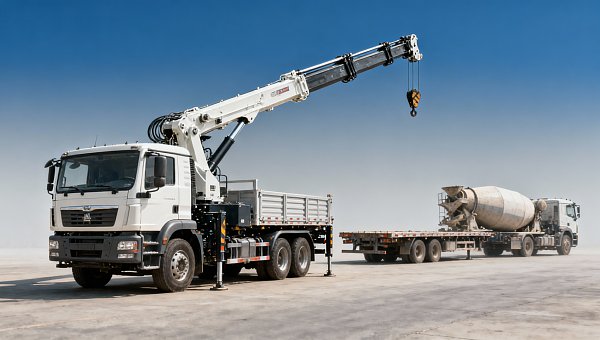
A truck mounted crane is not just a vehicle purchase. It is a combined investment in lifting performance, road transport efficiency, jobsite flexibility, maintenance planning, operator safety, and regulatory compliance. That is why early procurement errors often stay hidden during quotation comparison but become obvious after delivery.
For procurement teams and commercial evaluators, the core search intent behind this topic is practical: how to avoid hidden risks before placing an order. Buyers usually want to know which mistakes lead to higher operating cost, delayed deployment, lower utilization, or resale problems. Dealers and distributors also need to know which configurations are easier to support, service, and sell in their target markets.
The most expensive problems usually come from five areas:
- Choosing crane capacity based only on maximum lifting tonnage
- Ignoring chassis suitability and road conditions
- Overlooking local certification and compliance requirements
- Underestimating spare parts, service, and training needs
- Selecting suppliers based only on price instead of delivery and support capability
Understanding these issues before signing a contract helps buyers compare truck loader solutions more accurately and avoid equipment that becomes costly to operate, difficult to register, or unreliable in the field.
Are you buying for the real working condition or just for the catalog specification?
One of the most common truck mounted crane buying mistakes is selecting equipment based on headline specifications instead of actual use conditions. A crane that looks ideal in a product sheet may perform poorly if your lifting radius, terrain, road restrictions, or loading cycle is different from the assumed standard condition.
Buyers should start with job analysis, not product comparison. Ask:
- What materials will be lifted most often?
- What is the typical load weight, not just the maximum occasional load?
- What lifting radius is needed on real jobsites?
- Will the unit work in urban roads, mining routes, narrow industrial sites, or mixed terrain?
- How often will the crane travel versus remain stationary at the site?
For example, a buyer may choose a larger truck mounted crane assuming “more capacity is safer.” In reality, a larger model may increase fuel use, reduce payload efficiency, complicate maneuverability, and raise maintenance cost. On the other hand, undersizing the crane leads to overload risk, restricted job capability, and low productivity.
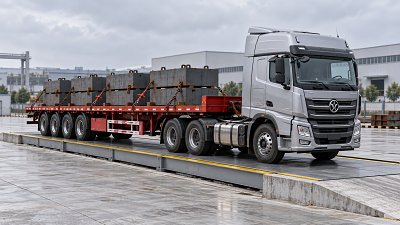
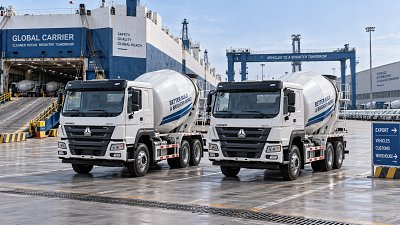
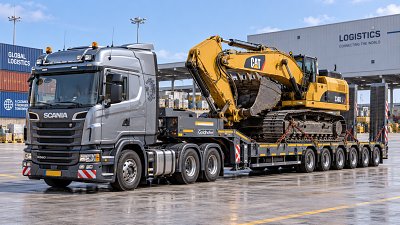
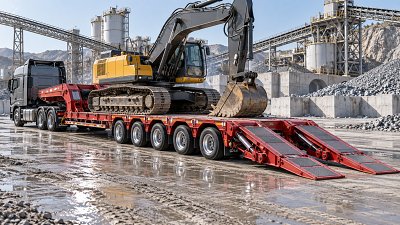
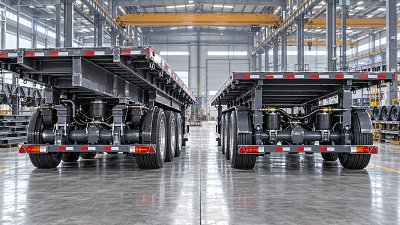
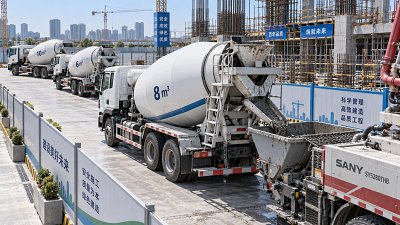
The smarter approach is to match configuration to task profile. That includes boom length, lifting moment, stabilizer design, cargo body arrangement, and chassis power. This is especially important for companies comparing multiple commercial vehicle assets such as construction truck fleets, lowbed trailer combinations, or mixer truck support equipment, where operational compatibility matters more than isolated machine specs.
Is the chassis-crane combination actually balanced?
Another costly mistake is treating the truck chassis and crane body as separate decisions. In practice, their compatibility determines safety, performance, maintenance complexity, and legal compliance. A crane with strong lifting ability on an unsuitable chassis can create axle overload, instability, poor turning performance, or premature wear.
Buyers should review:
- Gross vehicle weight rating and axle load distribution
- Engine power and torque relative to terrain and load pattern
- Frame strength and mounting design
- Wheelbase suitability for crane installation and body length
- Suspension strength for road and off-road operation
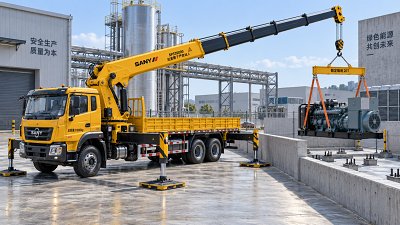
This point is especially important for international B2B buyers sourcing from overseas suppliers. Product images may show an attractive truck mounted crane setup, but export versions, local road regulations, and body modifications may change the final configuration. Procurement teams should request technical drawings, axle calculations, and installation details rather than rely only on general brochures.
A balanced combination reduces operating risk and protects long-term value. It also helps dealers avoid customer complaints after delivery, especially when the vehicle is expected to perform both transport and lifting tasks under demanding site conditions.
Have you checked local compliance, safety standards, and registration requirements?
Many purchasing problems do not start on the worksite—they start at customs clearance, registration, inspection, or insurance. A truck mounted crane may be technically capable but still become a costly asset if it does not meet local market requirements.
Common compliance oversights include:
- Missing or incomplete certification documents
- Non-compliant emissions standards for the chassis
- Differences in load charts, safety devices, or warning systems
- Road dimension and axle load restrictions
- Operator licensing and mandatory inspection rules
For procurement professionals, this is one of the highest-value checkpoints because non-compliance affects delivery time, legal operation, resale value, and financing acceptance. If you are importing equipment for public works, infrastructure contractors, or distributor inventory, confirm compliance early with both the supplier and local regulatory experts.
A reliable supplier should be able to provide certification support, specification confirmation, and documentation transparency. If they cannot clearly explain which market standards the truck mounted crane meets, that is a warning sign.
What hidden lifecycle costs are buyers most likely to underestimate?
Purchase price is only one part of the investment. In many cases, the real financial damage comes from hidden lifecycle costs that were not considered during procurement. This is where many low-price offers become expensive later.
Key cost areas to evaluate include:
- Fuel consumption under real operating load
- Preventive maintenance intervals and parts cost
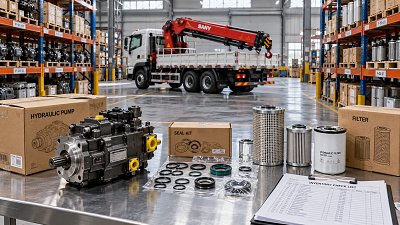
- Availability of hydraulic components and wear parts
- Downtime caused by slow service response
- Operator training and misuse-related repairs
- Resale value in the local secondary market
For business evaluators, total cost of ownership is a better decision framework than unit price alone. A slightly higher upfront investment may deliver better uptime, easier spare parts sourcing, stronger brand acceptance, and lower repair frequency. That difference becomes significant over several years of fleet operation.
This is also why buyers comparing truck mounted crane options alongside related equipment categories—such as lowbed trailer units for equipment transfer or mixer truck fleets for project support—should use a consistent lifecycle evaluation model across assets. Procurement decisions become more accurate when they are measured by operating return, not just initial quotation.
How much does supplier credibility really affect your final cost?
It affects far more than many buyers expect. In international sourcing, the supplier is not just a seller; they are your source of build quality consistency, parts continuity, technical support, and contract reliability. A weak supplier can turn a good-looking truck mounted crane into a procurement failure.
Before ordering, verify:
- Manufacturing capability and export experience
- Case references in similar countries or applications
- Lead time realism and production transparency
- Warranty terms and after-sales process
- Spare parts supply commitment
- Responsiveness of technical communication
For dealers, distributors, and agents, supplier stability is even more critical because your reputation depends on the equipment you represent. If the supplier cannot support training, documentation, branding consistency, or replacement parts, your downstream business cost rises quickly.
A good supplier discussion should include more than price. It should cover configuration validation, intended application, local compliance, service expectations, and future parts support. Buyers using a professional heavy truck industry platform can improve decision quality by comparing supplier profiles, product categories, and market information in one place before moving to commercial negotiation.
What is the safest way to compare truck mounted crane options before purchase?
The best comparison method is structured evaluation. Instead of asking which model is “best,” ask which model is best for your usage profile, budget cycle, and support environment. This approach reduces emotional buying, prevents overspecification, and makes supplier comparison more objective.
A practical pre-purchase checklist should include:
- Define application clearly: lifting tasks, road conditions, daily cycle, payload needs
- Confirm key technical match: crane capacity, boom length, chassis suitability, axle load
- Review compliance: emissions, safety devices, certifications, registration documents
- Calculate ownership cost: fuel, maintenance, downtime, parts, training, resale
- Assess supplier reliability: history, service ability, references, warranty, spare parts
- Request detailed documentation: drawings, load charts, configuration sheet, delivery scope
- Clarify after-sales support: remote support, field service, training, parts lead time
This process is highly useful for information researchers, procurement managers, and business assessment teams because it turns a broad product search into a defensible buying decision. It also helps avoid confusion when comparing multiple construction truck categories that may appear similar in price but differ greatly in practical return.
Conclusion: the cheapest buying mistake is the one prevented before ordering
Truck mounted crane buying mistakes usually happen when buyers focus too heavily on visible specifications and quoted price while overlooking real operating needs, compliance details, lifecycle cost, and supplier support. The result is higher long-term spending, lower equipment utilization, and more business risk.
The most successful buyers do not simply ask, “What is the price of this truck mounted crane?” They ask, “Will this configuration work in our actual environment, meet our compliance needs, stay serviceable over time, and create reliable business value?” That shift in thinking leads to better procurement outcomes.
For procurement teams, dealers, and evaluators working across heavy truck, construction truck, lowbed trailer, mixer truck, and related commercial vehicle segments, disciplined comparison is the best protection against expensive mistakes later. A smart purchase is not the fastest quote accepted—it is the equipment decision that remains profitable after delivery, operation, and years of service.
Trending News
- How to verify spare parts availability with a crane truck supplier
- How to verify a truck trailer OEM's claimed payload capacity
- How does operating weight affect the price of a new excavator?
- How to compare concrete mixer truck suppliers by total landed cost
- How axle load limits affect low bed trailer exports to Southeast Asia
Tag
Recommended News
 Buying GuideHow to verify spare parts availability with a crane truck supplierChoosing a crane truck supplier? Learn how to verify spare parts stock, compatibility, delivery times, and support commitments to reduce downtime and buy with confidence.
 Buying GuideHow to verify a truck trailer OEM's claimed payload capacityVerify a truck trailer OEM's payload claim with tare records, load calculations, and structural evidence. Learn key checks to avoid costly mistakes and buy with confidence.
 Buying GuideHow does operating weight affect the price of a new excavator?See how operating weight affects excavator price, transport costs, and productivity. Compare configurations and uncover the best value for your next equipment purchase.
 Buying GuideHow to compare concrete mixer truck suppliers by total landed costCompare truck cement mixer supplier quotes by total landed cost, including freight, duties, and delivery. Uncover hidden charges and choose the best-value truck for your fleet.
 Buying GuideWhen does heavy equipment transport require a lowboy trailer?Does your heavy equipment need a lowboy trailer? Discover how loaded height, weight distribution, loading access, and route limits determine the right choice for safe transport.
 Fleet ManagementWhen does a light commercial vehicle for urban delivery save fleet costs?Light commercial vehicle for urban delivery: learn when route density, payload utilization, access, and driver productivity can reduce fleet cost per successful stop.
 Buying GuideHow to choose an off road truck for steep and unstable job sitesChoose the right off road truck for steep, unstable job sites. Compare traction, braking, stability, clearance, payload, and route-test essentials.
 Buying GuideHow to match crane truck lifting capacity to your jobsite loadsCrane truck capacity planning made clear: calculate gross load, radius, rigging, outriggers, and ground conditions to select safer, job-ready lifting equipment.
 Buying GuideHow to match lowbed trailer deck height to your hauling equipmentLowbed trailer deck height guide: match equipment clearance, ramp geometry, axle loads, tractor fit, and route limits for safer, more efficient hauling.
 Buying GuideWhat to verify before choosing a delivery truck supplier for school transportationDelivery truck supplier for school transportation: verify route fit, payload, safety, compliance, service support, and total cost before choosing a reliable partner.
 Buying GuideWhat an excavator manufacturer catalog should show before you compare modelsExcavator manufacturer catalog guide: verify supplier identity, configurations, hydraulics, compliance, parts support, and delivery readiness before comparing models.
 Buying GuideWhat to check before appointing a bulldozer distributorBulldozer distributor selection guide: evaluate service, parts availability, warranty, pricing, compliance, and lifecycle value to reduce downtime and protect fleet investment.
 Buying GuideWhat to verify before choosing a truck cement mixer supplierTruck cement mixer supplier checklist: verify chassis fit, drum quality, hydraulics, compliance, spare parts, and after-sales support before you buy.
 Buying GuideHow to verify a truck spare parts supplier before placing a bulk orderTruck spare parts supplier verification made practical: learn how to check part specifications, factory control, test records, samples, pricing, and delivery capability before placing a bulk order.
 Buying GuideWhat size truck container is right for a typical freight load?Truck container sizing made simple: compare payload, volume, pallet layouts, route access, and loading needs to choose the most efficient freight solution.
 Buying GuideWhat drives semi trailer price differences between similar models?Semi trailer price differences come down to frame materials, axles, suspension, coating, and configuration. Compare specifications line by line to choose lasting value.
 Buying GuideHow to compare excavator manufacturer price lists before requesting quotesCompare an excavator manufacturer price list with confidence. Learn to normalize configurations, calculate landed costs, assess options and service, and create stronger RFQs.
 Buying GuideHow to choose a mixer truck drum capacity for your concrete pourMixer truck capacity guide: match drum size to pour rate, legal payload, site access, and delivery cycles for efficient, reliable concrete placement.
 Buying GuideHow to size a bulldozer for construction site grading workBulldozer for construction sizing guide: match weight, blade, traction, grade control, and transport needs to improve grading productivity and costs.
 Buying GuideHow to assess a truck cement manufacturer’s build quality before orderingTruck cement manufacturer build quality: assess tank steel, welding, chassis integration, pneumatic systems, factory QC, and inspection evidence before ordering.
 Buying GuideWhen does a truck trailer OEM make sense for private-label fleets?Truck trailer OEM programs help private-label fleets cut lifecycle costs, standardize operations, and improve uptime. Learn when customization delivers real commercial value.
 Buying GuideWhat to verify before choosing a water truck OEM for your fleetWater truck OEM selection guide: verify chassis compatibility, tank quality, pump performance, compliance, and service support to build a safer, more reliable fleet.
 Buying GuideHow to size a cab chassis truck for a fire department apparatusCab chassis truck for fire department sizing guide: balance GVWR, axle loads, wheelbase, water tank placement, and mission needs for safer apparatus design.
 Buying GuideWhat to verify before choosing a truck chassis supplierChoose the right truck chassis supplier with a practical checklist for application fit, axle ratings, body integration, quality control, delivery reliability, and after-sales support.
 Buying GuideHow to choose a logging truck for steep and rough forest roadsLogging truck selection for steep, rough forest roads: compare traction, braking, gearing, chassis strength, tires, and supplier support for safer, more reliable hauling.