Truck Cement Mixer Capacity: What Works Best for Urban Jobs
Choosing the right truck cement mixer capacity is critical for tight urban jobs where space, delivery speed, and efficiency matter. For buyers comparing a truck cement mixer with options like dump truck for sale, excavator rental, or crane truck for sale, understanding load size, road limits, and project demand can reduce costs and improve performance. This guide helps procurement teams and distributors evaluate the best fit for city construction.
How to judge the right truck cement mixer capacity for urban construction
In city projects, truck cement mixer capacity is not just a volume question. It affects route access, unloading frequency, labor coordination, and the risk of delays at congested sites. A mixer that is too large may face turning issues, axle load restrictions, or waiting time at small pours. A mixer that is too small may increase trip count and fuel cost across a 7–15 day project cycle.
For procurement teams in road transport equipment, the most practical approach is to match drum capacity with the actual concrete consumption per hour, the travel radius, and the site receiving conditions. On many urban jobs, the decision often falls within a typical range such as 3–6 m³ for tighter municipal access or 6–10 m³ for medium-volume pours where roads and schedules allow larger units.
Distributors and sourcing managers should also separate nominal drum volume from effective payload. The listed capacity of a truck cement mixer can differ from the workable loading volume once slump, density, and transport safety are considered. That is why comparing only the brochure number can lead to poor equipment planning and lower utilization during peak city demand.
The Global Heavy Truck Industry Platform helps buyers review mixer trucks together with related transport and construction equipment categories. This is useful when a city contractor needs not only a truck cement mixer, but also chassis options, spare parts, service support, or adjacent equipment such as dump trucks and concrete handling solutions for broader fleet planning.
Three core variables that usually decide capacity
Urban capacity selection usually depends on 3 core variables: jobsite access, daily concrete volume, and delivery rhythm. If one of these is misread, the selected truck cement mixer may underperform even when the engine and drum system are technically suitable.
- Jobsite access: check lane width, entrance height, turning radius, and local axle restrictions before choosing 8x4 or 6x4 configurations.
- Daily volume: estimate whether the site needs small-batch delivery, medium continuous supply, or high-frequency shuttle service over 1 shift or 2 shifts.
- Delivery rhythm: compare batching plant distance, expected cycle time, and unload queue time. In many cities, a single round trip may vary from 45 minutes to 2 hours.
When these variables are measured early, buyers can avoid the common mistake of purchasing a larger unit for “future flexibility” while ignoring present operating limits. In dense urban construction, fit often matters more than maximum rated volume.
Which mixer sizes work best in tight city scenarios?
Not every urban project needs the same truck cement mixer capacity. Small utility repairs, sidewalk reconstruction, and municipal trench work usually favor compact trucks with easier maneuverability. Mid-rise residential pours or commercial slab work often need a balance between volume and access. Larger city infrastructure contracts may still use higher-capacity mixers, but only when staging areas and routes are properly managed.
The table below gives a practical scenario-based view for buyers who need to compare application fit rather than only technical specifications. It can also help distributors explain why one truck cement mixer size sells better in urban fleets than another.
This comparison shows why urban buyers often prioritize 6–8 m³ mixers. That range tends to support both acceptable payload and better access on mixed city routes. However, projects in historic districts, underground parking access zones, or inner-city renewal blocks may still perform better with 3–5 m³ units despite more frequent trips.
A procurement decision should also reflect whether concrete placement is continuous or intermittent. If the crew pours in short windows and waits on formwork, a very large truck cement mixer may spend more time idling than unloading. In that case, smaller units can improve dispatch flexibility over a 4-step daily logistics flow: loading, transit, discharge, and return.
Why urban projects often reject oversized mixers
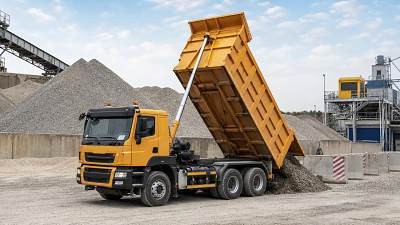
Oversized units can look efficient on paper, but they may create hidden cost in city conditions. Buyers comparing a truck cement mixer with a dump truck for sale or a crane truck for sale should remember that concrete delivery is time-sensitive. Access delays affect material quality and scheduling more directly than in bulk hauling.
Common operational drawbacks
- Longer queue and maneuver time at sites with only 1 entry lane or 1 discharge point.
- Higher risk of partial-load inefficiency when the actual pour is below rated capacity.
- Greater exposure to municipal weight controls, bridge restrictions, and neighborhood traffic windows.
That is why capacity planning should focus on delivered productivity per shift, not only m³ per truck. For many buyers, a mixer that completes 4–6 reliable urban cycles a day is more valuable than a larger unit that struggles to complete 2–3 efficient cycles under traffic constraints.
What technical specifications should procurement teams compare?
A truck cement mixer purchase should combine capacity analysis with technical performance checks. In B2B buying, especially across different markets, chassis configuration, engine output, transmission matching, and maintenance access all influence lifecycle value. For city fleets, after-sales parts support is also critical because downtime can disrupt daily dispatch plans and contractor commitments.
The specification review should not stop at drum volume. Buyers should confirm practical operating points such as drive type, wheelbase suitability, discharge system design, and compatibility with regional fuel, climate, and road conditions. In dense urban work, practical uptime often outweighs peak specification claims.
The next table outlines common evaluation items for a truck cement mixer used in urban jobs. It is designed for procurement staff, business evaluators, and distributors who need a structured checklist for supplier comparison.
This table helps shift the conversation from simple price comparison to operating suitability. For example, one supplier may offer a larger nominal truck cement mixer, while another offers a more city-friendly wheelbase and better local parts support. For urban jobs, the second option may produce lower total operating friction.
Standards, compliance, and documentation checks
Compliance matters in cross-border B2B sourcing. Requirements vary by destination, but buyers should usually verify 4 documentation areas: vehicle conformity, emissions level, axle and weight compliance, and spare parts traceability. If local registration or project tender rules are strict, these checks should happen before deposit and production scheduling.
It is also sensible to ask suppliers about routine maintenance intervals, operator manuals, and the recommended inspection cycle for drum wear, hydraulic connections, and discharge components. A practical review every 250–500 operating hours is common in heavy equipment maintenance planning, though exact intervals depend on design and operating conditions.
Through the Global Heavy Truck Industry Platform, buyers can compare suppliers across truck chassis, complete trucks, construction machinery, trailers, and spare parts in one procurement environment. This helps teams shorten early-stage supplier research and create more consistent evaluation records for internal approval.
How does a truck cement mixer compare with alternatives on city jobs?
Urban project buyers do not always purchase in a single category. They often compare a truck cement mixer with a dump truck for sale, excavator rental, or crane truck for sale as part of a broader equipment budget. The key is to identify whether the project needs concrete transport, material hauling, lifting support, or excavation support first, then select the most economical equipment mix.
A mixer truck is specialized. It preserves concrete workability during transport and supports controlled discharge. A dump truck moves aggregates, spoil, or loose material, but it is not suitable for ready-mix transport. An excavator rental supports trenching or site prep, and a crane truck supports lifting. They may complement a mixer, but they do not replace its core job function.
For procurement teams working on multi-equipment tenders, the comparison below can clarify where each option fits in an urban workflow and where the truck cement mixer provides direct value.
The comparison shows that a truck cement mixer should be evaluated as part of a process chain, not as a general-purpose truck. Buyers save time when they source the related vehicle categories from one platform because cross-checking suppliers, configurations, and lead times becomes easier across a 2–4 week evaluation window.
Cost logic and replacement mistakes to avoid
A common budgeting mistake is trying to reduce upfront spending by underestimating the need for specialized concrete transport. If concrete is central to the project schedule, replacing a truck cement mixer with unsuitable haul equipment can create quality loss, work stoppage, and labor inefficiency. That cost usually appears later in the project, not in the initial quotation.
Instead of looking for a replacement, buyers should compare ownership, rental, and mixed-fleet models. For example, a distributor or contractor may own 1–2 medium-capacity mixers for regular city work and supplement with rental units during seasonal peaks. This approach can improve asset utilization without overcommitting to excess fleet size.
The right sourcing strategy depends on expected monthly demand, project concentration in one urban area, and whether maintenance support is locally available. These are practical business variables that matter more than headline purchase price alone.
What should buyers, evaluators, and distributors ask before ordering?
A disciplined procurement process reduces risk. For a truck cement mixer, the best results usually come from a 5-point review covering application fit, technical matching, compliance, delivery timing, and after-sales support. This matters especially in international B2B trade where the buyer, end user, and distributor may be in different countries or regions.
Before requesting final pricing, buyers should prepare a short project profile. Include target capacity range, expected route conditions, preferred chassis type, local registration requirements, and whether the truck will run in 1 shift or multiple shifts. This basic file speeds up supplier communication and reduces revision rounds.
Practical pre-order checklist
- Confirm the required truck cement mixer capacity based on site demand per hour, not only total project volume.
- Check road access, route limits, and the likely loading-to-discharge cycle time across the city.
- Verify chassis, axle layout, and whether local regulations permit the expected loaded operation.
- Ask about spare parts lead time, service response method, and support for wear components.
- Review documentation needs early, including commercial paperwork and any local conformity requirements.
For many cross-border transactions, standard production and delivery planning can span several stages, often from technical confirmation to manufacturing to shipment. Exact timing varies, but buyers should ask for milestone visibility rather than one simple date promise. This is especially important when a project mobilization window is narrow.
FAQ for truck cement mixer capacity selection
How do I choose between a 5 m³ and 8 m³ truck cement mixer?
Start with access and dispatch rhythm. A 5 m³ unit may be better for tight streets, smaller pours, and faster positioning at compact sites. An 8 m³ unit may be better where roads are wider and each trip needs to deliver more volume. Compare not only payload, but also how many cycles the truck can complete in a normal urban shift.
What are the most overlooked buying risks?
Three risks are often missed: overestimating route access, ignoring effective working volume, and underchecking spare parts support. In practice, these issues affect operating continuity more than minor differences in initial pricing.
Is a larger mixer always cheaper per cubic meter delivered?
Not in urban jobs. If traffic, unloading queues, or site limits reduce cycle efficiency, a larger truck cement mixer may carry more per trip but deliver less usable productivity per day. Evaluate cost per completed delivery cycle and crew coordination, not only rated m³.
How long should procurement teams spend on supplier evaluation?
For standard configurations, a structured 2–4 week review is often enough to compare specifications, compliance documents, support terms, and shipment planning. More customized projects may need longer if multiple suppliers, chassis variants, or destination requirements are involved.
Why work with a global heavy truck industry platform for sourcing?
For buyers, distributors, and business evaluators, the real challenge is rarely just finding a truck cement mixer. The challenge is comparing credible suppliers, understanding adjacent equipment options, checking documentation expectations, and building a practical procurement plan. A specialized global heavy truck industry platform makes this process more efficient by bringing product discovery, supplier comparison, and market insight into one professional channel.
Because the platform covers truck chassis and cab, complete trucks, light trucks, construction machinery, trailers and semi-trailers, and spare parts, buyers can evaluate urban concrete transport solutions in context. This matters when a project requires more than one asset category or when distributors want to expand their lineup with related road transport equipment.
The sourcing value is practical. You can compare truck cement mixer capacity options, discuss suitable chassis configurations, review likely delivery cycles, and ask about spare parts planning before moving into quotation and shipment stages. That shortens internal decision time and improves communication between technical teams and commercial teams.
If you are evaluating the best truck cement mixer for urban jobs, contact us for specific support on parameter confirmation, capacity selection, supplier comparison, delivery cycle planning, customization options, spare parts matching, and quotation communication. For distributors and project buyers, we can also help align your mixer inquiry with related equipment needs such as dump trucks, construction machinery, and other heavy transport solutions.
Trending News
- Cab Chassis Truck for Fire Department: Key Specs Before Ordering
- When to Use an Excavator With Long Reach Boom on Site
- Choosing a Water Truck Factory for Municipal and Mining Projects
- Truck Parts Wholesale: How to Balance Price, Quality, and Lead Time
- Crane Truck Price in 2026: What Drives Total Ownership Cost
Tag
Recommended News
 Truck Parts IndustryTruck Parts Wholesale: How to Balance Price, Quality, and Lead TimeTruck parts wholesale made smarter: learn how to balance price, quality, and lead time by application to cut downtime, reduce hidden costs, and source with more confidence.
 Truck ReviewsLight Duty Truck With Durable Engine: What Matters MostLight duty truck with durable engine: discover the key checks for uptime, lower fuel costs, smarter maintenance, and reliable performance before you buy.
 Truck Parts IndustryTruck Spare Parts Supplier with Bulk Order Discounts: Savings vs Stock RiskTruck spare parts supplier with bulk order discounts: learn when bulk buying cuts fleet costs and when stock risk hurts cash flow, uptime, and sourcing efficiency.
 Truck Parts IndustryTruck Spare Parts Supplier in Europe: Compliance Checks Before OrderingTruck spare parts supplier in Europe selection starts with compliance. Learn the key checks for safety, fitment, traceability, and import documents before you order.
 Truck Parts IndustryChoosing a Heavy Truck Parts Manufacturer with OEM Services for Stable SupplyHeavy truck parts manufacturer with OEM services: learn how to secure stable supply, consistent quality, and lower sourcing risk with practical buyer evaluation tips.
 Truck Parts IndustryHeavy Truck Parts for Construction: Durability vs Replacement CostHeavy truck parts manufacturer for construction insights: learn how to balance durability, replacement cost, and uptime across rough ground, urban projects, and severe-duty fleets.
 Truck Parts IndustryCold Storage Vehicle Parts That Reduce Failure RatesCommercial vehicle parts for cold storage that cut failure rates: explore seals, insulation, cooling, and electrical upgrades to protect cargo, reduce downtime, and improve fleet uptime.
 Truck Parts IndustryGermany Heavy Truck Parts Manufacturers: Quality and Supply RisksHeavy truck parts manufacturer in Germany: learn how to assess quality, certifications, and supply risks to secure safer sourcing, stable deliveries, and long-term fleet performance.
 Truck Parts IndustryVietnam to Enforce New Used Truck Import Rules from Q4 2026Vietnam's new used truck import rules (Q4 2026) require OEM remanufacturing certification & traceability—key for Chinese exporters, assemblers & logistics providers.
 Truck ReviewsWhat Makes a Truck Tipper for Construction Perform Better On-Site?Truck tipper for construction performance depends on site conditions, body strength, hydraulics, and traction. Learn how to choose the right model for safer, faster, more efficient jobs.
 Truck Parts IndustryChoosing a Truck Parts Exporter: Lead Time, Compliance, and Quality RisksTruck parts exporter selection affects uptime, compliance, and cost. Learn how to compare lead time, certification, and quality control to avoid delays, claims, and fleet-wide failures.
 New Truck ReleasesKunming Launches Jacaranda-Themed EV Bus; Inspires Latin American Design FeedbackKunming's jacaranda-themed EV bus sets new standard for cultural adaptation in Latin American陆路运输设备 exports — blending aesthetics, UI localization & sustainable mobility.
 Truck Parts IndustryGermany Heavy Truck Parts Manufacturers: Quality and Supply RisksHeavy truck parts manufacturer in Germany selection guide: compare quality systems, traceability, testing, and supply risks to secure reliable truck parts sourcing.
 Truck Parts IndustryIrkeshtam Port’s 24-Hour Freight Clearance Boosts Exports to KyrgyzstanIrkeshtam Port’s 24-hour freight clearance slashes heavy-truck component clearance to <15 mins—boosting road transport equipment exports to Kyrgyzstan.
 Truck Parts IndustryHeavy Truck Parts for Construction: Which Components Fail Most OftenHeavy truck parts manufacturer for construction insights: discover which brake, suspension, filter, and drivetrain components fail most often—and how smarter sourcing cuts downtime and repair costs.
 Truck ReviewsLogging Truck Producer Comparison: Durability Issues That Affect UptimeLogging truck producer comparison guide: discover the durability issues that impact uptime, repair costs, and safety, and learn how to choose a truck built for harsh forestry transport.
 Truck Parts IndustryBulk Order Discounts on Truck Spare Parts: When Savings Become RiskTruck spare parts supplier with bulk order discounts: learn when lower prices increase downtime, quality, and inventory risk—and how to source smarter for reliable fleet performance.
 Truck Parts IndustryTruck Parts Wholesale: How to Balance Price, Quality, and Stock RiskTruck parts wholesale success depends on balancing price, quality, and inventory risk. Learn practical sourcing checks to protect margins, reduce dead stock, and choose reliable suppliers.
 Truck Parts IndustryHow OEM Services Reduce Downtime in Heavy Truck Parts SupplyHeavy truck parts manufacturer with OEM services helps cut downtime with accurate fit, faster lead times, and stable supply—discover smarter sourcing for fleet maintenance.
 Truck ReviewsTruck Tipper for Construction: When Payload Matters More Than PriceTruck tipper for construction buying guide: learn why payload, durability, and cycle efficiency matter more than price to cut costs, boost uptime, and improve site productivity.
 Truck Parts IndustryErenhot-Mongolia 24-Hour Freight Clearance Boosts Trucking EfficiencyErenhot-Mongolia 24-hour freight clearance slashes truck clearance time by 40%—boosting efficiency for auto parts, cold-chain & cross-border trucking.
 Truck Parts IndustryKazakhstan Extends Zero-Tariff for Truck Parts on China-Europe Rail Routes to 2027Kazakhstan extends zero-tariff for truck parts—including ADAS controllers, ECUs & T-BOX units—on China-Europe rail routes until 2027. Boost your logistics & export strategy now!
 Truck Parts IndustryHow Low-Maintenance Truck Spare Parts Reduce Downtime Over TimeTruck spare parts supplier with low maintenance solutions help fleets cut downtime, reduce repair frequency, and improve workshop efficiency. Discover how durable parts boost long-term truck performance.
 Truck ReviewsCrane Truck Manufacturer Comparison for Urban Lifting and Narrow SitesCrane truck manufacturer comparison for urban lifting: discover how to choose compact, safe, high-efficiency models for narrow sites, faster setup, and reliable support.
![]() Truck Parts IndustryHeavy Truck Parts Manufacturer for Construction: How to Judge Product ConsistencyHeavy truck parts manufacturer for construction selection starts with consistency. Learn how to judge batch stability, traceability, and quality control to reduce risk and improve fleet safety.
Truck Parts IndustryHeavy Truck Parts Manufacturer for Construction: How to Judge Product ConsistencyHeavy truck parts manufacturer for construction selection starts with consistency. Learn how to judge batch stability, traceability, and quality control to reduce risk and improve fleet safety.