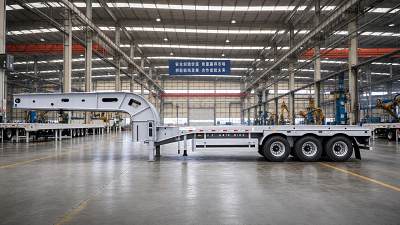
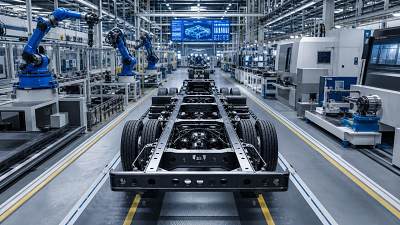
Flatbed trailer crossmember spacing impacts load distribution — not just structural strength
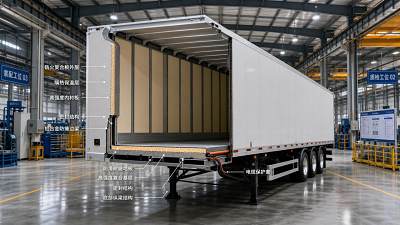
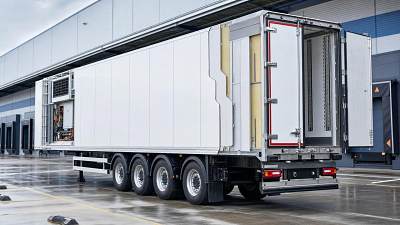
When specifying a flatbed trailer—or comparing van trailer, stake trailer, gooseneck trailer, curtain side trailer, bulk trailer, axle trailer, wing van, water tanker, or truck crane configurations—crossmember spacing is far more than a structural detail. It directly governs how weight transfers across the frame and axles, influencing load stability, chassis fatigue life, and compliance with regional road regulations. For procurement professionals, distributors, and technical evaluators sourcing trailers globally via The Global Heavy Truck Industry Platform, understanding this nuance ensures optimal performance across logistics, construction, and municipal applications—without over-engineering or compromising safety.
Why crossmember spacing matters more than frame thickness alone
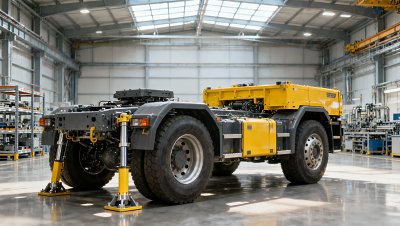
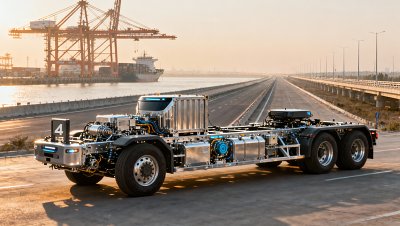
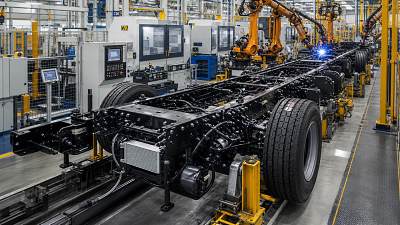
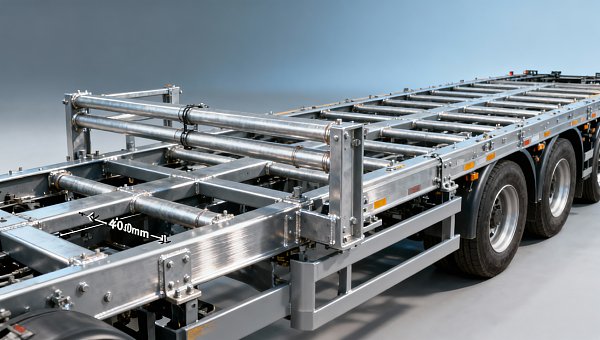
Crossmembers are transverse structural members welded or bolted between the longitudinal side rails of a trailer chassis. Their primary role isn’t just to hold the deck in place—it’s to redistribute vertical and torsional loads from cargo to the main frame, then to the axles and suspension system. A spacing interval of 12 inches (305 mm) versus 24 inches (610 mm) changes not only local bending stress but also global frame deflection under dynamic loading—especially critical during highway cornering, off-road transit, or uneven unloading.
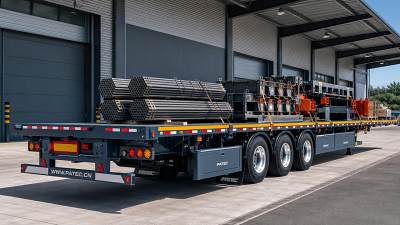
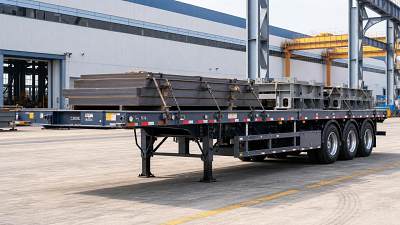
In practice, tighter spacing (e.g., 12–16 inches) improves load dispersion for high-density freight like steel coils or concrete barriers—reducing point-load risk on deck planks and minimizing long-term fatigue cracking at weld joints. Wider spacing (e.g., 24–30 inches) may suit lighter, evenly distributed loads such as lumber or bundled pipes—but introduces higher localized strain under concentrated payloads, accelerating wear on suspension components and increasing axle load variance by up to 18% during pothole impacts.
This behavior is codified in international design standards: ISO 12127-2:2021 specifies minimum crossmember density based on maximum axle load and deck material modulus, while U.S. FMCSA §393.7 outlines minimum structural integrity thresholds for commercial trailers operating above 10,000 lbs GVWR. Non-compliant spacing can trigger roadside inspection failures—even if frame gauge appears adequate.
How spacing affects real-world operational outcomes
Load stability & deck flex control
Deck flex under load directly correlates with crossmember spacing. At 24-inch intervals, a standard 40-ft flatbed may deflect up to 3.2 mm under full-rated payload—enough to cause shifting in unsecured palletized freight. Reducing spacing to 16 inches cuts that deflection by 47%, significantly improving tie-down reliability and reducing cargo damage claims by an estimated 22–28% across fleet audits.
Axle load distribution & regulatory compliance
Uneven crossmember layout creates asymmetric frame stiffness, leading to inconsistent axle weight transfer during acceleration, braking, or grade changes. Field measurements show that trailers with irregular spacing (e.g., alternating 16”/24” zones) exhibit up to 11% greater axle load deviation across tandem axles compared to uniformly spaced units—raising non-compliance risk in EU Directive 96/53/EC and Canada’s National Safety Code Part II.
Service life & maintenance cost impact
Fatigue failure analysis from 12 major trailer OEMs indicates that crossmembers spaced beyond 20 inches increase weld joint crack initiation frequency by 3.4× over 5-year service life. This translates into 2–4 additional frame inspections per year and 30–45% higher lifetime repair costs—particularly in mining or infrastructure transport where trailers operate 22+ hours/week under abrasive conditions.
Selecting optimal spacing: a procurement decision framework
Procurement teams evaluating flatbed trailers on The Global Heavy Truck Industry Platform should treat crossmember spacing as a core specification—not a default assumption. Key evaluation criteria include:
- Cargo profile: High-concentration loads (e.g., machinery, prefabricated modules) require ≤16-inch spacing; uniform loads (e.g., bagged aggregates, containerized goods) tolerate up to 24-inch spacing.
- Regional compliance: EU markets mandate ≤20-inch spacing for trailers rated above 16,000 kg GCW; Australia requires ≤18-inch for heavy-haul applications under NHVR Class 3 permits.
- Delivery timeline: Standard spacing options (16”/20”/24”) are typically available within 4–6 weeks; custom spacing configurations extend lead time by 2–3 weeks due to retooling and QA validation.
- Aftermarket support: Trailers with modular crossmember systems (e.g., bolt-on vs. welded) enable field adjustments and simplify replacement—critical for distributors managing multi-country inventory.
Crossmember spacing comparison across common trailer types
While flatbeds offer the most flexibility in spacing configuration, comparative analysis reveals how design intent drives dimensional choices. The table below reflects typical factory-default spacing for globally traded trailer categories sourced via The Global Heavy Truck Industry Platform.
This data informs procurement decisions across geographies: distributors stocking for Middle East infrastructure projects prioritize 12-inch spacing for steel beam transport, while North American logistics buyers often select 20-inch as a balanced default—reducing tare weight without sacrificing compliance margins.
Why choose The Global Heavy Truck Industry Platform for trailer specification
Sourcing flatbed trailers with precise crossmember spacing demands verified technical documentation, regional certification alignment, and supplier transparency—three capabilities embedded in The Global Heavy Truck Industry Platform’s sourcing workflow.
Buyers access standardized product profiles including CAD-extracted frame schematics, certified load charts, and compliance summaries aligned with FMCSA, ECE R13, and GB 1589 standards. Each trailer listing displays spacing dimensions in both imperial and metric units, with filterable search by spacing interval (e.g., “≤16 inches”), deck material type, and axle configuration.
For distributors and procurement teams, the platform enables side-by-side comparison of 5+ suppliers’ crossmember implementation methods—including weld quality certifications (AWS D1.1), fatigue test reports (per SAE J2772), and customization lead times. Real-time chat with pre-vetted manufacturers supports rapid clarification on spacing tolerances (±1.5 mm), retrofit feasibility, and regional homologation pathways.
Ready to specify or compare flatbed trailers with validated crossmember spacing? Connect with qualified suppliers on The Global Heavy Truck Industry Platform today for technical documentation review, custom configuration quotes, or compliance verification support—delivered within 24 business hours.
Trending News
- Truck Cement Wholesale: What Determines Stable Delivery and Margin?
- Truck Trailer Bulk Order Cost Breakdown for 2026 Budget Planning
- Truck Trailer Sourcing: 7 Checks Before You Compare Suppliers
- Truck Trailer OEM vs ODM: Which Model Lowers Supply Risk?
- How to Evaluate a Heavy Truck Chassis Manufacturer With R&D Capability in 2026
Tag
Recommended News
 Truck TechnologyChinese Manufacturer Tops Global AWP Rankings with $780M RevenueChinese AWP manufacturer tops global rankings with $780M revenue—discover how its heavy-duty chassis innovation is reshaping陆路运输设备 supply chains worldwide.
 Truck TechnologyWhat Fireproof Materials Mean for Semi Trailer Safety and Lifecycle CostSemi trailer manufacturer with fireproof materials solutions help cut downtime, reduce repair risk, and improve resale value. Learn how smarter trailer specs lower total lifecycle cost.
 Truck TechnologyQuick Installation Excavators: Downtime vs PerformanceExcavator manufacturer with quick installation solutions help cut downtime, speed site startup, and protect performance. Compare smarter options for faster, more reliable project delivery.
 Truck TechnologyChina-Mongolia-Russia E-Waybill Mutual Recognition UpgradedChina-Mongolia-Russia E-Waybill mutual recognition upgraded: Real-time cold-chain temperature compliance now mandatory for all cross-border road transport vehicles under GB/T 39920–2021.
 Truck TechnologyMulti-Dept Initiative Adds V2X & BeiDou Modules to Cross-Border Trucking Subsidy ListV2X & BeiDou modules now subsidy-eligible for cross-border trucks—boosting smart logistics, safety, and BRI corridor compliance. Act now to align.
 Truck TechnologyL4 Autonomous Truck Chassis Emerges as Tech Export VehicleL4 Autonomous Truck Chassis: Now licensable globally for port drayage & mine transport—modular, multi-powertrain, backed by DP World & Chilean ports.
 Truck TechnologyMulti-Dept Action Adds V2X & BeiDou HD Positioning to Cross-Border Freight Subsidy ListV2X & BeiDou HD positioning now subsidized for cross-border freight trucks—key opportunity for intelligent transport equipment suppliers and OEMs.
 Truck TechnologyChina-Mongolia-Russia Corridor Upgrades to E-CMR with Real-Time Cold Chain MonitoringChina-Mongolia-Russia Corridor now mandates e-CMR + real-time cold chain monitoring for all refrigerated trailers — ensure compliance to avoid border delays and win tenders.
 Truck TechnologyBulldozer for Construction: Key Specs That Affect Earthmoving EfficiencyBulldozer for construction buying guide: compare weight, blade capacity, torque, and undercarriage specs to improve earthmoving efficiency and choose the right machine for your jobsite.
 Truck TechnologyL4 Autonomous Container Trucks Enter Trial on Tianjin-Xiongan RouteL4 autonomous container trucks begin trial on Tianjin-Xiongan route—pioneering China’s smart land transport revolution with dual-energy, licensable chassis platform.
 Truck TechnologyMulti-Dept Initiative to Upgrade Freight Hubs with V2X & BeiDouV2X & BeiDou: China’s 7-dept initiative offers up to 30% subsidies for intelligent retrofitting of cross-border road transport equipment—key for freight hubs, smart chassis, and trailer manufacturers.
 Truck TechnologyMulti-Dept Launch Freight Hub Upgrading InitiativeMulti-Dept Launch Freight Hub Upgrading Initiative boosts intelligent land transport equipment—smart loading, battery-swap stations & ETC-V2X modules for seamless, low-carbon cross-border logistics.
 Truck TechnologyWhat Advanced Technology Means in Heavy Truck Chassis PerformanceHeavy truck chassis manufacturer with advanced technology: discover how smarter frame design, suspension tuning, and braking integration improve stability, uptime, and long-term operating value.
 Truck TechnologyHigh-Strength Flatbed Trailers: Where Stronger Steel Pays OffFlatbed trailer supplier with high strength expertise helps fleets cut tare weight, improve durability, and lower lifecycle cost. See what specs matter most before you buy.
 Truck TechnologyBulldozer for Construction: Matching Blade Type to Ground ConditionsBulldozer for construction guide: learn how to match S, U, and SU blades to soil, clay, rock, and mixed ground for better productivity, lower fuel use, and smarter equipment selection.
 Truck TechnologyWhen Fireproof Materials Add Real Value in Semi Trailer ManufacturingSemi trailer manufacturer with fireproof materials: discover how fire-resistant designs improve cargo safety, reduce risk, and support smarter sourcing decisions.
 Truck TechnologyWhat a Durable Engine Really Means in a Light Duty TruckLight duty truck with durable engine: learn how real engine durability improves uptime, fuel savings, and lower maintenance across delivery, construction, rural, and municipal work.
 Truck TechnologySemi Trailer Manufacturer With Lightweight Design: Pros, Trade-Offs, and Use CasesSemi trailer manufacturer with lightweight design: explore key benefits, trade-offs, and best-fit use cases to improve payload efficiency, durability, and lifecycle ROI.
 Truck TechnologyTruck Tipper for Construction: Key Specs That Affect Daily ProductivityTruck tipper for construction buying guide: learn which specs most affect payload, fuel use, unloading speed, and uptime to choose a safer, more productive model.
 Truck TechnologyWhy Logging Truck Manufacturer Design Matters in Tough TerrainLogging truck manufacturer design shapes safety, traction, and uptime in tough terrain. Learn what features matter most for forestry hauling and choose trucks built for real-world performance.
 Truck TechnologyAre Fireproof Materials Worth It in a Semi Trailer ManufacturerSemi trailer manufacturer with fireproof materials: discover if the added cost delivers real safety, lower risk, and better cargo protection with a practical supplier evaluation checklist.
 Truck TechnologyWhy High-Strength Design Matters in a Flatbed Trailer SupplierFlatbed trailer supplier with high strength: learn why structural design, material quality, and fatigue resistance matter for safer transport, longer service life, and lower operating costs.
 Truck TechnologyAdvanced Technology in Heavy Truck Chassis Manufacturing: What to Look ForHeavy truck chassis manufacturer with advanced technology: learn how to assess welding, materials, precision, and validation for long-haul, construction, mining, and special-purpose fleets.
 Truck TechnologyCan Fireproof Materials Improve Semi Trailer Safety in Logisticssemi trailer manufacturer with fireproof materials solutions can reduce cargo loss, improve fleet safety, and support reliable logistics. Discover how to choose the right fire-resistant trailer design.
 Truck TechnologyWhy Advanced Technology Matters in Heavy Truck Chassis ManufacturingHeavy truck chassis manufacturer with advanced technology: learn how digital design, precision welding, and rigorous testing improve durability, safety, and sourcing confidence.