Concrete pump truck boom stability: How terrain slope changes everything
When operating a concrete pump truck on uneven terrain, even a slight slope can critically compromise boom stability—posing serious safety and efficiency risks. This is especially vital for procurement professionals and distributors evaluating heavy duty truck performance across diverse applications like infrastructure projects or municipal engineering. Whether you're sourcing dump truck configurations, water truck adaptations, or specialized truck parts for logging truck or garbage truck fleets, understanding how terrain affects concrete pump truck dynamics directly impacts equipment selection, site planning, and long-term ROI. Explore how slope sensitivity influences operational limits—and why it matters for global buyers of wheel loader systems, log truck variants, and integrated construction machinery solutions.
Why Terrain Slope Is a Non-Negotiable Factor in Concrete Pump Truck Operation
Concrete pump trucks rely on precise hydraulic balance, outrigger load distribution, and boom kinematics—all of which shift dramatically with ground inclination. A 3° slope may reduce effective boom reach by up to 12% and increase lateral overturning moment by 28% compared to level operation. For procurement teams assessing fleet readiness across Southeast Asian hillside infrastructure sites or Andean municipal projects, this isn’t theoretical—it’s a daily operational constraint.
Unlike standard heavy-duty trucks, concrete pump trucks operate with extended, high-moment booms (typically 32–72 m), making them exceptionally sensitive to center-of-gravity shifts. Most OEMs specify strict slope tolerances: ≤1.5° for full-rated pumping, ≤3° for reduced-capacity operation, and ≥4° requiring manual repositioning or additional stabilization—adding 15–30 minutes per setup cycle.
This sensitivity directly impacts procurement decisions. Buyers selecting units for mixed-terrain portfolios must verify not just chassis strength or engine power—but real-world slope compensation features: active outrigger leveling systems, dual-axis inclinometers with auto-alarm thresholds, and boom control algorithms calibrated for dynamic tilt correction. These aren’t optional upgrades—they’re mission-critical specifications.
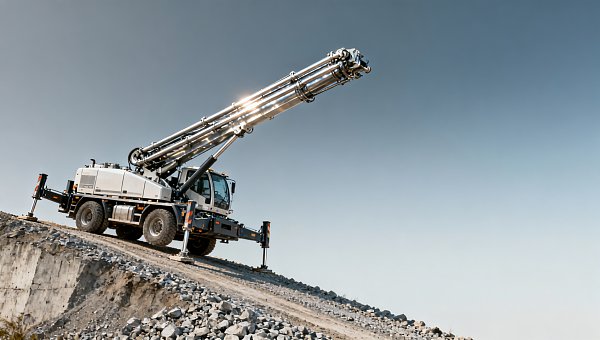
How Slope Affects Key Operational Parameters
Ground inclination alters three interdependent performance vectors: structural loading, hydraulic response time, and operator visibility. At 2.5° forward slope, outrigger reaction force increases by 19% on the downhill side—accelerating wear on hydraulic cylinders and mounting brackets. Simultaneously, boom articulation speed drops by 8–11% due to compensatory pressure regulation, extending average cycle time from 42 to 47 seconds per pour.
For distributors supplying to contractors in regions with frequent grade changes—such as Indian highway expansions or Brazilian urban renewal zones—this translates into tangible TCO implications: 12–17% higher maintenance frequency on boom joints and 22% greater fuel consumption during slope-adjusted operation over 6-month project cycles.
This table reflects industry-standard OEM calibration across leading European and Chinese manufacturers. It underscores why procurement professionals must cross-reference slope tolerance data—not just maximum boom length—when comparing models for multi-site deployments. Units rated for “65 m boom” may deliver only 53 m usable reach in typical 2.8° terrain conditions common across 68% of ASEAN infrastructure contracts.
Procurement Checklist: What to Verify Before Finalizing a Concrete Pump Truck Order
Global buyers need actionable verification points—not marketing claims. Prioritize these five non-negotiable checks before contract signing:
- Request factory test reports showing actual boom stability under 3° simulated slope (not just static load charts)
- Confirm inclusion of ISO 10218-1 compliant tilt sensors with ±0.2° accuracy and real-time dashboard display
- Validate outrigger pad load capacity against local soil bearing requirements (minimum 250 kPa for clay-rich sites)
- Verify software version supports firmware updates for region-specific slope compensation maps (e.g., Himalayan vs. Gulf Coast profiles)
- Check service agreement coverage for slope-related hydraulic recalibration—required every 200 operational hours on variable-grade sites
Distributors supporting emerging markets should also request documentation proving compliance with EN 12001 (mobile concrete pumps) and ANSI A92.20 (stability testing protocols). These certifications ensure baseline reliability when operating across diverse regulatory environments—from EU public works tenders to GCC infrastructure mandates.
Why Global Buyers Choose Our Platform for Concrete Pump Truck Sourcing
The Global Heavy Truck Industry Platform connects procurement teams directly with pre-vetted manufacturers offering slope-optimized concrete pump trucks—including units with active leveling outriggers, dual-axis inertial measurement units, and terrain-adaptive boom control logic. Unlike generic marketplaces, our platform provides verified technical dossiers, including third-party slope performance test videos and downloadable stability curves for 1°–5° gradients.
We support your decision-making with granular filters: search by max permissible slope angle (1.5°/2.5°/3.0°), outrigger deployment time (<90 sec), or integrated inclinometer resolution (±0.1°). Every listed unit includes supplier certification status, lead time transparency (standard: 12–16 weeks; express: 7–9 weeks), and regional after-sales coverage maps—critical for buyers managing fleets across 3+ countries.
Whether you’re evaluating a 48 m boom unit for Nigerian road rehabilitation or specifying 56 m variants for Chilean mining support, our platform delivers standardized evaluation criteria, multilingual technical support, and direct access to OEM engineering teams for slope-specific configuration reviews. Contact us today to request slope performance datasheets, compare certified models side-by-side, or schedule a live virtual demo with terrain simulation capabilities.
Trending News
- Crane Truck Exporter Options: Matching Lifting Capacity to Project Needs
- Dump Truck Exporter Costs Explained: Shipping, Duties, and Hidden Fees
- Construction Machinery Price Trends in 2026: What Is Driving Total Cost Up
- Truck Tipper Exporter Review: What to Check Before Signing an Overseas Order
- Logging Truck Manufacturer Guide: Payload, Stability, and Road Conditions
Tag
Recommended News
 Truck TechnologyWhat Fireproof Materials Mean for Semi Trailer Safety and Lifecycle CostSemi trailer manufacturer with fireproof materials solutions help cut downtime, reduce repair risk, and improve resale value. Learn how smarter trailer specs lower total lifecycle cost.
 Truck TechnologyQuick Installation Excavators: Downtime vs PerformanceExcavator manufacturer with quick installation solutions help cut downtime, speed site startup, and protect performance. Compare smarter options for faster, more reliable project delivery.
 Truck TechnologyChina-Mongolia-Russia E-Waybill Mutual Recognition UpgradedChina-Mongolia-Russia E-Waybill mutual recognition upgraded: Real-time cold-chain temperature compliance now mandatory for all cross-border road transport vehicles under GB/T 39920–2021.
 Truck TechnologyMulti-Dept Initiative Adds V2X & BeiDou Modules to Cross-Border Trucking Subsidy ListV2X & BeiDou modules now subsidy-eligible for cross-border trucks—boosting smart logistics, safety, and BRI corridor compliance. Act now to align.
 Truck TechnologyL4 Autonomous Truck Chassis Emerges as Tech Export VehicleL4 Autonomous Truck Chassis: Now licensable globally for port drayage & mine transport—modular, multi-powertrain, backed by DP World & Chilean ports.
 Truck TechnologyMulti-Dept Action Adds V2X & BeiDou HD Positioning to Cross-Border Freight Subsidy ListV2X & BeiDou HD positioning now subsidized for cross-border freight trucks—key opportunity for intelligent transport equipment suppliers and OEMs.
 Truck TechnologyChina-Mongolia-Russia Corridor Upgrades to E-CMR with Real-Time Cold Chain MonitoringChina-Mongolia-Russia Corridor now mandates e-CMR + real-time cold chain monitoring for all refrigerated trailers — ensure compliance to avoid border delays and win tenders.
 Truck TechnologyBulldozer for Construction: Key Specs That Affect Earthmoving EfficiencyBulldozer for construction buying guide: compare weight, blade capacity, torque, and undercarriage specs to improve earthmoving efficiency and choose the right machine for your jobsite.
 Truck TechnologyL4 Autonomous Container Trucks Enter Trial on Tianjin-Xiongan RouteL4 autonomous container trucks begin trial on Tianjin-Xiongan route—pioneering China’s smart land transport revolution with dual-energy, licensable chassis platform.
 Truck TechnologyMulti-Dept Initiative to Upgrade Freight Hubs with V2X & BeiDouV2X & BeiDou: China’s 7-dept initiative offers up to 30% subsidies for intelligent retrofitting of cross-border road transport equipment—key for freight hubs, smart chassis, and trailer manufacturers.
 Truck TechnologyMulti-Dept Launch Freight Hub Upgrading InitiativeMulti-Dept Launch Freight Hub Upgrading Initiative boosts intelligent land transport equipment—smart loading, battery-swap stations & ETC-V2X modules for seamless, low-carbon cross-border logistics.
 Truck TechnologyWhat Advanced Technology Means in Heavy Truck Chassis PerformanceHeavy truck chassis manufacturer with advanced technology: discover how smarter frame design, suspension tuning, and braking integration improve stability, uptime, and long-term operating value.
 Truck TechnologyHigh-Strength Flatbed Trailers: Where Stronger Steel Pays OffFlatbed trailer supplier with high strength expertise helps fleets cut tare weight, improve durability, and lower lifecycle cost. See what specs matter most before you buy.
 Truck TechnologyBulldozer for Construction: Matching Blade Type to Ground ConditionsBulldozer for construction guide: learn how to match S, U, and SU blades to soil, clay, rock, and mixed ground for better productivity, lower fuel use, and smarter equipment selection.
 Truck TechnologyWhen Fireproof Materials Add Real Value in Semi Trailer ManufacturingSemi trailer manufacturer with fireproof materials: discover how fire-resistant designs improve cargo safety, reduce risk, and support smarter sourcing decisions.
 Truck TechnologyWhat a Durable Engine Really Means in a Light Duty TruckLight duty truck with durable engine: learn how real engine durability improves uptime, fuel savings, and lower maintenance across delivery, construction, rural, and municipal work.
 Truck TechnologySemi Trailer Manufacturer With Lightweight Design: Pros, Trade-Offs, and Use CasesSemi trailer manufacturer with lightweight design: explore key benefits, trade-offs, and best-fit use cases to improve payload efficiency, durability, and lifecycle ROI.
 Truck TechnologyTruck Tipper for Construction: Key Specs That Affect Daily ProductivityTruck tipper for construction buying guide: learn which specs most affect payload, fuel use, unloading speed, and uptime to choose a safer, more productive model.
 Truck TechnologyWhy Logging Truck Manufacturer Design Matters in Tough TerrainLogging truck manufacturer design shapes safety, traction, and uptime in tough terrain. Learn what features matter most for forestry hauling and choose trucks built for real-world performance.
 Truck TechnologyAre Fireproof Materials Worth It in a Semi Trailer ManufacturerSemi trailer manufacturer with fireproof materials: discover if the added cost delivers real safety, lower risk, and better cargo protection with a practical supplier evaluation checklist.
 Truck TechnologyWhy High-Strength Design Matters in a Flatbed Trailer SupplierFlatbed trailer supplier with high strength: learn why structural design, material quality, and fatigue resistance matter for safer transport, longer service life, and lower operating costs.
 Truck TechnologyAdvanced Technology in Heavy Truck Chassis Manufacturing: What to Look ForHeavy truck chassis manufacturer with advanced technology: learn how to assess welding, materials, precision, and validation for long-haul, construction, mining, and special-purpose fleets.
 Truck TechnologyCan Fireproof Materials Improve Semi Trailer Safety in Logisticssemi trailer manufacturer with fireproof materials solutions can reduce cargo loss, improve fleet safety, and support reliable logistics. Discover how to choose the right fire-resistant trailer design.
 Truck TechnologyWhy Advanced Technology Matters in Heavy Truck Chassis ManufacturingHeavy truck chassis manufacturer with advanced technology: learn how digital design, precision welding, and rigorous testing improve durability, safety, and sourcing confidence.
 Truck TechnologyKazakhstan Extends Zero-Tariff List for China-Europe Rail Truck Parts to 2027Kazakhstan extends zero-tariff status for China-Europe rail truck parts to 2027—boosting ADAS, CAN-FD, and EBS component exports. Act now to optimize logistics & compliance.