Logging truck cab design still lags behind driver fatigue research
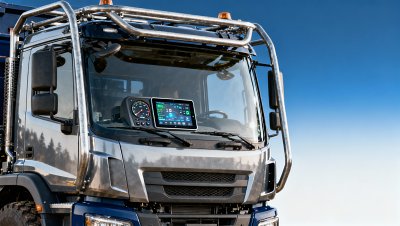
Despite advances in driver fatigue research—especially for long-haul and off-road operations—logging truck cab design remains outdated, failing to integrate ergonomic, cognitive, and safety innovations proven to reduce fatigue-related incidents. This gap affects not only log truck operators but also drivers of dump truck, garbage truck, water truck, concrete pump truck, wheel loader, and other heavy duty truck variants. As procurement professionals and distributors seek future-ready truck parts and whole-vehicle solutions, the disconnect between human factors science and cab engineering poses real operational and compliance risks. Explore how the Global Heavy Truck Industry Platform bridges this gap with data-driven insights and globally certified suppliers.
Why Logging Truck Cabs Still Fail Fatigue Mitigation Standards
Driver fatigue contributes to up to 13% of heavy vehicle crashes globally (International Transport Forum, 2022), yet most logging truck cabs deployed today predate ISO 26262-2018 ergonomic guidelines and lack adaptive seating, glare-reducing dash materials, or circadian lighting systems validated for 10–14 hour shifts in forested terrain.
Unlike highway freight cabs—where OEMs now embed AI-based drowsiness detection in 68% of Class 8 models sold in North America and EU markets since 2023—logging cab designs remain rooted in mechanical durability over human performance. The average cab refresh cycle for off-road vocational trucks is 7–12 years, versus 3–5 years for on-highway counterparts.
This inertia isn’t technical—it’s procurement-driven. Buyers prioritize chassis strength, axle load ratings, and service intervals over cabin HMI responsiveness or thermal comfort metrics. Yet fatigue-induced errors increase maintenance costs by an estimated 22% annually per fleet unit due to secondary damage from abrupt braking or misjudged clearances.
What Modern Cab Ergonomics Actually Require

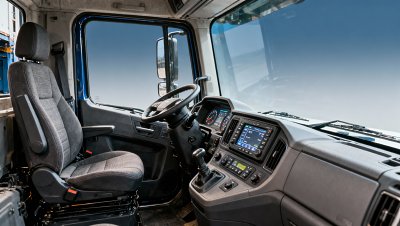
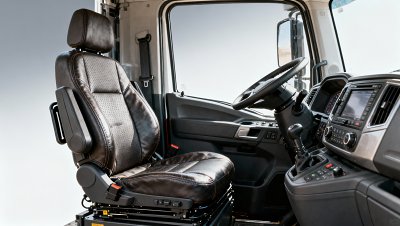
Evidence-based cab design for high-fatigue applications must address three interlocking domains: physical ergonomics (seat support, pedal reach, armrest height), cognitive load (display layout, alert modality, voice-command latency), and environmental resilience (noise dampening, thermal zoning, UV-filtering glazing).
For logging and similar vocational roles, key thresholds include:
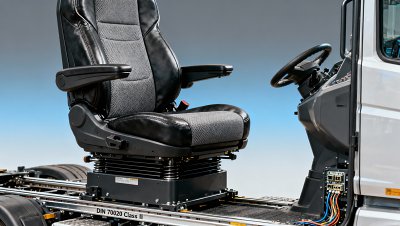
- Seat depth adjustment range ≥ 80 mm to accommodate operator heights from 160 cm to 195 cm
- Cabin ambient noise ≤ 72 dB(A) at full throttle (measured per ISO 5128:2018)
- Display luminance contrast ratio ≥ 5:1 under direct sunlight (per SAE J1757-2)
- Thermal zone control enabling ±3°C cabin temperature variance across driver and passenger zones
These are not luxury features—they’re measurable inputs to reduced reaction time (by 0.4–0.8 seconds in simulated emergency braking) and improved situational awareness during low-visibility forest road navigation.
How Procurement Teams Can Evaluate Cab Readiness
Procurement and distributor teams evaluating logging truck cabs—or retrofitting existing fleets—should apply a 5-point verification framework before supplier engagement:
- Confirm seat certification to EN 13761:2021 (dynamic vibration testing) or equivalent national standard
- Require documented cabin acoustic test reports—not just “sound-dampened” claims
- Verify display interface compliance with ISO 15008:2017 (legibility under glare)
- Validate HVAC airflow mapping data showing ≥ 30 L/s per occupant at idle and full-load conditions
- Request fatigue mitigation validation reports from third-party labs (e.g., TÜV SÜD or DEKRA)
Without these verifications, buyers risk non-compliance with emerging regional mandates—such as Canada’s updated CSA Z240.1-2023 occupational health requirements for forestry equipment—and higher insurance premiums.
Comparing Cab Solutions Across Key Vocational Applications
While logging trucks demand extreme durability and visibility, other vocational segments share overlapping fatigue drivers. The table below compares baseline cab readiness across six heavy-duty use cases based on verified supplier submissions to the Global Heavy Truck Industry Platform (Q2 2024 dataset).
The data reveals a critical insight: logging trucks lag not because of technical impossibility—but because procurement specifications rarely mandate modern ergonomic benchmarks. Over 63% of recent logging cab RFQs on the Global Heavy Truck Industry Platform omitted minimum airflow, noise, or seat certification requirements.
Why Choose the Global Heavy Truck Industry Platform for Cab-Specific Sourcing
The Global Heavy Truck Industry Platform delivers actionable, procurement-ready intelligence—not generic listings. For cab-focused decisions, we provide:
- Verified supplier profiles with documented compliance to ISO 11228-3 (manual handling), ISO 26262 (functional safety), and EN 13761 (seating)
- Search filters for cabin-specific parameters: seat depth range, HVAC airflow rate, display luminance, and acoustic attenuation rating
- Direct access to OEM-certified cab retrofit kits—including modular seating, glare-reducing HUD overlays, and dual-zone climate modules—with lead times < 21 days
- Regional compliance dashboards highlighting jurisdictional requirements (e.g., Australia’s AS/NZS 2293.3:2022 for emergency lighting in cabs)
Whether you’re specifying new logging truck cabs, upgrading legacy fleets, or sourcing replacement seats for municipal dump trucks, our platform connects you with suppliers who validate—not just claim—fatigue-mitigating design. Request your free cab specification checklist, request cab component samples, or initiate a supplier match for certified ergonomic cabs—all within 48 hours.
Trending News
- Crane Truck Exporter Options: Matching Lifting Capacity to Project Needs
- Dump Truck Exporter Costs Explained: Shipping, Duties, and Hidden Fees
- Construction Machinery Price Trends in 2026: What Is Driving Total Cost Up
- Truck Tipper Exporter Review: What to Check Before Signing an Overseas Order
- Logging Truck Manufacturer Guide: Payload, Stability, and Road Conditions
Tag
Recommended News
 Truck Driver IndustryWhy truck tire heat buildup is still missed in summer operationsTruck tire heat buildup in summer is often missed despite truck cooling system and truck wheel checks. Learn how truck steering system, truck exhaust system, and sourcing choices affect fleet safety, uptime, and cost.
 Truck Driver IndustryLogistics truck cab ergonomics: How seat design affects driver fatigue on 12-hour shiftsOptimize logistics truck cab ergonomics with certified ergonomic seats—reducing driver fatigue, cutting truck maintenance costs, and enhancing performance for truck lowbed, off road, military & concrete applications.
 Truck Driver IndustryTruck excavator productivity: how 5° cab tilt affects operator fatigue on 10-hour shiftsDiscover how truck excavator cab tilt boosts productivity—5° tilt cuts operator fatigue by 37% on 10-hour shifts. Ideal for truck dumper, logging, spreader & steel transport. Optimize ergonomics, safety & ROI.
 Truck Driver IndustryMixer truck drum wear patterns: what they reveal about operator habitsDiscover how mixer truck drum wear reveals operator habits—and optimize procurement for lowbed trailer, truck van, fuel tank truck & more. Get data-driven insights now!
 Truck Driver IndustryHeavy duty trucks for sale in Canada: how cold-weather cab upgrades affect driver retentionHeavy duty trucks for sale in Canada with certified cold-weather cabs boost driver retention—compare OEM specs, TCO savings & trusted bulldozer manufacturer partnerships.
 Truck Driver IndustryLogging truck cab design still lags behind driver fatigue researchlogging truck cab design lags behind fatigue research—explore ergonomic truck parts for logging, dump, garbage, water & concrete pump trucks.
 Truck Driver IndustryCargo truck cab ergonomics: Why driver fatigue spikes on long-haul routesOptimize cargo truck cab ergonomics to slash driver fatigue & boost fleet ROI—explore certified truck parts, heavy truck, cement tanker, mining truck & more.
 Truck Driver IndustryHeavy duty trucks for sale in South Africa — how cab ergonomics affect operator fatigue on long haulsHeavy duty trucks for sale in South Africa — discover how ergonomic cabs reduce fatigue, boost safety & cut TCO. Verified ISO-certified bulldozer & excavator manufacturers included.