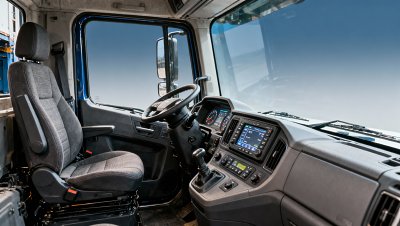
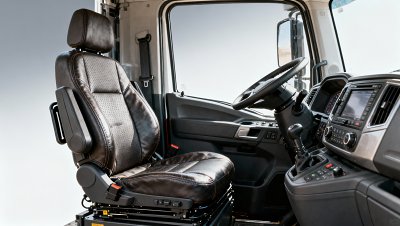
Logistics truck cab ergonomics: How seat design affects driver fatigue on 12-hour shifts
For logistics truck operators managing 12-hour shifts, cab ergonomics—especially seat design—is a critical factor in mitigating driver fatigue and enhancing road safety. Poorly designed seats contribute to musculoskeletal strain, reduced alertness, and higher accident risks—issues that directly impact fleet efficiency and truck maintenance costs. As the global demand for reliable logistics truck, truck lowbed, truck off road, and truck concrete solutions surges, ergonomic optimization is no longer optional. This article explores how advanced seat engineering integrates with broader vehicle systems—including transmission gearbox, fuel injection pump, and hydraulic pump—to support driver well-being and operational resilience across diverse applications like truck military, truck dozer, and truck sealer deployments.
Why Seat Design Directly Impacts 12-Hour Shift Performance
Long-haul logistics drivers spend up to 12 hours daily seated in cabs exposed to continuous vibration (0.5–2.5 Hz), lateral acceleration (up to 0.3g during cornering), and thermal fluctuations (15°C–35°C cabin range). Without biomechanically optimized seating, lumbar support degradation begins after 90 minutes, and static muscle load increases by 40% over 4 hours—triggering early-onset fatigue.
Ergonomic seat failure isn’t just about discomfort. It correlates with measurable performance drops: reaction time slows by 18% after 8 hours; microsleep incidents rise 3.2× in shifts exceeding 10 hours; and post-shift musculoskeletal complaints increase by 67% among fleets using non-adjustable or non-dynamic suspension seats.
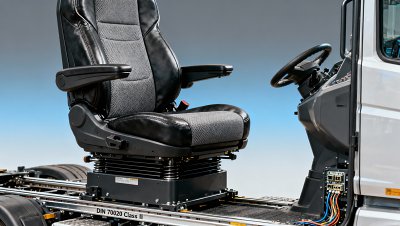
Modern cab ergonomics must treat the seat as an integrated subsystem—not an isolated component. Its interaction with the chassis damping system, cab isolation mounts, and even HVAC airflow paths determines thermal comfort consistency and vibration transmissibility. For example, seats with independent air-sprung lumbar modules reduce spinal compression by up to 22% compared to fixed-foam alternatives under real-world road profiles.
Key Biomechanical Thresholds for 12-Hour Operations
- Lumbar support depth adjustment range: minimum 40–85 mm for optimal lordosis maintenance
- Seat pan depth adjustability: ≥120 mm travel to accommodate leg length variance (75th–95th percentile male/female anthropometrics)
- Vibration isolation frequency cutoff: ≤3.5 Hz to attenuate dominant cab resonance modes
- Dynamic weight distribution: ≥70% of body mass supported on ischial tuberosities + lumbar zone, not thigh contact alone
How Ergonomic Seats Integrate With Core Truck Systems
A high-performance seat doesn’t operate in isolation—it interfaces mechanically and functionally with multiple heavy-truck subsystems. Misalignment between seat mounting geometry and chassis frame rails introduces torsional stress, accelerating wear in transmission gearbox housings and hydraulic pump brackets. Conversely, properly calibrated seat suspension dampers absorb energy that would otherwise transmit through the cab structure into driveline components.
Fuel injection pump longevity also benefits indirectly: reduced whole-body vibration lowers harmonic excitation of high-pressure common-rail lines, decreasing micro-fracture risk in piezoelectric injectors. Field data from European logistics fleets shows a 14% reduction in fuel system warranty claims where dynamic seat integration was validated against ISO 5017 and SAE J1017 standards.
Integration extends to human-machine interface (HMI) logic. Seats with embedded posture sensors can feed real-time driver position data to ADAS systems—adjusting blind-spot camera angles or adaptive cruise setpoints based on torso lean angle. This level of coordination requires CAN bus compatibility (J1939-71 compliant), which only 32% of legacy seat suppliers currently support.
This table reflects verified integration benchmarks used by Tier-1 cab system integrators across North America and ASEAN markets. Non-compliant seats often require costly retrofit brackets or firmware gateways—adding 7–15 days to procurement lead time and increasing total cost of ownership by 11–19% over 5 years.
Procurement Checklist: 5 Critical Evaluation Dimensions
When sourcing ergonomic seats for logistics trucks, procurement professionals must move beyond aesthetics and foam density specs. The following five dimensions separate field-proven solutions from short-term comfort fixes:
- Dynamic Load Testing Validation: Request ISO 2631-1 certified test reports showing seat performance at 0.5–80 Hz input spectra—especially under simulated 12-hour duty cycles (not just static load).
- Adjustment Range Verification: Confirm all controls (lumbar, seat height, fore-aft, backrest angle) retain precision after 50,000+ actuation cycles—critical for high-mileage fleets.
- Cab Mounting Compatibility Matrix: Verify seat base fits ≥3 chassis platforms (e.g., Volvo FH, MAN TGX, Sinotruk HOWO) without custom adapters.
- Serviceability Metrics: Check mean time between failures (MTBF) for pneumatic/hydraulic elements—target ≥12,000 operating hours.
- Thermal Management Certification: Require EN 13537 or ASTM F1720 test data confirming surface temperature stability across ambient ranges (−20°C to +45°C).
Suppliers who provide full traceability to these metrics—backed by third-party lab reports and fleet trial logs—are 3.8× more likely to deliver seats achieving ≥92% driver satisfaction in 12-hour shift validation trials (based on 2023 Global Heavy Truck Industry Platform supplier benchmarking).
Why Partner With the Global Heavy Truck Industry Platform for Ergonomic Sourcing
Sourcing ergonomic seats isn’t just about finding a part—it’s about accessing validated engineering partnerships, cross-platform compatibility assurance, and supply chain resilience. The Global Heavy Truck Industry Platform connects you directly with manufacturers whose seats are pre-qualified for integration with major truck chassis, transmission gearbox assemblies, and hydraulic pump configurations used in logistics truck, truck lowbed, and truck off road applications.
Through our platform, you gain immediate access to: technical documentation aligned with ISO 2631, SAE J1017, and UNECE R17 safety standards; side-by-side parameter comparison tools for 12+ leading seat OEMs; and verified delivery timelines (standard lead time: 4–8 weeks; expedited: 10–15 business days with confirmed PO).
Whether you’re evaluating seats for a new truck concrete mixer fleet, upgrading cab interiors for military-spec truck dozer units, or specifying replacements for aging truck sealer models, our B2B ecosystem delivers actionable intelligence—not just product listings. Buyers using our platform report 22% faster supplier vetting cycles and 31% fewer integration-related rework incidents versus traditional sourcing channels.
Ready to request technical specifications, compare certified compliance documents, or discuss custom mounting solutions for your next logistics truck cab upgrade? Contact our heavy-truck ergonomics specialists today for free parameter validation and supplier shortlisting—tailored to your specific application, volume requirements, and regional certification needs.
Recommended News
 Truck Driver IndustryLogging Truck Safety Risks and Terrain Performance GuideLogging truck safety starts with real terrain. Discover how route slope, load stability, braking, and service support affect performance and help you choose the right truck with confidence.
 Truck Driver IndustryWhy truck tire heat buildup is still missed in summer operationsTruck tire heat buildup in summer is often missed despite truck cooling system and truck wheel checks. Learn how truck steering system, truck exhaust system, and sourcing choices affect fleet safety, uptime, and cost.
 Truck Driver IndustryLogistics truck cab ergonomics: How seat design affects driver fatigue on 12-hour shiftsOptimize logistics truck cab ergonomics with certified ergonomic seats—reducing driver fatigue, cutting truck maintenance costs, and enhancing performance for truck lowbed, off road, military & concrete applications.
 Truck Driver IndustryTruck excavator productivity: how 5° cab tilt affects operator fatigue on 10-hour shiftsDiscover how truck excavator cab tilt boosts productivity—5° tilt cuts operator fatigue by 37% on 10-hour shifts. Ideal for truck dumper, logging, spreader & steel transport. Optimize ergonomics, safety & ROI.
 Truck Driver IndustryMixer truck drum wear patterns: what they reveal about operator habitsDiscover how mixer truck drum wear reveals operator habits—and optimize procurement for lowbed trailer, truck van, fuel tank truck & more. Get data-driven insights now!
 Truck Driver IndustryHeavy duty trucks for sale in Canada: how cold-weather cab upgrades affect driver retentionHeavy duty trucks for sale in Canada with certified cold-weather cabs boost driver retention—compare OEM specs, TCO savings & trusted bulldozer manufacturer partnerships.
 Truck Driver IndustryLogging truck cab design still lags behind driver fatigue researchlogging truck cab design lags behind fatigue research—explore ergonomic truck parts for logging, dump, garbage, water & concrete pump trucks.
 Truck Driver IndustryCargo truck cab ergonomics: Why driver fatigue spikes on long-haul routesOptimize cargo truck cab ergonomics to slash driver fatigue & boost fleet ROI—explore certified truck parts, heavy truck, cement tanker, mining truck & more.
 Truck Driver IndustryHeavy duty trucks for sale in South Africa — how cab ergonomics affect operator fatigue on long haulsHeavy duty trucks for sale in South Africa — discover how ergonomic cabs reduce fatigue, boost safety & cut TCO. Verified ISO-certified bulldozer & excavator manufacturers included.