When does a truck off road setup need locking differentials?
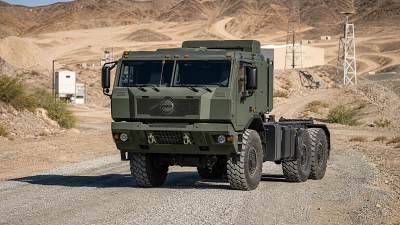
A truck off road setup needs locking differentials when loss of traction at one wheel can stop the vehicle, reduce control, or prevent it from completing its working cycle. The deciding factor is not simply whether the truck ever leaves pavement. It is whether the expected terrain regularly allows one wheel on an axle to unload, spin freely, or encounter a surface with far less grip than the wheel on the other side.
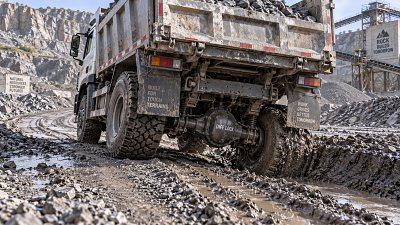
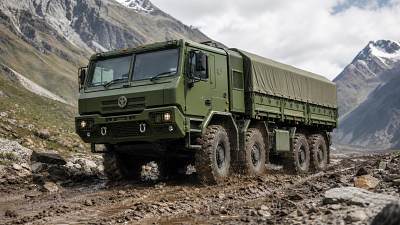
This situation appears on rutted construction access roads, wet forestry tracks, quarry floors, unprepared mine routes, soft shoulders, steep cross-slopes, and loading areas where loose material accumulates. With an open differential, torque follows the path of least resistance. One wheel may spin while the wheel with usable grip receives too little torque to move the truck. A locking differential can force both wheels on an axle to rotate together and make use of the available traction. It is justified when this condition is frequent, operationally costly, or safety-critical—not merely inconvenient.
The practical threshold: occasional wheelspin or a repeatable mobility problem?
Not every truck off road application requires axle locks. A vehicle that normally works on compacted yard surfaces, maintained gravel roads, and short dry construction approaches may gain little from a full locking-differential specification. Good tires, sensible axle loading, appropriate tire pressure, and an effective traction-control system may be sufficient.
The case becomes stronger when the vehicle repeatedly encounters split-traction conditions. These are conditions where the left and right wheels on the same axle do not carry similar load or do not have similar grip. Typical examples include one wheel in a rut, one wheel on loose stone beside a firm track, an axle crossing diagonal drainage channels, or a truck climbing out of a soft excavation area. In such cases, an open differential is doing what it was designed to do: allowing different wheel speeds in turns. The limitation is that it cannot reliably direct useful torque to the wheel with grip.
Locking differentials should therefore be assessed as an availability and recoverability feature. The relevant question is: Can the truck continue moving without repeated recovery actions, unsafe momentum, excessive wheelspin, or avoidable route preparation? If the answer is often no, a lockable axle deserves serious consideration.
Recognizing the operating conditions that justify locks
Terrain descriptions such as “rough site” or “off-road capable” are too broad for specification work. The decision should be tied to actual traction events and the vehicle’s duty cycle.
Deep ruts and axle articulation
Deep ruts do more than make the ride uncomfortable. They can unload a wheel as the suspension extends or as the chassis twists across uneven ground. Once one wheel has little vertical load, it also has little available traction. This is one of the clearest situations for a locking differential, particularly on drive axles that must propel a loaded vehicle at low speed.
A truck can appear stable while travelling straight on a rutted surface, then lose forward motion at a diagonal crossing or when entering a turn. The problem may be intermittent, but repeated interruptions are operationally significant when the truck must pass the same route throughout a shift or during wet weather.
Loose, wet, or deformable surfaces
Clay, wet soil, sand, loose aggregate, spoil, and snow-covered ground can all produce unequal traction across an axle. Wheelspin on these surfaces can quickly deepen a rut or polish the surface below the tire, making the next attempt more difficult. A locking differential lets the wheel with firmer contact contribute drive force rather than allowing the unloaded or low-grip wheel to absorb the available torque.
This does not mean a lock will make a truck suitable for every soft-ground condition. Ground bearing pressure, tire tread, tire inflation, axle load, approach geometry, and driver technique still determine whether the vehicle can stay on top of the surface. A differential lock improves torque distribution; it does not solve inadequate flotation or a route with insufficient bearing capacity.
Steep grades with variable grip
Climbing a grade often transfers weight to the rear, which may improve traction on rear drive axles. Yet a cross-slope, embedded rocks, loose material, or a wet section can still cause one wheel to spin. A lock can prevent loss of momentum at the point where restarting would be difficult or unsafe.
On descents, locking requirements should be evaluated more carefully. Mechanical locks are primarily traction devices, not substitutes for service brakes, engine braking, retarder control, or descent planning. Their use must follow the vehicle manufacturer’s operating instructions because locked axles affect wheel-speed differences and can influence vehicle behavior on turns or mixed-grip surfaces.
Work routes that cannot be avoided
A truck serving a remote work face, a timber landing, a pit, or a temporary infrastructure site may have no alternate route. Even if difficult ground covers only a short section, that section can dictate fleet availability. A vehicle that needs towing assistance or route repair every time conditions deteriorate can create delays beyond the individual truck.
In this type of operation, the decision should not be based only on the percentage of distance travelled off road. A short, mandatory, low-traction segment can justify locks if it is the access bottleneck for loaded or time-sensitive movements.
Open, limited-slip, automatic locking, and driver-selectable systems
“Locking differential” is often used as a general term, but different systems provide different levels of control and different behavior. The axle configuration must match the route, driver operating practice, and the consequences of a traction failure.
A limited-slip unit may be enough where the truck mostly travels on firm ground but occasionally crosses wet grass, loose gravel, or shallow ruts. It can reduce the likelihood of one-wheel spin while retaining relatively smooth behavior in normal use. It is less suitable where wheel lift, deep diagonal ruts, or very soft ground are expected, because it cannot necessarily provide near-equal drive torque to both wheels.
Driver-selectable locks offer the most decisive traction response when a vehicle approaches a known obstacle. They are commonly valuable where terrain changes rapidly and operators can engage the lock before wheelspin becomes severe. However, the benefit depends on training and on clear instructions about when the lock may be used. Engaging after a wheel is spinning heavily may not immediately recover traction and can increase driveline shock.
Decide which axle needs to lock
A truck can have locking capability on an inter-axle differential, an axle differential, or both. These are not interchangeable.
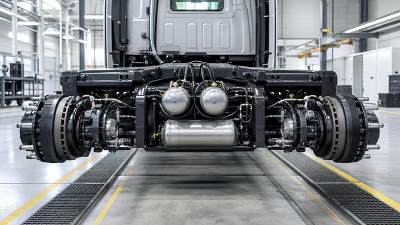
In a tandem-drive arrangement, the inter-axle differential allows the two drive axles to rotate at different average speeds. Locking it helps distribute torque between the front and rear drive axles. This is useful when one entire drive axle has poorer grip than the other, such as when one axle is on firmer ground and the other is in loose material. It does not fully resolve a left-to-right traction difference within the same axle.
An axle differential lock addresses the wheel-to-wheel problem on that particular axle. If one wheel spins in a rut while the opposite wheel has grip, an axle lock is the component that can force both axle shafts to turn together. For severe terrain, a configuration with inter-axle locking plus axle locks on the relevant drive axles may be appropriate. For less demanding mixed-surface work, inter-axle locking alone may provide enough improvement.
Front-drive axle locks require separate consideration on all-wheel-drive trucks. A front axle lock can improve forward movement where the front axle is heavily loaded or where the truck must pull through uneven terrain. At the same time, locking the steering axle reduces the ability of the front wheels to rotate at different speeds during turns. This can increase steering effort, tire scrub, and driveline stress. It should normally be used only at low speed, on loose ground, and for the shortest practical duration.
Do not confuse traction limitations with differential limitations
Before specifying locks, identify why the truck is losing mobility. A spinning wheel is strong evidence of a traction-distribution problem, but it is not the only possible cause. A technical review should separate these conditions:
- One wheel spins while the opposite wheel remains still: an axle lock may materially improve mobility.
- Both wheels spin and sink: the issue is more likely insufficient ground support, unsuitable tire configuration, excessive tire pressure, or excessive load for the surface.
- The truck cannot climb despite little wheelspin: assess grade, gross combination mass, powertrain gearing, rolling resistance, and route condition.
- Loss of traction occurs only during tight turns: tire scrub, surface deformation, and operating technique may be involved; a lock may worsen the condition if left engaged.
- Wheelspin begins after load changes: review axle loads and weight distribution. A drive axle with inadequate loading cannot make full use of a locking differential.
This distinction prevents a common specification error: adding increasingly aggressive differential hardware to compensate for a route or tire problem. Locks can preserve motion when usable grip exists at another wheel. They cannot create grip where neither side of the axle has enough traction.
Use the duty cycle, not the worst photograph of the route
Truck off road capability is often judged from a single difficult section observed during a site visit. That can lead either to under-specification or to unnecessary complexity. A better assessment considers how often the truck is empty or loaded on that section, whether the route changes with rain, whether grading is routine, and whether stopping is unavoidable.
A loaded tipper travelling slowly through a soft unloading area has a different need from a service truck that can choose its line and reverse out if necessary. A tractor pulling a trailer may also need more traction reserve than a rigid truck because articulation and trailer resistance can make recovery more difficult. The ability to maintain movement without excessive throttle is important: aggressive wheelspin can damage the surface, bury tires, and load the driveline abruptly when traction returns.
Record the conditions under which traction failures occur. Useful observations include axle positions at the point of slip, whether the vehicle is turning, tire track depth, load state, surface moisture, frequency of recovery, and whether the problem changes after route maintenance. This information is more useful than a general statement that the truck “gets stuck off road.”
Operational limits of locked differentials
A locked differential should generally be engaged before entering the difficult section, at low speed, and with modest throttle. The truck should be driven as straight as practical until the obstacle is passed. Once firm ground is reached, the lock should be disengaged according to the vehicle instructions.
Leaving a lock engaged on high-traction surfaces can cause driveline wind-up because the wheels need different rotational speeds when turning. The result may include tire scrub, difficult steering, increased component stress, and difficulty disengaging the lock. These risks are especially relevant when a truck transitions quickly from loose site ground to concrete, asphalt, or hard-packed haul roads.
Operators also need a clear indication of lock engagement. A dashboard symbol alone is helpful, but operating procedures should explain that a command switch and a fully engaged lock are not always the same condition. Engagement may require low wheel-speed difference, reduced torque, or a brief straight-line movement. If the lock does not engage, forcing the vehicle with high throttle is not an appropriate response.
When locking differentials are the justified choice
Specify locking differentials when the truck must repeatedly maintain traction through uneven, low-grip terrain; when a single wheel losing grip can halt a loaded movement; when route conditions routinely create wheel unloading; or when recovery delays and unsafe momentum are unacceptable. Favor axle locks where left-to-right wheel traction varies sharply, and consider inter-axle locking where traction differs between tandem drive axles.
Where difficult terrain is rare, shallow, and avoidable, a simpler driveline with suitable tires and careful route management may be the better choice. The strongest specification is not the one with every lock available. It is the one that matches the truck’s axle layout, load distribution, terrain severity, operator controls, and the real cost of losing mobility at the work site.
Trending News
- DeepWay Enters Malaysia With Electric Heavy Trucks Offering Up to 400 km Range
- XCMG Unveils Cabless L4 Autonomous Electric Yard Truck Concept
- How order size affects wholesale pricing for cement mixer trucks
- Commercial Vehicle Leaders Hold Firm in Q1–Q3 2026 Automotive Influence Index
- How to choose a refrigerated truck for multi-stop urban deliveries
Tag
Recommended News
 Truck TechnologyHow to locate a truck exhaust system leak before replacing partsLocate a truck exhaust system leak before replacing parts. Learn how to spot soot trails, confirm leaks safely, and identify root causes to avoid costly guesswork and repeat repairs.
 Truck TechnologyDoes a cab chassis truck for fire department have enough frame capacity?Cab chassis truck for fire department: assess frame strength, axle loads, tank weight, stability and compliance for a safer, reliable fire apparatus build.
 Truck TechnologyWhen does a truck off road setup need locking differentials?Truck off road setups need locking differentials when uneven, low-grip terrain causes wheelspin. Learn how to choose the right axle locks for safer, reliable mobility.
 Truck TechnologyEPA Remote-Diagnostics Rules Take Effect for Diesel EnginesEPA Remote-Diagnostics Rules take effect for diesel engines sold in the U.S. Learn how OTA updates, real-time NOx reporting, and fault-code retention may impact compliance, OEM projects, and imports.
 Truck TechnologyCab Chassis Truck for Military Use: Key Specs That Affect Mission ReadinessCab chassis truck for military use: explore the key specs that drive mission readiness, off-road mobility, integration flexibility, and lifecycle support for smarter fleet decisions.
 Truck TechnologyBULLDOZER with GPS Tracking: What Improves on Remote Job SitesBULLDOZER with GPS tracking improves remote job sites with better visibility, reduced idle time, stronger fleet coordination, and smarter earthmoving decisions across harsh terrain.
 Truck TechnologyTruck Body Materials Compared: Steel, Aluminum, or Composite?Truck body material comparison made practical: explore steel, aluminum, and composite options for payload, durability, corrosion resistance, and lifecycle cost.
 Truck TechnologyBest Cab Chassis Truck Setups for Municipal Engineering TasksCab chassis truck for municipal engineering: compare the best setups for sanitation, tanker, utility, and dump tasks to improve uptime, safety, and long-term fleet value.
 Truck TechnologyTruck Electrical System Faults: Common Causes and Fast ChecksTruck electrical system faults can cause no-starts, dim lights, and costly downtime. Learn common causes, fast checks, and practical steps to diagnose issues quickly.
 Truck TechnologyASEAN-ICV Opens Mutual Access for Connected Heavy VehiclesASEAN-ICV opens mutual access for connected heavy vehicles, cutting duplicate V2X testing across Thailand, Vietnam, Indonesia, and Malaysia. See what it means for exports, compliance, and fleet delivery.
![]() Truck TechnologyTruck Concrete Mixer Basics: Capacity, Drum Type, and Jobsite FitTruck concrete mixer basics explained: compare capacity, drum type, and jobsite fit to improve pour efficiency, cut delays, and choose the right mixer truck with confidence.
Truck TechnologyTruck Concrete Mixer Basics: Capacity, Drum Type, and Jobsite FitTruck concrete mixer basics explained: compare capacity, drum type, and jobsite fit to improve pour efficiency, cut delays, and choose the right mixer truck with confidence. Truck TechnologyBrazil Requires Dual-Mode Tracking on Imported Heavy TrucksBrazil requires dual-mode tracking on imported heavy trucks. Learn how BeiDou+GPS, SISFROTA, and ABNT NBR 16501:2025 rules affect licensing, compliance, and market access.
 Truck TechnologyWater Truck OEM Options: Tank Size, Pump Output, and Road ConditionsWater truck OEM selection starts with the right match of tank size, pump output, and road conditions. Learn how to compare specs, improve uptime, and choose a fleet-ready solution.
 Truck TechnologyChile Requires Remote Diagnostics on Imported Heavy TrucksChile Requires Remote Diagnostics on Imported Heavy Trucks: learn how NCh3871:2026, OTA, ISO 22161, and VHMP rules will impact truck imports, registration, and fleet planning.
 Truck TechnologyHow to Compare Logging Truck OEM Specs for Drivetrain and Load StabilityLogging truck OEM specs compared the right way: learn how to evaluate drivetrain torque, axle ratios, suspension, and load stability for safer forestry hauling.
 Truck TechnologyIndia Drafts BS-VI Phase II Remote OBD Upload RuleIndia Drafts BS-VI Phase II Remote OBD Upload Rule: learn how India’s new real-time OBD upload proposal could impact truck exporters, T-Box upgrades, certification timelines, and market access.
 Truck TechnologyMilitary Truck Payload vs Mobility: What Matters in Harsh TerrainMilitary truck performance in harsh terrain depends on more than payload. Discover how mobility, traction, axle load, and suspension affect real-world mission success.
 Truck TechnologyLogging Truck OEM Options: Key Specs for Harsh Forestry RoutesLogging truck OEM options for forestry routes: compare axle layouts, frame strength, traction, braking, and service support to choose a durable, high-uptime truck.
 Truck TechnologyVietnam to Require VCA Checks for Imported Heavy TrucksVietnam to Require VCA Checks for Imported Heavy Trucks from August 1, 2026. Learn how VCA testing, CAN, HVIL, and OBD-II rules could impact truck exports, certification, and delivery planning.
 Truck TechnologyMexico Enforces CAN FD Rule for Imported TrucksMexico Enforces CAN FD Rule for Imported Trucks: learn how NOM-042-SEMARNAT-2026 impacts OBD-II+, ANCE verification, ECU strategy, and Mexico-bound truck compliance.
 Truck TechnologyBrazil ANP Rule Requires H₂ Leak Sensors on Imported Gas TractorsBrazil ANP rule requires H₂ leak sensors on imported gas tractors from Oct 1, 2026. Learn the compliance impact, IEC 60079-29-1 standard, and what exporters must do now.
 Truck TechnologyTruck Brake System Basics: Components, Failure Risks, and Safety ChecksTruck brake system basics explained: key components, common failure risks, and practical safety checks to improve fleet uptime, compliance, and road safety.
 Truck TechnologySupply Chain Expo Opens With Focus on Heavy Truck Core SystemsHeavy truck core systems take center stage at the Supply Chain Expo, spotlighting battery systems, electric drive axles, and by-wire technologies shaping export opportunities.
 Truck TechnologyTruck Control Unit Failures: Common Symptoms and Fix StrategiesTruck control unit failures often start with small warning signs. Learn key symptoms, root causes, and smart repair strategies to cut downtime and avoid costly misdiagnosis.
 Truck TechnologyEU V2X Rule Sets 2027 Deadline for New Heavy Truck ApprovalEU V2X Rule Sets 2027 Deadline for New Heavy Truck Approval: learn how ETSI EN 302 637-2 and UN R155 reshape EU truck compliance, certification, sourcing, and export planning.