What to verify before choosing a truck chassis supplier
A truck chassis can look acceptable on a specification sheet and still become the wrong purchase once it reaches the intended route, body-builder, or service environment. Procurement problems often appear after the order is released: mounting points do not match the planned body, axle ratings leave too little margin for real payload distribution, parts are difficult to obtain, or delivery dates do not align with fleet deployment.
Before selecting a truck chassis supplier, verify more than price, nominal payload, and brochure dimensions. The practical decision should rest on six areas: application fit, engineering control, manufacturing and quality evidence, customization discipline, supply reliability, and lifecycle support. A supplier that can answer these points with clear documents and consistent technical communication is usually easier to work with than one offering an attractive quotation but vague commitments.
Start with the operating condition, not the chassis model
Procurement teams should define the actual duty cycle before comparing suppliers. A chassis intended for regional pallet delivery faces different stresses from a tipper working on rough access roads, a mixer carrying a high center of gravity, or a tractor unit pulling loads over long gradients. Buying departments sometimes receive a requested wheelbase, engine range, and axle configuration from the user department, but those items alone do not establish whether the chassis is suitable.
Build the requirement around how the vehicle will be used. Clarify the expected gross vehicle weight or gross combination weight, average and maximum payload, trailer type where relevant, road surface, operating altitude, temperature range, daily distance, stop frequency, and anticipated body equipment. Also identify whether the truck will run mainly on highways, urban roads, ports, construction sites, mines, or mixed routes. Each condition affects frame strength, axle selection, suspension type, cooling demand, braking configuration, and service intervals.
Payload should be assessed as a distribution problem, not merely a total-weight problem. A body-mounted crane, liquid tank, compactor mechanism, or rear overhang can shift load toward one axle even when the total vehicle rating appears adequate. Ask the supplier for axle-load calculations or the engineering assumptions used to validate the proposed layout. This is especially important when the chassis will be fitted with specialized equipment after delivery.
Questions to settle internally before sending an inquiry
- What body or trailer will be installed, and who is responsible for integration?
- What are the required wheelbase, rear overhang, frame height, and available chassis length?
- What weight will remain on each axle in laden, partly laden, and unloaded conditions?
- Are there route restrictions affecting vehicle width, height, turning radius, axle spacing, or emissions configuration?
- Will the vehicle require power take-off, hydraulic interfaces, additional electrical circuits, or auxiliary braking?
- How much operating margin is needed for seasonal loads, optional equipment, and future body changes?
A precise request for quotation reduces the risk of suppliers quoting different technical bases. Without it, one offer may include a heavy-duty suspension, another may assume a lighter application, and both may appear comparable only because their descriptions are incomplete.
Verify that the stated ratings work together
Truck chassis specifications are interdependent. Frame section, axle capacity, tire load index, suspension rating, brake system, driveline ratio, and cooling package must support the same use case. A high engine output does not compensate for an under-specified axle or an unsuitable transmission ratio. Likewise, a strong frame does not resolve a vehicle balance issue caused by incorrect wheelbase selection.
Request a detailed configuration sheet rather than a short product description. It should identify the chassis model or internal configuration code, wheelbase, frame dimensions, front and rear axle ratings, suspension arrangement, tire and wheel sizes, braking system, steering arrangement, fuel tank or energy storage layout, gearbox, final-drive ratio, and relevant electrical provisions. Where the chassis will carry equipment, the documents should also show usable mounting zones and restrictions on drilling, welding, or frame modification.
Do not accept “standard configuration” as a complete technical answer. Standard may vary by production batch, market, axle supplier, or engine option. Ask which elements are fixed and which are subject to availability. If an alternative component may be substituted, require prior approval for items that affect load rating, body installation, maintenance, or regulatory acceptance.
Examine engineering capability around body integration
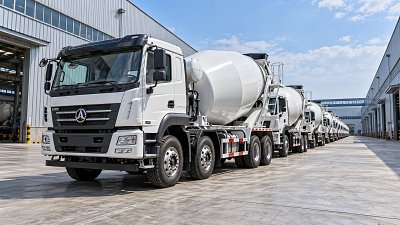
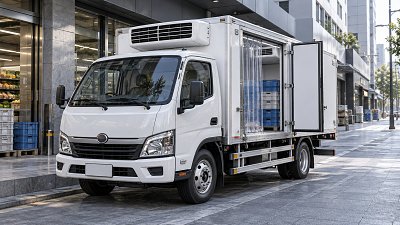
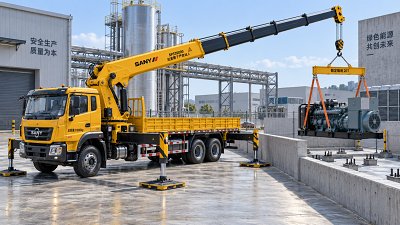
For many commercial applications, the chassis is only the foundation for a completed vehicle. The supplier does not need to build the final body to be a good partner, but it should understand the interfaces that affect safe and practical installation. This becomes critical with tippers, refrigerated bodies, tankers, recovery equipment, municipal bodies, concrete mixers, and crane trucks.
Ask whether the supplier can provide chassis drawings in a usable format, mounting guidance, electrical schematics, power take-off compatibility information, and recommendations on center-of-gravity limits. A technically capable supplier should be able to identify conflicts early, such as a fuel tank occupying a needed hydraulic equipment position or an exhaust aftertreatment component limiting body clearance.
There should also be a clear boundary of responsibility. Confirm who approves the final body mounting, who validates the axle-load distribution after installation, and whether modifications could affect warranty coverage. Ambiguity here can lead to disputes when a body builder changes the frame, relocates components, or installs equipment that exceeds the original design assumptions.
Look for evidence of manufacturing control, not just certificates
Quality certificates can be useful, but they do not replace production-level evidence. When evaluating a truck chassis supplier, review how it controls traceability, incoming components, assembly consistency, torque procedures, inspection records, and final testing. The depth of documentation should match the order’s value, technical risk, and intended operating conditions.
Relevant questions include whether the supplier can identify major component sources, maintain serial-number traceability, record critical tightening operations, and provide inspection documentation tied to the delivered units. For export orders, confirm whether chassis identification, documentation language, packing protection, and pre-shipment checks will be handled consistently.
A supplier should also explain its process for managing nonconforming parts. The answer does not need to reveal internal confidential procedures, but it should show that deviations are identified, isolated, corrected, and recorded rather than quietly passed into production. Watch for answers that rely only on broad statements such as “quality is guaranteed” without describing what will be inspected or what documents can be provided.
Use a sample review to test communication quality
Before committing to a large order, use the quotation stage to test how the supplier handles technical questions. Send a short list of application-specific points: desired axle-load distribution, proposed body dimensions, required PTO function, operating temperature, and spare-parts expectations. Evaluate whether the response addresses the questions directly, identifies missing information, and distinguishes confirmed specifications from assumptions.
This is not merely an administrative exercise. Delays and errors during procurement often begin with unclear technical communication. A supplier that cannot maintain configuration accuracy before the purchase order is issued may struggle when changes, claims, or spare-parts identification are required later.
Check customization without assuming every request is practical
Customization can make a chassis better suited to the task, but it can also introduce sourcing risk. Longer wheelbases, revised tank positions, reinforced frames, different suspension settings, tire changes, PTO arrangements, and auxiliary electrical systems may be available, yet each change can affect engineering approval, production lead time, serviceability, and replacement-part consistency.
Ask for each requested modification to be classified as one of the following: a regular factory option, a controlled engineering variation, or a third-party alteration. Regular options are generally easier to document and support. Engineering variations require a confirmed drawing, technical review, and an agreed lead time. Third-party alterations need particular care because responsibility may be split across several companies.
When comparing offers, distinguish between “can be customized” and “is included in this quotation.” The purchase order should describe the required configuration in enough detail that the delivered chassis can be inspected against it. Important items should not be left only in email discussions or general remarks.
Assess delivery capacity and configuration control together
Lead time is not simply the number of days shown on a quotation. It depends on production slots, component supply, the level of customization, inspection timing, export preparation, and the supplier’s ability to keep the agreed configuration stable. A short promised lead time has limited value if the supplier later proposes axle, tire, or electrical substitutions that disrupt the body-building plan.
Ask what triggers the production schedule: deposit receipt, final drawing approval, component confirmation, or another milestone. Clarify the supplier’s process if a specified component becomes unavailable. Procurement teams should know whether an equivalent substitution will be proposed, whether approval is required before use, and how any resulting schedule change will be communicated.
For multi-unit purchases, confirm whether all chassis will be built to one controlled bill of materials or whether variations between batches are possible. Fleet maintenance becomes more complicated when visually similar vehicles carry different filters, brake components, sensors, or driveline parts. Configuration consistency can be more valuable than a small saving on the initial purchase price.
Evaluate after-sales support before the first vehicle is shipped
Parts support should be reviewed at the same time as the chassis itself. The useful question is not simply whether spare parts are available, but how the correct part will be identified and supplied. Confirm the chassis serial-number format, parts catalog access, component references, service documentation, and the process for handling warranty claims or technical inquiries.
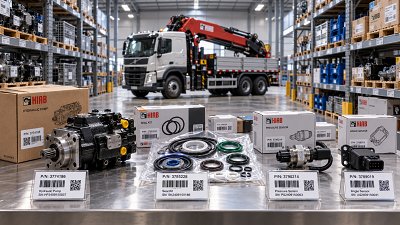
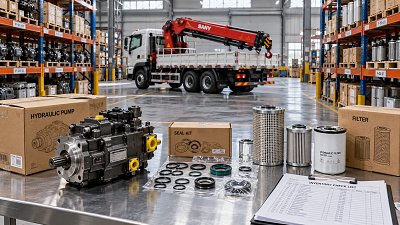
For remote operating regions, identify the consumables and critical service parts that should be ordered with the chassis. The exact list depends on the configuration, but buyers may need to consider filters, belts, hoses, brake wear items, sensors, lighting components, seals, and body-integration parts. A recommended initial parts package should be linked to the actual chassis configuration, not a generic vehicle list.
Ask who can provide technical clarification when a workshop encounters an electrical fault, driveline question, or body interface issue. Response channels, document availability, and escalation responsibility matter more than broad promises of support. Where local service capability is limited, obtain maintenance instructions and diagnostic requirements early enough to plan training, tools, and parts storage.
Make the final comparison on total procurement risk
The lowest unit price may be appropriate when the application is simple, specifications are fixed, and local support is strong. It is less reliable as a decision rule when the chassis will receive specialized equipment, operate under high loads, or enter a market where service parts take time to reach. In those cases, compare suppliers by the cost of uncertainty: unclear body interfaces, unverified axle margins, uncontrolled substitutions, weak documentation, and delayed parts can all create costs after delivery.
A practical approval decision should be supported by a complete technical offer, confirmed configuration, dimensional drawings, evidence of relevant production control, a clear delivery basis, and an after-sales plan. Where body installation or unusual duty cycles are involved, require the engineering assumptions to be reviewed before release. This approach does not eliminate every operational risk, but it makes the choice of truck chassis supplier based on verifiable capability rather than on a quotation alone.
Trending News
- XCMG Unveils Cabless L4 Autonomous Electric Yard Truck Concept
- How order size affects wholesale pricing for cement mixer trucks
- Commercial Vehicle Leaders Hold Firm in Q1–Q3 2026 Automotive Influence Index
- How to choose a refrigerated truck for multi-stop urban deliveries
- Tata Motors Returns to Q2 Profit on Strong Commercial Vehicle Demand
Tag
Recommended News
 Buying GuideHow order size affects wholesale pricing for cement mixer trucksExplore truck cement wholesale pricing by order size. Compare volume discounts, landed costs, and delivery terms to secure better value and avoid costly overbuying.
 Buying GuideHow to choose a refrigerated truck for multi-stop urban deliveriesKeep your truck refrigerated through every urban delivery stop. Learn how to compare cooling capacity, payload and door layouts to protect cargo and choose the right vehicle.
 Buying GuideHow much torque does a truck engine need for heavy-duty hauling?How much truck engine torque do you need? Explore the 1,250–2,050 lb-ft range and learn how load, gearing, and gradients shape the right choice for heavy-duty hauling.
 Buying GuideHow to assess a crane truck distributor's spare parts supportAssess a crane truck distributor's spare parts support with practical checks for stock, delivery, and technical expertise. Discover how to reduce downtime and buy with confidence.
 Buying GuideHow to verify spare parts availability with a crane truck supplierChoosing a crane truck supplier? Learn how to verify spare parts stock, compatibility, delivery times, and support commitments to reduce downtime and buy with confidence.
 Buying GuideHow to verify a truck trailer OEM's claimed payload capacityVerify a truck trailer OEM's payload claim with tare records, load calculations, and structural evidence. Learn key checks to avoid costly mistakes and buy with confidence.
 Buying GuideHow does operating weight affect the price of a new excavator?See how operating weight affects excavator price, transport costs, and productivity. Compare configurations and uncover the best value for your next equipment purchase.
 Buying GuideHow to compare concrete mixer truck suppliers by total landed costCompare truck cement mixer supplier quotes by total landed cost, including freight, duties, and delivery. Uncover hidden charges and choose the best-value truck for your fleet.
 Buying GuideWhen does heavy equipment transport require a lowboy trailer?Does your heavy equipment need a lowboy trailer? Discover how loaded height, weight distribution, loading access, and route limits determine the right choice for safe transport.
 Buying GuideHow to choose an off road truck for steep and unstable job sitesChoose the right off road truck for steep, unstable job sites. Compare traction, braking, stability, clearance, payload, and route-test essentials.
 Buying GuideHow to match crane truck lifting capacity to your jobsite loadsCrane truck capacity planning made clear: calculate gross load, radius, rigging, outriggers, and ground conditions to select safer, job-ready lifting equipment.
 Buying GuideHow to match lowbed trailer deck height to your hauling equipmentLowbed trailer deck height guide: match equipment clearance, ramp geometry, axle loads, tractor fit, and route limits for safer, more efficient hauling.
 Buying GuideWhat to verify before choosing a delivery truck supplier for school transportationDelivery truck supplier for school transportation: verify route fit, payload, safety, compliance, service support, and total cost before choosing a reliable partner.
 Buying GuideWhat an excavator manufacturer catalog should show before you compare modelsExcavator manufacturer catalog guide: verify supplier identity, configurations, hydraulics, compliance, parts support, and delivery readiness before comparing models.
 Buying GuideWhat to check before appointing a bulldozer distributorBulldozer distributor selection guide: evaluate service, parts availability, warranty, pricing, compliance, and lifecycle value to reduce downtime and protect fleet investment.
 Buying GuideWhat to verify before choosing a truck cement mixer supplierTruck cement mixer supplier checklist: verify chassis fit, drum quality, hydraulics, compliance, spare parts, and after-sales support before you buy.
 Buying GuideHow to verify a truck spare parts supplier before placing a bulk orderTruck spare parts supplier verification made practical: learn how to check part specifications, factory control, test records, samples, pricing, and delivery capability before placing a bulk order.
 Buying GuideWhat size truck container is right for a typical freight load?Truck container sizing made simple: compare payload, volume, pallet layouts, route access, and loading needs to choose the most efficient freight solution.
 Buying GuideWhat drives semi trailer price differences between similar models?Semi trailer price differences come down to frame materials, axles, suspension, coating, and configuration. Compare specifications line by line to choose lasting value.
 Buying GuideHow to compare excavator manufacturer price lists before requesting quotesCompare an excavator manufacturer price list with confidence. Learn to normalize configurations, calculate landed costs, assess options and service, and create stronger RFQs.
 Buying GuideHow to choose a mixer truck drum capacity for your concrete pourMixer truck capacity guide: match drum size to pour rate, legal payload, site access, and delivery cycles for efficient, reliable concrete placement.
 Buying GuideHow to size a bulldozer for construction site grading workBulldozer for construction sizing guide: match weight, blade, traction, grade control, and transport needs to improve grading productivity and costs.
 Buying GuideHow to assess a truck cement manufacturer’s build quality before orderingTruck cement manufacturer build quality: assess tank steel, welding, chassis integration, pneumatic systems, factory QC, and inspection evidence before ordering.
 Buying GuideWhen does a truck trailer OEM make sense for private-label fleets?Truck trailer OEM programs help private-label fleets cut lifecycle costs, standardize operations, and improve uptime. Learn when customization delivers real commercial value.
 Buying GuideWhat to verify before choosing a water truck OEM for your fleetWater truck OEM selection guide: verify chassis compatibility, tank quality, pump performance, compliance, and service support to build a safer, more reliable fleet.