Vietnam to Require VCA Checks for Imported Heavy Trucks
From August 1, 2026, Vietnam will apply a new compliance requirement to imported N2 and N3 trucks, including both chassis and complete vehicles, by requiring VCA electrification compatibility testing. The change is relevant not only to truck exporters, but also to certification teams, procurement planners, delivery coordinators, and after-sales support functions, because it adds a new technical review point tied to CAN protocol version, HVIL interface, and OBD-II physical compatibility. For companies shipping into the market, the practical issue is no longer only product entry, but whether technical documentation, certification timing, and delivery arrangements can match the new rule.
What the new requirement confirms
According to the information provided, Vietnam’s Directorate for Standards, Metrology and Quality (STAMEQ) issued Circular No. 22/2026/TT-BKHCN on June 26. The notice requires that, from August 1, 2026, all imported N2 and N3 trucks, including chassis and complete vehicles, must pass VCA electrification compatibility testing.
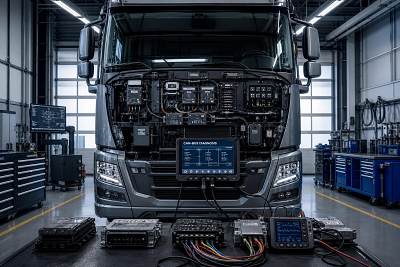
The confirmed testing scope covers the onboard CAN bus protocol version under ISO 11898-2:2018, the high-voltage interlock loop (HVIL) interface, and the physical compatibility of the remote diagnostic port using OBD-II. The provided information also states that Chinese vehicle manufacturers exporting to Vietnam will need to add a VCA type-approval step.
Where the operational pressure is likely to appear
Export programs face an added certification gate
From an industry perspective, exporters of medium- and heavy-duty trucks are the first group likely to feel the effect, because the rule introduces an additional certification-related step before shipment or market entry can proceed smoothly. The main pressure points are likely to sit in model readiness reviews, technical file preparation, and coordination between engineering and export compliance teams.
What deserves closer attention is whether existing export configurations for N2 and N3 products already align with the specified CAN, HVIL, and OBD-II compatibility requirements. Where that alignment is not clearly documented, companies may need to review technical specifications, supporting test materials, and product configuration consistency before delivery commitments are finalized.
Procurement and delivery planning may need earlier locking
For procurement and supply chain functions, the issue is less about policy interpretation and more about execution timing. If a vehicle now needs an added VCA-related approval step, order planning, production scheduling, and shipment booking may all require earlier confirmation. This is especially relevant where chassis imports and complete vehicle imports are managed through different internal workflows.
Analysis shows that companies involved in cross-border delivery will need to pay closer attention to document completeness, technical record availability, and any dependencies between certification progress and customs or handover arrangements. Even without further execution details, the rule creates a practical reason to recheck lead times and handoff points across the transaction chain.
Testing and after-sales functions may be drawn in earlier
Certification support providers, testing-related service teams, and after-sales technical units may also be affected because the required compatibility items are tied to interfaces and diagnostic access points that often matter beyond initial import clearance. In practice, these teams may need to support technical explanations, configuration confirmation, or consistency checks linked to the imported vehicle specification.
For market participants handling service preparation, the rule is also relevant because diagnostic-port compatibility and electrification-related interfaces can affect how products are documented, checked, and supported once they enter the market. The confirmed facts do not establish a final service requirement, but they do indicate that technical compliance and service readiness are becoming more closely connected.
What companies should review now
Check whether technical files match the stated interfaces
Companies exporting affected trucks should first review whether their existing technical files clearly describe the CAN bus protocol version, HVIL interface, and OBD-II physical compatibility referenced in the notice. Where product documents are incomplete or fragmented across suppliers, the compliance burden may increase even before formal testing begins.
Reassess certification sequencing for Vietnam-bound shipments
For businesses shipping to Vietnam, the practical question is whether the newly required VCA type-approval step for Chinese vehicle manufacturers has been built into internal approval flow, contract timing, and shipment planning. If not, teams may need to revisit how orders are scheduled and when a vehicle can be treated as ready for export delivery.
Watch for follow-up wording and execution practice
Observably, the provided information confirms the new requirement, but does not provide fuller execution detail on submission format, review process, or operational interpretation. That means companies should continue tracking later official wording, market implementation practice, and any procurement or tender documents that begin reflecting the new testing expectation.
Align supplier and service-side records in advance
Where vehicle systems, diagnostic interfaces, or electrification-related components involve multiple suppliers, companies may need to make sure supporting records can be traced consistently across the supply chain. This is not yet evidence of a defined enforcement outcome, but it is a reasonable compliance preparation step given that the rule is framed around interface compatibility rather than only a general product description.
Why this looks like more than a formal notice
Analysis shows that this development is best read as a concrete market-entry compliance signal rather than a purely abstract regulatory update. The reason is that the requirement is tied to specific technical compatibility points and a clear effective date of August 1, 2026. That gives the change direct relevance to certification workflow, export readiness, and delivery planning.
At the same time, it is also more appropriate to understand this as a rule change that still requires continued observation in execution. The provided facts confirm the requirement itself, but they do not settle how consistently it will be interpreted in review practice, how supporting documents will be checked, or how quickly procurement-side documents may adapt.
How the market is likely to read the change
In practical terms, this update should be understood as a confirmed compliance change with immediate planning implications for affected truck imports into Vietnam. It does not by itself prove a broader shift in every related business process, but it does set a new technical threshold that exporters and their partners cannot ignore once shipments fall within scope.
A neutral reading is that the rule matters most where companies rely on stable delivery windows, repeatable certification routines, and consistent technical documentation. The near-term task is not to overstate its effect, but to recognize that certification, documentation, and delivery coordination are now more tightly linked for the affected products.
Basis of this article and what still needs verification
This article is generated on the basis of the user-provided news title, event date, and event summary. For developments of this kind, commonly relevant source types may include official notices, releases by regulatory authorities, customs or trade administration information, industry association materials, standard-setting documents, and reporting by authoritative trade media.
No specific official source link was provided in the input, so the exact link still requires follow-up verification. Observably, the areas that still merit continued attention include detailed implementation language, certification interpretation in practice, changes in tender or procurement documents, industry feedback, and how affected companies carry out compliance and delivery arrangements after the rule takes effect.
Trending News
- DeepWay Enters Malaysia With Electric Heavy Trucks Offering Up to 400 km Range
- XCMG Unveils Cabless L4 Autonomous Electric Yard Truck Concept
- How order size affects wholesale pricing for cement mixer trucks
- Commercial Vehicle Leaders Hold Firm in Q1–Q3 2026 Automotive Influence Index
- How to choose a refrigerated truck for multi-stop urban deliveries
Tag
Recommended News
 Truck TechnologyHow to locate a truck exhaust system leak before replacing partsLocate a truck exhaust system leak before replacing parts. Learn how to spot soot trails, confirm leaks safely, and identify root causes to avoid costly guesswork and repeat repairs.
 Truck TechnologyDoes a cab chassis truck for fire department have enough frame capacity?Cab chassis truck for fire department: assess frame strength, axle loads, tank weight, stability and compliance for a safer, reliable fire apparatus build.
 Truck TechnologyWhen does a truck off road setup need locking differentials?Truck off road setups need locking differentials when uneven, low-grip terrain causes wheelspin. Learn how to choose the right axle locks for safer, reliable mobility.
 Truck TechnologyEPA Remote-Diagnostics Rules Take Effect for Diesel EnginesEPA Remote-Diagnostics Rules take effect for diesel engines sold in the U.S. Learn how OTA updates, real-time NOx reporting, and fault-code retention may impact compliance, OEM projects, and imports.
 Truck TechnologyCab Chassis Truck for Military Use: Key Specs That Affect Mission ReadinessCab chassis truck for military use: explore the key specs that drive mission readiness, off-road mobility, integration flexibility, and lifecycle support for smarter fleet decisions.
 Truck TechnologyBULLDOZER with GPS Tracking: What Improves on Remote Job SitesBULLDOZER with GPS tracking improves remote job sites with better visibility, reduced idle time, stronger fleet coordination, and smarter earthmoving decisions across harsh terrain.
 Truck TechnologyTruck Body Materials Compared: Steel, Aluminum, or Composite?Truck body material comparison made practical: explore steel, aluminum, and composite options for payload, durability, corrosion resistance, and lifecycle cost.
 Truck TechnologyBest Cab Chassis Truck Setups for Municipal Engineering TasksCab chassis truck for municipal engineering: compare the best setups for sanitation, tanker, utility, and dump tasks to improve uptime, safety, and long-term fleet value.
 Truck TechnologyTruck Electrical System Faults: Common Causes and Fast ChecksTruck electrical system faults can cause no-starts, dim lights, and costly downtime. Learn common causes, fast checks, and practical steps to diagnose issues quickly.
 Truck TechnologyASEAN-ICV Opens Mutual Access for Connected Heavy VehiclesASEAN-ICV opens mutual access for connected heavy vehicles, cutting duplicate V2X testing across Thailand, Vietnam, Indonesia, and Malaysia. See what it means for exports, compliance, and fleet delivery.
![]() Truck TechnologyTruck Concrete Mixer Basics: Capacity, Drum Type, and Jobsite FitTruck concrete mixer basics explained: compare capacity, drum type, and jobsite fit to improve pour efficiency, cut delays, and choose the right mixer truck with confidence.
Truck TechnologyTruck Concrete Mixer Basics: Capacity, Drum Type, and Jobsite FitTruck concrete mixer basics explained: compare capacity, drum type, and jobsite fit to improve pour efficiency, cut delays, and choose the right mixer truck with confidence. Truck TechnologyBrazil Requires Dual-Mode Tracking on Imported Heavy TrucksBrazil requires dual-mode tracking on imported heavy trucks. Learn how BeiDou+GPS, SISFROTA, and ABNT NBR 16501:2025 rules affect licensing, compliance, and market access.
 Truck TechnologyWater Truck OEM Options: Tank Size, Pump Output, and Road ConditionsWater truck OEM selection starts with the right match of tank size, pump output, and road conditions. Learn how to compare specs, improve uptime, and choose a fleet-ready solution.
 Truck TechnologyChile Requires Remote Diagnostics on Imported Heavy TrucksChile Requires Remote Diagnostics on Imported Heavy Trucks: learn how NCh3871:2026, OTA, ISO 22161, and VHMP rules will impact truck imports, registration, and fleet planning.
 Truck TechnologyHow to Compare Logging Truck OEM Specs for Drivetrain and Load StabilityLogging truck OEM specs compared the right way: learn how to evaluate drivetrain torque, axle ratios, suspension, and load stability for safer forestry hauling.
 Truck TechnologyIndia Drafts BS-VI Phase II Remote OBD Upload RuleIndia Drafts BS-VI Phase II Remote OBD Upload Rule: learn how India’s new real-time OBD upload proposal could impact truck exporters, T-Box upgrades, certification timelines, and market access.
 Truck TechnologyMilitary Truck Payload vs Mobility: What Matters in Harsh TerrainMilitary truck performance in harsh terrain depends on more than payload. Discover how mobility, traction, axle load, and suspension affect real-world mission success.
 Truck TechnologyLogging Truck OEM Options: Key Specs for Harsh Forestry RoutesLogging truck OEM options for forestry routes: compare axle layouts, frame strength, traction, braking, and service support to choose a durable, high-uptime truck.
 Truck TechnologyVietnam to Require VCA Checks for Imported Heavy TrucksVietnam to Require VCA Checks for Imported Heavy Trucks from August 1, 2026. Learn how VCA testing, CAN, HVIL, and OBD-II rules could impact truck exports, certification, and delivery planning.
 Truck TechnologyMexico Enforces CAN FD Rule for Imported TrucksMexico Enforces CAN FD Rule for Imported Trucks: learn how NOM-042-SEMARNAT-2026 impacts OBD-II+, ANCE verification, ECU strategy, and Mexico-bound truck compliance.
 Truck TechnologyBrazil ANP Rule Requires H₂ Leak Sensors on Imported Gas TractorsBrazil ANP rule requires H₂ leak sensors on imported gas tractors from Oct 1, 2026. Learn the compliance impact, IEC 60079-29-1 standard, and what exporters must do now.
 Truck TechnologyTruck Brake System Basics: Components, Failure Risks, and Safety ChecksTruck brake system basics explained: key components, common failure risks, and practical safety checks to improve fleet uptime, compliance, and road safety.
 Truck TechnologySupply Chain Expo Opens With Focus on Heavy Truck Core SystemsHeavy truck core systems take center stage at the Supply Chain Expo, spotlighting battery systems, electric drive axles, and by-wire technologies shaping export opportunities.
 Truck TechnologyTruck Control Unit Failures: Common Symptoms and Fix StrategiesTruck control unit failures often start with small warning signs. Learn key symptoms, root causes, and smart repair strategies to cut downtime and avoid costly misdiagnosis.
 Truck TechnologyEU V2X Rule Sets 2027 Deadline for New Heavy Truck ApprovalEU V2X Rule Sets 2027 Deadline for New Heavy Truck Approval: learn how ETSI EN 302 637-2 and UN R155 reshape EU truck compliance, certification, sourcing, and export planning.