Military Truck Payload vs Mobility: What Matters in Harsh Terrain
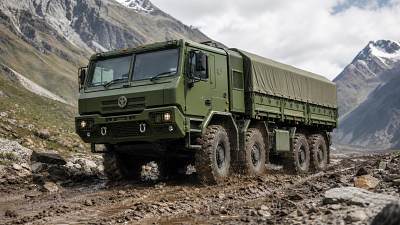
In harsh terrain, the right military truck is rarely the one with the highest payload on paper. What matters is how much load it can carry while still climbing, crossing soft ground, keeping traction, and protecting the chassis from repeated stress. In land transport operations, that balance has become a central evaluation point because mobility failure can delay supply, recovery, engineering support, and route continuity far more than a modest payload reduction.
This is also why the payload-versus-mobility debate matters across the wider heavy vehicle market. Platforms used for defense logistics, remote construction, mining access, and infrastructure support often face similar terrain pressures. On a global B2B sourcing platform that connects truck manufacturers, component suppliers, and buyers, comparing specifications is easy. The harder task is interpreting which specifications actually predict field performance.
Why payload alone can mislead
Payload is an essential number, but it is only one part of the operating equation. A military truck may advertise strong carrying capacity, yet become inefficient if the load pushes axle weight too high for sand, mud, snow, broken rock, or steep tracks.
In practice, excessive loading changes how the vehicle interacts with the ground. Tire sinkage increases. Braking distances grow. Steering authority drops. Recovery becomes harder. Fuel use rises. Mechanical wear also accelerates in suspension joints, driveline components, and frame connection points.
A military truck built for harsh terrain must therefore be judged by usable payload, not just nominal payload. Usable payload means the load the vehicle can move reliably through the expected route profile, climate, and surface condition.
The mobility factors that change the decision
Mobility is a combined outcome, not a single feature. Several technical variables determine whether a military truck remains effective after leaving paved roads.
Axle load distribution
Total weight matters, but distribution matters more. A poorly balanced military truck may overload one axle even when gross vehicle weight stays within limits. That raises ground pressure and reduces traction on weak surfaces.
Balanced axle loading improves contact stability and reduces the risk of digging into soft terrain. It also helps protect tires and hubs during long off-road cycles.
Suspension design
Suspension affects wheel articulation, shock absorption, and load control. In harsh terrain, a military truck with limited articulation may lift wheels too easily, losing traction when crossing ruts, rocks, or uneven slopes.
Heavy-duty leaf systems remain common for durability, but advanced parabolic, hydro-pneumatic, or reinforced independent layouts may improve ride control and wheel contact in specific missions. The trade-off is usually cost, maintenance complexity, and repair availability.
Ground clearance and approach geometry
Ground clearance is more than a catalog figure. Breakover angle, approach angle, departure angle, and underbody protection all influence whether a military truck can pass obstacles without chassis contact or driveline damage.
A vehicle with strong payload but weak underbody geometry may perform well on graded tracks and fail on deeply eroded routes.
Traction systems
Differential locks, transfer case ratios, tire type, tire inflation control, and torque delivery characteristics all shape off-road mobility. In many cases, a military truck with moderate payload and strong traction systems outperforms a heavier truck in mud or loose sand.
Central tire inflation systems are especially valuable where surface conditions shift within one route. They help adjust the tire footprint quickly without stopping for manual pressure changes.
What the industry is watching now
Current attention is moving away from isolated specification sheets and toward mission-based comparison. Buyers increasingly examine how a military truck performs under realistic load, terrain, climate, and maintenance conditions.
This trend reflects a broader change in the land transport equipment sector. Global supply chains, infrastructure work in remote regions, and cross-border equipment sourcing all require better data. A platform that brings together complete trucks, chassis systems, spare parts, and supplier information supports that deeper evaluation.
Another important shift is lifecycle thinking. A military truck that carries more at first purchase may still be the weaker option if it causes higher tire consumption, slower route speeds, more recovery events, or lower availability in rough terrain.
Typical operating scenarios where the balance changes
Not every mission profile demands the same balance. The best military truck for rocky mountain routes may differ from the best choice for desert convoy support or flood-damaged access roads.
Soft ground logistics
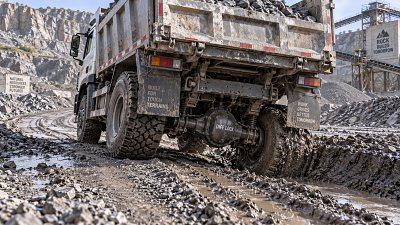
In sand, mud, peat, or thawed soil, low ground pressure and flexible traction management become more valuable than maximum load figures. A lighter military truck with wide tires may deliver better route continuity.
Mountain and broken-track transport
Steep grades and uneven rock demand strong torque control, reliable braking, and generous approach geometry. Here, center of gravity and load security become critical because rollover risk grows with height and poor balance.
Long-range support in mixed terrain
For routes that combine pavement, gravel, washboard tracks, and short off-road sections, a military truck needs compromise rather than specialization. Driveline durability, service intervals, and fuel range may decide the better platform.
How to assess a military truck in practical terms
A useful evaluation starts by translating mission needs into measurable thresholds. That means defining route surface, average grade, obstacle height, daily load cycle, climate, and recovery support before comparing models.
- Check payload at off-road operating condition, not only rated highway condition.
- Review axle-by-axle loading with expected cargo distribution.
- Confirm suspension travel, damping strategy, and frame torsional tolerance.
- Compare tire options, inflation systems, and driveline lock configurations.
- Look at turning radius and wheelbase against route width and breakover needs.
- Examine spare parts access and field repair simplicity.
It is also useful to request evidence beyond brochures. Test data, operating videos, maintenance records, parts lists, and supplier response capability often reveal more than headline specifications.
This is where a global heavy truck industry platform becomes practical. It allows side-by-side review of chassis categories, complete trucks, component ecosystems, and supplier backgrounds. That wider context helps narrow down which military truck configurations deserve technical validation.
The business value of getting the balance right
Choosing the right payload-mobility balance improves more than route performance. It affects readiness, operating cost, fleet commonality, parts planning, and cross-border sourcing decisions.
A military truck that matches terrain conditions can reduce immobilization events, lower structural fatigue, and maintain predictable delivery timing. In support operations, that consistency is often more valuable than chasing the highest nominal carrying number.
For organizations comparing suppliers internationally, the best decision usually comes from combining product data with market insight. Understanding brand capability, component sourcing depth, and after-sales support can change how a vehicle’s specifications should be interpreted.
A better next step than comparing payload figures
The most reliable way to compare a military truck is to build a terrain-based evaluation matrix. Start with route demands, then map payload, axle loads, suspension behavior, traction equipment, and service support against that profile.
That approach makes supplier comparison more meaningful and reduces the chance of selecting an overbuilt or under-mobile platform. In harsh terrain, mission success depends less on the biggest number in the brochure and more on whether the truck can keep moving when the ground stops cooperating.
Trending News
- What drives logging truck cost beyond the base purchase price?
- How to match lowbed trailer deck height to your hauling equipment
- What documents are needed to export a low bed trailer to Southeast Asia?
- What to verify before choosing a delivery truck supplier for school transportation
- What an excavator manufacturer catalog should show before you compare models
Tag
Recommended News
 Truck TechnologyDoes a cab chassis truck for fire department have enough frame capacity?Cab chassis truck for fire department: assess frame strength, axle loads, tank weight, stability and compliance for a safer, reliable fire apparatus build.
 Truck TechnologyWhen does a truck off road setup need locking differentials?Truck off road setups need locking differentials when uneven, low-grip terrain causes wheelspin. Learn how to choose the right axle locks for safer, reliable mobility.
 Truck TechnologyEPA Remote-Diagnostics Rules Take Effect for Diesel EnginesEPA Remote-Diagnostics Rules take effect for diesel engines sold in the U.S. Learn how OTA updates, real-time NOx reporting, and fault-code retention may impact compliance, OEM projects, and imports.
 Truck TechnologyCab Chassis Truck for Military Use: Key Specs That Affect Mission ReadinessCab chassis truck for military use: explore the key specs that drive mission readiness, off-road mobility, integration flexibility, and lifecycle support for smarter fleet decisions.
 Truck TechnologyBULLDOZER with GPS Tracking: What Improves on Remote Job SitesBULLDOZER with GPS tracking improves remote job sites with better visibility, reduced idle time, stronger fleet coordination, and smarter earthmoving decisions across harsh terrain.
 Truck TechnologyTruck Body Materials Compared: Steel, Aluminum, or Composite?Truck body material comparison made practical: explore steel, aluminum, and composite options for payload, durability, corrosion resistance, and lifecycle cost.
 Truck TechnologyBest Cab Chassis Truck Setups for Municipal Engineering TasksCab chassis truck for municipal engineering: compare the best setups for sanitation, tanker, utility, and dump tasks to improve uptime, safety, and long-term fleet value.
 Truck TechnologyTruck Electrical System Faults: Common Causes and Fast ChecksTruck electrical system faults can cause no-starts, dim lights, and costly downtime. Learn common causes, fast checks, and practical steps to diagnose issues quickly.
 Truck TechnologyASEAN-ICV Opens Mutual Access for Connected Heavy VehiclesASEAN-ICV opens mutual access for connected heavy vehicles, cutting duplicate V2X testing across Thailand, Vietnam, Indonesia, and Malaysia. See what it means for exports, compliance, and fleet delivery.
![]() Truck TechnologyTruck Concrete Mixer Basics: Capacity, Drum Type, and Jobsite FitTruck concrete mixer basics explained: compare capacity, drum type, and jobsite fit to improve pour efficiency, cut delays, and choose the right mixer truck with confidence.
Truck TechnologyTruck Concrete Mixer Basics: Capacity, Drum Type, and Jobsite FitTruck concrete mixer basics explained: compare capacity, drum type, and jobsite fit to improve pour efficiency, cut delays, and choose the right mixer truck with confidence. Truck TechnologyBrazil Requires Dual-Mode Tracking on Imported Heavy TrucksBrazil requires dual-mode tracking on imported heavy trucks. Learn how BeiDou+GPS, SISFROTA, and ABNT NBR 16501:2025 rules affect licensing, compliance, and market access.
 Truck TechnologyWater Truck OEM Options: Tank Size, Pump Output, and Road ConditionsWater truck OEM selection starts with the right match of tank size, pump output, and road conditions. Learn how to compare specs, improve uptime, and choose a fleet-ready solution.
 Truck TechnologyChile Requires Remote Diagnostics on Imported Heavy TrucksChile Requires Remote Diagnostics on Imported Heavy Trucks: learn how NCh3871:2026, OTA, ISO 22161, and VHMP rules will impact truck imports, registration, and fleet planning.
 Truck TechnologyHow to Compare Logging Truck OEM Specs for Drivetrain and Load StabilityLogging truck OEM specs compared the right way: learn how to evaluate drivetrain torque, axle ratios, suspension, and load stability for safer forestry hauling.
 Truck TechnologyIndia Drafts BS-VI Phase II Remote OBD Upload RuleIndia Drafts BS-VI Phase II Remote OBD Upload Rule: learn how India’s new real-time OBD upload proposal could impact truck exporters, T-Box upgrades, certification timelines, and market access.
 Truck TechnologyMilitary Truck Payload vs Mobility: What Matters in Harsh TerrainMilitary truck performance in harsh terrain depends on more than payload. Discover how mobility, traction, axle load, and suspension affect real-world mission success.
 Truck TechnologyLogging Truck OEM Options: Key Specs for Harsh Forestry RoutesLogging truck OEM options for forestry routes: compare axle layouts, frame strength, traction, braking, and service support to choose a durable, high-uptime truck.
 Truck TechnologyVietnam to Require VCA Checks for Imported Heavy TrucksVietnam to Require VCA Checks for Imported Heavy Trucks from August 1, 2026. Learn how VCA testing, CAN, HVIL, and OBD-II rules could impact truck exports, certification, and delivery planning.
 Truck TechnologyMexico Enforces CAN FD Rule for Imported TrucksMexico Enforces CAN FD Rule for Imported Trucks: learn how NOM-042-SEMARNAT-2026 impacts OBD-II+, ANCE verification, ECU strategy, and Mexico-bound truck compliance.
 Truck TechnologyBrazil ANP Rule Requires H₂ Leak Sensors on Imported Gas TractorsBrazil ANP rule requires H₂ leak sensors on imported gas tractors from Oct 1, 2026. Learn the compliance impact, IEC 60079-29-1 standard, and what exporters must do now.
 Truck TechnologyTruck Brake System Basics: Components, Failure Risks, and Safety ChecksTruck brake system basics explained: key components, common failure risks, and practical safety checks to improve fleet uptime, compliance, and road safety.
 Truck TechnologySupply Chain Expo Opens With Focus on Heavy Truck Core SystemsHeavy truck core systems take center stage at the Supply Chain Expo, spotlighting battery systems, electric drive axles, and by-wire technologies shaping export opportunities.
 Truck TechnologyTruck Control Unit Failures: Common Symptoms and Fix StrategiesTruck control unit failures often start with small warning signs. Learn key symptoms, root causes, and smart repair strategies to cut downtime and avoid costly misdiagnosis.
 Truck TechnologyEU V2X Rule Sets 2027 Deadline for New Heavy Truck ApprovalEU V2X Rule Sets 2027 Deadline for New Heavy Truck Approval: learn how ETSI EN 302 637-2 and UN R155 reshape EU truck compliance, certification, sourcing, and export planning.
 Truck TechnologyEU Draft Targets V2X as Standard for New Heavy TrucksV2X is moving toward a standard for new EU heavy trucks. Learn how the draft rule may affect certification, ETSI EN 302 637-2 compliance, open API access, and export planning.