IAA 2026 China Group Deadline Extended to July 15
On July 15, 2026, the extension of the registration deadline for the China national pavilion at IAA Transportation 2026 became a closely watched development for the new energy commercial vehicle sector. The deadline was moved from July 5 to July 15 after demand from Chinese exhibitors increased, while dedicated booth availability for new energy heavy-duty trucks fell to just 11 out of 98. For vehicle makers, battery system suppliers, certification teams, and export-facing business units, this matters because access to the remaining space is now tied more directly to compliance readiness rather than simple application timing.
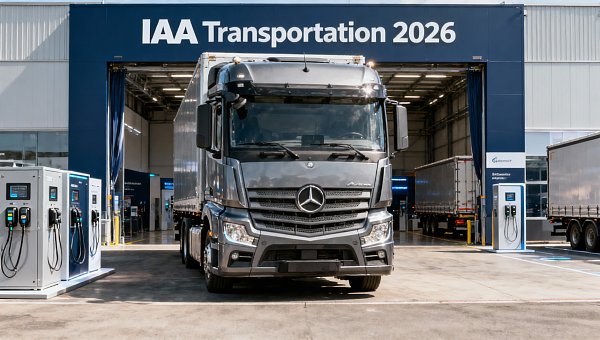
What Has Been Confirmed So Far
According to the information provided, Deutsche Messe announced on June 27 that the registration deadline for the China national pavilion at IAA Transportation 2026 was extended from July 5 to July 15. The stated reason was a surge in participation demand from Chinese new energy commercial vehicle companies.
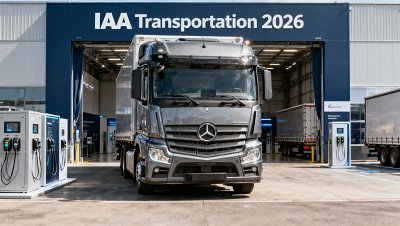
IAA Transportation 2026 is scheduled to take place from September 16 to 21. The information also states that only 11 dedicated booths for Chinese new energy heavy-duty trucks remain out of a total of 98.
The remaining booth allocation is being prioritized for companies that have already passed UN ECE R100.03 battery certification and ISO 26262 ASIL-B functional safety assessment.
Why the Remaining Booths Matter Across the Value Chain
For vehicle manufacturers, booth access is now linked to compliance readiness
From an industry perspective, the immediate impact on truck OEMs is not limited to exhibition planning. The remaining capacity is small, and the stated priority rules mean that product presentation opportunities are now more closely connected to whether a company can demonstrate battery and functional safety preparedness. What deserves closer attention is that exhibition participation, in this case, appears to favor companies whose export-facing technical documentation and assessment work are already in place.
For battery and system suppliers, supporting documents become part of commercial timing
Suppliers involved in battery packs, battery management systems, and related safety work may be affected because their downstream customers need recognized certification and assessment status to improve the chance of securing the remaining space. The business impact is likely to show up in documentation coordination, technical validation support, and timing alignment with exhibitor applications. Companies in these roles should watch whether customers ask for faster evidence preparation tied to booth allocation decisions.
For export and market development teams, the issue is no longer only marketing
For teams responsible for overseas market outreach, the development suggests that trade show participation is being filtered through technical access conditions. Analysis shows that application timing, certification status, and internal coordination between sales, engineering, and compliance functions may now matter at the same time. That changes the practical workload for firms preparing for international exposure in the new energy heavy-duty truck segment.
For service providers, coordination pressure may rise in a short window
Certification advisers, testing partners, and exhibition support providers may also see short-term pressure because the extension creates a narrow additional window rather than a long preparation cycle. Observably, the key business effect is likely to be concentrated in eligibility checks, document completion, and communication with participating companies before the revised deadline closes.
What Companies Should Watch in the Next Step
Track any further clarification on allocation rules
Companies still planning to apply should pay close attention to whether there are any further official clarifications on how priority allocation will be interpreted in practice. The current confirmed point is that priority goes to companies that have passed UN ECE R100.03 and ISO 26262 ASIL-B assessment. The practical question for applicants is how that requirement is reflected in submission review and final booth assignment.
Check whether compliance materials are ready for immediate use
What deserves closer attention is not only whether a company has completed the relevant certification or assessment, but also whether the supporting materials are organized and ready for external review. In a compressed deadline window, incomplete files, inconsistent descriptions, or slow internal sign-off can become operational obstacles even when the underlying work has already been done.
Align exhibition planning with export communication
Companies should also review whether their exhibition strategy matches the compliance position they can substantiate. Analysis shows that the issue here is not abstract brand visibility; it is the ability to present products in a context where technical credibility may affect access to limited resources. Sales, product, and regulatory teams should therefore work from the same version of the application and supporting documents.
Prepare for a limited-space outcome
Because only 11 of 98 dedicated booths remain, firms should treat space availability as a live operational variable. From a business planning perspective, this means preparing communication plans, timeline alternatives, and internal decision paths in case booth allocation cannot be secured under the remaining conditions.
How This Development Should Be Read
This section is analysis rather than confirmed fact. It is more appropriate to understand this development as a short-term market signal with longer-term implications, not as a complete verdict on the broader competitive landscape. The extension itself indicates strong participation interest from Chinese new energy commercial vehicle companies, while the limited remaining booth count points to tight competition for visibility within the heavy-duty truck category.
At the same time, the priority given to UN ECE R100.03 and ISO 26262 ASIL-B status suggests that technical and safety compliance is becoming more central to who can move forward in international-facing industry settings. Observably, the current information does not by itself prove a broader market outcome, but it does indicate that compliance preparedness is closely tied to commercial opportunity in this specific exhibition context.
What This Means for the Industry Right Now
At this stage, the news is best understood as a practical and immediate signal for companies active in new energy heavy-duty trucks and related supply chains. The extension to July 15 offers a short additional window, but the fact that fewer than 12% of dedicated booths remain means timing alone is unlikely to be the deciding factor. A more neutral reading is that participation conditions are tightening around demonstrable technical readiness.
For the industry, the significance lies less in the deadline change itself and more in what the remaining-space rule highlights: exhibition access, export preparation, and compliance status are interacting more directly. This remains a development that merits continued observation rather than a basis for broad conclusions.
Basis of This Article and Ongoing Verification
This article is based on the user-provided news title, event date, and event summary. The confirmed facts used here come from the provided description of the deadline extension, the event schedule, the remaining booth count, and the stated priority criteria linked to UN ECE R100.03 and ISO 26262 ASIL-B.
For this type of industry update, relevant source categories would typically include official organizer notices, company statements, industry association updates, authoritative media coverage, and standard-related documentation. No specific official source link was provided in the input, so the precise original link remains to be verified on an ongoing basis.
Further follow-up should focus on whether any additional official wording appears regarding booth allocation procedures, application review conditions, or any changes affecting exhibitor eligibility before IAA Transportation 2026 opens on September 16.
Trending News
- DeepWay Enters Malaysia With Electric Heavy Trucks Offering Up to 400 km Range
- XCMG Unveils Cabless L4 Autonomous Electric Yard Truck Concept
- How order size affects wholesale pricing for cement mixer trucks
- Commercial Vehicle Leaders Hold Firm in Q1–Q3 2026 Automotive Influence Index
- How to choose a refrigerated truck for multi-stop urban deliveries
Tag
Recommended News
 Truck Events & ExhibitionsEU to Require Smart Braking and Carbon LabelsEU will require smart braking and carbon labels for heavy trucks and semi-trailers from 2027 Q3. See what exporters must prepare now for type approval, AEBS, and compliance.
 Truck Events & ExhibitionsMENA Pilot Opens Smart Truck Approval PathMENA Pilot Opens Smart Truck Approval Path: explore how the new GCC+ MENA framework streamlines smart truck certification for V2X, ADAS L2+, and OTA access across Saudi Arabia, the UAE, and Egypt.
 Truck Events & ExhibitionsIAA Transportation 2026 Adds China New Energy Truck PavilionIAA Transportation 2026 adds a China New Energy Truck Pavilion, spotlighting certified EV truck makers and suppliers. Discover who qualifies, why EU compliance matters, and what buyers should watch.
 Truck Events & ExhibitionsIAA 2026 Preview: China EV Truck Entries Jump 42%IAA 2026 Preview reveals China EV truck entries jumping 42%, highlighting battery-swapping, hydrogen, and multi-energy chassis trends shaping compliance, sourcing, and market access.
 Truck Events & ExhibitionsIAA 2026: China Truck Tech Draws EU, US Fleet InterestIAA 2026 highlights rising EU and US fleet interest in China truck tech, from L3 intelligent heavy-duty trucks to low-carbon powertrains. See what this means for fleet procurement.
 Truck Events & ExhibitionsIAA 2026 Registration Signals New Compliance FocusIAA 2026 Registration highlights a new compliance focus in heavy truck markets, from certified supplier visibility to zero-emission and autonomous systems. Explore what it means for exporters and buyers.
 Truck Events & ExhibitionsIAA Transportation 2026 Extends Deadline to July 10IAA Transportation 2026 extends its deadline to July 10, giving exhibitors extra time while adding a new tech matchmaking zone for new energy trucks, buyers, and suppliers.
 Truck Events & ExhibitionsIAA 2026 China Group Deadline Extended to July 15IAA 2026 China Group Deadline Extended to July 15: discover why only 11 booths remain and how UN ECE R100.03 and ISO 26262 readiness could shape exhibitor access.
 Truck Events & ExhibitionsIAA 2026 Opens Registration as China NEV Commercial Vehicle Zone Grows 50%IAA 2026 opens registration as the China NEV commercial vehicle zone expands 50%. Explore buyer matchmaking, EV truck trends, and what global buyers and exhibitors should prepare now.
 Truck Events & ExhibitionsShanghai Show Highlights Export-Ready EV Truck SystemsShanghai Show Highlights Export-Ready EV Truck Systems as buyers shift toward intelligent e-axles, hydrogen chassis, and V2X diagnostics. See what this means for export compliance, sourcing, and delivery planning.
 Truck Events & ExhibitionsIAA 2026 Extends Registration, Adds China NEV ZoneIAA 2026 extends registration to June 30 and launches a China NEV Zone, spotlighting electric trucks, hydrogen vehicles, smart chassis, and V2X fleet tech for European buyers.
 Truck Events & ExhibitionsIAA Transport Extends China Signup, Adds NEV ZoneIAA Transport extends China signup to June 30 and launches a new NEV Zone. Explore how China NEV commercial vehicle suppliers can connect with European fleets, leasing firms, and Tier 1 partners.
 Truck Events & ExhibitionsALTS 2026 Opens in Shanghai With Multimodal FocusALTS 2026 opens in Shanghai with a multimodal focus, spotlighting TIR-compliant vehicles, cold chain trailers, and hazardous goods transport equipment. Explore the latest cross-border logistics trends.
 Truck Events & ExhibitionsBeijing Supply Chain Expo to Spotlight Smart Auto ChainBeijing Supply Chain Expo puts the smart auto chain in focus, highlighting NEV heavy-truck systems, automotive chips, domain controllers, and cross-border logistics opportunities.
 Truck Events & ExhibitionsThailand Industry Expo Highlights China’s E-TrucksThailand Industry Expo highlights China’s e-trucks with battery-swapping, hydrogen models, and smart dispatch systems—see why Southeast Asia buyers are placing trial orders.
 Truck Events & ExhibitionsChongqing Auto Show Puts L3 Truck Controllers in Export FocusChongqing Auto Show spotlights L3 truck controllers for export, with strong interest in domain controllers, drive-by-wire modules, and VLA kits across Europe and the Middle East.
 Truck Events & ExhibitionsLangfang Expo Signals New Export Matching for Smart TransportLangfang Expo Signals New Export Matching for Smart Transport, highlighting export-ready road transport equipment, B2B buyer matching, and compliance-focused opportunities for global procurement teams.
 Truck Events & ExhibitionsChongqing Auto AI Expo Puts Autonomous Trucks at CenterAutonomous trucks take the spotlight at the Chongqing Auto AI Expo as export-focused smart heavy truck solutions attract buyers from 32 countries. Explore market signals, cross-border deployment trends, and global logistics opportunities.
 Truck Events & ExhibitionsChongqing FATE 2026 Highlights AI Truck ComplianceChongqing FATE 2026 highlights AI truck compliance, showing how autonomous heavy truck makers, exporters, and buyers can prepare for EU, Middle East, and Latin America market entry.
 Truck Events & ExhibitionsChongqing Auto AI Expo Puts Focus on Autonomous TrucksAutonomous trucks take center stage at the Chongqing Auto AI Expo. Explore L3 commercialization, overseas distribution, compliance risks, and what it means for buyers and suppliers.
 Truck Events & ExhibitionsChongqing Auto AI Expo Opens With Focus on Autonomous TrucksChongqing Auto AI Expo spotlights autonomous trucks with L3 long-haul logistics solutions, vehicle-road-cloud systems, and compliance insights—see what it means for buyers and operators.
 Truck Events & ExhibitionsWIFFA Expo 2026 Booth Deadline Signals Compliance FocusWIFFA Expo 2026 booth deadline highlights a growing compliance focus in new-energy truck markets, with EU and Southeast Asia matchmaking shaping sourcing, certification, and trade-readiness decisions.
 Truck Events & ExhibitionsSmart New-Energy Chassis Draw Buying Interest at Turkey ExpoSmart new-energy chassis drew strong buying interest at Turkey Expo, with 210+ intention orders highlighting demand for V2X, steer-by-wire, and battery-swap heavy truck platforms.
 Truck Events & ExhibitionsChinese Firms Showcase Smart Equipment at Türkiye FairChinese firms showcase smart equipment at Türkiye Fair, highlighting modular electric truck chassis, CE certification progress, and localized service—key signals shaping cross-border procurement.
 Truck Events & ExhibitionsWBX Shanghai Ends With Focus on Wind Cargo VehiclesWBX Shanghai highlights rising demand for wind cargo vehicles, modular mining chassis, and special semi-trailers. See what this means for 2026–2027 sourcing, logistics planning, and export opportunities.