MENA Pilot Opens Smart Truck Approval Path
On July 15, 2026, the transport ministries of Saudi Arabia, the United Arab Emirates, and Egypt jointly launched the GCC+ MENA mutual recognition program for smart commercial vehicles, creating a type-approval pathway covering V2X communication, ADAS L2+ functions, and remote OTA upgrade systems. The move is worth close attention from heavy-duty vehicle OEMs, component and software suppliers, certification teams, and cross-border commercial vehicle operators because it links intelligent-vehicle compliance with market access across three countries under a "test once, access all" framework.
What Has Been Officially Announced
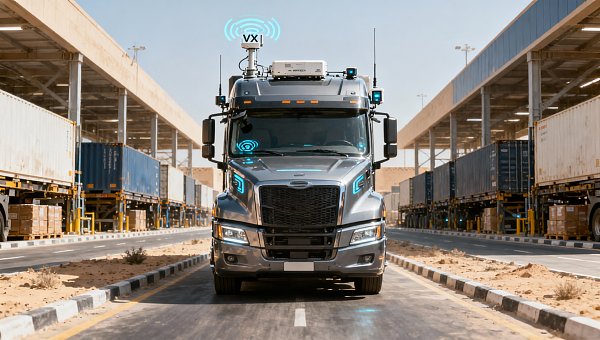
The confirmed facts are limited but commercially meaningful. According to the information provided, Saudi Arabia, the UAE, and Egypt announced the launch of the GCC+ MENA smart commercial vehicle mutual recognition program on July 15, 2026. The program opens type certification channels for three technical areas: V2X communication, ADAS L2+ capabilities, and remote OTA upgrade systems. Leading Chinese heavy-truck manufacturers have been invited to participate in the first round of technical coordination. If certification is obtained, approved products can enter all three markets through a single testing process recognized across the participating countries.
Where the Immediate Impact May Be Felt
Market-entry planning for heavy-truck OEMs
From an industry perspective, vehicle manufacturers are the most direct stakeholders because the announcement connects intelligent-function compliance with access to three MENA markets at the same time. The potential impact is concentrated in homologation planning, model configuration decisions, and launch sequencing for export programs that include connected and software-updatable heavy vehicles.
Pressure on intelligent-system suppliers
Suppliers involved in V2X, ADAS L2+, and OTA-related systems may also be affected because these functions are explicitly named in the certification pathway. The practical implications are likely to center on technical documentation, validation support, interface consistency, and coordination with OEM certification teams. What deserves closer attention is whether customer requests begin shifting from product supply alone to certification-ready support packages.
Certification and compliance service workflows
Service providers working on testing, approval preparation, and regulatory documentation may see new demand if manufacturers move quickly to join the first technical coordination round. The relevant business links are likely to include test preparation, evidence collection, technical interpretation, and communication with local authorities or designated assessment bodies once further rules are issued.
Regional distributors and fleet-side buyers
Channel partners and commercial vehicle buyers may be affected indirectly. Analysis shows that when intelligent functions become part of an approval pathway rather than only a product feature, procurement discussions can shift toward certification status, software maintenance capability, and delivery timing across multiple markets. For these stakeholders, the key variable is not only vehicle specification but whether approved configurations are aligned with actual import and deployment schedules.
What Companies Should Track Now
Watch for the next layer of official rules
The announcement establishes the framework, but businesses should distinguish between the policy signal and the operational rulebook. What deserves closer attention is any follow-up official wording on test procedures, documentation requirements, certification scope, and whether function-level approval conditions differ among V2X, ADAS L2+, and OTA systems.
Align product definitions with certifiable functions
For OEMs and core suppliers, the immediate task is not broad strategy language but clear mapping between export models and the functions named in the program. Companies will need to confirm which product variants include V2X, which ADAS L2+ functions are intended for submission, and how remote OTA capability is described and evidenced in certification materials.
Prepare documentation and technical coordination early
Because leading Chinese heavy-truck manufacturers have already been invited into the first round of technical coordination, preparation speed may matter. In practical terms, this points to readiness in technical files, system descriptions, approval records, and cross-team communication between engineering, regulatory, and overseas business units. For suppliers, it also raises the importance of supporting documents that can be used in OEM submissions.
Manage customer communication around timing and scope
It is also important to avoid treating the announcement itself as proof of immediate commercial availability across all models. Analysis shows that companies should communicate carefully with distributors and customers about what has been announced, what still depends on certification completion, and which products are actually being prepared for the three-country pathway.
Why This Looks Like a Policy Signal With Commercial Weight
Observably, this development should be read as more than a routine market-access notice, because it specifically brings connected and software-defined functions in heavy commercial vehicles into a cross-border recognition framework. At the same time, it is more appropriate to understand this as an opening stage rather than a completed market shift. The announcement confirms a route to certification and confirms Chinese OEM participation in early technical engagement, but it does not by itself establish how quickly approvals will be completed, how broad the first eligible product set will be, or how implementation details will evolve after launch.
How the Industry Should Read the Development
In current terms, the announcement is best understood as an actionable regulatory signal with near-term implications for compliance work and medium-term implications for regional market strategy. It does not yet prove a fully mature three-country access system in practice, but it does indicate that intelligent heavy-vehicle functions are moving closer to being assessed within a shared approval logic. For companies active in MENA-bound commercial vehicle business, the sensible reading is neither to overstate immediate results nor to treat the move as symbolic only.
Basis of This Article and What Still Needs Verification
This article is based on the user-provided news title, event date, and event summary. For developments of this kind, source types typically worth monitoring include official ministry announcements, company statements, industry association updates, authoritative media reporting, and standard or certification-related documents. No specific official source link was provided in the input, so the exact official text and any subsequent implementation documents still require ongoing verification. The main follow-up points are whether more detailed certification rules are released, how the first round of technical coordination progresses, and when the "test once, access all" mechanism begins to operate in actual approvals.
Trending News
- How order size affects wholesale pricing for cement mixer trucks
- Commercial Vehicle Leaders Hold Firm in Q1–Q3 2026 Automotive Influence Index
- How to choose a refrigerated truck for multi-stop urban deliveries
- Tata Motors Returns to Q2 Profit on Strong Commercial Vehicle Demand
- How to load an excavator onto a lowbed trailer without tipping
Tag
Recommended News
 Truck Events & ExhibitionsEU to Require Smart Braking and Carbon LabelsEU will require smart braking and carbon labels for heavy trucks and semi-trailers from 2027 Q3. See what exporters must prepare now for type approval, AEBS, and compliance.
 Truck Events & ExhibitionsMENA Pilot Opens Smart Truck Approval PathMENA Pilot Opens Smart Truck Approval Path: explore how the new GCC+ MENA framework streamlines smart truck certification for V2X, ADAS L2+, and OTA access across Saudi Arabia, the UAE, and Egypt.
 Truck Events & ExhibitionsIAA Transportation 2026 Adds China New Energy Truck PavilionIAA Transportation 2026 adds a China New Energy Truck Pavilion, spotlighting certified EV truck makers and suppliers. Discover who qualifies, why EU compliance matters, and what buyers should watch.
 Truck Events & ExhibitionsIAA 2026 Preview: China EV Truck Entries Jump 42%IAA 2026 Preview reveals China EV truck entries jumping 42%, highlighting battery-swapping, hydrogen, and multi-energy chassis trends shaping compliance, sourcing, and market access.
 Truck Events & ExhibitionsIAA 2026: China Truck Tech Draws EU, US Fleet InterestIAA 2026 highlights rising EU and US fleet interest in China truck tech, from L3 intelligent heavy-duty trucks to low-carbon powertrains. See what this means for fleet procurement.
 Truck Events & ExhibitionsIAA 2026 Registration Signals New Compliance FocusIAA 2026 Registration highlights a new compliance focus in heavy truck markets, from certified supplier visibility to zero-emission and autonomous systems. Explore what it means for exporters and buyers.
 Truck Events & ExhibitionsIAA Transportation 2026 Extends Deadline to July 10IAA Transportation 2026 extends its deadline to July 10, giving exhibitors extra time while adding a new tech matchmaking zone for new energy trucks, buyers, and suppliers.
 Truck Events & ExhibitionsIAA 2026 China Group Deadline Extended to July 15IAA 2026 China Group Deadline Extended to July 15: discover why only 11 booths remain and how UN ECE R100.03 and ISO 26262 readiness could shape exhibitor access.
 Truck Events & ExhibitionsIAA 2026 Opens Registration as China NEV Commercial Vehicle Zone Grows 50%IAA 2026 opens registration as the China NEV commercial vehicle zone expands 50%. Explore buyer matchmaking, EV truck trends, and what global buyers and exhibitors should prepare now.
 Truck Events & ExhibitionsShanghai Show Highlights Export-Ready EV Truck SystemsShanghai Show Highlights Export-Ready EV Truck Systems as buyers shift toward intelligent e-axles, hydrogen chassis, and V2X diagnostics. See what this means for export compliance, sourcing, and delivery planning.
 Truck Events & ExhibitionsIAA 2026 Extends Registration, Adds China NEV ZoneIAA 2026 extends registration to June 30 and launches a China NEV Zone, spotlighting electric trucks, hydrogen vehicles, smart chassis, and V2X fleet tech for European buyers.
 Truck Events & ExhibitionsIAA Transport Extends China Signup, Adds NEV ZoneIAA Transport extends China signup to June 30 and launches a new NEV Zone. Explore how China NEV commercial vehicle suppliers can connect with European fleets, leasing firms, and Tier 1 partners.
 Truck Events & ExhibitionsALTS 2026 Opens in Shanghai With Multimodal FocusALTS 2026 opens in Shanghai with a multimodal focus, spotlighting TIR-compliant vehicles, cold chain trailers, and hazardous goods transport equipment. Explore the latest cross-border logistics trends.
 Truck Events & ExhibitionsBeijing Supply Chain Expo to Spotlight Smart Auto ChainBeijing Supply Chain Expo puts the smart auto chain in focus, highlighting NEV heavy-truck systems, automotive chips, domain controllers, and cross-border logistics opportunities.
 Truck Events & ExhibitionsThailand Industry Expo Highlights China’s E-TrucksThailand Industry Expo highlights China’s e-trucks with battery-swapping, hydrogen models, and smart dispatch systems—see why Southeast Asia buyers are placing trial orders.
 Truck Events & ExhibitionsChongqing Auto Show Puts L3 Truck Controllers in Export FocusChongqing Auto Show spotlights L3 truck controllers for export, with strong interest in domain controllers, drive-by-wire modules, and VLA kits across Europe and the Middle East.
 Truck Events & ExhibitionsLangfang Expo Signals New Export Matching for Smart TransportLangfang Expo Signals New Export Matching for Smart Transport, highlighting export-ready road transport equipment, B2B buyer matching, and compliance-focused opportunities for global procurement teams.
 Truck Events & ExhibitionsChongqing Auto AI Expo Puts Autonomous Trucks at CenterAutonomous trucks take the spotlight at the Chongqing Auto AI Expo as export-focused smart heavy truck solutions attract buyers from 32 countries. Explore market signals, cross-border deployment trends, and global logistics opportunities.
 Truck Events & ExhibitionsChongqing FATE 2026 Highlights AI Truck ComplianceChongqing FATE 2026 highlights AI truck compliance, showing how autonomous heavy truck makers, exporters, and buyers can prepare for EU, Middle East, and Latin America market entry.
 Truck Events & ExhibitionsChongqing Auto AI Expo Puts Focus on Autonomous TrucksAutonomous trucks take center stage at the Chongqing Auto AI Expo. Explore L3 commercialization, overseas distribution, compliance risks, and what it means for buyers and suppliers.
 Truck Events & ExhibitionsChongqing Auto AI Expo Opens With Focus on Autonomous TrucksChongqing Auto AI Expo spotlights autonomous trucks with L3 long-haul logistics solutions, vehicle-road-cloud systems, and compliance insights—see what it means for buyers and operators.
 Truck Events & ExhibitionsWIFFA Expo 2026 Booth Deadline Signals Compliance FocusWIFFA Expo 2026 booth deadline highlights a growing compliance focus in new-energy truck markets, with EU and Southeast Asia matchmaking shaping sourcing, certification, and trade-readiness decisions.
 Truck Events & ExhibitionsSmart New-Energy Chassis Draw Buying Interest at Turkey ExpoSmart new-energy chassis drew strong buying interest at Turkey Expo, with 210+ intention orders highlighting demand for V2X, steer-by-wire, and battery-swap heavy truck platforms.
 Truck Events & ExhibitionsChinese Firms Showcase Smart Equipment at Türkiye FairChinese firms showcase smart equipment at Türkiye Fair, highlighting modular electric truck chassis, CE certification progress, and localized service—key signals shaping cross-border procurement.
 Truck Events & ExhibitionsWBX Shanghai Ends With Focus on Wind Cargo VehiclesWBX Shanghai highlights rising demand for wind cargo vehicles, modular mining chassis, and special semi-trailers. See what this means for 2026–2027 sourcing, logistics planning, and export opportunities.