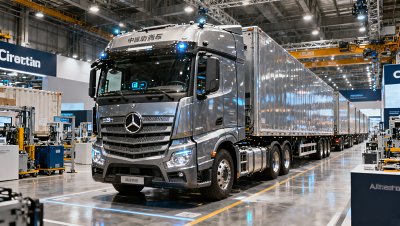
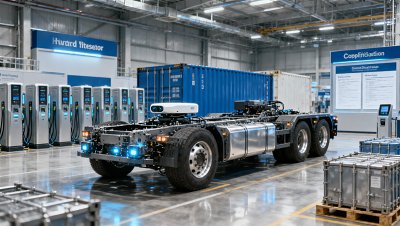
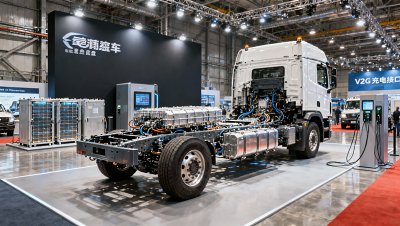
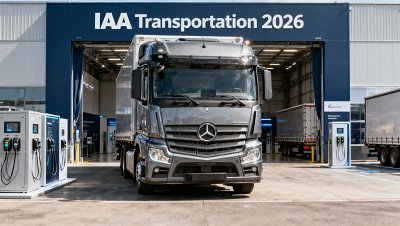
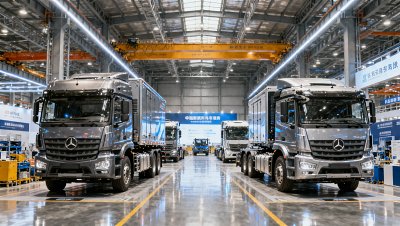
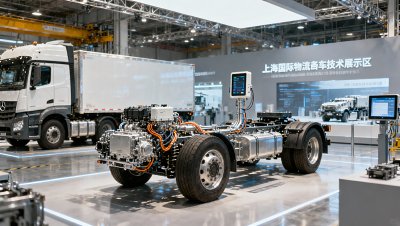
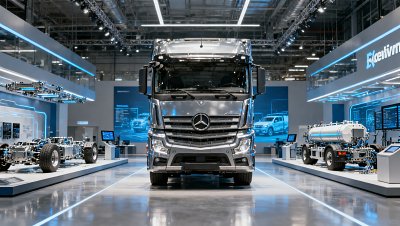
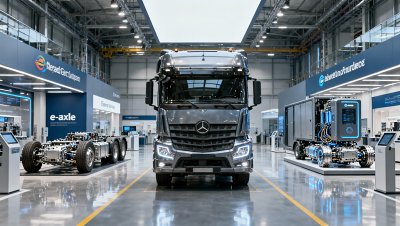
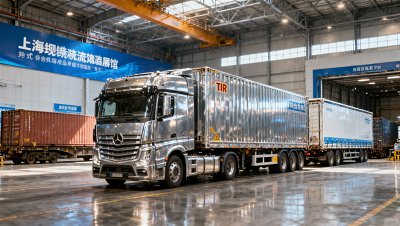
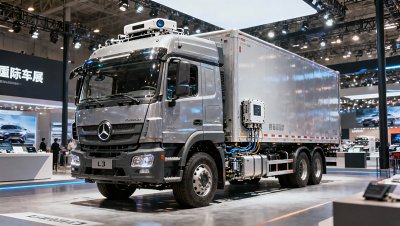
IAA Transportation 2026 Adds China New Energy Truck Pavilion
IAA Transportation organizers confirmed on July 9 that the 2026 show in Hanover, scheduled for September 15-22, will include its first China New Energy Truck Pavilion. The announcement matters not only to truck manufacturers, but also to battery and e-powertrain suppliers, certification teams, European buyers, and logistics operators, because the pavilion is tied directly to market access conditions through certification and to business matching through dedicated procurement and compliance events.
A new pavilion with defined entry conditions
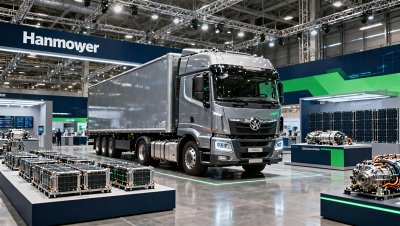
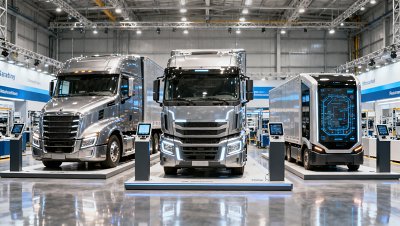
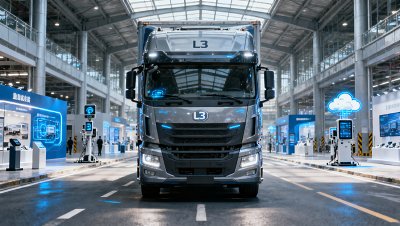
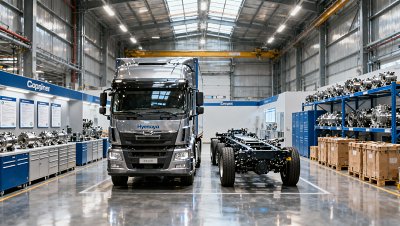
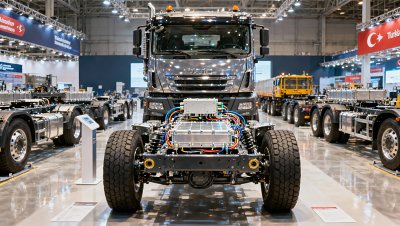
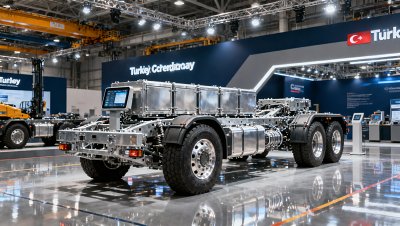
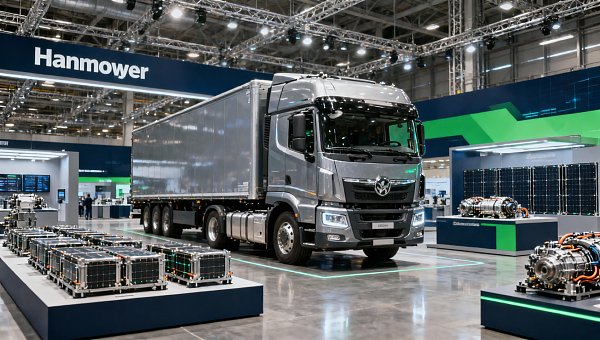
According to the information provided, the organizers of IAA Transportation announced that a first-ever China New Energy Truck Pavilion will be set up at the Hanover venue for the 2026 exhibition running from September 15 to 22.
The confirmed exhibitors include 23 Chinese vehicle companies, with BYD, Yutong, and SANY Heavy Truck specifically named in the event summary.
The program attached to the pavilion includes a dedicated matchmaking session focused on EU certification and a green logistics procurement networking day.
The pavilion is open only to complete vehicle manufacturers and suppliers of core electric powertrain systems that have already obtained CE-MDR or UN ECE R155 certification.
Where the immediate effects may be felt
For vehicle makers, access is no longer just about booth presence
From an industry perspective, the most direct effect is on Chinese new energy truck OEMs seeking visibility at a major European commercial vehicle event. The impact is likely to be concentrated in exhibitor qualification, product selection, and customer-facing preparations, because pavilion participation is explicitly limited by certification status rather than open to all interested companies.
What deserves closer attention is whether participating OEMs treat the exhibition primarily as a branding opportunity or as a compliance-linked business development venue. In this case, the stated structure of the pavilion points more clearly to the latter.
For three-electric system suppliers, certification becomes a commercial filter
Analysis shows that suppliers of battery, motor, and electronic control systems may also be affected, as the pavilion is not limited to complete vehicles. The influence is likely to appear in supplier qualification, sales documentation, and readiness for technical review, since only suppliers meeting the stated certification threshold are eligible for entry.
For this group, the practical issue is less about general market interest and more about whether certification work can support real customer conversations at the event.
For buyers and logistics operators, the pavilion may improve screening efficiency
European buyers and green logistics procurement teams may see the pavilion as a more structured sourcing touchpoint. The stated procurement networking day suggests that conversations may be organized around actual purchasing and deployment interest rather than only product display.
Observably, the main effect here would be on supplier screening, compliance review, and early-stage commercial evaluation. Buyers will likely pay close attention to whether participating companies can align certification status with delivery communication and system documentation.
For service providers, the demand focus shifts to compliance support
Certification advisors, documentation teams, exhibition service providers, and cross-border business support firms may also be influenced. The reason is that the event structure combines exhibition exposure with compliance access and procurement matching, which tends to increase demand for preparatory work in certification records, technical communication, and meeting coordination.
The business impact for these players is most likely to sit in pre-show preparation and customer support rather than in the exhibition period alone.
What companies should watch before the show opens
Any refinement in pavilion rules or official wording
Companies linked to the pavilion should closely monitor whether organizers issue further clarification on participant scope, document requirements, or certification interpretation. The current information sets a clear threshold, but practical execution often depends on how qualification is applied in registration, exhibitor review, and on-site business matching.
The difference between certification status and market readiness
Analysis shows that having the required certification and being commercially ready for procurement discussions are not the same thing. Companies should prepare product materials, technical explanations, and customer-facing compliance records in a way that supports actual procurement conversations, especially where the event includes a dedicated green logistics purchasing day.
How to prepare for the certification matchmaking session
The dedicated EU certification matchmaking session indicates that compliance discussion will be part of the business agenda, not a side topic. Relevant companies should therefore pay attention to document completeness, internal coordination across engineering and sales teams, and the consistency of statements made to potential customers and partners.
Supplier communication and delivery expectations
For qualified suppliers and OEMs, another practical point is communication with downstream customers and partners. Where interest is generated at the show, questions may quickly move from product display to supply capability, documentation, and delivery-related expectations. Preparing those answers in advance may be more important than expanding promotional messaging.
Why this should be read as a signal, not a finished outcome
Observably, this announcement says more than a routine exhibition expansion, but it should not yet be treated as proof of a completed market shift. What it clearly shows is that a major commercial vehicle exhibition has chosen to create a dedicated space for Chinese new energy truck participants under defined certification conditions and with procurement-oriented side events.
It is more appropriate to understand this as a structured industry signal. The signal points to a closer connection between exhibition access, compliance readiness, and commercial engagement. At the same time, the actual business effect will still depend on how the pavilion operates in practice, how buyers respond, and whether the announced matching activities convert into sustained follow-up.
How to read the development at this stage
At this stage, the news is best understood as an actionable development for companies already working at the intersection of new energy trucks, certification, and European commercial outreach. It does not by itself confirm long-term volume outcomes or competitive results, but it does indicate that compliance-qualified participation is becoming a more visible organizing principle in this part of the exhibition market.
For industry participants, the sensible conclusion is to treat the pavilion neither as a symbolic headline nor as a settled market result. It is a concrete near-term change in exhibition structure and a longer-term signal worth tracking through exhibitor execution, buyer interaction, and any follow-up official clarification.
Basis of this article and what still needs verification
This article is based on the user-provided news title, event date, and event summary concerning IAA Transportation 2026 and the launch of the China New Energy Truck Pavilion.
For this type of industry update, commonly relevant source categories include official exhibition announcements, company statements, industry association releases, authoritative media coverage, and standards-related documents. A specific official source link was not provided in the input, so the exact original announcement and any later updates still require ongoing verification.
Follow-up attention should focus on whether organizers release additional participation rules, whether the list of exhibitors changes, and whether the certification and procurement sessions receive more detailed public guidance.
Trending News
- How to verify a truck trailer OEM's claimed payload capacity
- How does operating weight affect the price of a new excavator?
- How to compare concrete mixer truck suppliers by total landed cost
- How axle load limits affect low bed trailer exports to Southeast Asia
- How to locate a truck exhaust system leak before replacing parts
Tag
Recommended News
 Truck Events & ExhibitionsEU to Require Smart Braking and Carbon LabelsEU will require smart braking and carbon labels for heavy trucks and semi-trailers from 2027 Q3. See what exporters must prepare now for type approval, AEBS, and compliance.
 Truck Events & ExhibitionsMENA Pilot Opens Smart Truck Approval PathMENA Pilot Opens Smart Truck Approval Path: explore how the new GCC+ MENA framework streamlines smart truck certification for V2X, ADAS L2+, and OTA access across Saudi Arabia, the UAE, and Egypt.
 Truck Events & ExhibitionsIAA Transportation 2026 Adds China New Energy Truck PavilionIAA Transportation 2026 adds a China New Energy Truck Pavilion, spotlighting certified EV truck makers and suppliers. Discover who qualifies, why EU compliance matters, and what buyers should watch.
 Truck Events & ExhibitionsIAA 2026 Preview: China EV Truck Entries Jump 42%IAA 2026 Preview reveals China EV truck entries jumping 42%, highlighting battery-swapping, hydrogen, and multi-energy chassis trends shaping compliance, sourcing, and market access.
 Truck Events & ExhibitionsIAA 2026: China Truck Tech Draws EU, US Fleet InterestIAA 2026 highlights rising EU and US fleet interest in China truck tech, from L3 intelligent heavy-duty trucks to low-carbon powertrains. See what this means for fleet procurement.
 Truck Events & ExhibitionsIAA 2026 Registration Signals New Compliance FocusIAA 2026 Registration highlights a new compliance focus in heavy truck markets, from certified supplier visibility to zero-emission and autonomous systems. Explore what it means for exporters and buyers.
 Truck Events & ExhibitionsIAA Transportation 2026 Extends Deadline to July 10IAA Transportation 2026 extends its deadline to July 10, giving exhibitors extra time while adding a new tech matchmaking zone for new energy trucks, buyers, and suppliers.
 Truck Events & ExhibitionsIAA 2026 China Group Deadline Extended to July 15IAA 2026 China Group Deadline Extended to July 15: discover why only 11 booths remain and how UN ECE R100.03 and ISO 26262 readiness could shape exhibitor access.
 Truck Events & ExhibitionsIAA 2026 Opens Registration as China NEV Commercial Vehicle Zone Grows 50%IAA 2026 opens registration as the China NEV commercial vehicle zone expands 50%. Explore buyer matchmaking, EV truck trends, and what global buyers and exhibitors should prepare now.
 Truck Events & ExhibitionsShanghai Show Highlights Export-Ready EV Truck SystemsShanghai Show Highlights Export-Ready EV Truck Systems as buyers shift toward intelligent e-axles, hydrogen chassis, and V2X diagnostics. See what this means for export compliance, sourcing, and delivery planning.
 Truck Events & ExhibitionsIAA 2026 Extends Registration, Adds China NEV ZoneIAA 2026 extends registration to June 30 and launches a China NEV Zone, spotlighting electric trucks, hydrogen vehicles, smart chassis, and V2X fleet tech for European buyers.
 Truck Events & ExhibitionsIAA Transport Extends China Signup, Adds NEV ZoneIAA Transport extends China signup to June 30 and launches a new NEV Zone. Explore how China NEV commercial vehicle suppliers can connect with European fleets, leasing firms, and Tier 1 partners.
 Truck Events & ExhibitionsALTS 2026 Opens in Shanghai With Multimodal FocusALTS 2026 opens in Shanghai with a multimodal focus, spotlighting TIR-compliant vehicles, cold chain trailers, and hazardous goods transport equipment. Explore the latest cross-border logistics trends.
 Truck Events & ExhibitionsBeijing Supply Chain Expo to Spotlight Smart Auto ChainBeijing Supply Chain Expo puts the smart auto chain in focus, highlighting NEV heavy-truck systems, automotive chips, domain controllers, and cross-border logistics opportunities.
 Truck Events & ExhibitionsThailand Industry Expo Highlights China’s E-TrucksThailand Industry Expo highlights China’s e-trucks with battery-swapping, hydrogen models, and smart dispatch systems—see why Southeast Asia buyers are placing trial orders.
 Truck Events & ExhibitionsChongqing Auto Show Puts L3 Truck Controllers in Export FocusChongqing Auto Show spotlights L3 truck controllers for export, with strong interest in domain controllers, drive-by-wire modules, and VLA kits across Europe and the Middle East.
 Truck Events & ExhibitionsLangfang Expo Signals New Export Matching for Smart TransportLangfang Expo Signals New Export Matching for Smart Transport, highlighting export-ready road transport equipment, B2B buyer matching, and compliance-focused opportunities for global procurement teams.
 Truck Events & ExhibitionsChongqing Auto AI Expo Puts Autonomous Trucks at CenterAutonomous trucks take the spotlight at the Chongqing Auto AI Expo as export-focused smart heavy truck solutions attract buyers from 32 countries. Explore market signals, cross-border deployment trends, and global logistics opportunities.
 Truck Events & ExhibitionsChongqing FATE 2026 Highlights AI Truck ComplianceChongqing FATE 2026 highlights AI truck compliance, showing how autonomous heavy truck makers, exporters, and buyers can prepare for EU, Middle East, and Latin America market entry.
 Truck Events & ExhibitionsChongqing Auto AI Expo Puts Focus on Autonomous TrucksAutonomous trucks take center stage at the Chongqing Auto AI Expo. Explore L3 commercialization, overseas distribution, compliance risks, and what it means for buyers and suppliers.
 Truck Events & ExhibitionsChongqing Auto AI Expo Opens With Focus on Autonomous TrucksChongqing Auto AI Expo spotlights autonomous trucks with L3 long-haul logistics solutions, vehicle-road-cloud systems, and compliance insights—see what it means for buyers and operators.
 Truck Events & ExhibitionsWIFFA Expo 2026 Booth Deadline Signals Compliance FocusWIFFA Expo 2026 booth deadline highlights a growing compliance focus in new-energy truck markets, with EU and Southeast Asia matchmaking shaping sourcing, certification, and trade-readiness decisions.
 Truck Events & ExhibitionsSmart New-Energy Chassis Draw Buying Interest at Turkey ExpoSmart new-energy chassis drew strong buying interest at Turkey Expo, with 210+ intention orders highlighting demand for V2X, steer-by-wire, and battery-swap heavy truck platforms.
 Truck Events & ExhibitionsChinese Firms Showcase Smart Equipment at Türkiye FairChinese firms showcase smart equipment at Türkiye Fair, highlighting modular electric truck chassis, CE certification progress, and localized service—key signals shaping cross-border procurement.
 Truck Events & ExhibitionsWBX Shanghai Ends With Focus on Wind Cargo VehiclesWBX Shanghai highlights rising demand for wind cargo vehicles, modular mining chassis, and special semi-trailers. See what this means for 2026–2027 sourcing, logistics planning, and export opportunities.