Truck Mounted Crane vs Mobile Crane: Which Fits Urban Lifting Jobs
Urban lifting starts with the street, not the load chart
A truck mounted crane and a mobile crane may seem close on paper, but city work exposes their differences quickly.
In dense districts, lifting efficiency depends on road width, traffic control windows, pavement limits, and how fast equipment can arrive and leave.
That is why the better choice is rarely about maximum capacity alone. It is about matching the machine to daily site pressure.
For projects tied to municipal engineering, utility work, logistics yards, or building maintenance, the right crane also affects transport planning and crew coordination.
In practice, a truck mounted crane often wins where mobility and quick setup matter most, while a mobile crane earns its place when reach and heavier lifting define the task.
This distinction matters across the commercial vehicle and heavy equipment market, where sourcing decisions increasingly rely on comparing real application conditions rather than broad product categories.
Why the same city can create very different lifting needs
Urban lifting jobs are not a single category. A downtown rooftop unit replacement behaves very differently from roadside pipe handling or distribution center loading.
The first question is usually access. If the crane must travel ordinary streets, park briefly, and work without long closure periods, a truck mounted crane becomes attractive.
The next question is lifting geometry. Tight turns, overhead cables, building setbacks, and outrigger space can rule out a machine before lifting even begins.
Then comes frequency. Repeated short jobs across several addresses in one day favor equipment that combines transport and lifting in one platform.
Where the load is heavier, the radius is longer, or the site remains active for several days, a mobile crane often delivers more stable performance.
A useful comparison should therefore look at work rhythm, site restrictions, and total operating cycle, not only crane type names.
When a truck mounted crane fits fast-moving city operations
A truck mounted crane is usually the practical answer for short-duration lifts that connect closely with road transport.
Common examples include streetlight maintenance, utility material delivery, compact equipment placement, palletized building supplies, and municipal repair work.
In these conditions, the biggest advantage is not just lifting. It is the ability to carry cargo, reach the site, unload, and leave with minimal handoff.
That saves time in neighborhoods where parking permits, lane occupation, and daytime access are tightly controlled.
Another reason a truck mounted crane works well is deployment speed. Outrigger setup and boom preparation are often faster than arranging a separate haul vehicle and crane unit.
This does not mean every urban job should default to a truck mounted crane. Capacity drops quickly when radius increases, especially around façades or barriers.
If the load must be placed high above the street or far behind a structure, the apparent convenience may disappear.
What usually matters most in this setting
- Short travel-to-lift cycle with limited waiting time
- Compact road profile and simpler urban routing
- Ability to combine hauling and lifting tasks
- Lower disruption around shops, residences, and traffic lanes
- Reasonable ownership and daily operating cost for frequent light lifts
Where a mobile crane makes more sense despite tighter logistics
A mobile crane becomes the stronger option when the lift is technically demanding, even if transport and setup become more complex.
Think about steel installation, precast placement, large HVAC modules, bridge-side work, or equipment replacement inside constrained industrial blocks.
These jobs often require better load charts at longer radii, more boom options, and steadier control near the upper end of performance.
In actual use, the key benefit is margin. A mobile crane provides more room for difficult picks where wind, angle, or staging position changes the lift plan.
This matters in urban projects because the ideal crane position is rarely available. Vehicles, trees, buried services, and neighboring structures force compromise.
A truck mounted crane may reach the address more easily, yet still fail the working radius requirement. That is a common planning mistake.
When the lift is critical and repeated delays are expensive, the larger mobile crane can actually reduce overall risk, even with a higher day rate.
Different jobs shift the decision in different ways
A direct comparison becomes easier when the work pattern is made explicit. The table below reflects common urban lifting differences.
This is why the truck mounted crane versus mobile crane debate should be tied to site behavior, not generic preference.
The hidden factors that change total cost
Urban lifting cost is often misread because people compare rental or purchase figures before examining workflow losses.
A truck mounted crane may cost less to deploy on short jobs because it reduces convoy needs, waiting time, and cargo transfer.
But if the machine must reposition repeatedly to stay within a safe radius, the savings disappear through slower execution.
A mobile crane may involve more planning, permits, and transport support, yet finish a difficult lift in one controlled move.
Ground protection, outrigger mats, escort needs, night access rules, and standby penalties can outweigh basic equipment rates.
For cross-border sourcing and equipment comparison, this is where structured market information becomes valuable.
Industry platforms focused on heavy trucks and construction machinery help clarify how chassis, crane body, and application support differ across suppliers.
Mistakes that commonly lead to the wrong crane choice
One frequent mistake is selecting a truck mounted crane because the load seems light, while ignoring actual placement distance.
Another is choosing a mobile crane only for rated capacity, even though the job involves frequent low-intensity stops across the city.
Urban projects also suffer when teams treat similar addresses as identical. Two blocks can differ sharply in underground support, overhead obstacles, and turning clearance.
Maintenance is often overlooked as well. A truck mounted crane used daily in stop-start city cycles needs close attention to hydraulics, stabilization systems, and vehicle wear.
With a mobile crane, planning gaps usually appear in permit timing, assembly space, and traffic coordination rather than raw lifting capability.
- Do not judge only by maximum tonnage
- Check radius, elevation, and final placement path
- Review street access for the full operating cycle
- Include permit, standby, and support equipment cost
- Compare long-term job mix, not a single lift alone
A practical way to decide before committing
A useful decision process starts with the route, then the site, then the lift, and only after that the equipment brand or model.
If most work involves urban delivery-linked lifting, fast relocation, and moderate loads, a truck mounted crane is usually the better operational fit.
If the pipeline includes heavier modules, longer radii, or technically sensitive picks, a mobile crane deserves stronger consideration.
Where fleet planning spans several regions, it helps to compare crane configurations alongside truck chassis options, spare parts support, and local service coverage.
That broader view is increasingly important in the global heavy truck ecosystem, where equipment decisions connect transport, construction machinery, uptime, and supplier reliability.
The next step is simple: map actual urban lifting scenarios, list radius and access constraints, then compare a truck mounted crane and a mobile crane against those realities.
Once those conditions are clear, cost, safety, and productivity become easier to judge with confidence.
Trending News
- What drives logging truck cost beyond the base purchase price?
- How to match lowbed trailer deck height to your hauling equipment
- What documents are needed to export a low bed trailer to Southeast Asia?
- What to verify before choosing a delivery truck supplier for school transportation
- What an excavator manufacturer catalog should show before you compare models
Tag
Recommended News
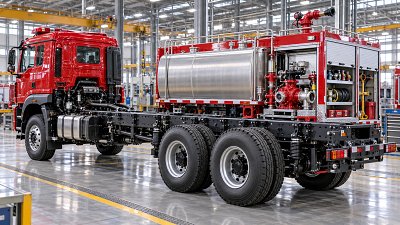
 Truck TechnologyDoes a cab chassis truck for fire department have enough frame capacity?Cab chassis truck for fire department: assess frame strength, axle loads, tank weight, stability and compliance for a safer, reliable fire apparatus build.
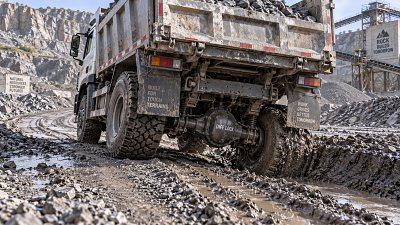
 Truck TechnologyWhen does a truck off road setup need locking differentials?Truck off road setups need locking differentials when uneven, low-grip terrain causes wheelspin. Learn how to choose the right axle locks for safer, reliable mobility.
 Truck TechnologyEPA Remote-Diagnostics Rules Take Effect for Diesel EnginesEPA Remote-Diagnostics Rules take effect for diesel engines sold in the U.S. Learn how OTA updates, real-time NOx reporting, and fault-code retention may impact compliance, OEM projects, and imports.
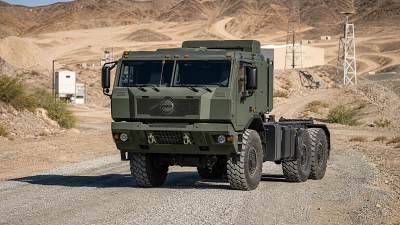
 Truck TechnologyCab Chassis Truck for Military Use: Key Specs That Affect Mission ReadinessCab chassis truck for military use: explore the key specs that drive mission readiness, off-road mobility, integration flexibility, and lifecycle support for smarter fleet decisions.
 Truck TechnologyBULLDOZER with GPS Tracking: What Improves on Remote Job SitesBULLDOZER with GPS tracking improves remote job sites with better visibility, reduced idle time, stronger fleet coordination, and smarter earthmoving decisions across harsh terrain.
 Truck TechnologyTruck Body Materials Compared: Steel, Aluminum, or Composite?Truck body material comparison made practical: explore steel, aluminum, and composite options for payload, durability, corrosion resistance, and lifecycle cost.
 Truck TechnologyBest Cab Chassis Truck Setups for Municipal Engineering TasksCab chassis truck for municipal engineering: compare the best setups for sanitation, tanker, utility, and dump tasks to improve uptime, safety, and long-term fleet value.
 Truck TechnologyTruck Electrical System Faults: Common Causes and Fast ChecksTruck electrical system faults can cause no-starts, dim lights, and costly downtime. Learn common causes, fast checks, and practical steps to diagnose issues quickly.
 Truck TechnologyASEAN-ICV Opens Mutual Access for Connected Heavy VehiclesASEAN-ICV opens mutual access for connected heavy vehicles, cutting duplicate V2X testing across Thailand, Vietnam, Indonesia, and Malaysia. See what it means for exports, compliance, and fleet delivery.
![]() Truck TechnologyTruck Concrete Mixer Basics: Capacity, Drum Type, and Jobsite FitTruck concrete mixer basics explained: compare capacity, drum type, and jobsite fit to improve pour efficiency, cut delays, and choose the right mixer truck with confidence.
Truck TechnologyTruck Concrete Mixer Basics: Capacity, Drum Type, and Jobsite FitTruck concrete mixer basics explained: compare capacity, drum type, and jobsite fit to improve pour efficiency, cut delays, and choose the right mixer truck with confidence. Truck TechnologyBrazil Requires Dual-Mode Tracking on Imported Heavy TrucksBrazil requires dual-mode tracking on imported heavy trucks. Learn how BeiDou+GPS, SISFROTA, and ABNT NBR 16501:2025 rules affect licensing, compliance, and market access.
 Truck TechnologyWater Truck OEM Options: Tank Size, Pump Output, and Road ConditionsWater truck OEM selection starts with the right match of tank size, pump output, and road conditions. Learn how to compare specs, improve uptime, and choose a fleet-ready solution.
 Truck TechnologyChile Requires Remote Diagnostics on Imported Heavy TrucksChile Requires Remote Diagnostics on Imported Heavy Trucks: learn how NCh3871:2026, OTA, ISO 22161, and VHMP rules will impact truck imports, registration, and fleet planning.
 Truck TechnologyHow to Compare Logging Truck OEM Specs for Drivetrain and Load StabilityLogging truck OEM specs compared the right way: learn how to evaluate drivetrain torque, axle ratios, suspension, and load stability for safer forestry hauling.
 Truck TechnologyIndia Drafts BS-VI Phase II Remote OBD Upload RuleIndia Drafts BS-VI Phase II Remote OBD Upload Rule: learn how India’s new real-time OBD upload proposal could impact truck exporters, T-Box upgrades, certification timelines, and market access.
 Truck TechnologyMilitary Truck Payload vs Mobility: What Matters in Harsh TerrainMilitary truck performance in harsh terrain depends on more than payload. Discover how mobility, traction, axle load, and suspension affect real-world mission success.
 Truck TechnologyLogging Truck OEM Options: Key Specs for Harsh Forestry RoutesLogging truck OEM options for forestry routes: compare axle layouts, frame strength, traction, braking, and service support to choose a durable, high-uptime truck.
 Truck TechnologyVietnam to Require VCA Checks for Imported Heavy TrucksVietnam to Require VCA Checks for Imported Heavy Trucks from August 1, 2026. Learn how VCA testing, CAN, HVIL, and OBD-II rules could impact truck exports, certification, and delivery planning.
 Truck TechnologyMexico Enforces CAN FD Rule for Imported TrucksMexico Enforces CAN FD Rule for Imported Trucks: learn how NOM-042-SEMARNAT-2026 impacts OBD-II+, ANCE verification, ECU strategy, and Mexico-bound truck compliance.
 Truck TechnologyBrazil ANP Rule Requires H₂ Leak Sensors on Imported Gas TractorsBrazil ANP rule requires H₂ leak sensors on imported gas tractors from Oct 1, 2026. Learn the compliance impact, IEC 60079-29-1 standard, and what exporters must do now.
 Truck TechnologyTruck Brake System Basics: Components, Failure Risks, and Safety ChecksTruck brake system basics explained: key components, common failure risks, and practical safety checks to improve fleet uptime, compliance, and road safety.
 Truck TechnologySupply Chain Expo Opens With Focus on Heavy Truck Core SystemsHeavy truck core systems take center stage at the Supply Chain Expo, spotlighting battery systems, electric drive axles, and by-wire technologies shaping export opportunities.
 Truck TechnologyTruck Control Unit Failures: Common Symptoms and Fix StrategiesTruck control unit failures often start with small warning signs. Learn key symptoms, root causes, and smart repair strategies to cut downtime and avoid costly misdiagnosis.
 Truck TechnologyEU V2X Rule Sets 2027 Deadline for New Heavy Truck ApprovalEU V2X Rule Sets 2027 Deadline for New Heavy Truck Approval: learn how ETSI EN 302 637-2 and UN R155 reshape EU truck compliance, certification, sourcing, and export planning.
 Truck TechnologyEU Draft Targets V2X as Standard for New Heavy TrucksV2X is moving toward a standard for new EU heavy trucks. Learn how the draft rule may affect certification, ETSI EN 302 637-2 compliance, open API access, and export planning.