Semi Trailer Manufacturer Lead Times: What Causes the Delays?
Lead times from a semi trailer manufacturer can vary widely, affecting fleet planning, procurement schedules, and market competitiveness. From raw material shortages to production bottlenecks and component supply issues involving commercial vehicle parts, truck engine parts, and truck brake system components, multiple factors can slow delivery. For buyers comparing heavy duty trucks for sale, bulk cement trailer options, or related transport equipment, understanding these delays is essential for smarter sourcing decisions.
In the road transport equipment sector, delivery timing is no longer a simple factory-to-customer issue. Semi trailer lead times influence route launch dates, project mobilization, inventory cost, dealer commitments, and even financing schedules. For procurement teams, distributors, and commercial evaluators, the ability to identify why a semi trailer manufacturer is delayed can reduce purchasing risk and improve supplier selection.
This article explains the main causes of semi trailer production delays, what buyers should verify before placing an order, and how international B2B sourcing platforms can help compare suppliers, capacity, and component readiness across the heavy truck supply chain.
Why Semi Trailer Manufacturer Lead Times Have Become Less Predictable
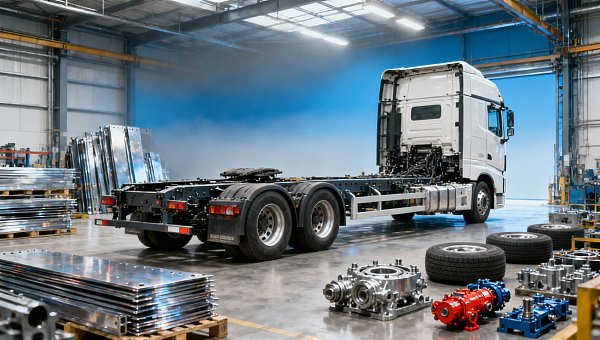
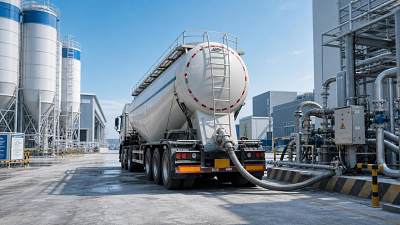
A standard semi trailer manufacturer may quote 20–45 days for common configurations, but actual lead times can extend to 60–120 days depending on trailer type, order quantity, axle specification, and component availability. Flatbed trailers, skeletal trailers, and some cargo semi trailers generally move faster than highly customized tankers, tipper trailers, or bulk cement trailer units that require more fabrication steps and compliance checks.
The first reason is that trailer production depends on several synchronized supply chains. Steel plate, high-tensile frame material, axles, landing gear, brake chambers, suspension systems, wiring harnesses, tires, and couplings may come from different vendors. If even 1 out of 8 key components is delayed by 2 weeks, the entire assembly sequence may stop or be reshuffled.
The second reason is demand volatility. When logistics demand rises quickly or infrastructure projects accelerate, factories often receive batch orders from distributors, fleet buyers, and export traders at the same time. A plant designed for 80–120 units per month may suddenly face booked capacity for the next 6–10 weeks, especially before regional holidays or year-end shipment cycles.
The third factor is increased customization. Buyers now ask for ABS or EBS options, reinforced chassis beams, special container locks, thicker floor plates, higher payload thresholds, or compatibility with specific tractor heads. Each variation adds engineering review, drawing confirmation, material planning, and inspection work. Even a small change in kingpin height or suspension type can shift lead time by 5–12 days.
For B2B buyers, this means quoted delivery dates should be treated as a production estimate, not as a guaranteed shipping date. A supplier with transparent process milestones, realistic booking windows, and clear component sourcing visibility is usually a safer choice than one promising unusually short lead times without documentation.
Typical lead-time ranges by trailer category
The following comparison shows common lead-time ranges seen in international sourcing. Actual timing varies by country, production scale, and whether the factory keeps standard subassemblies in stock.
The key conclusion is simple: the more specialized the semi trailer, the more sensitive the lead time becomes to engineering confirmation, critical parts sourcing, and final inspection. Buyers planning urgent deployment should prioritize standard specifications when possible.
The Main Causes of Production Delays Inside the Factory and Supply Chain
When buyers ask a semi trailer manufacturer why delivery is delayed, the answer often includes “materials” or “factory schedule,” but these broad explanations hide several distinct risks. Understanding the operational causes helps procurement teams judge whether a delay is temporary, recurring, or a sign of poor production control.
Raw materials and fabricated steel sections
Semi trailer structures rely heavily on steel coils, plates, beams, and formed sections. If the factory is using 4 mm, 6 mm, or 8 mm steel grades for different zones of the frame and body, any shortage in one thickness can interrupt the welding schedule. Price spikes also matter. Some manufacturers slow purchasing when steel prices move sharply within 7–14 days, hoping to restock later at a lower cost, which can silently extend lead time.
Critical purchased components
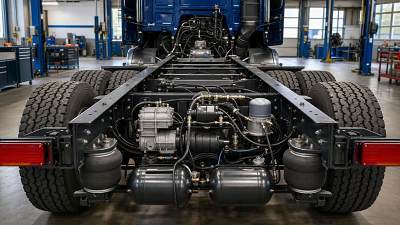
Axles, brake system components, bearings, leaf springs, airbags, landing legs, and electrical systems are common bottlenecks. Truck brake system components are especially important because they must match axle load, wheel end configuration, and regulatory requirements. If a plant has frames ready but is waiting 10–18 days for brake chambers or slack adjusters, finished trailers cannot move into final assembly or testing.
Labor scheduling and process bottlenecks
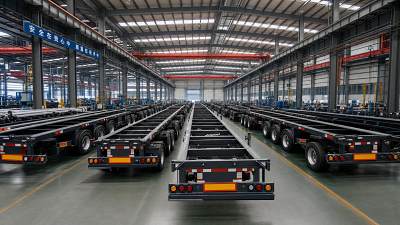
Trailer production is not a single-line operation. Cutting, jigging, welding, blasting, painting, wiring, assembly, and inspection all compete for labor and floor space. In many factories, welding and paint curing are the two most common capacity constraints. A plant may complete fabrication in 12 days but then wait another 5–9 days for paint booth access and coating curing windows, especially in humid environments.
Engineering changes after order confirmation
Many delays are buyer-created, even when the factory does not say so directly. Changes to axle brand, tire size, trailer length, tool box position, or discharge system layout after deposit payment can trigger drawing revision, BOM update, and re-approval. A single late revision may add 3–15 days depending on whether the affected parts were already produced or purchased.
Common delay triggers buyers should watch
- Order quantities above the factory’s normal weekly output, such as 30 units placed at once in a plant that usually finishes 15–20 units per week.
- Mixed specifications within one batch, for example different suspension systems or deck heights in the same purchase order.
- Late confirmation of drawings, colors, branding decals, or export documentation requirements.
- Dependency on imported components with shipping lead times of 3–6 weeks.
- Peak-season export congestion that delays final dispatch even after production is completed.
For business evaluators, a reliable supplier is not the one claiming “no delay,” but the one able to identify these triggers early, assign realistic buffers, and provide milestone updates at least every 7 days during production.
How Buyers Can Evaluate Lead-Time Risk Before Placing a Semi Trailer Order
Lead-time control starts before payment. A professional sourcing process should assess whether the semi trailer manufacturer has stable component channels, suitable capacity, and documented export experience. This matters for direct fleet procurement, dealer stocking plans, and cross-border trade through a digital B2B marketplace.
One useful approach is to separate lead time into 3 phases: engineering confirmation, production, and shipment readiness. A supplier may advertise a 30-day lead time, but if 7 days are used for drawing approval and another 10 days are needed for export inspection and container or Ro-Ro booking, the practical delivery cycle becomes 47 days or more. Buyers should ask for these phases separately.
It is also important to compare standard-product lead time with customized-product lead time. Some manufacturers can ship stock-style skeletal trailers within 15–25 days but need 45–60 days for bulk cement trailer orders because tank body fabrication, compressor selection, and sealing tests take longer. Without this distinction, buyers may underestimate project timelines.
For international transactions, verify whether the supplier controls key purchased parts internally or relies heavily on outside trading companies. A factory that directly manages axle, suspension, and brake procurement usually gives more credible timelines than one that sources everything only after receiving a deposit.
Lead-time evaluation checklist for procurement teams
The table below can be used by sourcing managers, dealers, and commercial teams to compare manufacturers before order placement.
This comparison highlights a practical rule: a semi trailer manufacturer with moderate lead times and high process visibility is usually safer than one quoting the shortest schedule but offering no evidence of materials, capacity, or component control.
Four questions that reduce procurement risk
- What is the lead time for my exact configuration, not the standard brochure model?
- Which 3 components are most likely to delay this order, and what are their current supply conditions?
- How often will production updates be provided: every 5 days, 7 days, or only when asked?
- What buffer should be added for export packing, inland delivery, and vessel booking?
These questions are valuable not only for trailer purchases, but also when comparing related road transport equipment such as heavy duty trucks for sale, truck chassis solutions, or replacement commercial vehicle parts connected to a fleet expansion program.
Strategies to Shorten Delivery Time Without Sacrificing Technical Fit
Buyers cannot control global steel prices or every supplier in the chain, but they can reduce lead-time risk through better specification discipline and sourcing strategy. In many trailer programs, 20% of the order details cause 80% of the schedule disruption. Eliminating unnecessary variation often shortens delivery more effectively than pressuring the factory after the order is placed.
The first strategy is to standardize core components. If the application allows it, use the manufacturer’s regular axle rating, common suspension option, standard tire size, and standard electrical layout. A custom combination may suit one route perfectly, but it may also add 2–4 weeks if special parts must be sourced from multiple vendors.
The second strategy is to lock drawings early. Procurement teams should complete dimensional confirmation, payload requirements, discharge method, brake configuration, and branding details before deposit release. This is especially important for application-specific units such as bulk cement trailer models, construction support trailers, and specialized municipal transport equipment.
The third strategy is staged ordering. Instead of one large batch with mixed configurations, buyers can split orders into a standard first batch and a customized second batch. For example, 10 standard skeletal trailers may be delivered in 25–35 days, while 5 modified units follow in 45–60 days. This approach supports faster fleet deployment and better cash-flow planning.
Practical methods to improve on-time delivery
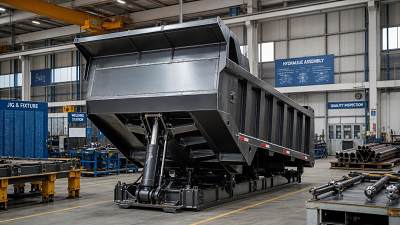
- Choose semi trailer designs built on the factory’s existing jig and fixture system rather than requesting a completely revised frame layout.
- Approve technical drawings within 48–72 hours when possible to prevent planning gaps in the workshop queue.
- Confirm whether truck brake system components, tires, and suspension kits are reserved before the factory starts steel cutting.
- Add a planning buffer of 10–15 days for export orders during peak shipping months or before long national holidays.
- Use milestone-based communication, such as frame completion, paint completion, axle installation, and final inspection photos.
Standardization versus customization
There is always a trade-off between ideal technical fit and production speed. Distributors and dealers often benefit from stocking 2–3 mainstream trailer specifications because these can be reordered faster, promoted more easily, and supported with more available spare parts. Fully customized units may offer higher application precision, but they usually require stronger forecasting and longer procurement windows.
For sourcing professionals using an international heavy truck and equipment platform, this is where supplier comparison becomes valuable. Buyers can identify manufacturers already active in trailers & semi-trailers, truck chassis & cab, and spare parts categories, then compare not only product specs but also responsiveness, category depth, and export process maturity.
Using a B2B Platform to Compare Suppliers, Capacity, and Delivery Readiness
A specialized B2B platform serving the global commercial vehicle and heavy equipment industry can help reduce lead-time uncertainty by making supplier discovery and comparison more structured. Instead of evaluating only price and brochure images, buyers can review product categories, related spare parts availability, business scope, and sourcing fit across the broader heavy truck ecosystem.
This matters because semi trailer delivery depends on more than one finished product listing. A supplier connected to a wider network of truck engine parts, commercial vehicle parts, brake assemblies, and transport equipment resources is often better positioned to solve shortages and propose alternatives. The ability to compare suppliers across multiple categories helps procurement teams see whether the manufacturer is part of a stable supply environment or operating in isolation.
For distributors and agents, digital sourcing tools also improve pre-sales accuracy. When a customer asks about a 3-axle flatbed, a low-bed trailer, or a bulk cement trailer with specific discharge capacity, the distributor can compare multiple factories, identify which products are standard and which require engineering review, and respond with more realistic timeframes.
For business evaluators, the platform value is not just product discovery but decision support. Market insights, buying guides, supplier information, and category-level visibility can shorten supplier screening cycles from several weeks to a few days, especially in cross-border sourcing where local verification is difficult.
What buyers should compare on a sourcing platform
Before moving to quotation or contract stage, buyers should review a consistent set of indicators across shortlisted suppliers.
The most effective sourcing decisions usually come from combining product comparison with market context. Buyers who understand both trailer specifications and supply-chain realities are less likely to be surprised by long lead times, hidden customization delays, or shipment bottlenecks.
FAQ for procurement and distribution teams
How long does a semi trailer manufacturer usually need for a standard order?
For standard flatbed or skeletal trailer models, a common production window is 20–40 days. For specialized units such as bulk cement trailer or tanker designs, 35–90 days is more realistic. International shipment preparation may add another 7–20 days depending on port and booking conditions.
What is the biggest hidden cause of delay?
Late technical changes are one of the most underestimated causes. A revision made after production planning can affect drawings, materials, purchased parts, and inspection sequence. Even small modifications can add 3–15 days, while major structural changes may require a full production reschedule.
Should buyers focus only on the quoted lead time?
No. Buyers should review the full timeline, including engineering confirmation, workshop production, inspection, inland transport, and export dispatch. A quote that sounds 10 days faster may not be faster in practice if the supplier does not control component sourcing or shipping coordination.
How can dealers reduce stock-out risk?
Dealers should keep 2–3 mainstream trailer specifications in their sourcing plan, monitor replenishment cycles by category, and work with suppliers that offer recurring lead-time visibility. Standardized stock models usually move faster through production and are easier to support with spare parts.
Semi trailer manufacturer lead times are shaped by raw materials, component supply, factory capacity, engineering discipline, and export coordination. For information researchers, procurement managers, business evaluators, and distribution partners, the goal is not only to find a supplier with a short quoted lead time, but to identify one with transparent production planning and dependable supply-chain support.
Through a professional global B2B platform focused on commercial vehicles, trailers, construction machinery, and spare parts, buyers can compare suppliers more efficiently, understand market conditions more clearly, and make sourcing decisions with fewer timing surprises. If you are planning your next trailer purchase or evaluating transport equipment partners, contact us now to get tailored sourcing support, compare qualified suppliers, and explore more road transport equipment solutions.
Trending News
- How to verify a truck trailer OEM's claimed payload capacity
- How does operating weight affect the price of a new excavator?
- How to compare concrete mixer truck suppliers by total landed cost
- How axle load limits affect low bed trailer exports to Southeast Asia
- How to locate a truck exhaust system leak before replacing parts
Tag
Recommended News
 FAQHow to spot early signs of truck hydraulic system failureTruck hydraulic system issues rarely start with total failure. Learn the early signs—pressure loss, noise, leaks, heat, and jerky movement—to prevent downtime and costly repairs.
 FAQHow to Diagnose Common Truck Steering System Problems Before They Cause DowntimeTruck steering system problems can cause costly downtime. Learn how to spot early warning signs, diagnose faults fast, and keep fleets safe and reliable.
 FAQTruck Air System Problems: Common Failure Points and FixesTruck air system problems can start with slow pressure build, leaks, or moisture. Learn common failure points, practical fixes, and how to improve truck uptime and safety.
 FAQExcavator Parts Failure Signs You Should Not IgnoreExcavator parts warning signs often start small. Learn how to spot wear, hydraulic weakness, overheating, and undercarriage damage early to reduce downtime and avoid costly shutdowns.
 FAQTruck Axle Failure Signs and Maintenance Checks That MatterTruck axle warning signs often start with heat, noise, leaks, or uneven tire wear. Learn the key maintenance checks that prevent costly downtime and unsafe failures.
 FAQTruck Wing Loading Problems and How to Prevent DowntimeTruck wing loading problems often start with small daily errors. Learn practical checks, route-based prevention tips, and smart maintenance steps to cut downtime and keep deliveries moving.
 FAQTruck Cement Delivery Problems: Common Causes and Practical FixesTruck cement delivery problems can cause blockages, delays, and waste. Learn the common causes, practical fixes, and smart checks to improve reliability and reduce downtime.
 FAQTruck Refrigerated Unit Failures That Increase Cargo Loss RiskTruck refrigerated failures can quietly raise cargo loss risk. Learn how route type, heat, airflow, seals, and parts planning affect cold-chain reliability.
 FAQTruck Transmission Problems: Early Signs, Causes, and Fix OptionsTruck transmission issues can start with subtle shifts, slipping, or heat buildup. Learn early signs, key causes, and practical repair or rebuild options for every duty cycle.
 FAQTruck Pump Troubleshooting: Common Pressure Loss Causes and FixesTruck pump troubleshooting guide: discover common pressure loss causes, warning signs, and practical fixes to restore hydraulic performance, reduce downtime, and prevent repeat failures.
 FAQHow to Evaluate a Truck Cement Supplier for Delivery RiskTruck cement supplier evaluation starts with delivery risk. Learn how to assess capacity, logistics control, export readiness, and on-time performance before you place an order.
 FAQExcavator Bucket Sizes Explained for Trenching, Loading, and Rock WorkExcavator bucket size affects trenching accuracy, loading speed, and rock work durability. Learn how to choose the right excavator bucket for better productivity and lower wear.
 FAQTruck Battery Problems: Signs, Causes, and FixesTruck battery problems can lead to breakdowns and costly delays. Learn the key warning signs, main causes, and practical fixes to keep heavy trucks reliable and on the road.
 FAQTipper Trailer Payload Limits and Safety RisksTipper trailer payload limits affect braking, stability, and rollover risk. Learn practical safety checks, load control tips, and ways to reduce costly overload damage.
 FAQHow to Qualify a Truck Tipper Supplier for Safety and Build ConsistencyTruck tipper supplier qualification starts with safety. Learn how to assess build consistency, hydraulic reliability, and factory controls to reduce sourcing risk.
 FAQHow to Read a Water Truck Quotation Without Missing Hidden CostsWater truck quotation guide: learn how to spot hidden costs in specs, freight, compliance, spare parts, and warranty so you can compare offers accurately and buy with confidence.
 FAQDelivery Truck Supplier for School Transportation: Safety ChecklistDelivery truck supplier for school transportation: use this safety checklist to compare compliance, braking, visibility, build quality, and supplier reliability before you buy.
 FAQHow ISO Certification Reduces Sourcing Risk in Truck Chassis SupplyHeavy truck chassis manufacturer with ISO certification: discover how certified suppliers reduce sourcing risk, improve traceability, and support safer global truck chassis procurement.
 FAQWater Sprinkler Truck Uses, Tank Sizes, and Road Safety BasicsWater sprinkler truck uses, tank sizes, and road safety basics explained. Learn how to choose the right capacity, improve dust control efficiency, and compare reliable fleet-ready options.
 FAQDelivery Truck for School Transportation: Safety Points Before OrderingDelivery truck supplier for school transportation: review key safety points before ordering, from braking and visibility to compliance and passenger protection.
 FAQDump Truck Sourcing Mistakes That Delay Construction ProjectsDump truck sourcing mistakes can delay construction projects, raise hidden costs, and disrupt site schedules. Learn the key risks to avoid and source smarter for faster, more reliable project delivery.
 FAQIs a Bulldozer for Construction the Right Fit for Your Site ConditionsBulldozer for construction: learn how terrain, soil, slope, and job size determine the right machine fit. Compare site conditions, avoid costly mismatches, and choose with confidence.
 FAQDump Truck OEM Quality Control Points Before Factory AcceptanceDump truck OEM quality control points before factory acceptance: learn the key checks for welding, hydraulics, brakes, and safety to reduce risk, avoid failures, and choose reliable suppliers.
 FAQTruck Trailer Bulk Order: How to Avoid Spec Drift Across BatchesTruck trailer bulk order quality can fail when specs drift across batches. Learn how to lock standards, align suppliers, and protect safety, compliance, and delivery consistency.
 FAQWhat a Dump Truck Distributor Should Offer After Vehicle DeliveryDump truck distributor support matters after delivery. Learn what to expect in spare parts, warranty, training, and technical service to reduce downtime and protect your investment.