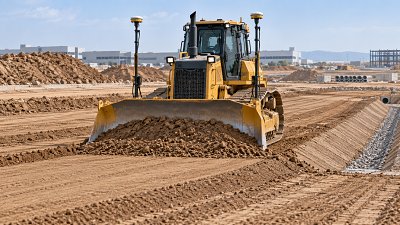
What to check before appointing a bulldozer distributor
What to Check Before Appointing a Bulldozer Distributor
Choosing a bulldozer distributor is not simply a purchasing decision. It determines equipment availability, operating costs, project continuity, resale value, and exposure to supply-chain risk.
For construction, mining, earthmoving, and infrastructure businesses, the strongest distributor is rarely the one offering the lowest initial quotation. It is the partner that protects uptime.
Before appointing a bulldozer distributor, decision-makers should assess commercial capability, technical depth, spare-parts support, service coverage, financial reliability, and cross-border execution capacity.
This guide explains how to evaluate a bulldozer distributor in practical business terms, helping buyers compare potential partners beyond brochures, price lists, and general sales promises.
Start With the Operational Requirements of Your Business
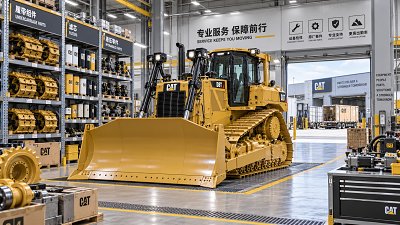
The right bulldozer distributor depends first on how and where the equipment will work. A distributor suitable for road construction may not support mining operations effectively.
Define the expected operating environment before reviewing suppliers. Consider ground conditions, altitude, climate, fuel quality, working hours, operator skill levels, and site accessibility.
Bulldozers used in quarrying, landfill operations, forestry, and municipal projects face different wear patterns. Distributor recommendations should reflect these application-specific operating realities.
Decision-makers should identify required machine classes, including small crawler dozers, medium construction dozers, heavy mining dozers, and specialized low-ground-pressure models.
Ask whether the distributor can provide configurations appropriate for your work. Blade type, undercarriage design, ripper options, cab protection, and telematics may materially affect performance.
A distributor should understand productivity rather than merely engine power. The critical measure is how much material the machine can move safely per operating hour.
Review the anticipated fleet size and purchase schedule. A capable bulldozer distributor should support individual equipment purchases, phased fleet expansion, and replacement planning.
Companies operating multiple sites should also examine whether the distributor can provide consistent service standards across regions, instead of supporting only one project location.
Verify the Distributor's Product Range and Brand Authorization
A credible distributor should offer clearly documented products from established manufacturers or provide transparent information about the origin, specifications, and warranty status of every machine.
Ask for evidence of formal authorization when evaluating branded bulldozers. Official distribution agreements often provide better access to factory support, technical updates, and genuine parts.
However, authorization alone does not guarantee strong performance. Some independent distributors may deliver valuable sourcing flexibility, especially for used equipment, alternative brands, or specialized configurations.
The key question is whether the supplier can explain its supply route. Buyers should know whether machines come directly from manufacturers, regional warehouses, dealers, auctions, or third-party traders.
Request detailed model comparisons rather than accepting broad statements about quality. Compare operating weight, drawbar pull, blade capacity, fuel consumption, emissions compliance, and service intervals.
Product range matters because projects rarely remain static. A distributor able to supply compatible excavators, loaders, trucks, attachments, and parts can simplify future procurement.
Check whether the distributor supports both new and used bulldozers. A balanced offering can help businesses match capital expenditure to project duration and utilization expectations.
For used machinery, insist on machine hours, maintenance records, inspection reports, serial-number verification, component condition, and documentation showing whether major rebuilds were completed.
Evaluate Service Capacity Before Comparing Purchase Prices
Equipment downtime can cost far more than a modest difference in purchase price. Service capability should therefore be one of the highest-weighted distributor selection criteria.
Ask how many trained technicians the distributor employs, where they are based, and whether they are qualified to work on the specific bulldozer brands under consideration.
A strong bulldozer distributor should offer defined response times for field service. Vague promises of “fast support” are less useful than written service-level commitments.
Determine whether technicians can reach remote job sites with diagnostic tools, lifting equipment, service vehicles, and common replacement parts. Remote projects require more than workshop capacity.
Review the distributor's workshop facilities. Look for sufficient bays, undercarriage tooling, component rebuild capability, engine diagnostics, welding capacity, and safe handling systems for heavy assemblies.
Ask how technical problems are escalated. The distributor should have a clear path from field technician to senior engineer, manufacturer support team, and warranty decision-maker.
Telematics support is increasingly important for fleet operators. Confirm whether the distributor can help interpret machine data, identify idle time, schedule maintenance, and prevent abnormal operating patterns.
Service quality should be verified through references. Speak with customers operating similar machines under comparable loads, climates, operating hours, and project pressures whenever possible.
Check Spare-Parts Availability and Supply-Chain Resilience
Many bulldozer ownership problems originate from parts shortages rather than mechanical complexity. A machine cannot generate value while waiting for an ordinary replacement component.
Ask the distributor which parts are stocked locally, which are held at regional warehouses, and which must be ordered from the manufacturer’s central supply network.
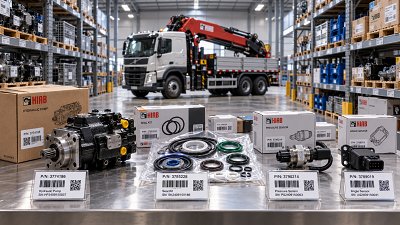
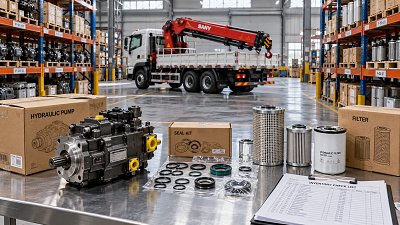
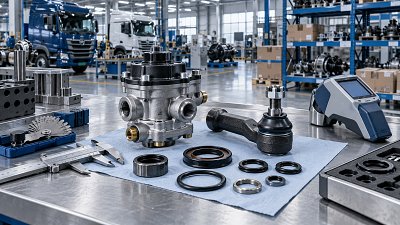
High-consumption items deserve special attention. Filters, cutting edges, track shoes, rollers, sprockets, seals, hoses, batteries, and wear components should be readily available.
For intensive applications, undercarriage availability is particularly important. The undercarriage can represent a substantial share of a crawler bulldozer's lifecycle maintenance cost.
Request typical lead times for critical components. Separate the answers for routine service parts, emergency repair parts, major assemblies, and imported components requiring customs clearance.
A reliable bulldozer distributor should provide a parts forecast based on expected utilization. This helps buyers budget for scheduled maintenance and avoid preventable stock shortages.
Check whether the distributor supplies genuine, OEM-equivalent, or aftermarket parts. Each option may have a place, but the supplier should clearly disclose quality, origin, and warranty implications.
International buyers should also ask about packaging, export documentation, harmonized codes, freight options, insurance, and procedures for handling damaged or incorrect shipments.
Assess After-Sales Support, Warranty Terms, and Accountability
Warranty language is often treated as a legal detail, but it is a commercial risk-control mechanism. Buyers should understand exactly what protection applies after delivery.
Review warranty duration, hour limits, exclusions, labor coverage, travel charges, consumable-part treatment, and whether coverage applies when equipment operates outside the selling country.
Ask who approves warranty claims. A distributor with local decision-making authority may resolve legitimate issues faster than one relying entirely on distant manufacturer approvals.
Clarify whether warranty repairs use original parts and qualified technicians. A low-cost repair performed incorrectly can create recurring failures and reduce equipment value.
After-sales support should include maintenance planning, operator familiarization, diagnostic assistance, and technical documentation. These services reduce avoidable misuse and improve asset productivity.
Evaluate the distributor's communication process. You should know who receives service requests, how cases are tracked, when updates are provided, and how unresolved issues are escalated.
For major fleets, consider negotiating a maintenance agreement. Planned service contracts can make maintenance spending more predictable and reduce pressure on internal workshop resources.
Good distributors take responsibility beyond machine delivery. Their commercial relationship should continue through commissioning, routine operation, major repairs, resale discussions, and fleet replacement cycles.
Review Commercial Terms and Total Cost of Ownership
A lower acquisition price does not necessarily mean a lower total cost of ownership. Bulldozer economics depend on fuel use, maintenance, availability, operator productivity, and residual value.
Ask each candidate distributor to provide a structured lifecycle cost estimate. It should include purchase price, delivery, commissioning, planned maintenance, wear parts, repairs, and expected resale assumptions.
Compare payment terms carefully. Deposits, milestone payments, letters of credit, financing fees, currency exposure, and late-payment conditions can materially affect the true procurement cost.
For international transactions, define the applicable Incoterms clearly. Responsibilities for loading, export clearance, freight, insurance, destination handling, and import duties must be unambiguous.
Decision-makers should assess whether quoted prices include attachments, operator protection systems, transport preparation, spare-parts kits, training, and required compliance certificates.
Check for unusually low quotations that omit necessary services. A low headline price may exclude commissioning, warranty coverage, inland delivery, customs support, or basic consumables.
Residual value deserves attention when equipment will be replaced after several years. Well-supported brands and documented maintenance histories usually improve resale opportunities.
Use a weighted scorecard rather than selecting solely by price. Service capacity, parts availability, technical credibility, contract terms, and reference quality should carry significant weight.
Confirm Financial Stability and Business Credibility
Appointing a distributor creates dependence on its continued operation. A supplier that becomes financially unstable may be unable to honor warranties, retain technicians, or maintain parts inventory.
Conduct basic due diligence before signing an agreement. Review company registration details, export history, ownership structure, years in business, customer references, and available financial information.
Look for evidence that the distributor has completed comparable transactions. Experience with small equipment sales does not automatically demonstrate capability for heavy machinery fleet contracts.
References should be relevant and verifiable. Ask customers about delivery accuracy, commissioning quality, spare-parts response, warranty cooperation, billing transparency, and problem resolution.
Consider visiting the distributor's premises for high-value purchases. A site visit can reveal workshop activity, parts inventory, technician resources, machine preparation standards, and operating discipline.
Digital marketplaces can improve initial supplier discovery, but they should not replace verification. Use platform profiles, product listings, and trade information as starting points for deeper evaluation.
The Global Heavy Truck Industry Platform can help buyers compare equipment suppliers, explore construction machinery categories, and identify potential commercial partners across international markets.
Still, final appointment decisions should be supported by direct discussions, documentation reviews, reference checks, technical evaluations, and a contract that assigns responsibilities clearly.
Examine Export Capability and Local Compliance Requirements
Cross-border equipment procurement adds legal and operational complexity. The distributor must understand export procedures as well as the destination market's regulatory requirements.
Confirm that the bulldozer meets applicable emissions standards, safety rules, cab requirements, labeling requirements, and import restrictions in the country where it will operate.
Ask for complete documentation before shipment. Typical records include commercial invoices, packing lists, certificates of origin, serial-number records, manuals, inspection documents, and export declarations.
Import regulations may differ for new and used equipment. Older machines can face restrictions related to emissions, age limits, contamination controls, safety requirements, or registration rules.
Shipping arrangements should also be evaluated. Bulldozers may require disassembly, container loading, flat-rack transport, roll-on roll-off shipment, or specialized heavy-lift logistics.
A capable distributor should explain shipping risks, estimated transit times, cargo insurance options, destination-port procedures, and the responsibilities of each party under the agreed terms.
Consider local service access before importing from another country. Buying directly can reduce acquisition cost, but savings may disappear if technical support and parts logistics are weak.
For multinational projects, prioritize distributors with proven regional networks. Consistent support across borders can reduce administrative burden and improve fleet control.
Use a Structured Appointment Process Instead of an Informal Comparison
Appointing a bulldozer distributor should follow a documented process. Informal comparisons based on a few quotations may overlook risks that become expensive after equipment arrives.
Begin with a written requirement specification. Include machine application, target productivity, working conditions, required attachments, annual hours, delivery location, service expectations, and budget limits.
Invite shortlisted distributors to respond using the same evaluation format. Standardized information makes it easier to compare technical offerings, commercial terms, and service commitments objectively.
Request evidence rather than promises. Relevant evidence includes authorization letters, parts-stock reports, technician certifications, workshop photographs, customer references, sample service reports, and warranty terms.
Involve operational, maintenance, procurement, finance, and legal stakeholders in the evaluation. Each department sees different risks that a single buyer may overlook.
Conduct a technical and commercial clarification meeting before final selection. Use this discussion to test the distributor's knowledge, responsiveness, transparency, and willingness to commit in writing.
Before appointment, negotiate measurable obligations. Include response times, parts lead times, warranty procedures, commissioning scope, training delivery, reporting frequency, and dispute-resolution arrangements.
Finally, establish a performance review process. The distributor relationship should be assessed regularly against uptime, service response, parts fulfillment, cost control, and customer support quality.
Conclusion: Select the Partner That Reduces Operational Risk
The best bulldozer distributor is not defined only by machine availability or price. It is defined by its ability to keep equipment productive throughout its working life.
Business decision-makers should prioritize verified service resources, dependable parts supply, transparent commercial terms, credible technical support, and proven experience in comparable operating conditions.
A disciplined evaluation process protects capital investment, supports project schedules, and reduces the risk of costly downtime. Strong distributor selection is therefore a strategic fleet-management decision.
When comparing suppliers through global equipment platforms or direct sourcing channels, use documentation, references, operational evidence, and lifecycle cost analysis to appoint a partner with confidence.
Trending News
- How to choose a refrigerated truck for multi-stop urban deliveries
- Tata Motors Returns to Q2 Profit on Strong Commercial Vehicle Demand
- How to load an excavator onto a lowbed trailer without tipping
- China’s New Energy Heavy Truck Sales Share Exceeds 50% in September 2026
- CATL Unveils Heavy-Truck Battery Range Extension, Signs Deals for 13,000 Vehicles
Tag
Recommended News
 Buying GuideHow to choose a refrigerated truck for multi-stop urban deliveriesKeep your truck refrigerated through every urban delivery stop. Learn how to compare cooling capacity, payload and door layouts to protect cargo and choose the right vehicle.
 Buying GuideHow much torque does a truck engine need for heavy-duty hauling?How much truck engine torque do you need? Explore the 1,250–2,050 lb-ft range and learn how load, gearing, and gradients shape the right choice for heavy-duty hauling.
 Buying GuideHow to assess a crane truck distributor's spare parts supportAssess a crane truck distributor's spare parts support with practical checks for stock, delivery, and technical expertise. Discover how to reduce downtime and buy with confidence.
 Buying GuideHow to verify spare parts availability with a crane truck supplierChoosing a crane truck supplier? Learn how to verify spare parts stock, compatibility, delivery times, and support commitments to reduce downtime and buy with confidence.
 Buying GuideHow to verify a truck trailer OEM's claimed payload capacityVerify a truck trailer OEM's payload claim with tare records, load calculations, and structural evidence. Learn key checks to avoid costly mistakes and buy with confidence.
 Buying GuideHow does operating weight affect the price of a new excavator?See how operating weight affects excavator price, transport costs, and productivity. Compare configurations and uncover the best value for your next equipment purchase.
 Buying GuideHow to compare concrete mixer truck suppliers by total landed costCompare truck cement mixer supplier quotes by total landed cost, including freight, duties, and delivery. Uncover hidden charges and choose the best-value truck for your fleet.
 Buying GuideWhen does heavy equipment transport require a lowboy trailer?Does your heavy equipment need a lowboy trailer? Discover how loaded height, weight distribution, loading access, and route limits determine the right choice for safe transport.
 Buying GuideHow to choose an off road truck for steep and unstable job sitesChoose the right off road truck for steep, unstable job sites. Compare traction, braking, stability, clearance, payload, and route-test essentials.
 Buying GuideHow to match crane truck lifting capacity to your jobsite loadsCrane truck capacity planning made clear: calculate gross load, radius, rigging, outriggers, and ground conditions to select safer, job-ready lifting equipment.
 Buying GuideHow to match lowbed trailer deck height to your hauling equipmentLowbed trailer deck height guide: match equipment clearance, ramp geometry, axle loads, tractor fit, and route limits for safer, more efficient hauling.
 Buying GuideWhat to verify before choosing a delivery truck supplier for school transportationDelivery truck supplier for school transportation: verify route fit, payload, safety, compliance, service support, and total cost before choosing a reliable partner.
 Buying GuideWhat an excavator manufacturer catalog should show before you compare modelsExcavator manufacturer catalog guide: verify supplier identity, configurations, hydraulics, compliance, parts support, and delivery readiness before comparing models.
 Buying GuideWhat to check before appointing a bulldozer distributorBulldozer distributor selection guide: evaluate service, parts availability, warranty, pricing, compliance, and lifecycle value to reduce downtime and protect fleet investment.
 Buying GuideWhat to verify before choosing a truck cement mixer supplierTruck cement mixer supplier checklist: verify chassis fit, drum quality, hydraulics, compliance, spare parts, and after-sales support before you buy.
 Buying GuideHow to verify a truck spare parts supplier before placing a bulk orderTruck spare parts supplier verification made practical: learn how to check part specifications, factory control, test records, samples, pricing, and delivery capability before placing a bulk order.
 Buying GuideWhat size truck container is right for a typical freight load?Truck container sizing made simple: compare payload, volume, pallet layouts, route access, and loading needs to choose the most efficient freight solution.
 Buying GuideWhat drives semi trailer price differences between similar models?Semi trailer price differences come down to frame materials, axles, suspension, coating, and configuration. Compare specifications line by line to choose lasting value.
 Buying GuideHow to compare excavator manufacturer price lists before requesting quotesCompare an excavator manufacturer price list with confidence. Learn to normalize configurations, calculate landed costs, assess options and service, and create stronger RFQs.
 Buying GuideHow to choose a mixer truck drum capacity for your concrete pourMixer truck capacity guide: match drum size to pour rate, legal payload, site access, and delivery cycles for efficient, reliable concrete placement.
 Buying GuideHow to size a bulldozer for construction site grading workBulldozer for construction sizing guide: match weight, blade, traction, grade control, and transport needs to improve grading productivity and costs.
 Buying GuideHow to assess a truck cement manufacturer’s build quality before orderingTruck cement manufacturer build quality: assess tank steel, welding, chassis integration, pneumatic systems, factory QC, and inspection evidence before ordering.
 Buying GuideWhen does a truck trailer OEM make sense for private-label fleets?Truck trailer OEM programs help private-label fleets cut lifecycle costs, standardize operations, and improve uptime. Learn when customization delivers real commercial value.
 Buying GuideWhat to verify before choosing a water truck OEM for your fleetWater truck OEM selection guide: verify chassis compatibility, tank quality, pump performance, compliance, and service support to build a safer, more reliable fleet.
 Buying GuideHow to size a cab chassis truck for a fire department apparatusCab chassis truck for fire department sizing guide: balance GVWR, axle loads, wheelbase, water tank placement, and mission needs for safer apparatus design.