What to verify before choosing a logging truck producer
Start With the Operating Profile, Not the Truck Brochure
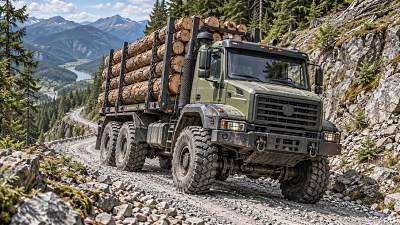
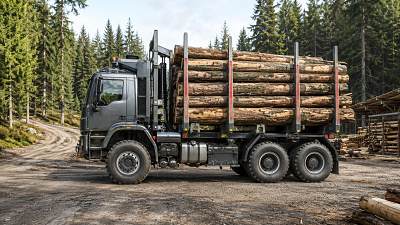
A logging truck may look like a conventional heavy-duty truck with specialized bodywork, but its purchasing risk is much higher than that description suggests. The vehicle is expected to carry high, shifting, and irregular loads; travel over rough forest roads; tolerate repeated loading cycles; and remain serviceable when it is far from a main workshop. A producer that can build a capable highway tractor is not automatically equipped to deliver a reliable forestry transport vehicle.
Before comparing quotations, procurement teams should first define the operating profile in enough detail for producers to respond to the same requirement. This includes the usual log length and diameter range, legal gross vehicle limits, annual mileage, road surface, gradient, climate, loading method, expected axle loads, and whether the truck will return empty or carry backhaul cargo. Without this baseline, a supplier comparison often becomes a comparison of incomplete configurations rather than a comparison of actual suitability.
The best logging truck producer for one operation may be a poor choice for another. A short-wheelbase rigid truck used on narrow harvesting roads has different structural, maneuverability, and traction needs from a tractor and trailer combination operating mainly between a timber yard and a processing plant. Buyers should therefore treat the truck as a working system: chassis, suspension, axles, load body, restraints, hydraulics, tires, and support network must fit together.
Verify Whether the Producer Controls the Critical Build, or Only Assembles It
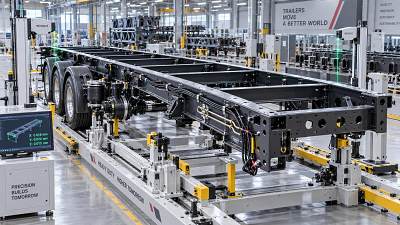
One of the first questions to ask is how much of the final forestry configuration the producer actually designs and controls. Some manufacturers produce the base chassis and integrate a logging body in-house. Others source the body, crane preparation, stakes, hydraulic components, or trailer from separate partners. Either model can work, but the responsibility for integration must be clear.
A producer that coordinates several third-party components should be able to show who owns the final engineering decision when a problem emerges. For example, if the chassis frame develops cracking near a body mounting point, the buyer needs a clear answer on whether the truck manufacturer, body builder, or installer is responsible for analysis and repair. Ambiguous interfaces can become expensive once the vehicle is in service.
Ask for the technical documentation behind the proposed configuration, rather than relying on a general product brochure. Useful items include:
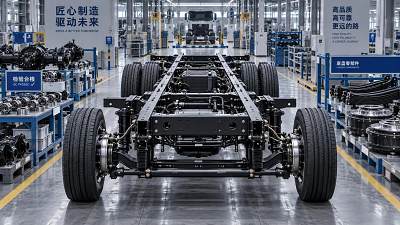
- Chassis layout drawings showing axle positions, wheelbase, frame extensions, body mounting locations, and turning clearance.
- Rated axle and suspension capacities under the intended operating conditions.
- Details of frame reinforcement, cross-member arrangement, and protection for exposed lines and components.
- Load-body drawings that show stake spacing, headboard design, bunks, bolsters, and any adjustable load-retention features.
- Weight information for the completed vehicle, including the actual body, hydraulic equipment, spare wheel arrangement, and optional equipment.
- Documentation describing the interface between the truck, trailer, crane, or self-loading equipment where these are included.
Completed-vehicle weight deserves particular attention. Buyers sometimes receive a payload estimate based on the bare chassis or a lightly specified body. Forestry equipment can add substantial mass, especially when the truck includes a loader, hydraulic oil tank, heavy-duty guards, extra fuel capacity, winches, or reinforced trailer coupling equipment. The payload that matters is the legally permitted and operationally usable payload after the full vehicle is equipped.
Examine Chassis Strength in Relation to the Route
Forestry routes impose forces that are different from steady long-haul transport. Deep ruts, uneven cross slopes, frequent low-speed articulation, abrupt load transfer, and repeated operation at high gross weight all place stress on the frame and suspension. A configuration suitable for paved roads may suffer premature wear when sent into timber country every day.
Frame strength cannot be assessed by looking only at frame rail thickness or a producer's general claim of a “heavy-duty chassis.” The relevant issue is how the frame is engineered around concentrated loads and torsional movement. Body mounts, crane bases, rear overhang, drawbar areas, suspension brackets, and coupling zones should all be reviewed as part of the proposed layout.
Procurement teams should ask the producer to explain the intended duty cycle. Does the specification assume predominantly paved-road haulage with occasional unsealed access roads, or does it support continuous work on rough forest tracks? This distinction affects suspension selection, damping, axle ratio, tire choice, underbody protection, cooling requirements, and maintenance intervals.
Suspension selection is especially important. Mechanical suspension may be valued for simplicity and robustness in severe off-road use. Air suspension can improve ride quality and load management in some applications, but its suitability depends on the road conditions, protection of air-system components, and the service capability available at the operating location. There is no universal answer; a producer should be able to justify the suspension recommendation against the buyer's actual terrain and loading pattern.
Traction should also be considered beyond the drive configuration stated on a quotation. A 6x4, 6x6, 8x4, or other arrangement affects payload, turning radius, tire wear, and mobility differently. Locking differentials, hub reduction, ground clearance, tire specification, and weight distribution can matter as much as the axle formula. A low-cost configuration that requires recovery assistance in wet conditions can quickly lose its price advantage.
Check Load Security as an Engineered System
The load body is not an accessory. It is a safety-critical part of the vehicle. Logs can vary widely in length, taper, surface condition, moisture content, and stacking behavior. The producer should demonstrate how the vehicle will retain the expected load across normal transport movements, uneven ground, braking, and cornering.
Review the arrangement of bolsters, stakes, headboards, and restraints against the planned timber dimensions. Inadequate stake height or spacing may force operators to load below the truck's potential or depend too heavily on improvised securing practices. Conversely, oversized body equipment may add unnecessary tare weight and reduce useful payload.
The question is not simply whether the truck has stakes. Buyers should determine whether the entire system is compatible with the loading method and local operating rules. Consider how logs are placed, how overhang is managed, where binders or chains are anchored, whether operators can access securing points safely, and how damaged stakes or bunks can be replaced. If a truck will handle mixed loads, ask whether the body design accommodates that variation without requiring unapproved modifications.
Producers should provide a clear explanation of the proposed load-retention equipment, including materials, attachment method, wear points, corrosion protection, and replacement availability. A component may look substantial when new but become a maintenance concern if its pins, bushes, locking mechanisms, or mounting brackets are difficult to inspect and service.
Do Not Treat Safety and Compliance as Paperwork
Compliance requirements depend on the country and route where the truck will operate. A producer may be familiar with regulations in its home market while the buyer needs equipment that can be registered, inspected, insured, and legally loaded elsewhere. Procurement should establish the applicable roadworthiness, axle-load, dimensional, lighting, braking, emissions, and load-securing requirements before signing the contract.
It is useful to separate two questions: can the truck be supplied with the required documents, and can the proposed configuration operate legally once all optional equipment is fitted? These are not always the same. A configuration that is technically capable of carrying a certain load may exceed a local axle limit, bridge formula, height restriction, or overall-length requirement.
For cross-border procurement, request a document list early. It should identify the vehicle identification and conformity documents, component certifications where relevant, technical drawings, owner manuals, maintenance instructions, and any evidence required by the destination authority. Translation requirements should also be addressed before delivery, particularly for safety labels, operating instructions, and service materials.
Safety assessment should also cover the people working around the vehicle. A logging truck has numerous daily access points: cab steps, load securing positions, crane controls, trailer connections, hydraulic lines, and inspection areas. Look for practical details such as non-slip access surfaces, guarded hot or moving parts, protected hose routing, adequate work lighting, and sensible placement of emergency controls. These features rarely attract attention in a sales presentation, yet they influence the usability of the truck through every loading cycle.
Evaluate Serviceability Before You Evaluate the Warranty
A long warranty is less valuable than a truck that can be repaired quickly with parts available nearby. Forestry operations are vulnerable to downtime because the vehicle often sits at the link between harvesting, storage, and mill delivery. A missing hose, damaged stake, failed sensor, or worn suspension component can interrupt more than one part of the supply chain.
When assessing a logging truck producer, ask for a service map that reflects the actual operating region, not just the producer's headquarters or export market. Identify authorized workshops, mobile service capability, diagnostic access, and the route for handling major repairs. For remote operations, determine what support can be provided when the truck cannot readily reach a dealer facility.
Spare-parts planning needs the same discipline. The buyer should ask which parts are standard commercial truck components and which are unique to the forestry body or local adaptation. Standardized parts may be easier to source, while specialized components can be entirely appropriate if the producer has a credible stocking and delivery arrangement. What creates risk is a specialized component with no defined replacement path.
A practical pre-delivery discussion should cover a recommended initial parts package. The contents will depend on the truck, but common attention areas include filters, belts, electrical connectors, lighting components, hoses, body pins and bushes, stake hardware, brake wear items, and vulnerable protection parts. The goal is not to stock every possible item. It is to reduce predictable downtime in an operating environment where ordinary lead times may be unacceptable.
Test the Supplier's Delivery Discipline Before Awarding the Order
A producer can have credible engineering and still be a weak supply partner if configuration control and delivery planning are poor. Logging trucks commonly involve customized wheelbases, body installations, hydraulic systems, specialized tires, trailers, and destination-specific compliance work. Each added option creates a possible handoff between suppliers.
Before selecting a producer, request a delivery plan that distinguishes between chassis production, body fabrication, installation, inspection, documentation, shipment preparation, and commissioning. The buyer should know which items are on the critical path and which components have long procurement lead times. A promised delivery date has limited value if it does not account for the body builder, hydraulic equipment supplier, or export documentation process.
Pre-shipment inspection should be agreed as part of the purchase process. It should confirm the final configuration against the approved technical specification, including axle arrangement, tires, load body dimensions, safety equipment, hydraulic functions, electrical systems, markings, and documentation. For complex builds, an acceptance checklist is more useful than a broad statement that the truck has passed factory inspection.
Procurement teams should also examine how the producer handles deviations. A capable supplier will identify a component change, explain its technical effect, and obtain approval before substituting it. Uncontrolled substitutions can affect vehicle weight, compatibility, service support, or regulatory acceptance.
Use a Comparison Method That Rewards Operational Fit
The lowest acquisition price is often an unreliable indicator of value in logging transport. A cheaper truck can become the more expensive option if it carries less payload than expected, requires frequent structural repairs, consumes excessive time during loading and securing, or depends on parts that cannot reach the site promptly.
A structured comparison should place technical fit ahead of headline price. One useful approach is to score each producer against the same operating requirements: completed vehicle weight, payload under applicable limits, route suitability, traction, body integration, safety documentation, service coverage, parts plan, delivery certainty, and clarity of warranty responsibility. Commercial terms can then be compared alongside, rather than in place of, those operational factors.
Before award, convert the preferred quotation into a controlled final specification. Every critical feature should be written clearly enough to inspect at delivery. Phrases such as “forestry package,” “heavy-duty suspension,” or “suitable for rough roads” are too broad on their own. The purchase document should identify the actual components, ratings, dimensions, and responsibilities that make the truck appropriate for the job.
Choosing a logging truck producer is ultimately a question of whether the supplier can deliver a complete, supportable vehicle for a specific timber transport operation. Buyers who verify the engineering behind the chassis and body, the legality of the finished configuration, the repair path for remote work, and the discipline of the delivery process are far less likely to discover the truck's limitations after it has entered the forest.
Trending News
- How to locate a truck exhaust system leak before replacing parts
- When does heavy equipment transport require a lowboy trailer?
- When does a light commercial vehicle for urban delivery save fleet costs?
- How to choose an off road truck for steep and unstable job sites
- How to match crane truck lifting capacity to your jobsite loads
Tag
Recommended News
 Buying GuideWhen does heavy equipment transport require a lowboy trailer?Does your heavy equipment need a lowboy trailer? Discover how loaded height, weight distribution, loading access, and route limits determine the right choice for safe transport.
 Buying GuideHow to choose an off road truck for steep and unstable job sitesChoose the right off road truck for steep, unstable job sites. Compare traction, braking, stability, clearance, payload, and route-test essentials.
 Buying GuideHow to match crane truck lifting capacity to your jobsite loadsCrane truck capacity planning made clear: calculate gross load, radius, rigging, outriggers, and ground conditions to select safer, job-ready lifting equipment.
 Buying GuideHow to match lowbed trailer deck height to your hauling equipmentLowbed trailer deck height guide: match equipment clearance, ramp geometry, axle loads, tractor fit, and route limits for safer, more efficient hauling.
 Buying GuideWhat to verify before choosing a delivery truck supplier for school transportationDelivery truck supplier for school transportation: verify route fit, payload, safety, compliance, service support, and total cost before choosing a reliable partner.
 Buying GuideWhat an excavator manufacturer catalog should show before you compare modelsExcavator manufacturer catalog guide: verify supplier identity, configurations, hydraulics, compliance, parts support, and delivery readiness before comparing models.
 Buying GuideWhat to check before appointing a bulldozer distributorBulldozer distributor selection guide: evaluate service, parts availability, warranty, pricing, compliance, and lifecycle value to reduce downtime and protect fleet investment.
 Buying GuideWhat to verify before choosing a truck cement mixer supplierTruck cement mixer supplier checklist: verify chassis fit, drum quality, hydraulics, compliance, spare parts, and after-sales support before you buy.
 Buying GuideHow to verify a truck spare parts supplier before placing a bulk orderTruck spare parts supplier verification made practical: learn how to check part specifications, factory control, test records, samples, pricing, and delivery capability before placing a bulk order.
 Buying GuideWhat size truck container is right for a typical freight load?Truck container sizing made simple: compare payload, volume, pallet layouts, route access, and loading needs to choose the most efficient freight solution.
 Buying GuideWhat drives semi trailer price differences between similar models?Semi trailer price differences come down to frame materials, axles, suspension, coating, and configuration. Compare specifications line by line to choose lasting value.
 Buying GuideHow to compare excavator manufacturer price lists before requesting quotesCompare an excavator manufacturer price list with confidence. Learn to normalize configurations, calculate landed costs, assess options and service, and create stronger RFQs.
 Buying GuideHow to choose a mixer truck drum capacity for your concrete pourMixer truck capacity guide: match drum size to pour rate, legal payload, site access, and delivery cycles for efficient, reliable concrete placement.
 Buying GuideHow to size a bulldozer for construction site grading workBulldozer for construction sizing guide: match weight, blade, traction, grade control, and transport needs to improve grading productivity and costs.
 Buying GuideHow to assess a truck cement manufacturer’s build quality before orderingTruck cement manufacturer build quality: assess tank steel, welding, chassis integration, pneumatic systems, factory QC, and inspection evidence before ordering.
 Buying GuideWhen does a truck trailer OEM make sense for private-label fleets?Truck trailer OEM programs help private-label fleets cut lifecycle costs, standardize operations, and improve uptime. Learn when customization delivers real commercial value.
 Buying GuideWhat to verify before choosing a water truck OEM for your fleetWater truck OEM selection guide: verify chassis compatibility, tank quality, pump performance, compliance, and service support to build a safer, more reliable fleet.
 Buying GuideHow to size a cab chassis truck for a fire department apparatusCab chassis truck for fire department sizing guide: balance GVWR, axle loads, wheelbase, water tank placement, and mission needs for safer apparatus design.
 Buying GuideWhat to verify before choosing a truck chassis supplierChoose the right truck chassis supplier with a practical checklist for application fit, axle ratings, body integration, quality control, delivery reliability, and after-sales support.
 Buying GuideHow to choose a logging truck for steep and rough forest roadsLogging truck selection for steep, rough forest roads: compare traction, braking, gearing, chassis strength, tires, and supplier support for safer, more reliable hauling.
 Buying GuideHow to choose a flatbed trailer deck length for oversized loadsFlatbed trailer deck length guide for oversized loads: balance cargo support, axle weight, securement space, overhang, and route access for safer transport.
 Buying GuideHow to assess a truck chassis supplier for trailer manufacturingTruck chassis supplier for trailer manufacturing: learn how to assess technical fit, quality control, engineering support, and delivery reliability for smarter sourcing.
 Buying GuideIs the SHACMAN H3000 6×4 Cement Mixer suitable for large projects?SHACMAN H3000 6×4 Cement Mixer: assess payload, cycle time, traction, and service support to see if it can keep large concrete projects moving efficiently.
 Buying GuideHow to evaluate heavy duty trucks for sale in Russia before buyingHeavy duty trucks for sale in Russia: learn how to compare specifications, winter readiness, service support, supplier reliability, and total ownership costs before buying.
 Buying GuideWhat to verify before choosing a logging truck producerChoose a logging truck producer with confidence: verify chassis strength, load security, compliance, service support, and delivery control for demanding forestry routes.