How to evaluate heavy duty trucks for sale in Russia before buying
How to Evaluate Heavy Duty Trucks for Sale in Russia Before Buying
Evaluating heavy duty trucks for sale in Russia requires more than comparing list prices, engine output, or a few photographs from a supplier. A truck that looks competitive on paper can become an expensive asset if it is poorly matched to the route, difficult to service, incompatible with the intended trailer, or unable to operate reliably through Russian winter conditions.
For procurement teams, the real question is not simply, “Which truck is cheapest to buy?” It is, “Which truck can complete our work with acceptable downtime, fuel use, maintenance exposure, and delivery risk?” That distinction matters whether the vehicle will be used for long-haul freight, regional distribution, construction materials, timber, municipal work, mining support, or heavy project transport.
Russia is not one operating environment. A tractor unit serving paved intercity corridors faces very different demands from a tipper working on unstable construction access roads, or a vehicle operating in remote areas where the nearest qualified workshop may be far away. Before requesting quotations, buyers should turn their actual operating conditions into a clear technical brief. This prevents the familiar problem of receiving several attractive offers that are not truly comparable.
Start With the Job, Not the Truck Brand
The first evaluation step is to define what the truck must do on its hardest working day, rather than its average day. A fleet may state that it needs a 6x4 truck for bulk transport, for example, but that still leaves important unanswered questions: What is the typical gross combination weight? How often will the truck climb loaded? Is the route paved, gravel, frozen, muddy, or mixed? Will it pull a semi-trailer, carry a body, or work with a tipper trailer? Is the vehicle expected to remain on the road for several shifts between maintenance stops?
This operational brief should include payload targets, annual mileage or operating hours, route profile, ambient temperature range, fuel availability, driver shift length, and the expected trailer or body configuration. It should also identify the consequence of downtime. A day of downtime for a local construction truck may be inconvenient; downtime for a truck supporting a remote mining operation can interrupt a much larger chain of activity.
Avoid selecting a truck merely because a similar model is popular in another market. The badge may be familiar, but axle ratios, fuel system configuration, cab heating, air system protection, suspension, tire specification, and electronics can differ substantially by market and application.
Check the Driveline as a Working System
Engine horsepower is often the first number discussed in a truck quotation, but it is rarely enough to make a purchasing decision. Buyers should examine engine torque, transmission type, rear-axle ratio, wheelbase, tire size, and intended gross vehicle or combination weight together. These components determine whether the truck starts reliably under load, maintains suitable road speed, handles gradients, and uses fuel sensibly in its actual duty cycle.
A higher-power engine can be justified for heavy combinations, hilly routes, or time-sensitive long-haul work. Yet more power is not automatically better. If axle ratios and transmission calibration are poorly suited to the route, the vehicle may spend too much time at inefficient engine speeds. Conversely, a truck specified for flat highway work may feel under-equipped when regularly loaded on rough access roads or steep approaches.
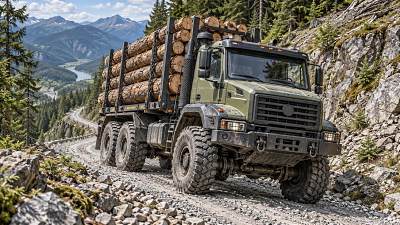
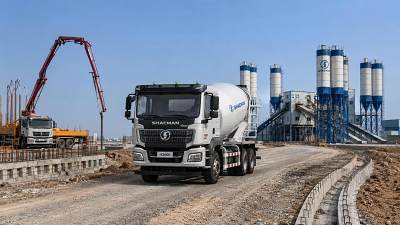
For demanding sites, traction matters as much as power. A 6x4 configuration is common for many heavy-haul and tipper applications, but buyers should still verify axle load ratings, differential lock arrangements, ground clearance, suspension choice, and the compatibility of the chassis with the planned body or trailer. A road tractor converted informally into a site vehicle may not deliver the durability expected from a purpose-specified construction truck.
Treat Cold-Weather Preparation as a Specification Item
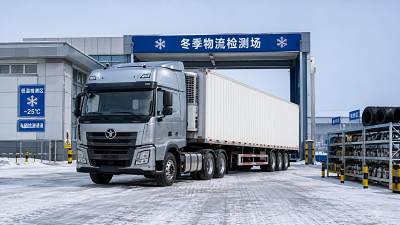
For many Russian operations, winter readiness should not be treated as an optional accessory package. Low temperatures can affect starting performance, battery capacity, fuel behavior, air systems, seals, lubricants, cab comfort, and the practical ability of drivers to inspect equipment before departure. The necessary configuration depends on the region and operating schedule, but the subject deserves a written discussion with the supplier.
Ask exactly what cold-climate equipment is included in the offered vehicle and what remains optional. The conversation may cover battery capacity and placement, engine or coolant preheating arrangements, fuel heating or filtration measures where applicable, insulation, cab heater performance, air dryer specification, and the low-temperature suitability of fluids and rubber components. Do not accept vague wording such as “suitable for cold climate” without supporting configuration details.
Cold-weather readiness also depends on daily practice. A well-specified truck can still suffer if fuel quality is inconsistent, drivers do not follow warm-up procedures, or maintenance teams lack the correct fluids and filters. Procurement should therefore involve fleet maintenance personnel early, not only commercial staff.
Verify Legal, Registration, and Body-Building Compatibility
Before placing an order, confirm that the exact vehicle configuration can be legally imported, registered, insured, and operated for the planned use. Requirements can depend on vehicle category, origin, emissions and safety documentation, intended operating location, body type, and current customs or technical rules. These matters can change, so they should be checked with qualified local specialists and the relevant authorities rather than inferred from a supplier brochure.
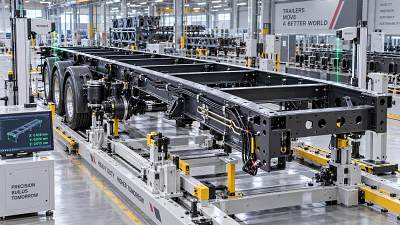
The same caution applies to bodies and trailers. A chassis may be supplied as a cab-and-chassis unit, but the final application depends on the body builder’s design, mounting points, power take-off requirements, hydraulic installation, weight distribution, and completed vehicle documentation. For tippers, mixers, cranes, tankers, forestry bodies, and special-purpose equipment, the chassis-body interface should be reviewed before shipment.
A useful procurement discipline is to request a configuration sheet that identifies every major item included in the quoted truck. This is more reliable than comparing a model name alone. Two trucks carrying the same model designation can differ in wheelbase, axle arrangement, fuel tank capacity, cab level, tire package, braking equipment, PTO preparation, and winter equipment.
Look Beyond the Purchase Price to Service Reality
The availability of spare parts is one of the most practical filters when comparing heavy duty trucks for sale in Russia. Buyers should ask which maintenance parts are held locally, which components must be ordered internationally, how warranty claims are handled, and who is authorized to carry out diagnostics and repairs. It is especially important to understand the position of high-wear and downtime-sensitive items: filters, belts, brake components, clutch-related parts, suspension items, sensors, lights, body hardware, and tires.
For a small fleet, a supplier’s promise that parts are “available” may be too broad to be meaningful. Request a practical answer: where are the parts stocked, what is the usual ordering route, which workshop will support the vehicle, and what diagnostic equipment is required? If the truck is electronically sophisticated, ask whether local technicians have access to the software, tools, and technical documentation needed for fault diagnosis.
A lower acquisition price can lose its advantage quickly when a truck is parked waiting for a relatively ordinary component. This does not mean buyers should automatically choose the brand with the largest advertised network. It means service support needs to be assessed against the actual region where the truck will work, not against a national map.
Assess the Supplier, Not Just the Vehicle
Truck sourcing involves technical, commercial, and logistical risk. A credible supplier should be able to provide clear company information, detailed specifications, vehicle identification or production information when available, delivery terms, warranty scope, payment conditions, packing or transport arrangements, and a defined point of contact after delivery. Gaps in documentation are not a minor administrative issue; they often signal wider uncertainty about configuration, responsibility, or lead time.
Procurement teams should also clarify whether they are buying from a manufacturer, authorized distributor, exporter, trader, or intermediary. Each route can be workable, but the responsibilities are different. A manufacturer may offer deeper product knowledge; a local distributor may provide stronger workshop support; a trading company may simplify cross-border sourcing but should be assessed carefully on technical accuracy and after-sales commitment.
Digital B2B marketplaces can make the early stage more efficient by bringing together truck manufacturers, component suppliers, distributors, trailers, construction machinery providers, and industry information in one place. A specialist platform such as the Global Heavy Truck Industry Platform can help buyers discover suppliers, compare product categories, review brand and market resources, and build a broader shortlist. It should support due diligence, not replace it. Direct technical clarification, document review, and where practical, inspection remain essential before a contract is signed.
Inspect What Can Be Inspected
When the purchase value and project criticality justify it, arrange a pre-delivery inspection or appoint an independent inspector. The objective is not simply to confirm that the truck exists. It is to verify that the physical vehicle matches the agreed specification.
Inspection points may include the chassis and axle configuration, tire date and specification, cab equipment, engine and transmission identification, fuel tanks, battery system, spare wheel provision, PTO preparation, body mounting interfaces, visible workmanship, accessories, and the presence of manuals and service documents. For used trucks, inspection becomes even more important. Check maintenance history where available, frame condition, corrosion, suspension wear, braking components, tire condition, fluid leaks, signs of overload, and evidence of previous accident repair.
A road test can reveal issues that static photographs will never show: transmission behavior, steering response, brake feel, dashboard warnings, vibration, cab noise, and the function of auxiliary systems. If a road test is not feasible, the contract should state clearly what acceptance evidence will be provided.
Build a Total-Cost View Before Approval
The final comparison should include more than the vehicle invoice. Consider delivery, customs-related processes where relevant, registration, body installation, insurance, initial spare-parts stock, workshop tools, driver familiarization, tires, expected maintenance intervals, and the cost of keeping a replacement vehicle available. Some costs are difficult to forecast precisely, but leaving them out creates a misleadingly simple comparison.
It is often helpful to compare two or three shortlisted trucks against the same operating profile rather than using generic claims about fuel economy or durability. One truck may have a stronger service path in the target region. Another may be easier to configure for a specialized body. A third may offer a lower entry cost but require more parts planning. The right choice depends on which trade-off the operation can realistically absorb.
Before approving a purchase, make sure the technical team, operations team, finance team, and supplier are all working from the same final configuration. In heavy transport, many poor buying decisions begin with a small misunderstanding: an omitted winter package, an unsuitable axle ratio, no confirmed parts route, or a chassis that does not fit the planned body. Those details are far easier to resolve before payment and shipment than after the truck arrives.
Trending News
- When does heavy equipment transport require a lowboy trailer?
- When does a light commercial vehicle for urban delivery save fleet costs?
- How to choose an off road truck for steep and unstable job sites
- How to match crane truck lifting capacity to your jobsite loads
- What drives logging truck cost beyond the base purchase price?
Tag
Recommended News
 Buying GuideWhen does heavy equipment transport require a lowboy trailer?Does your heavy equipment need a lowboy trailer? Discover how loaded height, weight distribution, loading access, and route limits determine the right choice for safe transport.
 Buying GuideHow to choose an off road truck for steep and unstable job sitesChoose the right off road truck for steep, unstable job sites. Compare traction, braking, stability, clearance, payload, and route-test essentials.
 Buying GuideHow to match crane truck lifting capacity to your jobsite loadsCrane truck capacity planning made clear: calculate gross load, radius, rigging, outriggers, and ground conditions to select safer, job-ready lifting equipment.
 Buying GuideHow to match lowbed trailer deck height to your hauling equipmentLowbed trailer deck height guide: match equipment clearance, ramp geometry, axle loads, tractor fit, and route limits for safer, more efficient hauling.
 Buying GuideWhat to verify before choosing a delivery truck supplier for school transportationDelivery truck supplier for school transportation: verify route fit, payload, safety, compliance, service support, and total cost before choosing a reliable partner.
 Buying GuideWhat an excavator manufacturer catalog should show before you compare modelsExcavator manufacturer catalog guide: verify supplier identity, configurations, hydraulics, compliance, parts support, and delivery readiness before comparing models.
 Buying GuideWhat to check before appointing a bulldozer distributorBulldozer distributor selection guide: evaluate service, parts availability, warranty, pricing, compliance, and lifecycle value to reduce downtime and protect fleet investment.
 Buying GuideWhat to verify before choosing a truck cement mixer supplierTruck cement mixer supplier checklist: verify chassis fit, drum quality, hydraulics, compliance, spare parts, and after-sales support before you buy.
 Buying GuideHow to verify a truck spare parts supplier before placing a bulk orderTruck spare parts supplier verification made practical: learn how to check part specifications, factory control, test records, samples, pricing, and delivery capability before placing a bulk order.
 Buying GuideWhat size truck container is right for a typical freight load?Truck container sizing made simple: compare payload, volume, pallet layouts, route access, and loading needs to choose the most efficient freight solution.
 Buying GuideWhat drives semi trailer price differences between similar models?Semi trailer price differences come down to frame materials, axles, suspension, coating, and configuration. Compare specifications line by line to choose lasting value.
 Buying GuideHow to compare excavator manufacturer price lists before requesting quotesCompare an excavator manufacturer price list with confidence. Learn to normalize configurations, calculate landed costs, assess options and service, and create stronger RFQs.
 Buying GuideHow to choose a mixer truck drum capacity for your concrete pourMixer truck capacity guide: match drum size to pour rate, legal payload, site access, and delivery cycles for efficient, reliable concrete placement.
 Buying GuideHow to size a bulldozer for construction site grading workBulldozer for construction sizing guide: match weight, blade, traction, grade control, and transport needs to improve grading productivity and costs.
 Buying GuideHow to assess a truck cement manufacturer’s build quality before orderingTruck cement manufacturer build quality: assess tank steel, welding, chassis integration, pneumatic systems, factory QC, and inspection evidence before ordering.
 Buying GuideWhen does a truck trailer OEM make sense for private-label fleets?Truck trailer OEM programs help private-label fleets cut lifecycle costs, standardize operations, and improve uptime. Learn when customization delivers real commercial value.
 Buying GuideWhat to verify before choosing a water truck OEM for your fleetWater truck OEM selection guide: verify chassis compatibility, tank quality, pump performance, compliance, and service support to build a safer, more reliable fleet.
 Buying GuideHow to size a cab chassis truck for a fire department apparatusCab chassis truck for fire department sizing guide: balance GVWR, axle loads, wheelbase, water tank placement, and mission needs for safer apparatus design.
 Buying GuideWhat to verify before choosing a truck chassis supplierChoose the right truck chassis supplier with a practical checklist for application fit, axle ratings, body integration, quality control, delivery reliability, and after-sales support.
 Buying GuideHow to choose a logging truck for steep and rough forest roadsLogging truck selection for steep, rough forest roads: compare traction, braking, gearing, chassis strength, tires, and supplier support for safer, more reliable hauling.
 Buying GuideHow to choose a flatbed trailer deck length for oversized loadsFlatbed trailer deck length guide for oversized loads: balance cargo support, axle weight, securement space, overhang, and route access for safer transport.
 Buying GuideHow to assess a truck chassis supplier for trailer manufacturingTruck chassis supplier for trailer manufacturing: learn how to assess technical fit, quality control, engineering support, and delivery reliability for smarter sourcing.
 Buying GuideIs the SHACMAN H3000 6×4 Cement Mixer suitable for large projects?SHACMAN H3000 6×4 Cement Mixer: assess payload, cycle time, traction, and service support to see if it can keep large concrete projects moving efficiently.
 Buying GuideHow to evaluate heavy duty trucks for sale in Russia before buyingHeavy duty trucks for sale in Russia: learn how to compare specifications, winter readiness, service support, supplier reliability, and total ownership costs before buying.
 Buying GuideWhat to verify before choosing a logging truck producerChoose a logging truck producer with confidence: verify chassis strength, load security, compliance, service support, and delivery control for demanding forestry routes.