What drives semi trailer price differences between similar models?
Two semi-trailers can share the same basic layout, axle count, deck length, and stated payload while carrying very different price tags. The visible outline is only the starting point. Price is shaped by the material specification behind the drawing, how that material is formed and joined, the rating of purchased components, the depth of quality control, and the degree to which the trailer has been configured for a particular route or load.
A low quotation is not automatically a poor quotation, and a high quotation is not automatically evidence of better value. The difficulty is that many quotations describe the trailer at a level that is too broad to reveal what has actually been included. “Three-axle flatbed,” “skeletal trailer,” or “tipping semi-trailer” identifies a category, not a fully comparable machine. A useful comparison starts by converting the application into a detailed technical baseline, then checking every offer against that baseline.
The frame is where similar trailers often stop being similar
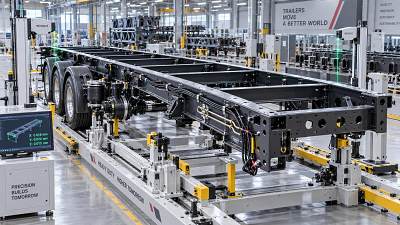
The main beams, cross-members, kingpin area, suspension mounting points, and rear frame absorb most of the repeated stress created by loading, braking, road impact, and twisting. Their design has a major effect on semi trailer price because steel weight alone does not tell the full story.
Two frames may use beams of similar external dimensions but differ in steel grade, web thickness, flange thickness, reinforcement layout, and fabrication method. Higher-strength steel can reduce dead weight while retaining the required structural capacity, but it demands controlled cutting, forming, welding, and distortion management. A heavier trailer built from lower-grade steel is not necessarily stronger. It may simply carry more material in areas that do not address the critical fatigue points.
Ask where thickness changes along the main beam. A uniform beam can be appropriate for certain service conditions, but a beam with local reinforcement around high-stress zones may be a more deliberate design. The gooseneck transition, kingpin plate, landing-gear brackets, suspension hangers, and rear bumper structure deserve particular attention. These are locations where cracks, deformation, and alignment issues tend to become expensive long after delivery.
Frame weight should be read alongside tare weight, permitted gross combination weight, target payload, and cargo distribution. A quote that lists only “steel structure” gives too little information. It should identify the relevant steel grades, plate thicknesses, beam geometry, cross-member spacing, and any areas that receive extra gussets or doubler plates.
Axles, suspension, and running gear change the ownership cost
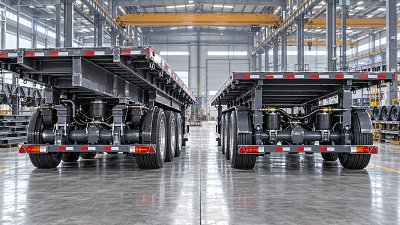
Running gear is among the largest sources of price variation in trailers that look nearly identical from a distance. Axle assemblies differ in load rating, tube construction, spindle design, brake specification, hub type, bearing arrangement, and seal quality. The initial saving from a lower-cost axle package can be offset by shorter service intervals, limited parts availability, or uneven braking behavior under demanding use.
Suspension selection must reflect the work rather than the product category alone. Mechanical leaf suspension is widely used because it is straightforward and robust, yet spring thickness, equalizer design, bushing material, hanger construction, and axle alignment control vary substantially. Air suspension may improve cargo protection and ride characteristics, but its valves, air bags, control system, mounting brackets, and maintenance requirements all affect the delivered price.
“Three axles” is therefore not a sufficient comparison point. Confirm the rated capacity of each axle, the intended tire size and ply rating, brake chamber configuration, brake type, wheel material, and spare-wheel provision. Also establish whether the offer includes a complete wheel-end package or merely axle beams with selected components left unspecified.
Brake systems create a similar issue. Drum brakes and disc brakes serve different operating and maintenance priorities. Even within the same system type, the brake lining, chamber, slack adjuster, air reservoir, valves, hoses, and protective routing may vary. A trailer intended for frequent descents, high cycle counts, or harsh road debris needs a package evaluated as a system, rather than a brake label on a quotation.
Configuration details are often priced out of sight
The base model is frequently used to attract comparison, while application-specific content appears in abbreviated notes or is omitted until later. This is especially common with flatbeds, lowbeds, tank trailers, bulk carriers, and dump trailers, where small changes in the operating requirement alter fabrication complexity.
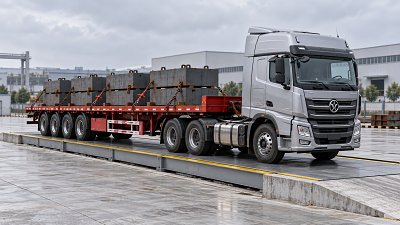
A flatbed configured for palletized freight is different from one expected to restrain machinery, steel coil, timber, or oversized project cargo. Stake pockets, lashing rings, twist locks, side rails, container guides, ramps, winches, toolboxes, dunnage storage, and deck surface treatment all affect both price and usability. Their placement matters as much as their quantity. A tie-down point welded where it cannot safely accept the expected loading direction offers little practical value.
For a tipping model, body plate thickness, floor material, hydraulic cylinder arrangement, subframe stiffness, tailgate design, and hinge construction are central cost drivers. A thicker floor may be justified for abrasive aggregate but adds unproductive weight on light bulk materials. A body that appears inexpensive may require additional wear liners or reinforcement once the actual cargo is considered.
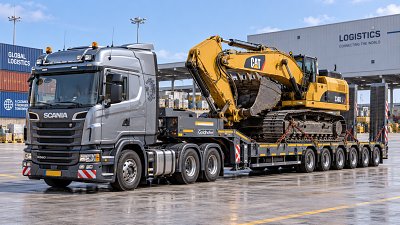
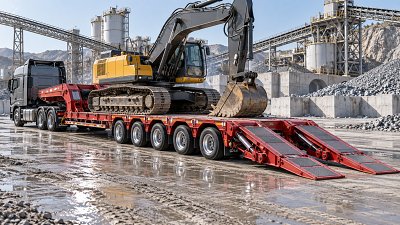
Lowbed pricing changes sharply with deck height, ramp design, detachable gooseneck requirements, steering axles, hydraulic equipment, and bridge structure. These are not cosmetic options. They determine loading access, turning behavior, center of gravity, and the loads transferred through the frame.
Fabrication quality is difficult to read from a finished surface
Paint can conceal as much as it reveals. The more meaningful questions concern fit-up, welding sequence, weld accessibility, straightness control, and inspection before coating. A fabricated structure accumulates heat and stress during production. Poor control may leave the axle group out of alignment, introduce distortion into the deck, or produce uneven load transfer through suspension brackets.
Weld appearance alone is not a complete quality measure, but it can prompt further review. Look for inconsistent bead profiles, abrupt starts and stops at stressed connections, excessive spatter around critical brackets, or reinforcement plates added in a way that creates sharp stress transitions. Accessible, well-finished welds do not eliminate the need for proper internal fusion, yet they often reflect the level of discipline applied throughout fabrication.
Jigs and fixtures also influence the price. A producer using controlled assembly fixtures can hold repeatable kingpin, axle, and deck geometry across a production batch. Less controlled assembly may be acceptable for simple, low-duty equipment, but alignment correction after completion is costly and may not fully resolve tire wear or tracking problems.
Request the dimensional tolerances that will be checked at handover, especially kingpin position, axle spacing, axle parallelism, deck flatness, and overall length and width. Stating that a trailer is “tested” is less useful than identifying which measurements and functional tests are included.
Corrosion protection is a specification, not a paint color
The apparent finish of two new trailers can be nearly identical while their resistance to corrosion differs materially. Surface preparation is the first variable. Cleaning, rust removal, edge preparation, weld treatment, primer selection, dry-film thickness, and curing conditions determine whether the topcoat has a stable base.
Service environment should drive the coating requirement. Long highway service in dry conditions places different demands on a chassis than port handling, winter road exposure, fertilizer transport, humid storage, or intermittent use near corrosive cargo. Galvanized components, zinc-rich primers, cavity treatment, sealed box sections, and stone-chip protection may raise the initial semi trailer price, but their value depends on the corrosion mechanism actually expected.
Over-specifying a finish can waste budget; under-specifying it can create recurrent repair work at structural joints and hidden cavities. The quotation should clarify the preparation method, coating system, targeted thickness, treatment of underbody areas, and whether wheels, fasteners, air tanks, electrical boxes, and exposed hydraulic parts receive separate protection.
Electrical, pneumatic, and hydraulic content is easy to underestimate
Lighting systems are often described with a short phrase, yet wiring routing, connector quality, lamp sealing, conduit protection, junction box placement, and service access strongly influence durability. Loose external wiring may reduce build time and price, but it is vulnerable to impact and abrasion. Fully concealed routing is not automatically superior either, because inaccessible wiring can complicate repairs. The preferred arrangement protects high-risk sections while retaining sensible access points.
Pneumatic and hydraulic systems require the same scrutiny. Hose routing near heat sources or moving parts, unsupported long runs, poor clamp spacing, and inadequate shielding can result in leaks or chafing. For hydraulic trailers, identify the pump or power source, cylinder capacity, hose rating, control arrangement, emergency lowering provisions where relevant, and whether the tractor interface is included in the scope.
Delivery scope can distort the comparison
Some price differences are commercial rather than structural. One offer may include export packaging, documentation, inspection support, loose accessories, spare parts, technical drawings, or commissioning items, while another treats them as exclusions. Freight terms also change the apparent equipment price. A factory-gate figure cannot be compared directly with a delivered price without separating the transport, port, insurance, tax, and handling elements.
Payment terms, production slot availability, currency exposure, and warranty wording can influence the total commercial offer. Warranty duration alone is an incomplete measure. Read what components are covered, which failures are excluded, who bears labor and transport costs, and how claims are assessed when the trailer is operating in another region.
Compare offers line by line, not model by model
A reliable evaluation uses a single specification sheet issued to every quoted source. It should define the cargo, maximum distributed and concentrated loads, route condition, required dimensions, coupling height, tire requirements, target tare weight, environmental exposure, and required accessories. Requests based only on photographs or a generic model name invite suppliers to price different assumptions.
When quotations return, separate deviations into three groups: changes that affect legal or operating suitability, changes that alter durability or maintenance, and changes that are merely cosmetic or convenient. A lower quote becomes understandable when it omits a feature that is unnecessary for the work. It becomes risky when the omission concerns frame capacity, braking, axle quality, corrosion protection, or cargo restraint.
Ask for a general arrangement drawing, bill of major components, weight statement, and a clear exclusions list before treating two prices as comparable. Resolve ambiguous wording such as “heavy-duty,” “reinforced,” “standard export specification,” or “premium axle” into measurable content. These phrases can describe a sound trailer, but they are not specifications.
The most useful semi trailer price comparison is therefore a cost-and-configuration review. It identifies what each unit is built to carry, how long its critical components are expected to remain serviceable under the stated duty, and which costs have simply been moved outside the headline quotation. That level of detail makes a price difference explainable before it becomes a problem in service.
Trending News
- How to verify a truck trailer OEM's claimed payload capacity
- How does operating weight affect the price of a new excavator?
- How to compare concrete mixer truck suppliers by total landed cost
- How axle load limits affect low bed trailer exports to Southeast Asia
- How to locate a truck exhaust system leak before replacing parts
Tag
Recommended News
 Buying GuideHow to verify a truck trailer OEM's claimed payload capacityVerify a truck trailer OEM's payload claim with tare records, load calculations, and structural evidence. Learn key checks to avoid costly mistakes and buy with confidence.
 Buying GuideHow does operating weight affect the price of a new excavator?See how operating weight affects excavator price, transport costs, and productivity. Compare configurations and uncover the best value for your next equipment purchase.
 Buying GuideHow to compare concrete mixer truck suppliers by total landed costCompare truck cement mixer supplier quotes by total landed cost, including freight, duties, and delivery. Uncover hidden charges and choose the best-value truck for your fleet.
 Buying GuideWhen does heavy equipment transport require a lowboy trailer?Does your heavy equipment need a lowboy trailer? Discover how loaded height, weight distribution, loading access, and route limits determine the right choice for safe transport.
 Buying GuideHow to choose an off road truck for steep and unstable job sitesChoose the right off road truck for steep, unstable job sites. Compare traction, braking, stability, clearance, payload, and route-test essentials.
 Buying GuideHow to match crane truck lifting capacity to your jobsite loadsCrane truck capacity planning made clear: calculate gross load, radius, rigging, outriggers, and ground conditions to select safer, job-ready lifting equipment.
 Buying GuideHow to match lowbed trailer deck height to your hauling equipmentLowbed trailer deck height guide: match equipment clearance, ramp geometry, axle loads, tractor fit, and route limits for safer, more efficient hauling.
 Buying GuideWhat to verify before choosing a delivery truck supplier for school transportationDelivery truck supplier for school transportation: verify route fit, payload, safety, compliance, service support, and total cost before choosing a reliable partner.
 Buying GuideWhat an excavator manufacturer catalog should show before you compare modelsExcavator manufacturer catalog guide: verify supplier identity, configurations, hydraulics, compliance, parts support, and delivery readiness before comparing models.
 Buying GuideWhat to check before appointing a bulldozer distributorBulldozer distributor selection guide: evaluate service, parts availability, warranty, pricing, compliance, and lifecycle value to reduce downtime and protect fleet investment.
 Buying GuideWhat to verify before choosing a truck cement mixer supplierTruck cement mixer supplier checklist: verify chassis fit, drum quality, hydraulics, compliance, spare parts, and after-sales support before you buy.
 Buying GuideHow to verify a truck spare parts supplier before placing a bulk orderTruck spare parts supplier verification made practical: learn how to check part specifications, factory control, test records, samples, pricing, and delivery capability before placing a bulk order.
 Buying GuideWhat size truck container is right for a typical freight load?Truck container sizing made simple: compare payload, volume, pallet layouts, route access, and loading needs to choose the most efficient freight solution.
 Buying GuideWhat drives semi trailer price differences between similar models?Semi trailer price differences come down to frame materials, axles, suspension, coating, and configuration. Compare specifications line by line to choose lasting value.
 Buying GuideHow to compare excavator manufacturer price lists before requesting quotesCompare an excavator manufacturer price list with confidence. Learn to normalize configurations, calculate landed costs, assess options and service, and create stronger RFQs.
 Buying GuideHow to choose a mixer truck drum capacity for your concrete pourMixer truck capacity guide: match drum size to pour rate, legal payload, site access, and delivery cycles for efficient, reliable concrete placement.
 Buying GuideHow to size a bulldozer for construction site grading workBulldozer for construction sizing guide: match weight, blade, traction, grade control, and transport needs to improve grading productivity and costs.
 Buying GuideHow to assess a truck cement manufacturer’s build quality before orderingTruck cement manufacturer build quality: assess tank steel, welding, chassis integration, pneumatic systems, factory QC, and inspection evidence before ordering.
 Buying GuideWhen does a truck trailer OEM make sense for private-label fleets?Truck trailer OEM programs help private-label fleets cut lifecycle costs, standardize operations, and improve uptime. Learn when customization delivers real commercial value.
 Buying GuideWhat to verify before choosing a water truck OEM for your fleetWater truck OEM selection guide: verify chassis compatibility, tank quality, pump performance, compliance, and service support to build a safer, more reliable fleet.
 Buying GuideHow to size a cab chassis truck for a fire department apparatusCab chassis truck for fire department sizing guide: balance GVWR, axle loads, wheelbase, water tank placement, and mission needs for safer apparatus design.
 Buying GuideWhat to verify before choosing a truck chassis supplierChoose the right truck chassis supplier with a practical checklist for application fit, axle ratings, body integration, quality control, delivery reliability, and after-sales support.
 Buying GuideHow to choose a logging truck for steep and rough forest roadsLogging truck selection for steep, rough forest roads: compare traction, braking, gearing, chassis strength, tires, and supplier support for safer, more reliable hauling.
 Buying GuideHow to choose a flatbed trailer deck length for oversized loadsFlatbed trailer deck length guide for oversized loads: balance cargo support, axle weight, securement space, overhang, and route access for safer transport.
 Buying GuideHow to assess a truck chassis supplier for trailer manufacturingTruck chassis supplier for trailer manufacturing: learn how to assess technical fit, quality control, engineering support, and delivery reliability for smarter sourcing.