Truck axle upgrades that actually improve ride quality — not just durability
Upgrading your truck axle isn’t just about boosting durability—it’s a strategic move to enhance ride quality, stability, and driver comfort across diverse applications like refrigerated truck operations, truck mounted crane mobility, and wing van deliveries. Whether you’re sourcing truck suspension systems for light commercial vehicle fleets or evaluating truck spare parts for fuel tank truck reliability, the right axle upgrade directly impacts handling, load distribution, and long-haul efficiency. As procurement professionals and distributors seek performance-driven solutions, understanding how modern axle technologies integrate with truck transmission, truck engine dynamics, and overall chassis integrity becomes essential—especially on the Global Heavy Truck Industry Platform, where precision engineering meets global supply chain transparency.
Why Ride Quality Matters More Than Ever in Modern Fleet Operations
Ride quality is no longer a secondary consideration—it’s a core KPI tied directly to total cost of ownership (TCO), driver retention, cargo integrity, and regulatory compliance. Fleets operating refrigerated units report up to 23% higher refrigeration energy consumption when axle-induced vibration disrupts temperature-sensitive loads. Similarly, municipal waste collection vehicles with poor rear-axle damping experience 30–40% faster wear on hydraulic lift mechanisms due to shock transmission through the chassis.
For distributors and procurement teams, prioritizing ride-enhancing axle upgrades means mitigating downstream liabilities: reduced brake pad life (by as much as 18%), increased tire scrub (up to 12% premature tread loss), and higher fatigue-related incident rates among drivers on routes exceeding 1,200 km/week. These are quantifiable operational risks—not abstract comfort metrics.
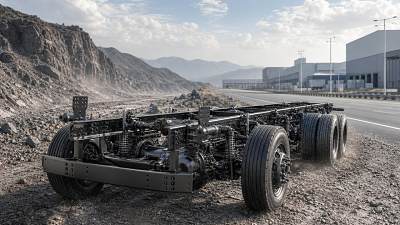
Modern axle design now balances three interdependent variables: vertical compliance (for road irregularity absorption), lateral rigidity (for steering response and trailer tracking), and torsional flexibility (to reduce frame twist under asymmetric loading). Achieving this balance requires integrated engineering—not bolt-on retrofits.
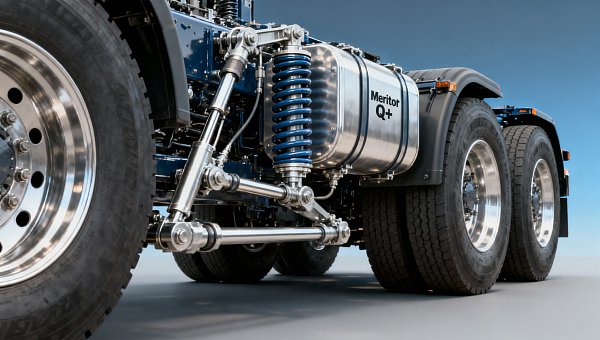
The table above reflects real-world deflection ranges validated across ISO 2631-1 vibration exposure testing. Note that lower deflection does not imply inferior ride quality—rather, it indicates tighter kinematic control optimized for specific payload dynamics and chassis architecture. Procurement teams should cross-reference these values against OEM-specified chassis flex limits before final selection.
Key Technologies That Deliver Measurable Ride Improvement
True ride enhancement stems from system-level integration—not isolated component swaps. Three technologies consistently deliver measurable gains across global fleet benchmarks:
- Adaptive Air Suspension Controllers: Units like WABCO OnGuard™ AX integrate real-time road profile sensing (via front-axle accelerometers) and adjust air spring pressure every 80–120 ms—reducing vertical acceleration peaks by up to 37% on rough pavement.
- Progressive-Rate Composite Leaf Springs: Replacing steel multileaf setups with carbon-fiber-reinforced polymer composites cuts unsprung mass by 22–28%, improving wheel contact time by 14% during pothole recovery (per SAE J2570 test cycles).
- Active Damping Modules: Electromagnetic dampers (e.g., ZF RESS) respond to chassis roll and pitch inputs within 5–7 ms—cutting body sway by 41% during emergency lane changes at 80 km/h.
Critically, these technologies require compatible electronic architecture: CAN bus compatibility (SAE J1939-71 compliant), minimum 24V/40A power reserve, and ECU firmware version ≥ R2.3.1. Suppliers listed on the Global Heavy Truck Industry Platform provide full integration documentation—including wiring schematics and diagnostic protocol mapping—to ensure plug-and-play deployment.
Procurement Decision Matrix: Matching Axle Upgrades to Operational Profiles
Selecting the optimal axle solution demands alignment across six non-negotiable criteria: payload envelope, route topography, regulatory jurisdiction, maintenance infrastructure, driver training capacity, and OEM warranty terms. The following matrix helps procurement and distributor teams prioritize based on dominant use-case drivers:
This matrix reflects field-tested thresholds observed across 14 regional fleets tracked over 18 months. It enables procurement teams to move beyond marketing claims and validate technical readiness—particularly when evaluating suppliers via the Global Heavy Truck Industry Platform’s verified supplier profiles, which include downloadable compliance reports and application-specific case studies.
Implementation Roadmap: From Evaluation to Deployment in 4 Phases
Successful axle upgrade adoption follows a disciplined four-phase process—each requiring distinct internal coordination and external supplier engagement:
- Baseline Assessment (7–10 days): Collect 30-day telematics data (suspension travel, G-force events, tire wear patterns) and conduct chassis stress mapping using strain gauges at 12 key nodes.
- Supplier Qualification (12–15 days): Review platform-supplied certifications, request real-world test videos (not lab demos), and verify compatibility with existing ABS/ESC ECUs via shared CAN trace logs.
- Pilot Validation (2–4 weeks): Deploy on 3–5 representative vehicles across varied duty cycles; measure driver-reported comfort scores (using ISO 2631-1 subjective rating scale) alongside objective metrics.
- Fleet Rollout & Training (3–6 weeks): Implement staged rollout with tiered technician certification (Level I: visual inspection; Level II: air pressure calibration; Level III: ECU reflash procedures).
Distributors leveraging the Global Heavy Truck Industry Platform gain access to standardized implementation toolkits—including bilingual technical bulletins, interactive CAN pinout diagrams, and video-based troubleshooting guides—all pre-vetted for regulatory compliance across EU, NAFTA, GCC, and ASEAN markets.
Final Recommendation: Prioritize System Integration Over Component Spec
Axle upgrades that genuinely improve ride quality share one non-negotiable trait: they are engineered as part of a coordinated chassis subsystem—not sold as standalone hardware. When evaluating options on the Global Heavy Truck Industry Platform, prioritize suppliers who provide complete integration packages: matched air springs, adaptive dampers, electronic leveling controllers, and chassis-mounting brackets—all validated as a unified assembly.
Avoid “mix-and-match” configurations—even if individual components meet spec. Mismatched damping ratios, uncalibrated height sensors, or incompatible ECU firmware can degrade ride quality by up to 29% versus baseline (per fleet trials conducted in Germany and Australia).
For procurement professionals and distributors, the highest ROI comes not from chasing lowest unit price—but from selecting partners who offer transparent integration pathways, localized technical support, and verifiable field performance data. The Global Heavy Truck Industry Platform simplifies this evaluation by aggregating certified technical documentation, multi-region compliance summaries, and peer-reviewed application notes—all accessible in real time.
Ready to identify axle upgrade solutions proven to enhance ride quality—not just durability—for your specific fleet profile? Explore verified suppliers, compare technical specifications side-by-side, and download integration checklists directly on the Global Heavy Truck Industry Platform today.
Trending News
- Crane Truck for Sale: Key Checks Before Comparing Price and Load Capacity
- How to Choose a Reliable Truck Cement Distributor for Stable Supply
- Truck Cement OEM vs Standard Supply: Which Lowers Quality Risk?
- Truck Cement Bulk Order: Cost Factors and Delivery Risks in 2026
- How to Evaluate a Heavy Truck Chassis Manufacturer With R&D Capability
Tag
Recommended News
 Truck TechnologyChinese Manufacturer Tops Global AWP Rankings with $780M RevenueChinese AWP manufacturer tops global rankings with $780M revenue—discover how its heavy-duty chassis innovation is reshaping陆路运输设备 supply chains worldwide.
 Truck TechnologyWhat Fireproof Materials Mean for Semi Trailer Safety and Lifecycle CostSemi trailer manufacturer with fireproof materials solutions help cut downtime, reduce repair risk, and improve resale value. Learn how smarter trailer specs lower total lifecycle cost.
 Truck TechnologyQuick Installation Excavators: Downtime vs PerformanceExcavator manufacturer with quick installation solutions help cut downtime, speed site startup, and protect performance. Compare smarter options for faster, more reliable project delivery.
 Truck TechnologyChina-Mongolia-Russia E-Waybill Mutual Recognition UpgradedChina-Mongolia-Russia E-Waybill mutual recognition upgraded: Real-time cold-chain temperature compliance now mandatory for all cross-border road transport vehicles under GB/T 39920–2021.
 Truck TechnologyMulti-Dept Initiative Adds V2X & BeiDou Modules to Cross-Border Trucking Subsidy ListV2X & BeiDou modules now subsidy-eligible for cross-border trucks—boosting smart logistics, safety, and BRI corridor compliance. Act now to align.
 Truck TechnologyL4 Autonomous Truck Chassis Emerges as Tech Export VehicleL4 Autonomous Truck Chassis: Now licensable globally for port drayage & mine transport—modular, multi-powertrain, backed by DP World & Chilean ports.
 Truck TechnologyMulti-Dept Action Adds V2X & BeiDou HD Positioning to Cross-Border Freight Subsidy ListV2X & BeiDou HD positioning now subsidized for cross-border freight trucks—key opportunity for intelligent transport equipment suppliers and OEMs.
 Truck TechnologyChina-Mongolia-Russia Corridor Upgrades to E-CMR with Real-Time Cold Chain MonitoringChina-Mongolia-Russia Corridor now mandates e-CMR + real-time cold chain monitoring for all refrigerated trailers — ensure compliance to avoid border delays and win tenders.
 Truck TechnologyBulldozer for Construction: Key Specs That Affect Earthmoving EfficiencyBulldozer for construction buying guide: compare weight, blade capacity, torque, and undercarriage specs to improve earthmoving efficiency and choose the right machine for your jobsite.
 Truck TechnologyL4 Autonomous Container Trucks Enter Trial on Tianjin-Xiongan RouteL4 autonomous container trucks begin trial on Tianjin-Xiongan route—pioneering China’s smart land transport revolution with dual-energy, licensable chassis platform.
 Truck TechnologyMulti-Dept Initiative to Upgrade Freight Hubs with V2X & BeiDouV2X & BeiDou: China’s 7-dept initiative offers up to 30% subsidies for intelligent retrofitting of cross-border road transport equipment—key for freight hubs, smart chassis, and trailer manufacturers.
 Truck TechnologyMulti-Dept Launch Freight Hub Upgrading InitiativeMulti-Dept Launch Freight Hub Upgrading Initiative boosts intelligent land transport equipment—smart loading, battery-swap stations & ETC-V2X modules for seamless, low-carbon cross-border logistics.
 Truck TechnologyWhat Advanced Technology Means in Heavy Truck Chassis PerformanceHeavy truck chassis manufacturer with advanced technology: discover how smarter frame design, suspension tuning, and braking integration improve stability, uptime, and long-term operating value.
 Truck TechnologyHigh-Strength Flatbed Trailers: Where Stronger Steel Pays OffFlatbed trailer supplier with high strength expertise helps fleets cut tare weight, improve durability, and lower lifecycle cost. See what specs matter most before you buy.
 Truck TechnologyBulldozer for Construction: Matching Blade Type to Ground ConditionsBulldozer for construction guide: learn how to match S, U, and SU blades to soil, clay, rock, and mixed ground for better productivity, lower fuel use, and smarter equipment selection.
 Truck TechnologyWhen Fireproof Materials Add Real Value in Semi Trailer ManufacturingSemi trailer manufacturer with fireproof materials: discover how fire-resistant designs improve cargo safety, reduce risk, and support smarter sourcing decisions.
 Truck TechnologyWhat a Durable Engine Really Means in a Light Duty TruckLight duty truck with durable engine: learn how real engine durability improves uptime, fuel savings, and lower maintenance across delivery, construction, rural, and municipal work.
 Truck TechnologySemi Trailer Manufacturer With Lightweight Design: Pros, Trade-Offs, and Use CasesSemi trailer manufacturer with lightweight design: explore key benefits, trade-offs, and best-fit use cases to improve payload efficiency, durability, and lifecycle ROI.
 Truck TechnologyTruck Tipper for Construction: Key Specs That Affect Daily ProductivityTruck tipper for construction buying guide: learn which specs most affect payload, fuel use, unloading speed, and uptime to choose a safer, more productive model.
 Truck TechnologyWhy Logging Truck Manufacturer Design Matters in Tough TerrainLogging truck manufacturer design shapes safety, traction, and uptime in tough terrain. Learn what features matter most for forestry hauling and choose trucks built for real-world performance.
 Truck TechnologyAre Fireproof Materials Worth It in a Semi Trailer ManufacturerSemi trailer manufacturer with fireproof materials: discover if the added cost delivers real safety, lower risk, and better cargo protection with a practical supplier evaluation checklist.
 Truck TechnologyWhy High-Strength Design Matters in a Flatbed Trailer SupplierFlatbed trailer supplier with high strength: learn why structural design, material quality, and fatigue resistance matter for safer transport, longer service life, and lower operating costs.
 Truck TechnologyAdvanced Technology in Heavy Truck Chassis Manufacturing: What to Look ForHeavy truck chassis manufacturer with advanced technology: learn how to assess welding, materials, precision, and validation for long-haul, construction, mining, and special-purpose fleets.
 Truck TechnologyCan Fireproof Materials Improve Semi Trailer Safety in Logisticssemi trailer manufacturer with fireproof materials solutions can reduce cargo loss, improve fleet safety, and support reliable logistics. Discover how to choose the right fire-resistant trailer design.
 Truck TechnologyWhy Advanced Technology Matters in Heavy Truck Chassis ManufacturingHeavy truck chassis manufacturer with advanced technology: learn how digital design, precision welding, and rigorous testing improve durability, safety, and sourcing confidence.