Truck Dumper Cycle Time Problems That Cut Daily Output
Slow truck dumper cycle time can quietly reduce daily output, increase fuel waste, and disrupt industrial transportation schedules. For buyers, fleet managers, and distributors evaluating truck dumper performance, understanding the causes behind loading, tipping, and return delays is essential. This article explores key bottlenecks, equipment factors, and system-level solutions that help improve truck fleet efficiency and support smarter sourcing decisions.
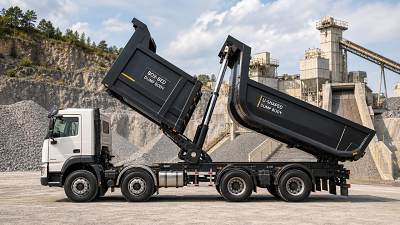
In mining, aggregate handling, port logistics, waste transfer, and bulk material yards, a truck dumper is expected to move high volumes with predictable rhythm. When one cycle extends from 4 minutes to 7 minutes, the difference may look small at equipment level, but across a 10-hour shift it can remove dozens of loads from the daily plan. That is why cycle time is not just an operational metric; it directly affects asset utilization, labor scheduling, and procurement return.
For B2B buyers and commercial evaluators, the key question is not simply whether a truck dumper can tip a vehicle. The real question is how consistently it can complete loading, positioning, locking, lifting, unloading, lowering, and truck exit under real site conditions. Equipment design, hydraulic response, truck compatibility, operator workflow, and yard layout all shape the final result.
Why Truck Dumper Cycle Time Matters More Than Many Buyers Expect
Truck dumper cycle time is the total elapsed time from truck arrival at the dumper approach to vehicle exit and readiness for the next truck. In many bulk handling environments, a normal working range may fall between 3.5 and 8 minutes per cycle, depending on payload, material flow behavior, site traffic, and automation level. A buyer who only compares rated lifting capacity may overlook the more expensive issue: repeated delay over hundreds of cycles.
Daily output loss becomes substantial when delays are repeated across two or three shifts. For example, if a site plans 100 cycles per day at 5 minutes each, but actual performance averages 6.5 minutes, available throughput drops by roughly 23%. That reduction can affect downstream crushers, hoppers, conveyors, or stockpile planning, especially where feed continuity is required every 15 to 30 minutes.
Longer cycle time also increases hidden operating cost. Trucks waiting in queue consume fuel at idle, operators lose productive hours, and loading equipment may stop and restart more often. In diesel fleets, even 10 to 20 minutes of extra idle time per truck per shift can create measurable monthly fuel waste when a site handles 30, 50, or 80 vehicles per day.
From a sourcing perspective, cycle time should be treated as a system KPI rather than a machine-only specification. Procurement teams should ask suppliers for typical cycle ranges under loaded conditions, recommended truck approach time, lift angle, hydraulic recovery time, and expected variance when material is sticky, wet, frozen, or oversized.
Key cycle stages that affect output
Each truck dumper cycle usually includes 6 linked stages. A delay in any one stage extends the whole process, and the bottleneck may not be where buyers first assume.
- Truck approach and alignment, often taking 20 to 90 seconds depending on yard guidance and driver visibility.
- Vehicle positioning and securing, which may add 15 to 60 seconds if wheel stops or clamps are slow.
- Lifting and discharge, typically 30 to 120 seconds depending on hydraulic speed and material flow.
- Hold time at tip angle, which can increase sharply for wet sand, clay, mixed demolition waste, or cohesive ore.
- Lowering and release, commonly 20 to 60 seconds.
- Truck departure and next-truck clearance, often another 20 to 90 seconds when the exit path is narrow.
This breakdown matters because a dumper with fast lifting cylinders may still produce poor shift output if the ramp geometry causes frequent alignment correction, or if truck body variation requires repeated repositioning before safe locking.
The Most Common Causes of Slow Truck Dumper Cycles
In most road transport equipment operations, cycle time problems come from a combination of machine limits and site process issues. Buyers should avoid treating delay as a single mechanical fault. In practice, slow performance often results from 4 recurring categories: poor truck-dumper fit, hydraulic inefficiency, material discharge resistance, and yard traffic interference.
Truck compatibility is one of the most underestimated causes. Different chassis lengths, axle spacing, bed geometry, center of gravity, and rear gate designs can alter approach time and discharge behavior. If a dumper is configured for one trailer profile but used across several body types, operators may need extra alignment attempts or lower lift speeds to maintain safety. Even a 30-second mismatch repeated 60 times per day equals 30 lost minutes.
Hydraulic system condition is another major factor. Low pump efficiency, internal leakage, overheated oil, undersized valves, or delayed control response can stretch both lift and return phases. In high-duty environments, oil temperature above a common working band such as 40°C to 60°C may affect response stability. Poorly maintained seals and hoses can further reduce speed consistency across a full shift.
Material behavior often creates the longest unplanned delay. Bulk solids do not discharge the same way. Dry gravel may empty in less than 20 seconds at target angle, while wet clay, ore fines, sludge-like residue, or mixed waste may require extra hold time, vibration assistance, or even manual intervention. This is especially relevant for procurement teams comparing dumpers only on payload tonnage rather than material type.
Operational bottlenecks outside the dumper itself
Many cycle losses originate beyond the platform. Congested approaches, weak lighting, poor lane markings, inconsistent dispatch rules, and untrained drivers can add 1 to 3 minutes before tipping even begins. If one truck blocks the exit lane or the receiving hopper reaches temporary capacity, the dumper stands idle although mechanically available.
The following comparison table helps buyers distinguish equipment-caused and process-caused cycle delays when evaluating suppliers or site upgrades.
The table shows that no single supplier specification tells the full story. A faster hydraulic package may not solve output loss if the real issue is truck heterogeneity or poor receiving-point coordination. Commercial evaluators should therefore request both equipment data and site process recommendations during supplier comparison.
How to Diagnose the Real Bottleneck Before Buying or Upgrading
A practical diagnosis begins with measuring the cycle in segments rather than treating the whole event as one number. Buyers, distributors, and fleet managers can collect a 3- to 7-day sample using manual time logs, CCTV review, or PLC timestamps. A minimum sample of 30 to 50 cycles per operating condition usually reveals whether the main delay appears during entry, securing, tipping, discharge, or truck release.
The next step is to separate normal variation from structural inefficiency. If average cycle time is 5.8 minutes but ranges from 4.2 to 9.5 minutes, variability may be more damaging than the average itself. High spread typically points to inconsistent truck body types, moisture-sensitive material, uneven operator practice, or unstable hydraulic response after thermal buildup.
Commercial buyers should also ask whether site throughput targets are hourly, daily, or seasonal. A dumper sized for 25 trucks per hour may perform well in dry bulk transfer but underperform in rainy seasons when materials bridge and truck cleaning becomes necessary. Matching site conditions across 12 months is more useful than relying on a single best-case demonstration.
A practical diagnostic checklist
Before issuing a purchase inquiry or retrofit plan, use a structured checklist. It reduces the risk of selecting a machine that looks adequate on paper but slows production after commissioning.
- Measure average and peak cycle time across at least 2 operating periods, such as morning and afternoon shifts.
- Record truck dimensions, payload range, trailer type, and body liner condition for 20 or more representative vehicles.
- Identify material properties, including moisture sensitivity, particle size, and likelihood of arching or sticking.
- Check receiving equipment readiness, such as hopper volume, conveyor speed, and blockage frequency.
- Inspect hydraulic lifting time, hold time, and lowering time separately rather than as a single figure.
- Review operator and driver workflow, including radio communication, signaling, and re-entry rules.
If data collection shows that 40% or more of lost time occurs before the truck is even secured, upgrading to a larger-capacity dumper alone may not solve the issue. In that case, approach redesign, guidance systems, and traffic control may produce faster payback than a heavy equipment replacement.
Signals that a retrofit may be enough
Not every slow cycle requires a new unit. Retrofitting can be viable if the steel structure remains sound, lift angle is still suitable for the material, and most delay comes from outdated controls or worn hydraulic parts. In many industrial yards, upgrading sensors, replacing hoses and seals, improving oil cooling, and adding truck alignment aids can recover 10% to 25% of lost cycle performance without changing the entire dumper frame.
Equipment and System Solutions That Improve Daily Output
Effective cycle-time improvement usually combines machine upgrades with process redesign. The best-performing truck dumper installations are not always the ones with the highest nominal capacity. They are the ones where platform design, hydraulic response, vehicle compatibility, and yard routing are matched to actual duty cycles, often over 8 to 20 hours of daily operation.
On the equipment side, buyers should review lift angle range, lifting speed under load, control accuracy, clamp or restraint reliability, and recovery time. Depending on material and truck body design, a lift angle in the 45° to 60° range may be sufficient, but sticky products sometimes require higher effective discharge support through vibration, liner optimization, or controlled hold duration. Faster is not always better if load stability is compromised.
Automation can also reduce cycle inconsistency. Sensors for truck positioning, axle detection, gate status, and platform angle help standardize each cycle. Even basic visual signaling can reduce alignment errors and approach hesitation. For higher-throughput yards, interlocking the dumper with hopper level and conveyor readiness prevents trucks from entering when downstream equipment cannot receive material, reducing unsafe stoppages and queue buildup.
Solution comparison for buyers and engineering teams
The table below summarizes common improvement options and where each option delivers the strongest benefit.
This comparison highlights an important procurement principle: the right solution depends on where the time loss is occurring. A B2B platform user comparing global suppliers should prioritize vendors able to discuss full handling scenarios, not just platform tonnage and steel structure thickness.
Implementation priorities for faster payback
Sites seeking quick improvement often start with 3 priorities: reduce alignment time, stabilize lift/lower response, and prevent material hang-up. These measures are usually easier to execute in 2 to 6 weeks than a full yard rebuild. Longer-term upgrades may include new approach geometry, integrated dispatch logic, and standardized truck body specifications across the fleet.
What Procurement Teams Should Ask Suppliers Before Making a Decision
For procurement officers, commercial evaluators, and distributors, truck dumper sourcing should move beyond catalog review. A supplier may offer an attractive price and rated payload, but if commissioning reveals poor compatibility with local truck fleets or difficult materials, the operational cost can exceed the initial savings within one season. A good RFQ should therefore include process, vehicle, and throughput details.
Start by defining expected daily truck count, payload range, truck body dimensions, and material characteristics. If the site handles 60 to 120 trucks per day, a few seconds per cycle have strong ROI value. If the fleet includes multiple trailer types, ask whether the dumper requires adjustable restraint systems or special approach geometry. If material moisture changes by season, ask how performance is affected at the worst-case condition rather than ideal dry conditions.
Service capability is equally important. Heavy transport equipment buyers should understand spare parts lead time, commissioning support, remote troubleshooting options, and maintenance frequency. In cross-border supply projects, a common benchmark is whether key wear parts can be shipped within 7 to 21 days and whether technical documentation is available in the buyer’s operating language.
Core supplier evaluation criteria
The following table can support sourcing comparison on a B2B industry platform when shortlisting truck dumper suppliers or distributors.
Well-structured supplier questions improve not only price negotiation but also decision quality. For distributors and agents, this approach also helps match end users with the right equipment class and avoid avoidable claims linked to cycle-time expectations that were never clearly defined.
Common purchasing mistakes
- Selecting by maximum rated load only, without checking actual truck geometry and daily cycle target.
- Ignoring material behavior, especially moisture-sensitive or cohesive products that increase hold time.
- Assuming yard traffic can be solved later, even though approach and exit delays may account for over 30% of lost time.
- Failing to define spare parts support and service response before signing a cross-border supply contract.
Maintenance, FAQ, and Long-Term Performance Control
Once a truck dumper is installed, maintaining cycle time requires more than reactive repair. Preventive inspection should focus on hydraulic leaks, oil cleanliness, platform wear points, restraint mechanisms, sensors, and approach-surface condition. In moderate-duty applications, weekly visual checks and monthly functional testing are common. High-duty sites may need more frequent inspection intervals, especially where equipment runs 2 or 3 shifts per day.
Cycle monitoring should be built into operations review. A practical target is to track average cycle time, longest 10% of cycles, and causes of abnormal delay. This helps distinguish random fluctuation from a worsening mechanical condition. When the longest 10% of cycles expand significantly over 4 to 8 weeks, maintenance teams often find early signs of hydraulic wear, misalignment, or material buildup issues.
How often should truck dumper cycle time be reviewed?
For stable bulk handling operations, weekly review is usually enough. For newly commissioned systems, seasonal material changes, or multi-supplier truck fleets, daily review during the first 2 to 4 weeks is better. Early tracking helps confirm whether the equipment is meeting the intended operational window and where adjustments are needed.
What cycle time is considered acceptable?
There is no universal number because payload, material, and yard design differ. However, many industrial users treat a consistent range such as 4 to 6 minutes as efficient for standard bulk material unloading. If average time exceeds 7 minutes without a material-specific reason, the site should review alignment, hydraulic performance, and receiving-point coordination.
Can software and controls really improve output?
Yes, especially where inconsistency is the main issue. Interlocks, sensors, and simple queue management reduce human variation and prevent trucks from entering before the dumper is ready. They may not increase nominal lift speed, but they often improve real hourly throughput by reducing hesitation, false starts, and unsafe interruptions.
Is standardizing trucks worth the effort?
In mixed fleets, standardization often produces strong operational gains. When body dimensions, rear gate behavior, and axle positioning are more uniform, alignment becomes faster and discharge becomes more predictable. Even partial standardization across the top 60% to 80% of fleet volume can reduce variability in cycle time and simplify operator training.
Truck dumper cycle time problems rarely come from one isolated fault. They usually reflect the interaction of heavy transport equipment, vehicle design, site flow, and maintenance discipline. For buyers, distributors, and business evaluators working through a global commercial vehicle and heavy equipment marketplace, the most reliable decisions come from comparing suppliers on real operating conditions, service capability, and throughput fit rather than on headline specifications alone.
If you are assessing truck dumper options, planning a retrofit, or comparing heavy transport equipment suppliers for bulk unloading applications, use a data-based evaluation framework and align machine choice with actual cycle demands. To explore suitable truck dumper solutions, compare supplier capabilities, or discuss sourcing requirements for your market, contact us today to get tailored recommendations and more industry-specific options.
Trending News
- Construction Machinery Cost Control: 7 Hidden Expenses in Project Planning
- Logging Truck Price Guide: Spec Choices That Change Total Ownership Cost
- Crane Truck Cost Breakdown: Chassis, Crane Unit, and Compliance Fees
- How to Vet a Logging Truck Distributor Before Entering a New Market
- Logging Truck Supplier Selection: Load Capacity, Terrain Fit, and Downtime
Tag
Recommended News
 Truck TechnologyMulti-Dept Launch Freight Hub Upgrading InitiativeMulti-Dept Launch Freight Hub Upgrading Initiative boosts intelligent land transport equipment—smart loading, battery-swap stations & ETC-V2X modules for seamless, low-carbon cross-border logistics.
 Truck TechnologyWhat Advanced Technology Means in Heavy Truck Chassis PerformanceHeavy truck chassis manufacturer with advanced technology: discover how smarter frame design, suspension tuning, and braking integration improve stability, uptime, and long-term operating value.
 Truck TechnologyHigh-Strength Flatbed Trailers: Where Stronger Steel Pays OffFlatbed trailer supplier with high strength expertise helps fleets cut tare weight, improve durability, and lower lifecycle cost. See what specs matter most before you buy.
 Truck TechnologyBulldozer for Construction: Matching Blade Type to Ground ConditionsBulldozer for construction guide: learn how to match S, U, and SU blades to soil, clay, rock, and mixed ground for better productivity, lower fuel use, and smarter equipment selection.
 Truck TechnologyWhen Fireproof Materials Add Real Value in Semi Trailer ManufacturingSemi trailer manufacturer with fireproof materials: discover how fire-resistant designs improve cargo safety, reduce risk, and support smarter sourcing decisions.
 Truck TechnologyWhat a Durable Engine Really Means in a Light Duty TruckLight duty truck with durable engine: learn how real engine durability improves uptime, fuel savings, and lower maintenance across delivery, construction, rural, and municipal work.
 Truck TechnologySemi Trailer Manufacturer With Lightweight Design: Pros, Trade-Offs, and Use CasesSemi trailer manufacturer with lightweight design: explore key benefits, trade-offs, and best-fit use cases to improve payload efficiency, durability, and lifecycle ROI.
 Truck TechnologyTruck Tipper for Construction: Key Specs That Affect Daily ProductivityTruck tipper for construction buying guide: learn which specs most affect payload, fuel use, unloading speed, and uptime to choose a safer, more productive model.
 Truck TechnologyWhy Logging Truck Manufacturer Design Matters in Tough TerrainLogging truck manufacturer design shapes safety, traction, and uptime in tough terrain. Learn what features matter most for forestry hauling and choose trucks built for real-world performance.
 Truck TechnologyAre Fireproof Materials Worth It in a Semi Trailer ManufacturerSemi trailer manufacturer with fireproof materials: discover if the added cost delivers real safety, lower risk, and better cargo protection with a practical supplier evaluation checklist.
 Truck TechnologyWhy High-Strength Design Matters in a Flatbed Trailer SupplierFlatbed trailer supplier with high strength: learn why structural design, material quality, and fatigue resistance matter for safer transport, longer service life, and lower operating costs.
 Truck TechnologyAdvanced Technology in Heavy Truck Chassis Manufacturing: What to Look ForHeavy truck chassis manufacturer with advanced technology: learn how to assess welding, materials, precision, and validation for long-haul, construction, mining, and special-purpose fleets.
 Truck TechnologyCan Fireproof Materials Improve Semi Trailer Safety in Logisticssemi trailer manufacturer with fireproof materials solutions can reduce cargo loss, improve fleet safety, and support reliable logistics. Discover how to choose the right fire-resistant trailer design.
 Truck TechnologyWhy Advanced Technology Matters in Heavy Truck Chassis ManufacturingHeavy truck chassis manufacturer with advanced technology: learn how digital design, precision welding, and rigorous testing improve durability, safety, and sourcing confidence.
 Truck TechnologyKazakhstan Extends Zero-Tariff List for China-Europe Rail Truck Parts to 2027Kazakhstan extends zero-tariff status for China-Europe rail truck parts to 2027—boosting ADAS, CAN-FD, and EBS component exports. Act now to optimize logistics & compliance.
 Truck TechnologyKazakhstan Extends Zero-Tariff for China’s Truck Parts to 2027Kazakhstan extends zero-tariff for China’s truck parts to 2027—now covering 12 intelligent vehicle control components. Boost exports, cut costs, and accelerate rail freight along the China-Europe corridor.
 Truck TechnologyWhy Lightweight Semi Trailer Design Matters More in Long-Haul OperationsSemi trailer manufacturer with lightweight design expertise helps long-haul fleets boost payload, cut fuel costs, and improve ROI with durable, compliant trailer solutions.
 Truck TechnologyTruck Trailer OEM Selection: Key Specs That Affect Service LifeTruck trailer OEM selection starts with the specs that define service life. Compare steel, axles, welding, suspension, and corrosion protection to reduce risk and choose smarter.
 Truck TechnologyTruck Tipper OEM Options Compared by Body Design and Payload NeedsTruck tipper OEM options compared by body design and payload needs. Discover the best-fit tipper for construction, mining, and transport with expert selection insights.
 Truck TechnologySASO Releases New Cybersecurity Standard for Commercial Trucks in Saudi ArabiaSASO IEC 62443-3-3:2026 mandates OTA firmware auditing for connected commercial trucks in Saudi Arabia — critical for exporters, cybersecurity providers & telematics integrators. Act now to meet Q3 2026 compliance.
 Truck TechnologyTC521 Advances Smart Heavy-Duty Truck Remote Diagnostics StandardTC521 advances smart heavy-duty truck remote diagnostics standard—aligning with ISO 27145 & EU GDPR. Critical for OEMs, telematics providers, and exporters targeting EU, ME & AU markets.
 Truck TechnologyFireproof Semi Trailers: Where the Materials Matter Most in Daily TransportSemi trailer manufacturer with fireproof materials: discover how safer flooring, wall panels, cable protection, and heat shielding reduce risk, protect cargo, and improve daily transport reliability.
 Truck TechnologyHow High-Strength Flatbed Trailers Reduce Repair Risk in Heavy Cargo TransportFlatbed trailer supplier with high strength solutions help reduce repair risk in heavy cargo transport through better durability, safer load support, and lower downtime.
 Truck TechnologyKey Build Features to Compare in a Logging Truck ManufacturerLogging truck manufacturer comparison guide: explore chassis strength, payload, drivetrain, hydraulics, durability, and service support to choose a truck built for harsh forestry work.
 Truck TechnologyChina Advances Smart Heavy-Duty Truck Remote Diagnostics Standard for EU ComplianceSmart heavy-duty truck remote diagnostics standard advances for EU compliance—key for exporters, OEMs & Tier 1 suppliers. Act now to align with Uptime Consortium 2.0.