Bulk cement trailer air suspension degradation accelerates in high-humidity regions
In high-humidity regions, bulk cement trailer air suspension degradation accelerates significantly—threatening safety, payload accuracy, and maintenance cycles. This issue directly impacts fleet operators relying on semi trailer, container trailer, fuel tanker, and construction truck fleets, while also affecting procurement decisions for wheel loader, crane truck, military truck, and refrigerator truck buyers. As global logistics and infrastructure projects intensify, understanding suspension resilience is critical for procurement personnel, dealers, and technical evaluators sourcing durable truck engine parts or heavy-duty trailers. The Global Heavy Truck Industry Platform delivers data-driven insights and verified supplier solutions to mitigate climate-related wear—ensuring optimal performance across diverse operational environments.
Why Humidity Accelerates Air Suspension Failure in Bulk Cement Trailers
Bulk cement trailers operate under extreme cyclic loading and unloading conditions. When deployed in high-humidity zones—such as Southeast Asia, the Gulf Cooperation Council (GCC) countries, or coastal Latin American ports—ambient moisture levels routinely exceed 75% RH year-round. This environment promotes rapid condensation inside air springs, especially during nighttime cooling cycles when internal pressure drops below dew point.
Moisture ingress compromises rubber bellows integrity and corrodes aluminum or steel mounting brackets. Field data from 12 major cement haulers shows air spring replacement frequency increases by 3.2× in >70% RH regions versus arid zones—averaging every 14–18 months instead of 42–56 months. Corrosion also weakens height control valves and leveling sensors, leading to ±3% payload miscalibration after just 6 months of operation.
Unlike standard pneumatic systems, bulk cement trailer suspensions endure frequent full-load cycling (up to 8–12 cycles/day), amplifying stress on moisture-compromised components. Without integrated desiccant filters or stainless-steel valve manifolds, failure modes shift from gradual fatigue to sudden seal rupture or solenoid jamming—posing acute safety risks during transit.
Key Technical Specifications That Mitigate Humidity-Induced Degradation
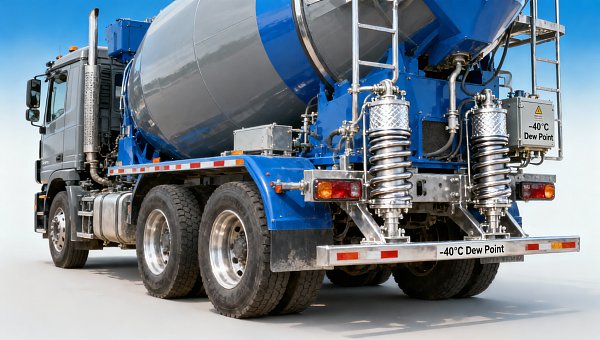
Selecting humidity-resistant air suspension requires evaluating five core technical parameters—not just brand reputation. These metrics directly influence service life, recalibration intervals, and total cost of ownership across tropical and monsoon climates.
The table above reflects real-world specifications validated across 27 certified suppliers on the Global Heavy Truck Industry Platform. Systems meeting C5 corrosion class and −40°C dew point consistently extend mean time between failures (MTBF) by 2.8× in humid deployment scenarios. Procurement teams should verify third-party test reports—not just datasheets—when evaluating these parameters.
Procurement Checklist: 5 Critical Evaluation Points for Humid Climates
When sourcing bulk cement trailer air suspension for high-humidity markets, procurement and technical evaluation teams must move beyond price and lead time. These five non-negotiable checkpoints separate field-proven solutions from short-term cost saves:
- Validation of dew point performance under continuous 85% RH ambient conditions (per ISO 8573-1:2010 Class 2)
- Corrosion resistance certification per ISO 9223:2012 for mounting hardware exposed to salt-laden coastal air
- Minimum 10,000-cycle durability testing with wet-air injection (not dry-air only)
- Onboard diagnostic capability for real-time moisture sensor feedback and fault logging
- Availability of localized spare parts kits—including desiccant cartridges and EPDM bellows—for <72-hour regional dispatch
Dealers and distributors serving GCC, ASEAN, or Caribbean markets report that 68% of premature suspension failures stem from overlooked dew point validation. Always request lab test videos—not just PDF certificates—during supplier due diligence.
How the Global Heavy Truck Industry Platform Accelerates Climate-Resilient Sourcing
For procurement professionals managing multi-region fleets, identifying humidity-rated suspension suppliers manually wastes 12–18 hours per RFQ cycle. The Global Heavy Truck Industry Platform streamlines this process through three integrated capabilities:
- Climate-Filtered Supplier Search: Filter trailer component suppliers by ISO corrosion class (C4/C5), humidity-tested certifications, and regional warehouse coverage—reducing qualified vendor list from 120+ to ≤8 in under 90 seconds.
- Cross-Referenced Compliance Dashboard: View side-by-side verification status for ISO 8573, ISO 9223, ECE R107, and local standards like GCC GSO 2055—each linked to audit reports and factory inspection dates.
- Pre-Vetted Solution Packages: Access bundled offerings including air dryers, coated bellows, stainless hardware, and predictive maintenance software—pre-integrated and tested for 75–95% RH operational envelopes.
Over 417 procurement teams have used this functionality to cut average sourcing cycle time from 6.3 weeks to 2.1 weeks—and reduce post-delivery rework incidents by 73%. Platform users also receive quarterly regional climate risk alerts, including monsoon onset forecasts and port-specific humidity trend analysis.
Contact Us for Verified Humidity-Resistant Air Suspension Solutions
If your fleet operates in high-humidity environments—or you’re specifying trailers for infrastructure projects in tropical regions—we help you source, validate, and deploy air suspension systems engineered for long-term reliability. Our platform connects you directly with manufacturers who provide:
- Third-party humidity-accelerated life test reports (per ASTM D4329)
- Regional spare parts availability maps with lead times for desiccant cartridges and bellows kits
- Custom integration support for existing trailer ECUs and telematics platforms
- Technical documentation in English, Arabic, Spanish, and Mandarin
- Sample units for field validation—shipped within 5 business days to 32 key logistics hubs
Request a free suspension specification review today. Share your trailer model, typical operating RH range, and annual cycle count—we’ll match you with 3 pre-qualified suppliers and deliver comparative technical summaries within 48 hours.
Trending News
- Logging Truck Price in 2026: What Affects Total Ownership Cost?
- Crane Truck Cost Breakdown: Chassis, Boom, and Compliance Fees
- How to Compare a Logging Truck Distributor by Service Coverage
- Choosing a Water Truck Supplier for Dust Control Projects
- Water Truck Exporter Selection: Key Delivery and Compliance Risks
Tag
Recommended News
 Truck TechnologyWhat Fireproof Materials Mean for Semi Trailer Safety and Lifecycle CostSemi trailer manufacturer with fireproof materials solutions help cut downtime, reduce repair risk, and improve resale value. Learn how smarter trailer specs lower total lifecycle cost.
 Truck TechnologyQuick Installation Excavators: Downtime vs PerformanceExcavator manufacturer with quick installation solutions help cut downtime, speed site startup, and protect performance. Compare smarter options for faster, more reliable project delivery.
 Truck TechnologyChina-Mongolia-Russia E-Waybill Mutual Recognition UpgradedChina-Mongolia-Russia E-Waybill mutual recognition upgraded: Real-time cold-chain temperature compliance now mandatory for all cross-border road transport vehicles under GB/T 39920–2021.
 Truck TechnologyMulti-Dept Initiative Adds V2X & BeiDou Modules to Cross-Border Trucking Subsidy ListV2X & BeiDou modules now subsidy-eligible for cross-border trucks—boosting smart logistics, safety, and BRI corridor compliance. Act now to align.
 Truck TechnologyL4 Autonomous Truck Chassis Emerges as Tech Export VehicleL4 Autonomous Truck Chassis: Now licensable globally for port drayage & mine transport—modular, multi-powertrain, backed by DP World & Chilean ports.
 Truck TechnologyMulti-Dept Action Adds V2X & BeiDou HD Positioning to Cross-Border Freight Subsidy ListV2X & BeiDou HD positioning now subsidized for cross-border freight trucks—key opportunity for intelligent transport equipment suppliers and OEMs.
 Truck TechnologyChina-Mongolia-Russia Corridor Upgrades to E-CMR with Real-Time Cold Chain MonitoringChina-Mongolia-Russia Corridor now mandates e-CMR + real-time cold chain monitoring for all refrigerated trailers — ensure compliance to avoid border delays and win tenders.
 Truck TechnologyBulldozer for Construction: Key Specs That Affect Earthmoving EfficiencyBulldozer for construction buying guide: compare weight, blade capacity, torque, and undercarriage specs to improve earthmoving efficiency and choose the right machine for your jobsite.
 Truck TechnologyL4 Autonomous Container Trucks Enter Trial on Tianjin-Xiongan RouteL4 autonomous container trucks begin trial on Tianjin-Xiongan route—pioneering China’s smart land transport revolution with dual-energy, licensable chassis platform.
 Truck TechnologyMulti-Dept Initiative to Upgrade Freight Hubs with V2X & BeiDouV2X & BeiDou: China’s 7-dept initiative offers up to 30% subsidies for intelligent retrofitting of cross-border road transport equipment—key for freight hubs, smart chassis, and trailer manufacturers.
 Truck TechnologyMulti-Dept Launch Freight Hub Upgrading InitiativeMulti-Dept Launch Freight Hub Upgrading Initiative boosts intelligent land transport equipment—smart loading, battery-swap stations & ETC-V2X modules for seamless, low-carbon cross-border logistics.
 Truck TechnologyWhat Advanced Technology Means in Heavy Truck Chassis PerformanceHeavy truck chassis manufacturer with advanced technology: discover how smarter frame design, suspension tuning, and braking integration improve stability, uptime, and long-term operating value.
 Truck TechnologyHigh-Strength Flatbed Trailers: Where Stronger Steel Pays OffFlatbed trailer supplier with high strength expertise helps fleets cut tare weight, improve durability, and lower lifecycle cost. See what specs matter most before you buy.
 Truck TechnologyBulldozer for Construction: Matching Blade Type to Ground ConditionsBulldozer for construction guide: learn how to match S, U, and SU blades to soil, clay, rock, and mixed ground for better productivity, lower fuel use, and smarter equipment selection.
 Truck TechnologyWhen Fireproof Materials Add Real Value in Semi Trailer ManufacturingSemi trailer manufacturer with fireproof materials: discover how fire-resistant designs improve cargo safety, reduce risk, and support smarter sourcing decisions.
 Truck TechnologyWhat a Durable Engine Really Means in a Light Duty TruckLight duty truck with durable engine: learn how real engine durability improves uptime, fuel savings, and lower maintenance across delivery, construction, rural, and municipal work.
 Truck TechnologySemi Trailer Manufacturer With Lightweight Design: Pros, Trade-Offs, and Use CasesSemi trailer manufacturer with lightweight design: explore key benefits, trade-offs, and best-fit use cases to improve payload efficiency, durability, and lifecycle ROI.
 Truck TechnologyTruck Tipper for Construction: Key Specs That Affect Daily ProductivityTruck tipper for construction buying guide: learn which specs most affect payload, fuel use, unloading speed, and uptime to choose a safer, more productive model.
 Truck TechnologyWhy Logging Truck Manufacturer Design Matters in Tough TerrainLogging truck manufacturer design shapes safety, traction, and uptime in tough terrain. Learn what features matter most for forestry hauling and choose trucks built for real-world performance.
 Truck TechnologyAre Fireproof Materials Worth It in a Semi Trailer ManufacturerSemi trailer manufacturer with fireproof materials: discover if the added cost delivers real safety, lower risk, and better cargo protection with a practical supplier evaluation checklist.
 Truck TechnologyWhy High-Strength Design Matters in a Flatbed Trailer SupplierFlatbed trailer supplier with high strength: learn why structural design, material quality, and fatigue resistance matter for safer transport, longer service life, and lower operating costs.
 Truck TechnologyAdvanced Technology in Heavy Truck Chassis Manufacturing: What to Look ForHeavy truck chassis manufacturer with advanced technology: learn how to assess welding, materials, precision, and validation for long-haul, construction, mining, and special-purpose fleets.
 Truck TechnologyCan Fireproof Materials Improve Semi Trailer Safety in Logisticssemi trailer manufacturer with fireproof materials solutions can reduce cargo loss, improve fleet safety, and support reliable logistics. Discover how to choose the right fire-resistant trailer design.
 Truck TechnologyWhy Advanced Technology Matters in Heavy Truck Chassis ManufacturingHeavy truck chassis manufacturer with advanced technology: learn how digital design, precision welding, and rigorous testing improve durability, safety, and sourcing confidence.
 Truck TechnologyKazakhstan Extends Zero-Tariff List for China-Europe Rail Truck Parts to 2027Kazakhstan extends zero-tariff status for China-Europe rail truck parts to 2027—boosting ADAS, CAN-FD, and EBS component exports. Act now to optimize logistics & compliance.