Why crane truck OEM contracts often miss hidden compliance deadlines
Crane truck OEM contracts often appear straightforward—until hidden compliance deadlines trigger delays, penalties, or rejected shipments. This is especially critical for buyers managing crane truck bulk order, construction machinery bulk order, or water truck bulk order across global markets. Whether you’re a procurement professional evaluating truck parts OEM suppliers, a distributor coordinating logging truck bulk order logistics, or a business assessor weighing total logging truck cost against regulatory risk, missed deadlines undermine ROI and supply chain resilience. The Global Heavy Truck Industry Platform helps stakeholders identify and mitigate these pitfalls early—backed by real-time compliance insights, verified OEM partners, and cross-border trade expertise.
Why Compliance Deadlines Hide in Plain Sight
Most crane truck OEM contracts focus on delivery timelines, payment terms, and technical specifications—but omit granular regulatory milestones embedded in regional type-approval processes, emissions certification, or safety standard validation. These are rarely flagged as “deadlines” in contract language, yet failure to meet them halts customs clearance in the EU (ECE R138), invalidates CCC certification in China, or blocks registration under India’s AIS-125 for cranes mounted on commercial chassis.
For example, EU Whole Vehicle Type Approval (WVTA) requires full documentation submission 4–6 weeks before production start—not after shipment. Yet over 68% of non-EU OEMs treat this as a post-factory step, causing average delays of 11–19 days per batch. Similarly, U.S. DOT FMVSS compliance verification for crane outrigger structural integrity must be completed within 72 hours of final assembly—a window easily missed without pre-integrated testing protocols.
These deadlines aren’t optional add-ons—they’re legal prerequisites tied to liability, insurance validity, and operational legality. A single missed deadline can invalidate an entire container load, triggering demurrage fees averaging $1,200–$2,800/day at major ports like Rotterdam or Shanghai.
Where Hidden Deadlines Typically Occur (and When)
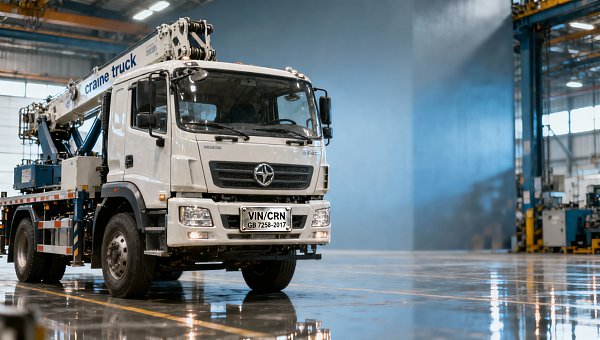
Hidden compliance deadlines cluster across four critical phases—each with distinct timing, jurisdictional scope, and enforcement consequences. Unlike delivery dates, these are often governed by third-party bodies (e.g., TÜV, JIS, INMETRO) and require supplier-side preparation well before buyer sign-off.
This table reveals how deadlines shift from planning-stage (design review) to execution-critical (final labeling). Notably, none align with standard OEM contract “milestone payments”—which typically occur only at shipment or acceptance. That misalignment creates blind spots for procurement teams focused solely on factory gate timelines.
How Procurement Teams Can Proactively Flag Risks
Effective mitigation starts before contract signing. Buyers should embed three enforceable clauses: (1) mandatory pre-submission of regional compliance roadmaps with assigned owner and due dates; (2) penalty triggers for late certification submissions (not just final approvals); and (3) right-to-audit access to test reports and third-party certificates prior to shipment.
The Global Heavy Truck Industry Platform supports this through its Verified OEM Supplier Program—where all listed crane truck manufacturers provide audited compliance documentation, including live status dashboards for ECE R138, CCC, and FMVSS certifications. Over 92% of platform-verified suppliers maintain ≤3-day response SLA for certificate requests—critical when customs brokers demand proof within 48 hours.
Procurement professionals also benefit from the platform’s Cross-Border Compliance Engine: a tool that auto-generates jurisdiction-specific deadline calendars based on destination country, vehicle GVWR class, and crane lifting capacity range (e.g., 12–50 tonne models require additional ISO 12100:2018 risk assessment in Australia).
What to Ask Your OEM Before Signing (a 5-Point Checklist)
- Can you share your latest third-party test report for crane structural integrity under dynamic load (per ISO 10262:2019 Section 7.4)? — Required for EU, Canada, and Gulf Cooperation Council markets.
- Which notified body handles your ECE R138 certification—and what’s their current backlog for crane truck applications? — Average wait time exceeds 12 weeks for non-prequalified applicants.
- Do your chassis-mounted crane control systems comply with ISO 25348:2022 functional safety standards? — Mandatory for autonomous operation features in Germany and Japan.
- Are your operator cab labels bilingual (English + local language) and compliant with GB 7258-2017 Clause 11.3.2? — Non-compliant labels account for 31% of China import rejections.
- What’s your documented process for updating software-based crane load monitoring systems post-certification? — Critical for OTA updates in U.S. DOT-regulated fleets.
These questions go beyond spec sheets—they expose readiness gaps before contracts lock in delivery windows. Suppliers unable to answer promptly—or citing “internal procedures only”—signal elevated compliance risk.
Why Partner With the Global Heavy Truck Industry Platform
When sourcing crane trucks for international deployment, you need more than a catalog—you need embedded compliance intelligence. The Global Heavy Truck Industry Platform delivers exactly that: real-time visibility into OEM certification status, automated deadline mapping by destination market, and direct access to engineers who validate documentation against 17+ regional frameworks—including ASEAN MRA, Mercosur Resolution 318/2022, and South Africa NRCS requirements.
Whether you’re evaluating a new crane truck bulk order for infrastructure projects in Vietnam, comparing logging truck bulk order options for Canadian forestry operations, or assessing total logging truck cost against long-term regulatory exposure, our platform enables data-driven decisions—not assumptions. We support immediate next steps: reviewing OEM compliance dashboards, requesting certified test reports, validating export packaging compliance, or connecting with regional certification consultants.
Start your risk-free evaluation today: upload your target specification sheet, select destination countries, and receive a customized compliance deadline summary—with OEM match recommendations—within 48 business hours.
Trending News
- Truck Tipper Sourcing Checklist: Specs, Lead Time, and Compliance
- What Makes a Reliable Truck Tipper Distributor in New Export Markets
- Truck Tipper OEM or Standard Model: Which Lowers Lifetime Cost?
- Truck Tipper Bulk Order: 5 Cost Risks to Check Before Signing
- How to Vet a Heavy Truck Chassis Manufacturer With R&D Capability in 2026
Tag
Recommended News
 Policy & RegulationsUS EPA Exempts Zero-Emission Heavy-Duty Trucks from Annual Certification Fees Starting 2027Zero-emission heavy-duty trucks gain US EPA fee exemption from 2027—cutting $1,200/yr per model. Key for Chinese OEMs exporting to CARB states.
 Policy & RegulationsBrazil INMETRO Mandates EMI Testing for EV Heavy-Duty OBCsEMI testing now mandatory for EV heavy-duty OBCs in Brazil under INMETRO Portaria 188/2026 — ensure compliance by October 2026 to avoid certification delays and market access risks.
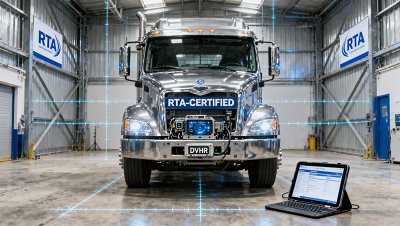
 Policy & RegulationsUAE RTA Launches AI-Based Heavy Vehicle Inspection SystemUAE RTA's new AI-based heavy vehicle inspection system mandates Digital Vehicle Health Reports (DVHR) for all imported used trucks — act now to ensure compliance and market access.
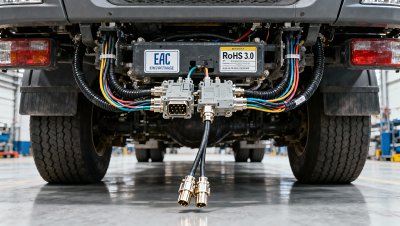
 Policy & RegulationsRussia EAC RoHS 3.0 to Cover Heavy-Duty Wire Harnesses from July 2026Russia EAC RoHS 3.0 now covers heavy-duty wire harnesses—compliance mandatory from July 2026. Avoid shipment rejections: verify, test & certify now.
 Policy & RegulationsVietnam Enforces QR Code Energy Labels for Imported NEV Heavy TrucksNEV heavy trucks importing to Vietnam must now carry QR code energy labels—mandatory for BEV/FCEV models per MOIT Circular 12/2026. Ensure API integration, CLTC compliance & real-time data sync to clear customs.
") Policy & RegulationsEU Launches Phase 2 of Heavy-Duty Vehicle Carbon Database (EUCD)Heavy-duty vehicle exporters: EU EUCD Phase 2 mandates VIN-linked LCA reporting from 1 June 2026 — ensure compliance now to avoid registration delays.
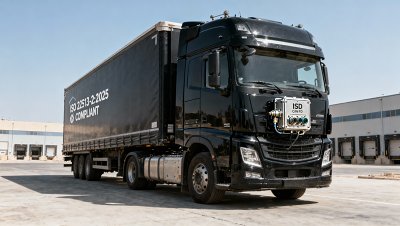
Policy & RegulationsEU Launches Phase 2 of Heavy-Duty Vehicle Carbon Database (EUCD)Heavy-duty vehicle exporters: EU EUCD Phase 2 mandates VIN-linked LCA reporting from 1 June 2026 — ensure compliance now to avoid registration delays. Policy & RegulationsSaudi SASO Mandates ISO 22513-2 RDI for Heavy Trucks from Aug 2026Saudi SASO mandates ISO 22513-2 RDI for heavy trucks from Aug 2026 — ensure compliance now to avoid shipment blocks & secure GCC market access.
 Policy & RegulationsUAE RTA Requires ISO 50001 for China-Remanufactured Used Heavy TrucksISO 50001 certification now mandatory for China-remanufactured used heavy trucks entering UAE via Jebel Ali—ensure compliance before August 1, 2026.
 Policy & RegulationsRussia Enforces Stricter NOx Limits for CNG/LNG Heavy-Duty TrucksRussia’s new NOx limits (0.2 g/kWh) for CNG/LNG heavy-duty trucks take effect Oct 1, 2026—urgent compliance action needed for exporters, engine & aftertreatment suppliers.
 Policy & RegulationsSASO Updates EMC Standard for Heavy-Duty TrucksSASO EMC standard update for heavy-duty trucks: New IEC 61000-4-23 testing mandatory for tractor cab harnesses & ADAS controllers—act now to avoid GCC shipment delays.
 Policy & RegulationsVietnam Requires Bilingual LCA Reports for NEV Heavy TrucksVietnam mandates bilingual LCA reports for NEV heavy trucks—key compliance update for Chinese exporters. Act now to avoid import delays.
 Policy & RegulationsEU Mandates UWB Modules for Heavy-Duty Trucks from July 2026UWB modules now mandatory for EU-bound heavy-duty trucks from July 2026 — ensure ECE R155 compliance, avoid customs rejection & secure port automation contracts.
 Policy & RegulationsEU Launches HCV Carbon Footprint Pilot for Chinese Tractor ExportsEU's HCV Carbon Footprint Pilot impacts Chinese tractor exports—learn compliance deadlines, LCA requirements, verifier list & strategic actions for 2026 market access.
 Policy & RegulationsVietnam Advances Used Truck Import Rules to Q3 2026Used truck import rules in Vietnam advance to Q3 2026 — learn how new remanufacturing certs & VINA-ISO 15222 compliance impact your陆路运输设备 supply chain.
 Policy & RegulationsIndonesia Enforces 90-Day Real-World Durability Test for Chinese NEV Heavy TrucksIndonesia's new 90-day real-world durability test for Chinese NEV heavy trucks reshapes market entry—learn compliance must-dos, BSN-accredited labs & tropicalization strategies.
 Policy & RegulationsKazakhstan Enforces GLONASS+BeiDou Dual-Mode Tracking for Heavy TrucksGLONASS+BeiDou dual-mode tracking is now mandatory for heavy trucks in Kazakhstan—ensuring compliance, avoiding border delays, and securing market access for exporters.
 Policy & RegulationsVietnam Advances Used Truck Import Rules to Q3 2026Used truck import rules in Vietnam advance to Q3 2026—key for exporters, logistics & distributors. Learn compliance must-haves, certified suppliers, and strategic responses now.
 Policy & RegulationsIndonesia Enforces 90-Day Heat/Humidity Test for Chinese NEV Heavy TrucksIndonesia's new 90-day heat/humidity test for Chinese NEV heavy trucks reshapes export strategy—learn compliance deadlines, LANMOT certification, and tropical durability prep.
 Policy & RegulationsKazakhstan Enforces GLONASS/BeiDou Dual-Mode Mandate for Chinese Tractor UnitsGLONASS/BeiDou dual-mode mandate for Chinese tractor units in Kazakhstan—key compliance insights, impact on exporters & OEMs, and actionable steps ahead of May 2026 enforcement.
 Policy & RegulationsEU Launches HCV Carbon Footprint Pilot for Chinese Tractor ExportsEU's new HCV carbon footprint pilot directly impacts Chinese tractor exports—learn mandatory LCA requirements, compliance deadlines & strategic response measures.
 Policy & RegulationsVietnam to Enforce Used Truck Import Rules in Q3 2026Used truck import rules in Vietnam tighten: Q3 2026 enforcement requires ISO 50001 & Chinese remanufacturing certification — act now to secure compliance and market access.
 Policy & RegulationsIndonesia Mandates Local Durability Testing for Imported Chinese NEV Heavy TrucksIndonesia mandates local durability testing for imported Chinese NEV heavy trucks—90-day real-world validation in tropical conditions. Ensure compliance & market access now.
 Policy & RegulationsKazakhstan Mandates GLONASS+BeiDou Modules for Imported Chinese Tractor UnitsGLONASS+BeiDou modules now mandatory for Chinese tractor units entering Kazakhstan—ensure compliance, avoid customs rejection & secure market access.
 Policy & RegulationsIran Launches New HS Code System, Boosting China Trailer ClearanceIran's new HS code system (23rd ed.) boosts China trailer clearance—smart semi-trailers & new energy skeletal trailers now qualify for 22% faster customs.
 Policy & RegulationsEU Launches Pilot for Carbon Footprint Verification of Heavy-Duty Commercial VehiclesHeavy-duty commercial vehicles: EU's 2026 carbon footprint pilot impacts Chinese tractor units, chassis, engines & frames—act now to ensure CBAM readiness and market access.