Truck Logging Demand Is Shifting With Regional Timber Rules
Regional timber rules are no longer a niche compliance issue for forestry operators. They are directly changing where logging activity happens, what kinds of trucks are needed, how fleets are specified, and which supporting components matter most in real-world procurement. For buyers, distributors, and market analysts in the heavy truck sector, the key takeaway is clear: truck logging demand is becoming more regional, more regulation-sensitive, and more dependent on fit-for-purpose vehicle configuration than on simple volume growth alone.
That shift matters because timber policy changes can quickly alter haul distances, payload requirements, permitted road access, seasonal operating windows, and environmental compliance standards. In practice, this affects demand for heavy-duty trucks, logging transport equipment, truck chassis, drivetrain durability, engine assembly performance, truck gearbox matching, and even component replacement cycles such as truck turbocharger demand. Companies that understand these regional effects early are better positioned to source the right equipment, avoid misaligned fleet investments, and respond faster to changes in forestry transport markets.
What Is Driving the Shift in Truck Logging Demand?
The main driver is not simply timber consumption. It is the way regional forestry regulations are reshaping harvest patterns and transport economics. Different regions are tightening or revising rules on logging permits, forest conservation, road protection, axle loads, emissions, and land-use management. As a result, timber flow is being redistributed rather than uniformly reduced or increased.
In some markets, stricter harvesting controls reduce activity in protected zones while shifting production to licensed commercial forests or neighboring regions. In others, new road-use restrictions or seasonal environmental rules reduce the efficiency of older truck fleets and create demand for newer, more compliant vehicles. This means truck logging demand is increasingly tied to localized regulatory conditions, not just national forestry output.
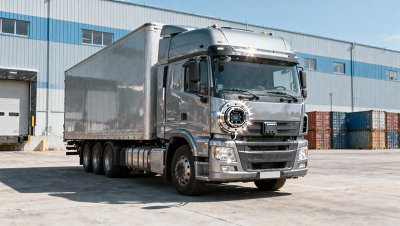
For industry participants, this creates a more segmented market. One region may require high-traction off-road logging trucks with reinforced chassis and reliable low-speed torque, while another may need road-legal long-haul timber transport trucks optimized for fuel efficiency and highway compliance. The demand signal becomes more technical and more regional at the same time.
Why Regional Timber Rules Matter to Truck Buyers and Procurement Teams
For procurement teams, the biggest risk is assuming that all forestry transport demand follows the same purchasing logic. It does not. Regional timber rules change the operational profile of the truck, which directly affects equipment selection.
Buyers need to assess several practical questions:
- Will new timber rules shorten or lengthen average haul distance?
- Are there new axle load limits, road access restrictions, or bridge limitations?
- Will trucks operate more on forest roads, mixed terrain, or paved public roads?
- Are emissions or engine standards becoming stricter in harvesting zones or transport corridors?
- Will operators need higher uptime during narrower legal harvesting windows?
These questions influence whether the right procurement choice is a purpose-built logging truck, a heavy-duty chassis for body customization, a highway-capable timber hauler, or a mixed-use transport solution. They also affect the specification of transmission ratios, suspension systems, braking systems, tire selection, engine output, and spare parts planning.
In other words, regulation now shapes technical specification more directly than many buyers expect. A fleet that performs well in one timber region may be inefficient, non-compliant, or maintenance-heavy in another.
How Timber Regulations Change Fleet Specification Decisions
When regional rules become stricter, buyers often need to move away from broad, generic fleet planning and toward application-specific configuration. This is where commercial vehicle sourcing decisions become more strategic.
1. Chassis and structural durability
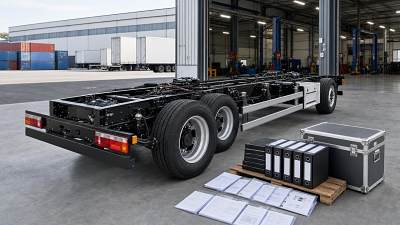
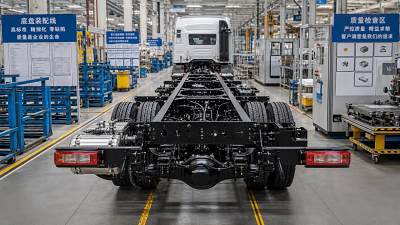
In forestry operations, road quality and load distribution are critical. If regulations shift harvesting into more remote but approved areas, trucks may face rougher access roads and heavier frame stress. That increases demand for durable truck chassis, reinforced suspension, and components built for repeated off-road cycles.
2. Engine assembly and emissions fit
Where timber transport crosses regulated corridors or enters low-emission zones, the engine assembly must meet local compliance standards without sacrificing torque and reliability. Buyers need to balance emissions compliance, maintenance complexity, and fuel economy.
3. Truck gearbox matching
Logging operations often require a specific balance between low-speed pulling power and road-speed efficiency. If regional rules change average trip length or terrain profile, the wrong truck gearbox setup can increase fuel use, clutch wear, and downtime. Transmission selection becomes a cost-control issue, not just a performance issue.
4. Truck turbocharger and component durability
Forestry trucks frequently operate under high load, stop-start cycles, dust exposure, and changing elevations. If regulation-driven rerouting increases these conditions, supporting components like the truck turbocharger, filtration systems, cooling systems, and driveline parts become more important in lifecycle purchasing decisions.
5. Payload and compliance balance
Even in strong timber markets, stricter road protection rules can lower legal payload thresholds. Buyers then need to evaluate whether more trips with compliant vehicles deliver better long-term economics than fewer high-payload trips with equipment that may create legal or maintenance risk.
Which Market Signals Indicate New Opportunities in Forestry Transport?
For distributors, sourcing platforms, and business evaluation teams, the most valuable opportunities often appear before a clear surge in truck orders. The market usually signals change through a combination of policy, infrastructure, and operational indicators.
Watch for these signals:
- New regional forest harvesting permits or conservation zoning adjustments
- Road access reforms affecting timber corridors
- Seasonal transport restrictions tied to weather or land protection
- Infrastructure investment in forest roads, rural highways, or timber processing hubs
- Growth in sawmill, pulp, biomass, or wood product capacity in specific regions
- Rising demand for replacement parts in existing logging fleets
These indicators can reveal whether the market is moving toward new truck purchases, refurbishment demand, or stronger aftermarket opportunity. In some regions, buyers may delay complete truck replacement but increase spending on gearbox components, engine overhaul parts, turbocharger replacements, tires, and trailer upgrades to maintain compliance and productivity.
That is especially important for B2B suppliers. Not every regulation shift creates immediate complete-truck demand, but many create significant demand for parts, fleet modification, and specialized component sourcing.
What Do Buyers Most Often Get Wrong When Evaluating Logging Truck Demand?
A common mistake is reading timber demand as a single national trend. In reality, regional policy fragmentation can produce opposite outcomes within the same country. One province or state may tighten forest protection and reduce truck activity, while another expands licensed harvesting and creates fresh transport demand.
Another mistake is focusing only on truck counts instead of transport conditions. A region may need fewer trucks overall but higher-specification units with better uptime, stronger drivetrains, and more reliable parts support. That can increase the value of each purchase decision even if total volume grows slowly.
Buyers also underestimate the impact of serviceability. In remote forestry operations, equipment downtime is costly. A truck with attractive initial pricing but weak spare parts availability or difficult engine and transmission maintenance may become a poor investment. Procurement decisions should therefore include supplier support, parts access, and technical documentation, not just unit cost.
How Should Distributors and Sourcing Teams Respond?
The best response is to treat forestry transport as a regional application market, not a generic heavy truck category. That means aligning product offerings and supplier evaluation with actual operating conditions created by timber rules.
Practical actions include:
- Segment target markets by forestry regulation intensity and transport environment
- Build product portfolios around use cases such as off-road logging, mixed-route timber hauling, and long-distance wood transport
- Prioritize suppliers that can provide configurable truck chassis, drivetrain options, and reliable spare parts support
- Track aftermarket demand for truck gearbox parts, engine assembly components, truck turbocharger systems, suspension parts, and trailers
- Evaluate suppliers not only on manufacturing capability but also on documentation, certification, logistics coordination, and export responsiveness
For international B2B platforms and distributors, this creates a strong value opportunity. Buyers increasingly need a faster way to compare suppliers, verify product suitability, and identify equipment matched to changing regional forestry conditions. Platforms that combine product access with industry insight and supplier transparency are in a better position to support these decisions.
How to Make Better Procurement Decisions in a Regulation-Driven Logging Market
If you are evaluating trucks or suppliers for forestry-related transport, a useful framework is to move through four layers of decision-making:
First, define the operating environment.
Map road conditions, terrain, legal payload limits, emissions requirements, and trip distance.
Second, match vehicle configuration to task.
Choose chassis strength, engine range, gearbox setup, axle configuration, and trailer compatibility based on actual use, not standard catalog assumptions.
Third, test lifecycle support.
Assess spare parts availability, maintenance intervals, technical support, and component reliability under forestry conditions.
Fourth, monitor policy volatility.
Because regional timber rules can change quickly, buyers should prefer sourcing partners and equipment lines that allow flexibility in future fleet expansion, replacement, or reconfiguration.
This approach helps reduce procurement risk while improving operational fit. It is especially valuable for buyers managing cross-border sourcing or entering unfamiliar regional forestry markets.
Conclusion: Regional Rules Are Reshaping Demand More Than Headline Timber Volume
Truck logging demand is shifting because regional timber rules are changing where timber is harvested, how it is transported, and what kind of equipment can operate efficiently and legally. For procurement teams, distributors, and market researchers, the most important insight is that demand is becoming more localized, more technical, and more dependent on compliance-driven operating conditions.
That means the best opportunities are no longer found by looking only at overall timber output. They come from understanding regional policy changes, transport route realities, fleet specification requirements, and aftermarket support needs. Companies that can connect those factors will be better prepared to source the right heavy trucks, evaluate supporting components such as truck gearbox systems, engine assembly options, and truck turbocharger reliability, and respond to emerging demand across the forestry transport chain.
In a market shaped by regulation as much as by resource demand, better decisions come from better regional insight.
Trending News
- Construction Machinery Cost Control: 7 Hidden Expenses in Project Planning
- Logging Truck Price Guide: Spec Choices That Change Total Ownership Cost
- Crane Truck Cost Breakdown: Chassis, Crane Unit, and Compliance Fees
- How to Vet a Logging Truck Distributor Before Entering a New Market
- Logging Truck Supplier Selection: Load Capacity, Terrain Fit, and Downtime
Tag
Recommended News
 Policy & RegulationsSouth China Pioneer Studio Wins Youth May 4th Award for Heavy-Duty Truck CertificationHeavy-duty truck certification breakthrough: South China Pioneer Studio wins Youth May 4th Award for global intelligent truck compliance—accelerating EU, US & GCC market access.
 Policy & RegulationsMOT Strengthens Oil Price-Freight Rate Linkage for Cross-Border Road TransportMOT mandates oil price–freight rate linkage for cross-border road transport—real-time, auditable diesel-based pricing at Manzhouli, Erenhot & rail intermodal hubs. Boost transparency, cut risk.
 Policy & RegulationsMulti-Dept Launches New Freight Hub Resilience ActionMulti-Dept Freight Hub Resilience Action boosts land transport equipment intelligence—AI loading systems, cloud diagnostics & multilingual e-clearance now drive efficiency, compliance, and export readiness.
 Policy & RegulationsMOT Issues Oil-Price-Freight Coordination Mechanism NoticeMOT's Oil-Price-Freight Coordination Mechanism transforms cross-border road freight pricing—real-time diesel-linked rates at key land ports like Erenhot & Manzhouli. Learn impacts & compliance steps.
 Policy & RegulationsMOF & MOT Launch New Freight Hub Resilience InitiativeMOF & MOT launch Freight Hub Resilience Initiative—boosting multimodal connectivity, smart trailers, and cross-border rail freight for land transport equipment exporters and operators.
 Policy & RegulationsVietnam to Enforce China's Tier 6B Emission Standard for Imported Medium/Heavy Trucks from Q3 2026Vietnam to enforce China's Tier 6B emission standard for imported medium/heavy trucks from Q3 2026 — critical for exporters, certifiers & distributors. Act now.
 Policy & RegulationsEU Draft Rules Mandate V2X for Imported Commercial Trucks from 2027V2X for imported commercial trucks becomes mandatory in the EU from 2027—learn how EU draft rules impact exporters, OEMs & certification providers.
 Policy & RegulationsHow ISO Certification Reduces Risk When Choosing a Heavy Truck Chassis ManufacturerChoose a heavy truck chassis manufacturer with ISO certification to reduce compliance, quality, and safety risks. Learn how certified processes improve traceability and supplier reliability.
 Policy & RegulationsKazakhstan Extends Zero Tariff on China-Europe Express Truck Parts to 2027Kazakhstan extends zero tariff on China-Europe Express truck parts to 2027—now covering 12 intelligent control components. Boost your export edge in陆路运输设备.
 Policy & RegulationsNew Railway Freight Rules Effective May 1, 2026: 72-Hour Pre-Submission for Oversize CargoNew railway freight rules (effective May 1, 2026) require 72-hour pre-submission for oversize cargo — critical for land transport equipment shippers, EPC contractors & heavy-lift logistics providers.
 Policy & RegulationsKazakhstan Extends Zero Tariff on China’s Rail Truck Parts to 2027Kazakhstan extends zero tariff on China’s rail truck parts to 2027 — now covering 12 intelligent control system components. Boost your Central Asia market access & pricing edge.
 Policy & RegulationsTruck Chassis Supplier in Europe: Key Compliance Points Before OrderingTruck chassis supplier in Europe: learn the key compliance checks before ordering, from documents and axle loads to body integration and safety, to reduce risk and source with confidence.
 Policy & RegulationsNew Railway Cargo Rules Effective May 1, 2026: 72-Hour Pre-Submission for Oversized LoadsNew railway cargo rules (2026) require 72-hour pre-submission for oversized land transport equipment—critical for exporters, manufacturers & freight forwarders on China-Europe/Asia rail corridors.
 Policy & RegulationsLow Bed Trailer Export to Southeast Asia: Key Compliance Points to KnowLow bed trailer export to Southeast Asia requires more than pricing. Discover key compliance points on axle loads, certifications, road standards, and supplier evaluation for safer, faster sourcing.
 Policy & RegulationsEU Mandates ISO 27145-2 Compliance for Heavy-Duty Trucks from May 2026EU mandates ISO 27145-2 compliance for heavy-duty trucks from May 2026 — ensure your exports meet remote diagnostics, type approval & after-sales requirements.
 Policy & RegulationsNew China Railway Freight Rules Take Effect May 1, 2026New China railway freight rules (2026) mandate transparent pricing & service standards for land transport equipment — boosting predictability for China-Europe rail shippers.
 Policy & RegulationsHow to Evaluate a Truck Chassis Supplier in Europe for Compliance and StabilityTruck chassis supplier in Europe selection starts with compliance and stability. Discover a practical checklist to compare suppliers, reduce sourcing risk, and choose reliable long-term partners.
 Policy & RegulationsWhat Sets a Truck Trailer Exporter Apart in Regulated MarketsTruck trailer exporter selection in regulated markets goes beyond price. Learn how compliance, documentation, traceability, and service reduce risk and improve sourcing decisions.
 Policy & RegulationsNew Railway Cargo Regulations Take Effect May 1, 2026New Railway Cargo Regulations (2026) impact rail freight exporters, forwarders & importers—key for China-Europe/Asia rail logistics. Act now to ensure compliance.
 Policy & RegulationsNew Railway Cargo Rules Take Effect May 1, 2026New Railway Cargo Rules (effective May 1, 2026) reshape rail freight compliance for exporters, logistics providers & manufacturers—key updates on fees, safety, and data sharing.
 Policy & RegulationsHuanggang Port Freight Closure Shapes Shenzhen-HK Logistics PatternHuanggang Port freight closure reshapes Shenzhen-HK logistics — key implications for truck & special-purpose vehicle exporters, customs brokers, and ASEAN/Middle East supply chains.
 Policy & Regulations2026 Q1 Transport Industry Tax & Finance Policy List Released2026 Q1 transport industry tax & finance policy: 35% export credit insurance subsidy for heavy-duty & new-energy trucks — key updates for road freight and OEM exporters.
 Policy & Regulations2026 Q1 Transport Industry Tax & Finance Policy List Released2026 Q1 Transport Industry Tax & Finance Policy List: 35% export credit insurance subsidy for heavy-duty trucks, special-purpose vehicles, KD kits & chassis via China-Europe Railway, Western Land-Sea Passage & RCEP routes—key update for exporters & OEMs.
 Policy & RegulationsMOT Releases Translation Guidelines for Highway StandardsMOT's new Highway Standards Translation Guidelines impact heavy-duty truck exporters to Latin America, Central Asia & ASEAN—get compliant bilingual/trilingual technical docs now.
 Must Comply with Maritime Authority Rules") Policy & RegulationsSmall Yacht Operators (Under 12 Pax) Must Comply with Maritime Authority RulesSmall yacht operators (under 12 pax) must comply with maritime authority rules—critical for Ro-Ro logistics, port engineering & export service providers. Act now to avoid enforcement risks.
Policy & RegulationsSmall Yacht Operators (Under 12 Pax) Must Comply with Maritime Authority RulesSmall yacht operators (under 12 pax) must comply with maritime authority rules—critical for Ro-Ro logistics, port engineering & export service providers. Act now to avoid enforcement risks.