MOT Releases Translation Guidelines for Highway Standards
On April 24, 2026, the Ministry of Transport (MOT) of China issued the Guidelines for Translation Management of Foreign-Language Versions of Highway Engineering Industry Standards. The document introduces new requirements for technical documentation compliance in heavy-duty truck exports—particularly affecting enterprises targeting Latin America, Central Asia, and ASEAN markets.
Event Overview
On April 24, 2026, the Ministry of Transport officially released the Guidelines for Translation Management of Foreign-Language Versions of Highway Engineering Industry Standards. The Guidelines explicitly require that mandatory national standards applicable to exported heavy-duty vehicles—including GB 1589 (vehicle dimension/mass limits), GB 7258 (safety requirements for motor vehicles), and GB/T 32960 (telematics system for commercial vehicles)—must be accompanied by certified bilingual or trilingual technical documents in English, Spanish, and Russian. These translated versions must undergo review and certification by authorized institutions. The Guidelines apply to third-party conformity assessment procedures such as CE, INMETRO, and EAC certifications.
Industries Affected
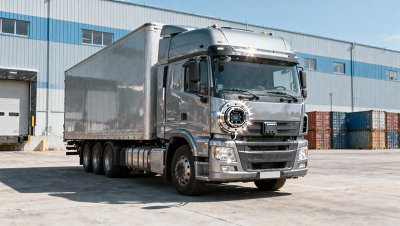
Direct Exporters of Heavy-Duty Trucks and Specialized Vehicles
These enterprises are directly subject to the new documentation requirement. Since their product certifications (e.g., INMETRO for Brazil or EAC for Eurasian Economic Union) rely on submission of compliant technical files, delays or rejections may occur if translations lack formal certification or omit required language versions.
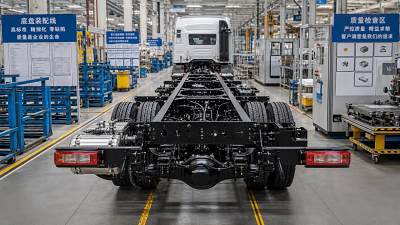
Chassis and Special-Purpose Vehicle Manufacturers
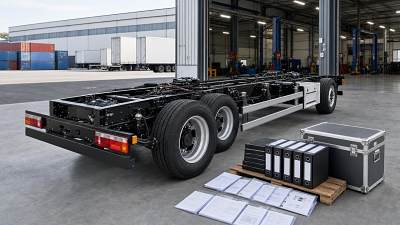
Manufacturers supplying chassis or upfit-ready platforms to exporters must now ensure that base-vehicle technical documentation—including interface specifications, safety parameters, and telematics protocols—is pre-translated and certified in all three languages. This affects design documentation handover timelines and OEM-supplier alignment processes.
Supply Chain Service Providers Supporting Certification
Third-party testing labs, translation agencies with MOT-recognized accreditation, and certification consultants will face increased demand for coordinated, audit-ready multilingual documentation packages. Their service scope now includes verification of terminological consistency across language versions—not just linguistic accuracy.
Key Points for Enterprises and Practitioners to Monitor and Act On
Track official implementation timelines and accredited translation bodies
The Guidelines do not specify an effective date or list approved certification entities. Enterprises should monitor subsequent announcements from MOT or the Standardization Administration of China (SAC) regarding recognized translation reviewers and phased enforcement schedules.
Identify high-priority export markets and corresponding standard subsets
Not all clauses in GB 1589 or GB 7258 apply uniformly across destination markets. For example, axle load limits under GB 1589 may align closely with INMETRO’s NBR 16001 but differ from EAC TR CU 018/2011. Exporters should map relevant standard clauses to each target market’s regulatory expectations before initiating translation.
Distinguish between policy signal and operational readiness
Analysis来看, this Guideline functions primarily as a procedural specification—not a new technical regulation. It does not change test methods or performance thresholds; rather, it raises the bar for documentation integrity in certification workflows. Enterprises should treat it as a process upgrade, not a product redesign trigger.
Prepare documentation workflows for multilingual version control
Current more suitable approach is to establish internal versioning protocols for technical files—ensuring source Chinese text, English, Spanish, and Russian translations remain synchronized across revisions. This includes assigning responsibility for terminology governance and audit trail maintenance ahead of certification submissions.
Editorial Perspective / Industry Observation
From industry angle, this Guideline signals a maturing phase in China’s infrastructure-related export governance: emphasis is shifting from product-level compliance to documentation ecosystem rigor. It is better understood as a procedural milestone—not yet a binding enforcement outcome—since no penalties, transition periods, or accreditation lists have been published. Continued observation is warranted on whether MOT will integrate these translation requirements into existing export declaration systems or link them to customs clearance data fields.
Conclusion
This Guideline reflects a targeted tightening of technical documentation governance for highway-related exports. Its immediate significance lies not in altering vehicle design or testing, but in elevating the evidentiary standard for regulatory submissions. Currently, it is more appropriately interpreted as a formalized expectation for documentation quality—rather than a standalone compliance barrier—requiring calibrated preparation, not urgent overhaul.
Information Sources
Main source: Ministry of Transport of the People’s Republic of China, Guidelines for Translation Management of Foreign-Language Versions of Highway Engineering Industry Standards, issued April 24, 2026.
Points requiring ongoing observation: official list of accredited translation certification bodies; effective date and enforcement mechanism; integration with existing certification application portals (e.g., INMETRO’s SISCEM or EAC’s EAEU certification systems).
Trending News
Tag
Recommended News
 Policy & RegulationsEU Launches Consultation on Smart-Connected HCV准入 RulesSmart-connected HCV准入新规启动!EU mandates UN R155/R156 for ADAS Level 2+ heavy commercial vehicles by Q1 2027—act now to secure EU market access.
 Policy & RegulationsVietnam to Require Chinese Remanufacturing Cert for Used Truck ImportsVietnam to require Chinese remanufacturing cert for used truck imports—key compliance update for exporters, OEMs & logistics providers ahead of Oct 2026 enforcement.
 Policy & RegulationsEU Launches Consultation on Smart-Connected HCV Type Approval RulesSmart-connected HCV type approval rules: EU consultation on R155/R156 compliance for heavy commercial vehicles — act now to secure China–EU market access.
 Policy & RegulationsSouth China Pioneer Studio Wins Youth May 4th Award for Heavy-Duty Truck CertificationHeavy-duty truck certification breakthrough: South China Pioneer Studio wins Youth May 4th Award for global intelligent truck compliance—accelerating EU, US & GCC market access.
 Policy & RegulationsMOT Strengthens Oil Price-Freight Rate Linkage for Cross-Border Road TransportMOT mandates oil price–freight rate linkage for cross-border road transport—real-time, auditable diesel-based pricing at Manzhouli, Erenhot & rail intermodal hubs. Boost transparency, cut risk.
 Policy & RegulationsMulti-Dept Launches New Freight Hub Resilience ActionMulti-Dept Freight Hub Resilience Action boosts land transport equipment intelligence—AI loading systems, cloud diagnostics & multilingual e-clearance now drive efficiency, compliance, and export readiness.
 Policy & RegulationsMOT Issues Oil-Price-Freight Coordination Mechanism NoticeMOT's Oil-Price-Freight Coordination Mechanism transforms cross-border road freight pricing—real-time diesel-linked rates at key land ports like Erenhot & Manzhouli. Learn impacts & compliance steps.
 Policy & RegulationsMOF & MOT Launch New Freight Hub Resilience InitiativeMOF & MOT launch Freight Hub Resilience Initiative—boosting multimodal connectivity, smart trailers, and cross-border rail freight for land transport equipment exporters and operators.
 Policy & RegulationsVietnam to Enforce China's Tier 6B Emission Standard for Imported Medium/Heavy Trucks from Q3 2026Vietnam to enforce China's Tier 6B emission standard for imported medium/heavy trucks from Q3 2026 — critical for exporters, certifiers & distributors. Act now.
 Policy & RegulationsEU Draft Rules Mandate V2X for Imported Commercial Trucks from 2027V2X for imported commercial trucks becomes mandatory in the EU from 2027—learn how EU draft rules impact exporters, OEMs & certification providers.
 Policy & RegulationsHow ISO Certification Reduces Risk When Choosing a Heavy Truck Chassis ManufacturerChoose a heavy truck chassis manufacturer with ISO certification to reduce compliance, quality, and safety risks. Learn how certified processes improve traceability and supplier reliability.
 Policy & RegulationsKazakhstan Extends Zero Tariff on China-Europe Express Truck Parts to 2027Kazakhstan extends zero tariff on China-Europe Express truck parts to 2027—now covering 12 intelligent control components. Boost your export edge in陆路运输设备.
 Policy & RegulationsNew Railway Freight Rules Effective May 1, 2026: 72-Hour Pre-Submission for Oversize CargoNew railway freight rules (effective May 1, 2026) require 72-hour pre-submission for oversize cargo — critical for land transport equipment shippers, EPC contractors & heavy-lift logistics providers.
 Policy & RegulationsKazakhstan Extends Zero Tariff on China’s Rail Truck Parts to 2027Kazakhstan extends zero tariff on China’s rail truck parts to 2027 — now covering 12 intelligent control system components. Boost your Central Asia market access & pricing edge.
 Policy & RegulationsTruck Chassis Supplier in Europe: Key Compliance Points Before OrderingTruck chassis supplier in Europe: learn the key compliance checks before ordering, from documents and axle loads to body integration and safety, to reduce risk and source with confidence.
 Policy & RegulationsNew Railway Cargo Rules Effective May 1, 2026: 72-Hour Pre-Submission for Oversized LoadsNew railway cargo rules (2026) require 72-hour pre-submission for oversized land transport equipment—critical for exporters, manufacturers & freight forwarders on China-Europe/Asia rail corridors.
 Policy & RegulationsLow Bed Trailer Export to Southeast Asia: Key Compliance Points to KnowLow bed trailer export to Southeast Asia requires more than pricing. Discover key compliance points on axle loads, certifications, road standards, and supplier evaluation for safer, faster sourcing.
 Policy & RegulationsEU Mandates ISO 27145-2 Compliance for Heavy-Duty Trucks from May 2026EU mandates ISO 27145-2 compliance for heavy-duty trucks from May 2026 — ensure your exports meet remote diagnostics, type approval & after-sales requirements.
 Policy & RegulationsNew China Railway Freight Rules Take Effect May 1, 2026New China railway freight rules (2026) mandate transparent pricing & service standards for land transport equipment — boosting predictability for China-Europe rail shippers.
 Policy & RegulationsHow to Evaluate a Truck Chassis Supplier in Europe for Compliance and StabilityTruck chassis supplier in Europe selection starts with compliance and stability. Discover a practical checklist to compare suppliers, reduce sourcing risk, and choose reliable long-term partners.
 Policy & RegulationsWhat Sets a Truck Trailer Exporter Apart in Regulated MarketsTruck trailer exporter selection in regulated markets goes beyond price. Learn how compliance, documentation, traceability, and service reduce risk and improve sourcing decisions.
 Policy & RegulationsNew Railway Cargo Regulations Take Effect May 1, 2026New Railway Cargo Regulations (2026) impact rail freight exporters, forwarders & importers—key for China-Europe/Asia rail logistics. Act now to ensure compliance.
 Policy & RegulationsNew Railway Cargo Rules Take Effect May 1, 2026New Railway Cargo Rules (effective May 1, 2026) reshape rail freight compliance for exporters, logistics providers & manufacturers—key updates on fees, safety, and data sharing.
 Policy & RegulationsHuanggang Port Freight Closure Shapes Shenzhen-HK Logistics PatternHuanggang Port freight closure reshapes Shenzhen-HK logistics — key implications for truck & special-purpose vehicle exporters, customs brokers, and ASEAN/Middle East supply chains.
 Policy & Regulations2026 Q1 Transport Industry Tax & Finance Policy List Released2026 Q1 transport industry tax & finance policy: 35% export credit insurance subsidy for heavy-duty & new-energy trucks — key updates for road freight and OEM exporters.